Sopra_Steria_URD_EN 2025
-
-
2025 Universal Registration Document
- Chairman’s message
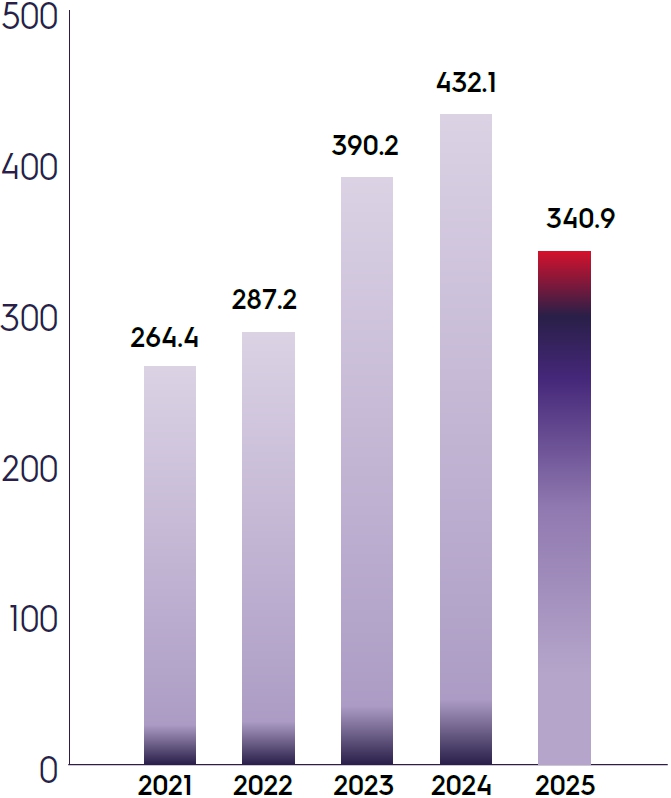
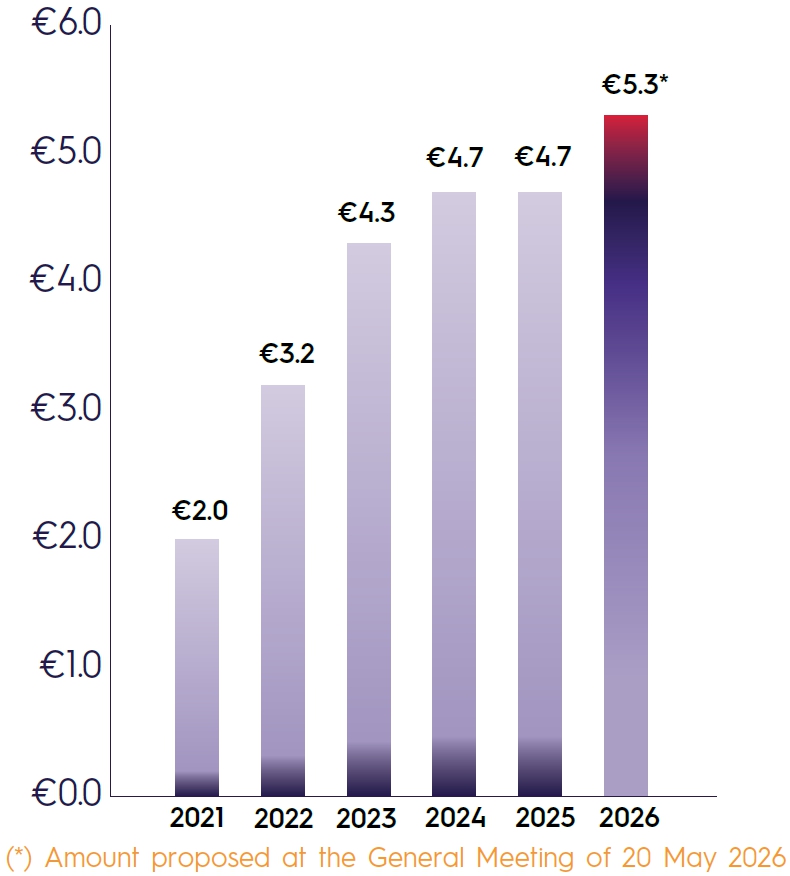
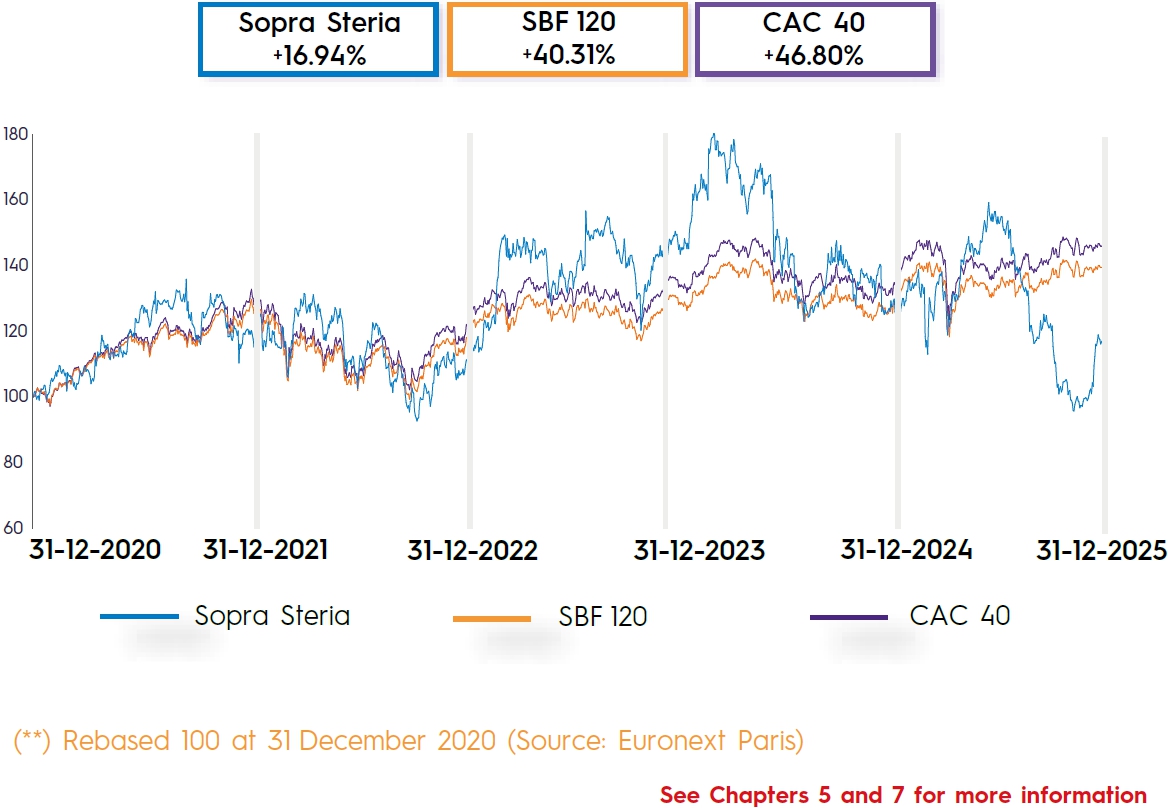
- Key figures
- History and corporate plan
- Independent corporate plan
- Our mission and values
- Breakdown of revenue and the workforce
- Business model
- Strategy & Ambitions
- Risk management
- Governance
- Sustainability reporting
- Our direct and indirect contribution to the 17 United Nations SDGs
- Financial performance
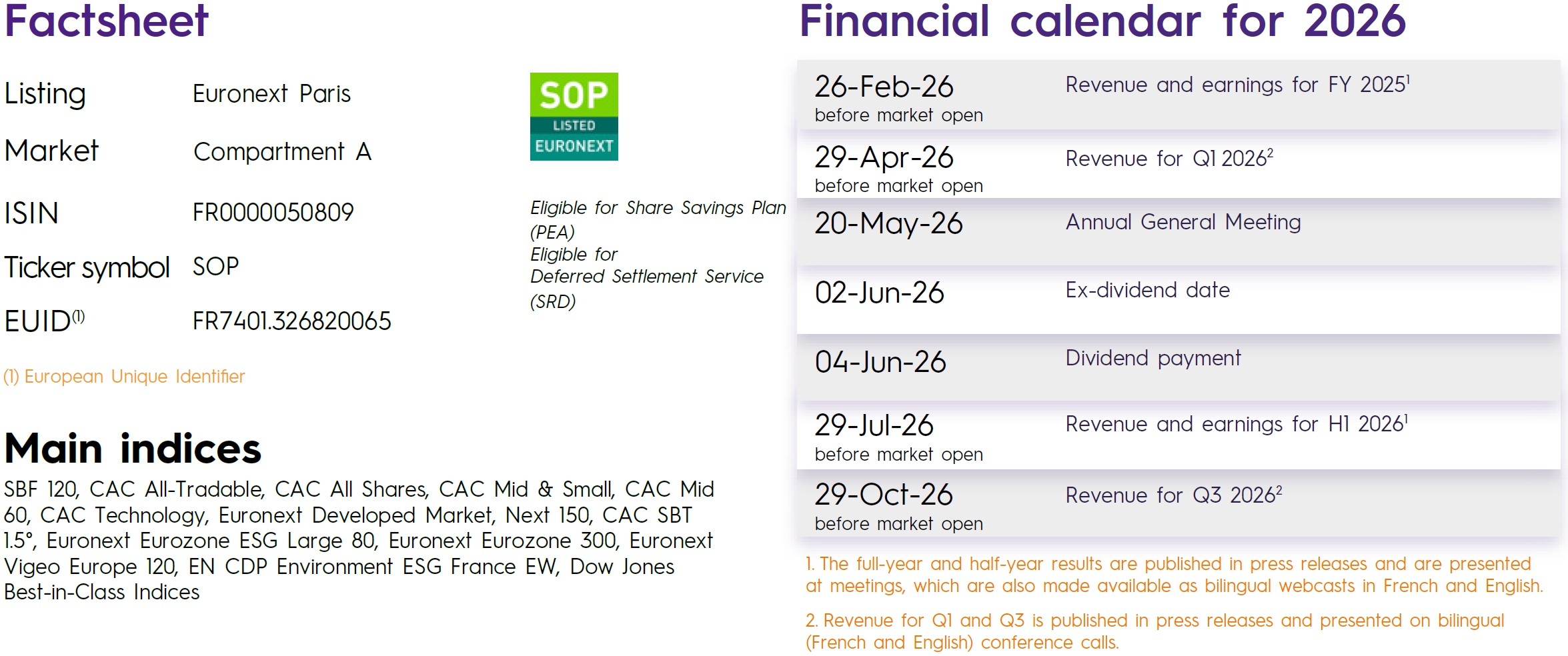
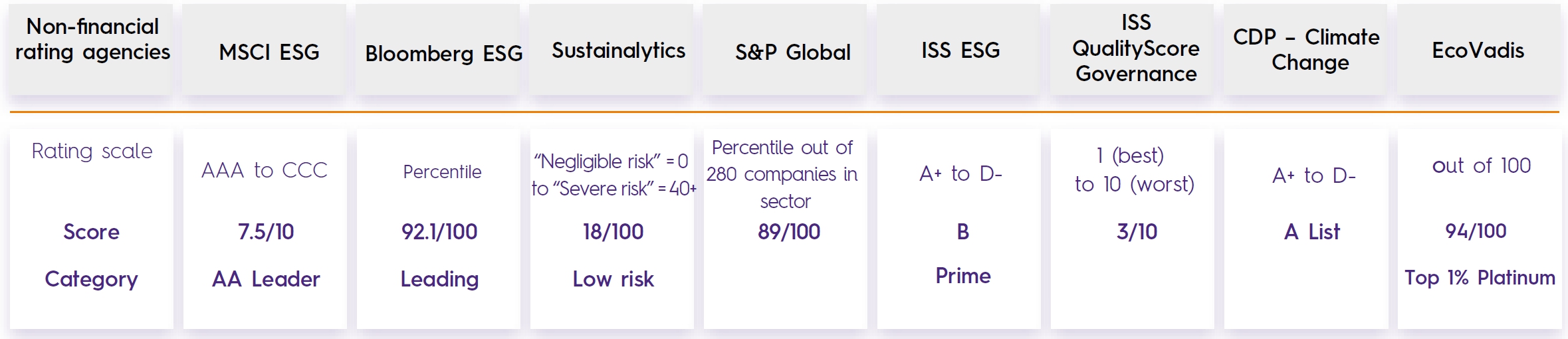
- Dialogue with investors and rating agencies
- Investor Relations Contacts
INCLUDING THE ANNUAL FINANCIAL REPORT AND MANAGEMENT REPORT CONTAINING COMPONENTS OF THE SUSTAINABILITY REPORT
The original French-language version of the Universal Registration Document was filed on 13 March 2026 with the Autorité des Marchés Financiers (AMF) in its capacity as competent authority in respect of Regulation (EU) 2017/1129, without prior approval in accordance with Article 9 of said regulation.
The original French-language version of the Universal Registration Document may be used for the purposes of an offer to the public of financial securities or the admission of financial securities to trading on a regulated market if it is supplemented by a securities note and, where applicable, a summary and any amendments made to the Universal Registration Document. The resulting combined document is approved by the AMF in accordance with Regulation (EU) 2017/1129.
This document is a free translation into English of the original French “Document d’enregistrement universel”, referred to as the “Universal Registration Document”. It is not a binding document. In the event of a conflict of interpretation, reference should be made to the French version, which is the authentic text.
-
Chairman’s message
“When I consider the development of artificial intelligence, I see additional growth opportunities for our business.”
The final part of financial year 2025 saw our business return to growth. After seven consecutive quarters of low or negative revenue growth, this is an encouraging development for the coming period.
Furthermore, our business outlook for 2026 is once again positive across most of our geographies and vertical markets.
As regards performance, we have moved into 2026 on a solid foundation. Although the operating margin on business activity declined slightly in 2025, it remained close to 10%, while free cash flow returned to its normative level and the pre-tax return on capital employed remained above 20%.
The Group thus has a strong balance sheet with little debt and, consequently, plenty of room for manoeuvre.
The environment in which we operate presents major challenges. From the political and geopolitical arena to energy and technology, they are all likely to impact our markets, our organisation, our skills and our models.
For example, the development of generative and agentic AI will have far-reaching implications both for how we operate and for the content of the services we deliver to our clients. We are readying ourselves for these changes with determination. We have made integrating AI into our production methods – for all our employees – a top priority.
We are supporting our clients as they adopt these new tools – which can boost efficiency and add value – to manage their processes. The opportunities thus unlocked are likely to give rise to new needs and drive new investment in technology. So, when I consider the development of artificial intelligence, I see additional growth opportunities for our business.
Ever since it was established nearly 60 years ago, the Group has always succeeded in adapting to changes in its environment. Embracing emerging and transformative technologies is part of our DNA. Our entrepreneurial culture and agile organisation have enabled us to make decisive choices that have made Sopra Steria what it is today: a European leader in consulting and digital services, with a particular edge when it comes to sovereignty issues.
-
Key figures
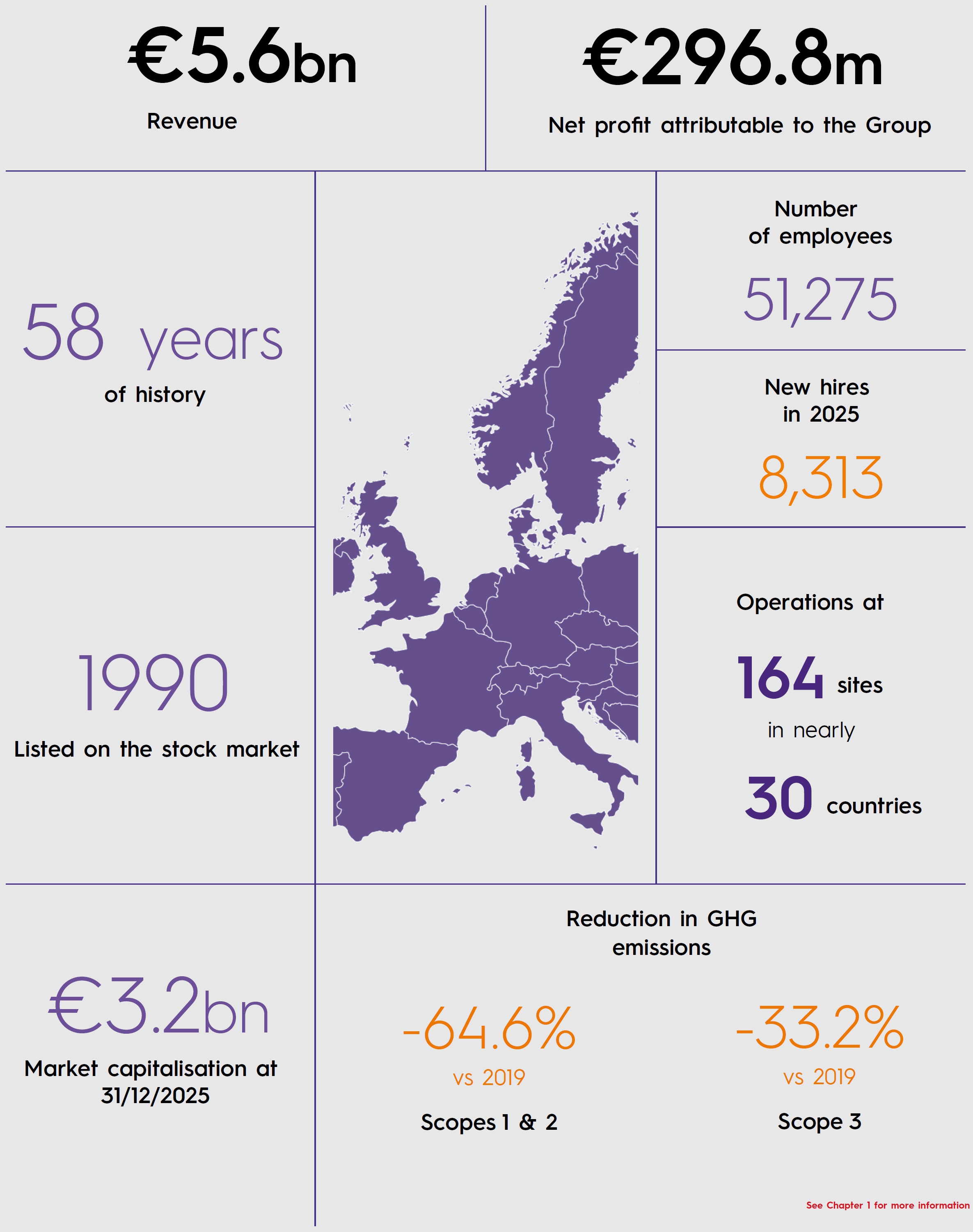
Sopra Steria, a major European digital services group, is a trusted alternative to the global tech giants. The Group harnesses cutting-edge technology to help address the challenges facing industry and society. With the pace of innovation growing ever more rapidly, there is rarely just one single, obvious solution to a given challenge.
-
Our mission and values
Our mission
Technology serves as a gateway to infinite possibilities. As fascinating as this never-ending stream of innovations is, it also raises questions as to what is actually behind the frantic race for novelty and change. Solutions are never straightforward or obvious, and there is certainly never just one way of doing things.
At Sopra Steria, our mission is to guide our clients, partners and employees towards bold choices to build a positive future by putting digital technology to work in service of humanity.
Beyond technology, we set great store by collective intelligence, in the firm belief it can help make the world a better place.
-
Business model
Extensive range of high value-added services and solutions
Our Vision
The digital revolution has triggered a radical transformation in our environment. It is speeding up changes in our clients’ business models, internal processes and information systems.
In this fast-changing environment, we bring our clients new ideas and support them in their transformation by making the most effective use of digital technology.
Our business
Sopra Steria provides end-to-end solutions to address the core business needs of large companies and organisations, helping them remain competitive and grow, supporting them throughout their digital transformation in Europe and around the world.
European digital services market
-
Strategy & Ambitions
Strategy
Sopra Steria is keen to establish itself as a European leader in digital services and position itself as a trusted, credible European alternative to global operators. The Group is developing and strengthening its foothold in four strategic markets (Public Sector, Financial Services, Defence & Security, Aeronautics & Space), where issues relating to sovereignty and responsible digital technology are becoming increasingly critical in Europe. To this end, it focuses on delivering high value-added solutions and an industrial and sustainable approach to implementing technology. The Group aims to act and innovate in such a way as to be able to influence how its stakeholders make use of technology.
-
Governance
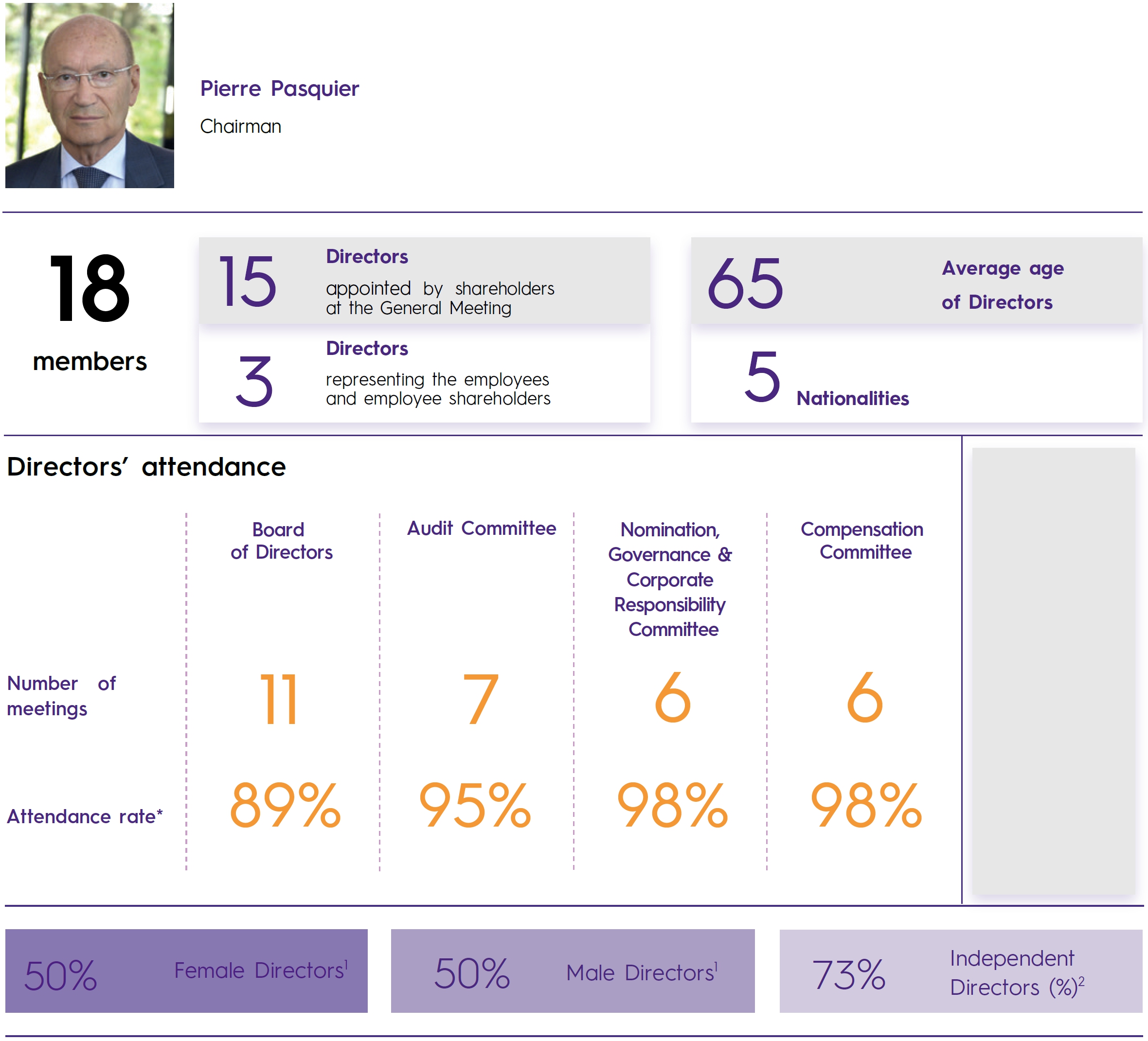
Board of Directors
The Company has identified nine key competencies that it would like to be represented within the Board of Directors.
Top 5 areas of expertise and experience on the Board of Directors
- Knowledge of the digital and consulting sectors, ability to promote technological innovation
- International teams and organisations
- Finance, risk management and control
- Human resources and social dialogue (CSR)
- Mergers and acquisitions
Other skills and experience represented in the Board of Directors
-
Sustainability reporting
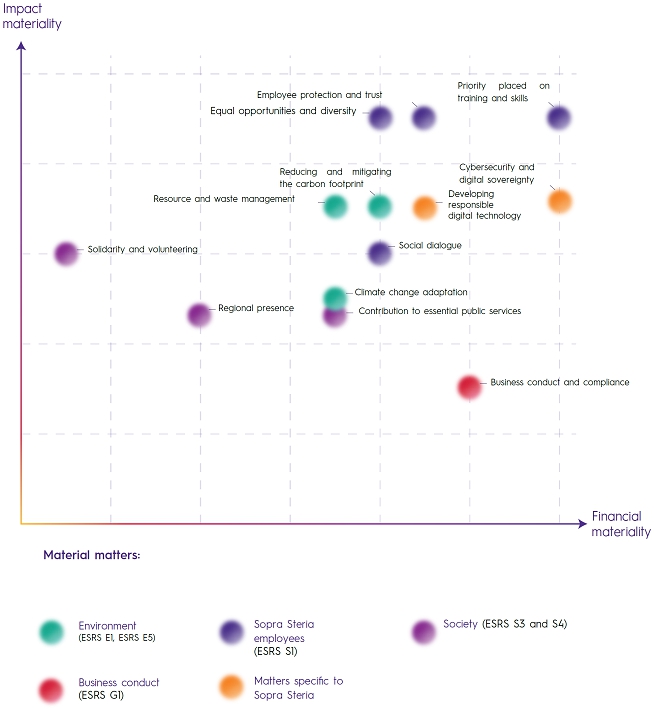
13 important matters with regard to impact materiality and/or financial materiality
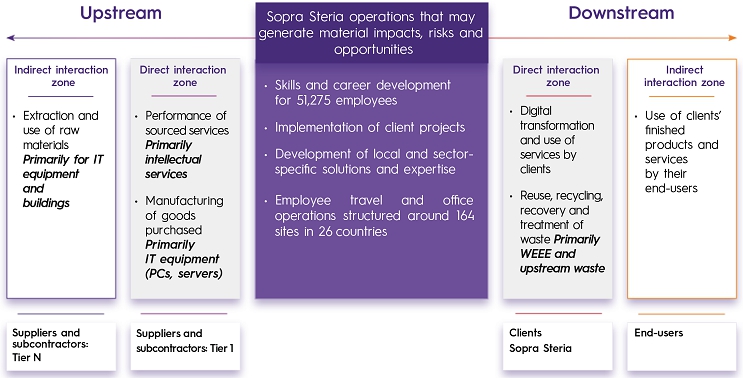
Sopra Steria has conducted a double materiality assessment,1 the outcome of which has confirmed the Company’s priorities, some of them long-standing, while providing a fresh perspective on the value chain.
These priorities reflect Sopra Steria’s identity, strategy and business model, which are intrinsically linked to the quality of its relationships with its partners and the role of digital technology in society.
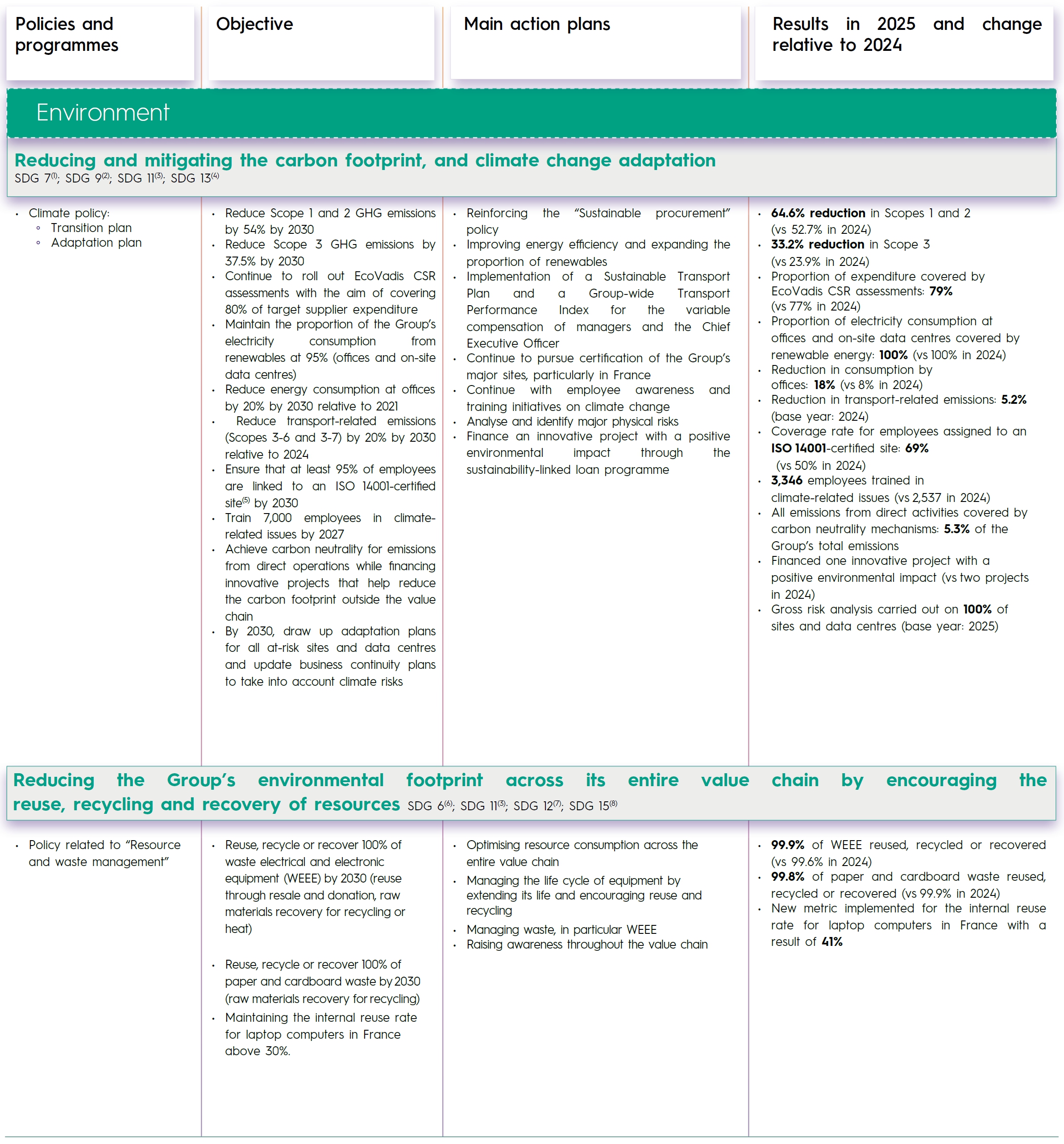
- Climate change adaptation (ESRS E1)
- Reducing and mitigating the carbon footprint (ESRS E1)
- Resource and waste management (ESRS E5)
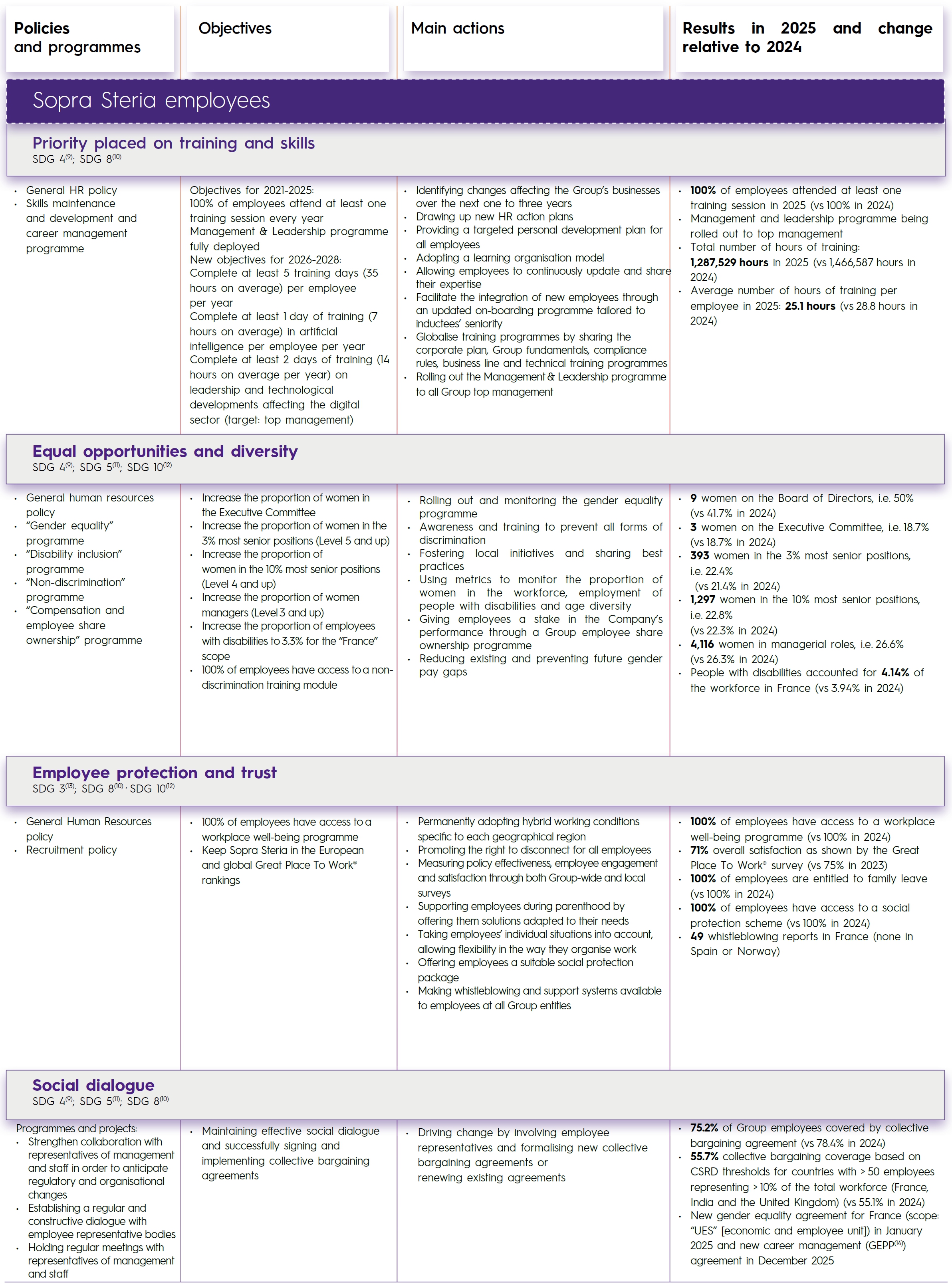
- Priority placed on training and skills (ESRS S1)
- Equal opportunities and diversity (ESRS S1)
- Employee protection and trust (ESRS S1)
- Social dialogue (ESRS S1)
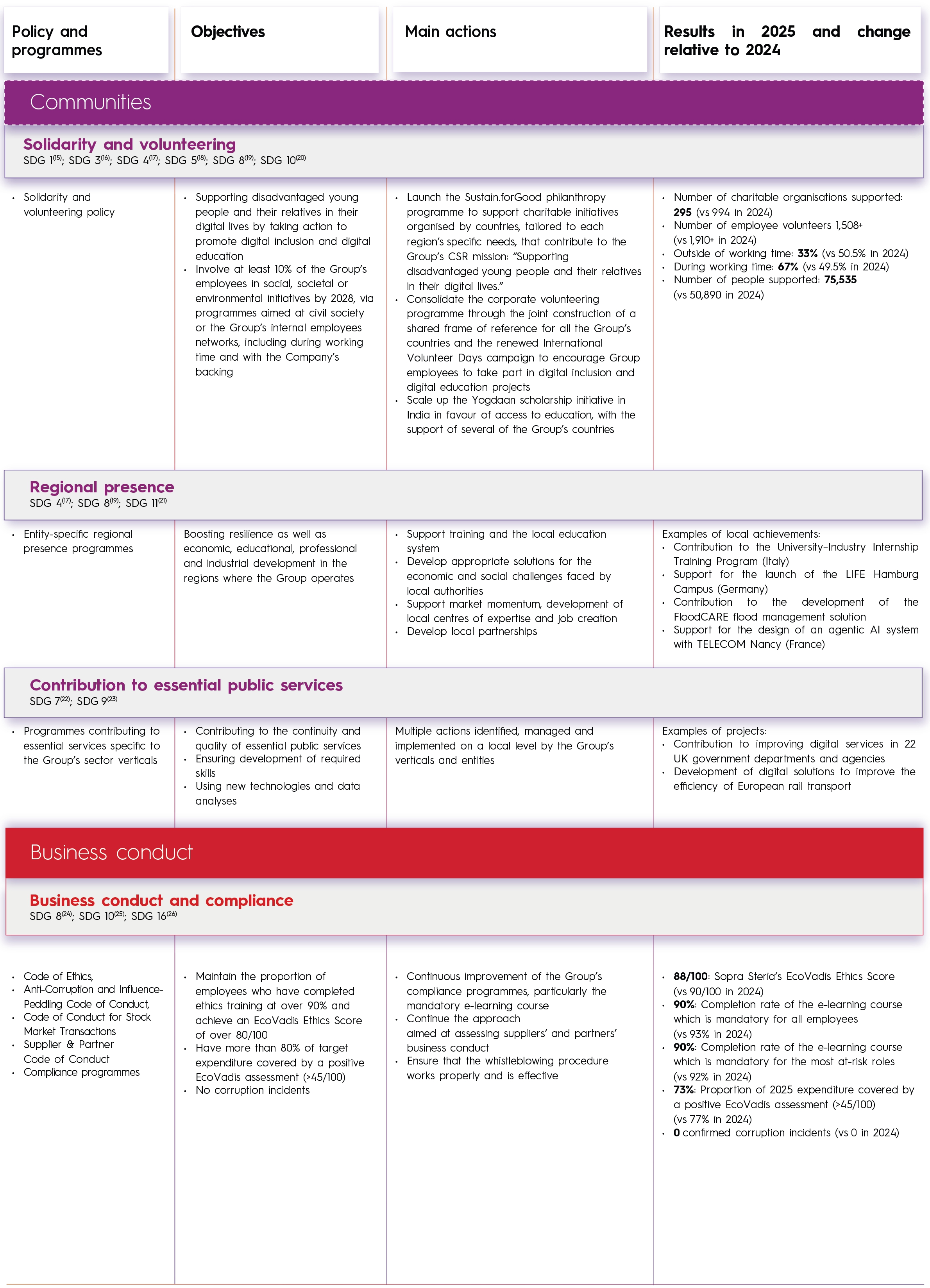
- Solidarity and volunteering (ESRS S3)
- Regional presence (ESRS S3)
- Contribution to essential public services (ESRS S4)
- Business conduct and compliance (ESRS G1)
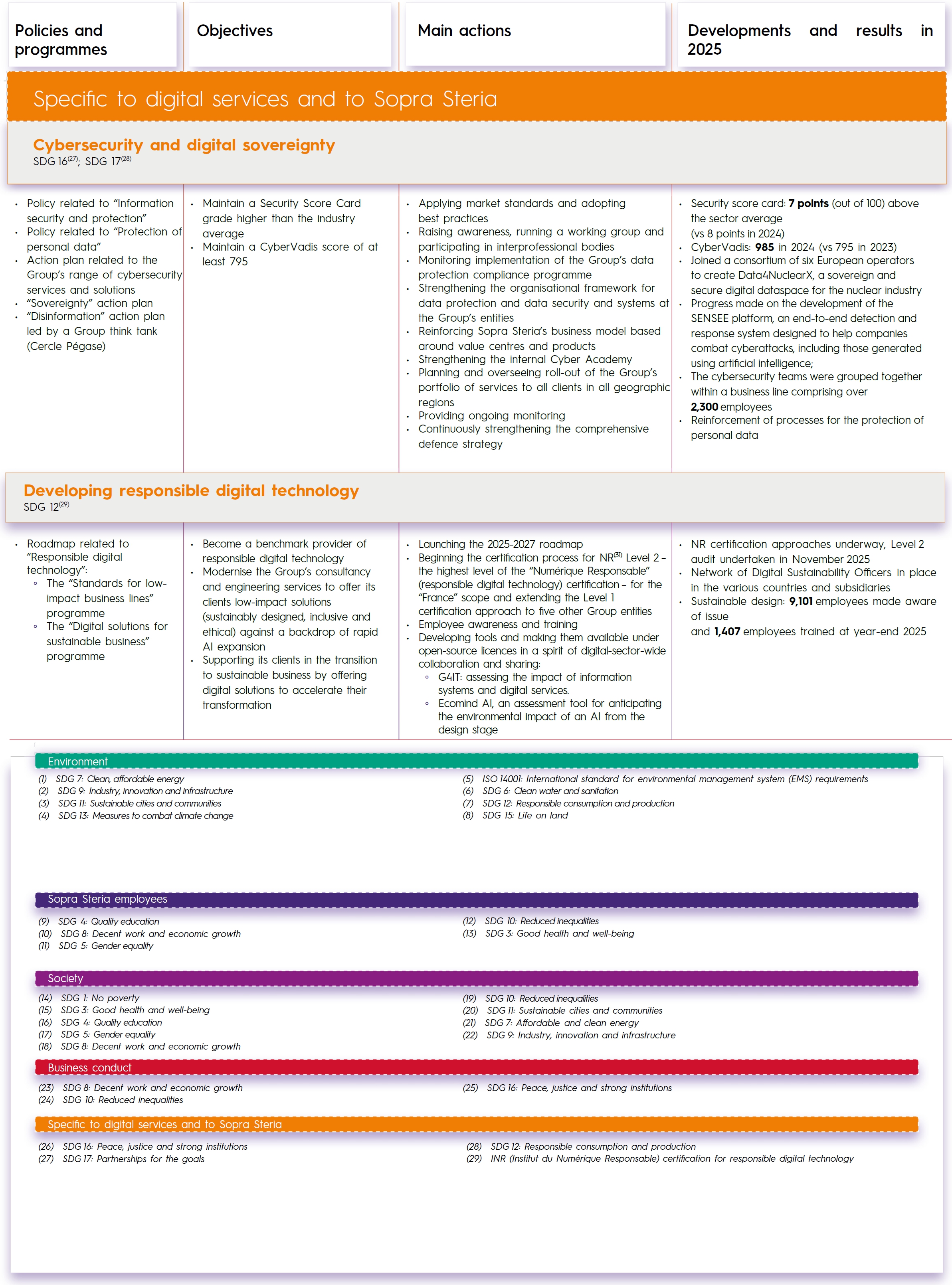
- Cybersecurity and digital sovereignty
- Developing responsible digital technology
-
Our direct and indirect contribution to the 17 United Nations SDGs
Sopra Steria is fully committed to managing its sustainability matters to ensure that it delivers as a responsible corporate citizen and meets its stakeholders’ expectations. The results achieved are testament to the Group’s tangible commitment to employees, the environment and society.
Commitment to employees
AI training programme for all employees totaling 31,537 hours of training, with 14,897 employees trained in 2025
-
Financial performance
-
 Investor Relations Contacts
 -
1. Business and strategy overview
- 1. Sopra Steria Group at a glance
- 2. History of Sopra Steria Group
- 3. Digital services market
- 4. Sopra Steria’s activities
- 5. Strategy and objectives
- 6. Results for full-year 2025
- 7. Subsequent events
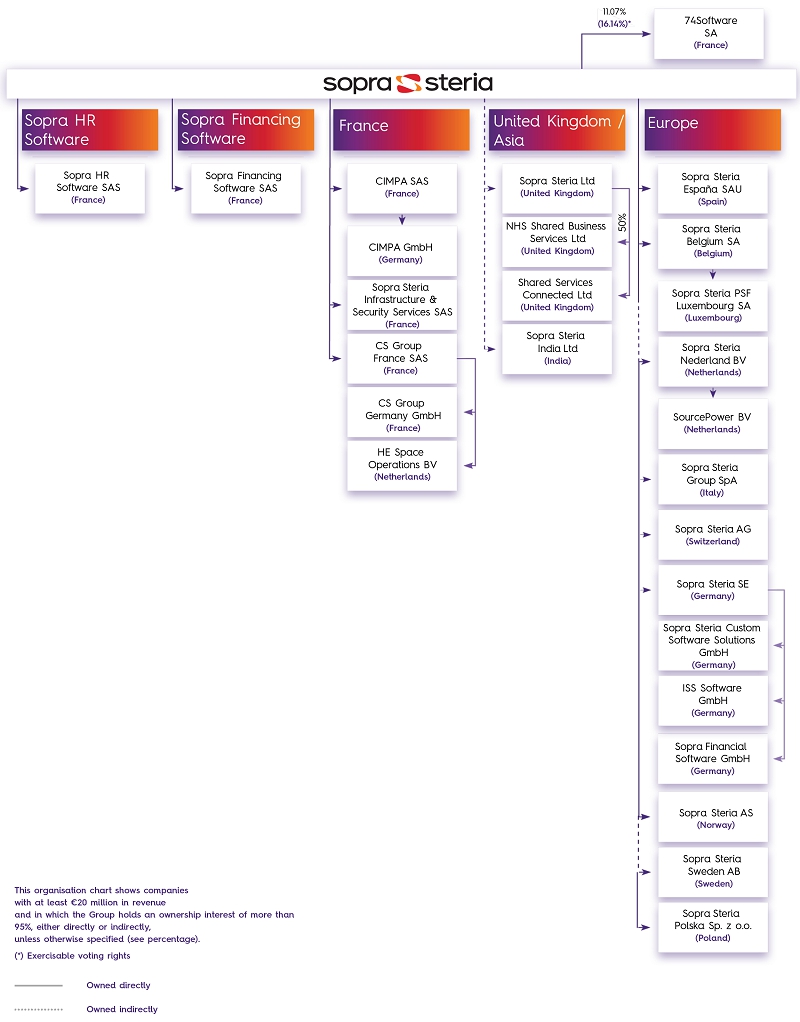
- 8. Simplified Group structure at 31 December 2025
- 9. Group organisation
1. Sopra Steria Group at a glance
Until 2 September 2014, the name of the Company was “Sopra Group”. As a result of the successful public exchange offer made by Sopra Group for the shares of Groupe Steria SCA (see press release dated 6 August 2014), the Board of Directors met on 3 September 2014, with Pierre Pasquier presiding, and recorded the entry into effect of several resolutions conditionally adopted at the General Meeting of 27 June 2014.
Among the consequences of the implementation of these resolutions was the change in the corporate name from “Sopra Group” to “Sopra Steria Group”.
Registered office : PAE Les Glaisins, Annecy-le-Vieux, 74940 Annecy – France. Phone: +33(0)4 50 33 30 30
Company website: https://www.soprasteria.com
Date of incorporation: 5 January 1968, with a term of fifty years as from 25 January 1968, renewed at the General Meeting of 19 June 2012 for a subsequent term of ninety-nine years.
In France and elsewhere, to provide all advice, expertise, studies and learning related to business organisation and information processing, all computer analyses and programming and to perform all custom work.
The design and creation of automation and management systems, including the purchase and assembly of components and equipment, and appropriate software.
The creation or acquisition of and the operation of other businesses or establishments of a similar type.
And, generally, all commercial or financial transactions, movable or immovable, directly or indirectly related to said corporate purpose or in partnership or in association with other companies or persons” (Article 2 of the Articles of Association).
Explanation of the changes to the name of the entity presenting the financial statements after the end of the previous reporting period: N/A
“An amount of at least five per cent shall be deducted from the profit for the financial year, reduced by prior losses, if any, in order to constitute the statutory reserve fund. Such deduction shall cease to be mandatory when the amount in the statutory reserve fund is equal to one-tenth of the share capital.
Distributable profit comprises the profit for the financial year less any losses carried forward and amounts allocated to reserves, pursuant to the law and the Articles of Association, plus retained earnings.
The General Meeting may deduct from this profit all amounts that it deems appropriate for allocation to all discretionary, ordinary or extraordinary reserves, or to retained earnings.
The balance, if any, is apportioned at the General Meeting between all shareholders in proportion to the number of shares that they own.
The General Meeting may also decide to distribute amounts deducted from the reserves at its disposal, expressly indicating the reserve items from which the deductions are made. However, dividends shall first be withdrawn from the profits for the financial year.” (Excerpt from Article 37 of the Articles of Association)
-
2. History of Sopra Steria Group
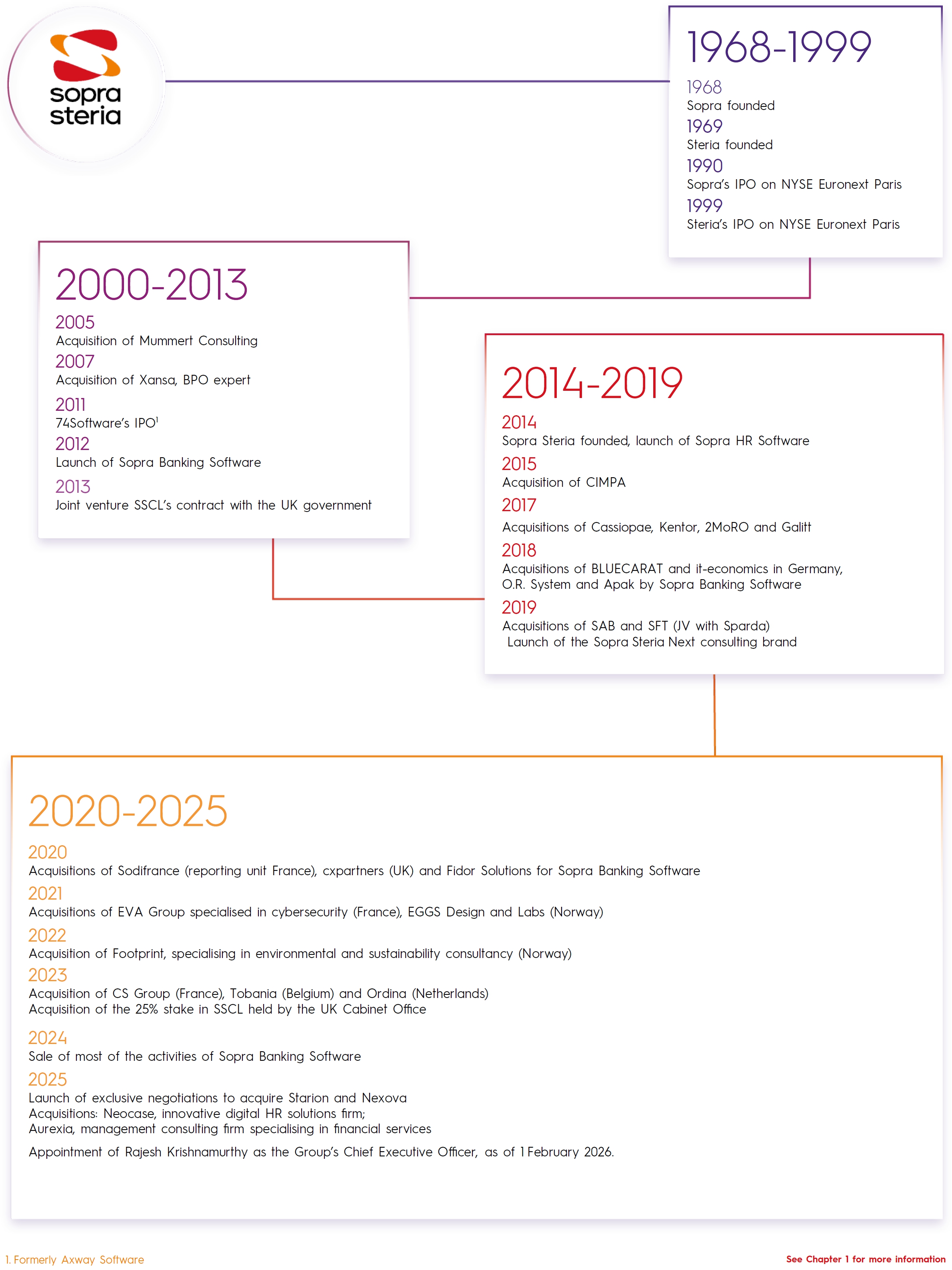
Entrepreneurial spirit, an ever-present characteristic of the Group since its inception, remains the lifeblood of its corporate project. A commitment to collective endeavour, initiative-taking and an emphasis on making a difference are the pillars that allow us to achieve our clients’ objectives.We are the leading partner to businesses and organisations that play a crucial role in helping society to run smoothly. As such, we are constantly striving to ensure that our impact is a positive one, both for society and from a business perspective.
On 17 December 2025, Sopra Steria announced that it had entered into exclusive negotiations to acquire Starion and Nexova on behalf of its subsidiary CS Group. This acquisition is aimed at creating a leading European industrial-scale player in sovereign and secure digital services for the space and cybersecurity sectors.
On 1 December 2025, Sopra Steria announced that it had finalised the acquisition – plans for which had been announced on 24 September 2025 – of Neocase, an innovative digital HR solutions firm, aimed at bolstering the Sopra HR business.
On 2 May 2025, the Group completes its acquisition of Aurexia, a management consulting firm specialising in financial services.
2024 marks the finalisation of the sale of most of the activities of Sopra Banking Software, reflecting a strategic refocusing on consulting and digital services. This pivot strengthens the Group’s commitment to its goal of playing a leading role in Europe’s digital transformation.
In 2023, Sopra Steria acquires Tobania in Belgium, CS Group in France and Ordina in the Netherlands. On 6 November 2023, Shared Services Connected Ltd (SSCL) becomes a wholly owned subsidiary of Sopra Steria following the acquisition of the 25% stake in the SSCL joint venture held by the UK Cabinet Office.
In 2022, the Group acquires Footprint, a Norwegian consulting firm specialising in environmental and sustainability issues.
The Group also acquires two other companies in 2021: EGGS Design, which specialises in digital service design and has locations in Norway’s four biggest cities (Oslo, Bergen, Trondheim and Stavanger) as well as in Denmark (Copenhagen), and Labs, a Norwegian user experience consulting firm.
In 2021, Sopra Steria is bolstered by the acquisition of French cybersecurity firm EVA Group. This acquisition is a key step toward positioning Sopra Steria as one of the top players in the French cybersecurity market.
Lastly, Fidor Solutions, the software subsidiary of next-generation bank Fidor Bank specialising in digital banking solutions, joins the Group on 31 December 2020. With this acquisition, Sopra Banking Software significantly accelerates the pace of its development, in particular by augmenting user features as part of its SBP Digital Banking Suite. In the United Kingdom, Sopra Steria acquires cxpartners, bolstering its expertise in user experience and ergonomic design. With the acquisition of Sodifrance in 2020, the Group creates a market leader in digital services for insurers and social security providers.
At the end of 2019, Sopra Steria also bolsters its operations and consolidates its strategy by launching its new digital transformation consulting brand, Sopra Steria Next. In 2019, Sopra Steria takes two important steps forward in the core banking market: the acquisition of SAB, finalised on 7 August 2020, and the partnership with Sparda banks in Germany.
In 2018, the Group acquires German IT services company BLUECARAT to strengthen its position in Germany and offer new growth opportunities for its local subsidiary, as well as Apak to expand its range of lending solutions. Following the acquisition of software developer Cassiopae, finalised in January 2017, three new companies join Sopra Steria Group in 2017: Kentor, 2MoRO and Galitt.
The acquisition of CIMPA in October 2015 boosts Sopra Steria’s presence in the product lifecycle management (PLM) market.
Complementing each other in business strengths, strategic verticals and geographies while sharing a similar corporate culture, Sopra and Steria merge to give birth to Sopra Steria Group.
In 2001, the Internet bubble bursts, accelerating market changes. Clients are looking for global players capable of assisting them in transforming their businesses.
Steria rises to these challenges by completing major strategic acquisitions, including Bull’s IT services business in Europe in 2001, Mummert Consulting in Germany in 2005 and the business process outsourcing (BPO) expert Xansa in 2007.
Given the maturity of the IT services market, Sopra reexamines its fundamentals and refocuses on systems integration and software development. Sopra completes its initial public offering in 1990. Steria prioritises the rationalisation and industrialisation of processes to reorganise its functional structure. After landing a number of major deals, Steria proceeds with its initial public offering in 1999.
Sopra combines internal and external growth to consolidate its European expansion and its areas of expertise: consulting, systems integration and solutions development. Axway,(1) a subsidiary formed by bringing together the Group’s software infrastructure divisions, is floated in 2011.
Sopra and Steria are two distinct entities, making their way forward in the emerging IT services industry. They both strive to meet the needs of major clients with innovative products and services. Sopra invests in software development and opens new locations in various markets. At the same time, Steria racks up several contract wins in the public sector.
-
3. Digital services market
Main markets – Competitive environment of the digital services sector
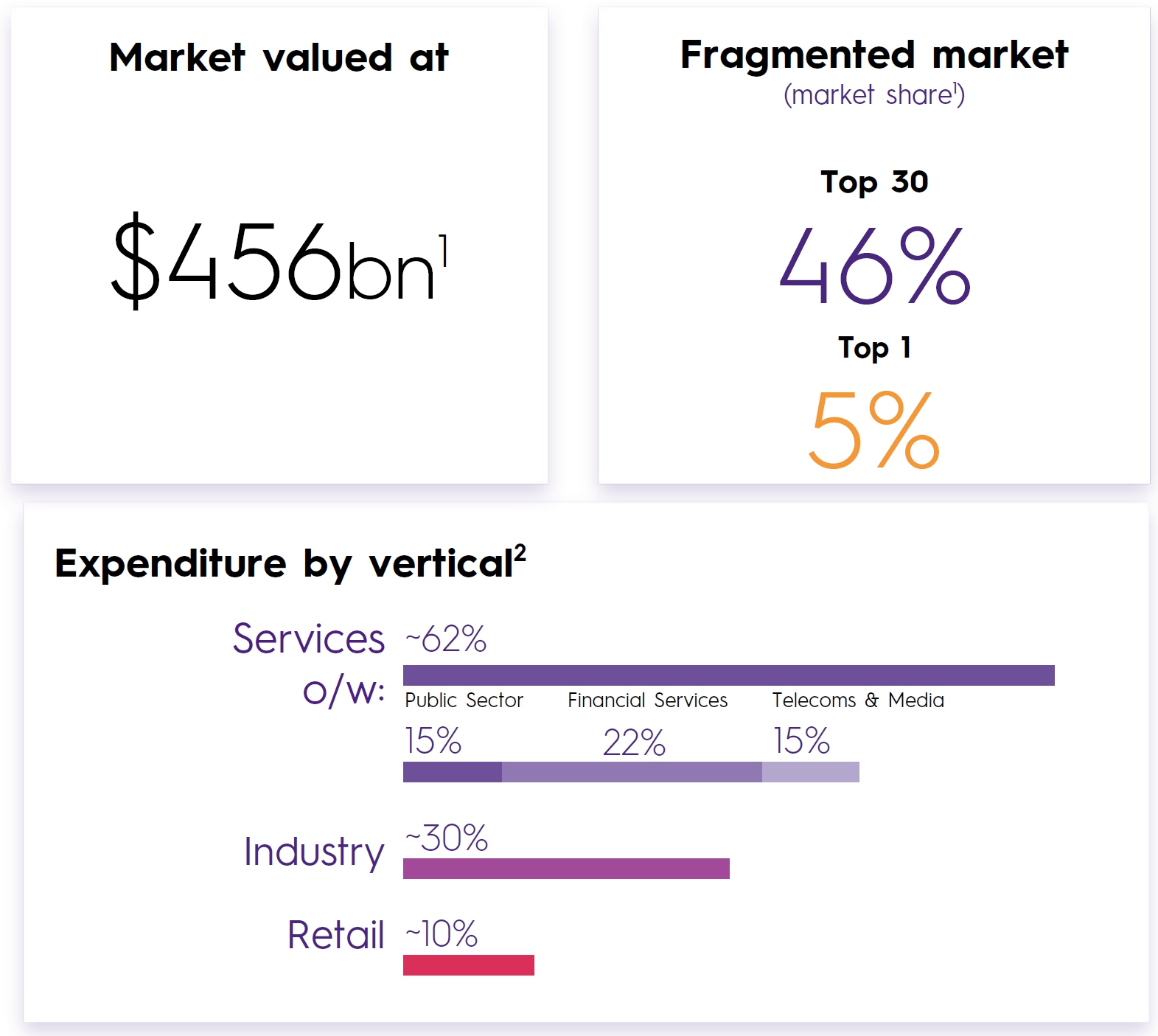
Three countries (the United Kingdom, Germany and France) account for 58.07% of IT services spending.(1)
The IT services market remains fragmented despite some consolidation, with the leading player in the European market holding a 5% share(3).
Against this backdrop, Sopra Steria is one of the 9 largest digital services companies operating in Europe (excluding software and hyperscalers) with an average market share of just under 2%.
In France (second in the market) and Norway (third in the market), the Group’s market share is over 5%. In the other major European countries, its market share is around 1%.
Sopra Steria’s main competitors in Europe are Accenture, Atos, Capgemini, CGI, DXC and IBM, all of which are present worldwide. It also faces competition from Indian groups, chiefly in the United Kingdom (such as TCS, Cognizant, Wipro and Infosys), and local companies with a strong regional presence (Indra in Spain, Fujitsu in the United Kingdom, Tietoevry in Scandinavia, etc.).
-
4. Sopra Steria’s activities
4.1. A European leader in digital technology
Sopra Steria, a major tech player in Europe, is recognised for its consulting, digital services and solutions. It helps its clients drive their digital transformation and obtain tangible and sustainable benefits thanks to the most comprehensive portfolio of services and solutions on the market, encompassing consulting and systems integration, solutions, digital platform services, cybersecurity and business process services.
The Group provides end-to-end solutions to make large companies and organisations more competitive by combining in-depth knowledge of a wide range of business sectors and innovative technologies with a fully collaborative approach: from strategic analysis, programme definition and implementation, and IT infrastructure transformation and operation, to designing and implementing solutions and outsourcing business processes.
For Sopra Steria, helping clients succeed in their digital transformation means addressing their strategic and business priorities through digital initiatives powered by an end-to-end range of services and solutions. Thanks to very close relationships with its clients and its multi-disciplinary teams, the Group is able to continually innovate to guarantee that its services and solutions remain relevant to the strategic priorities of each of its vertical markets.
Sopra Steria Group is also the preferred partner of 74Software (formerly Axway Software), whose exchange and digital enablement platforms play an important role in modernising information systems and opening them up to digital technology.
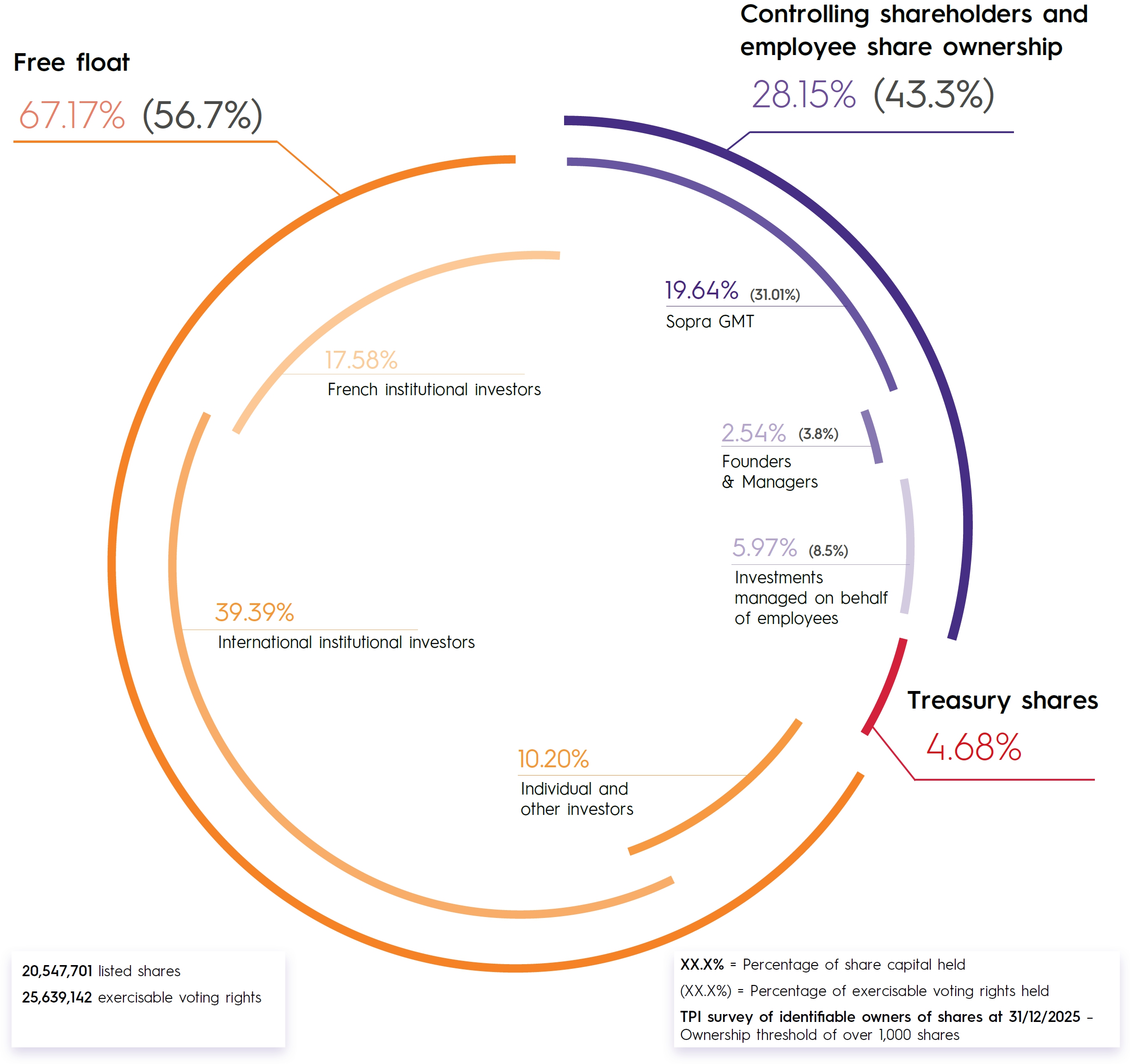
The Group is independent; as part of the agreement put in place with the founders and managers, Sopra GMT controls 22.2% of share capital and 33.6% of theoretical voting rights. Sopra Steria has nearly 51,275 employees in nearly 30 countries, all working tirelessly to shape Europe’s digital future.
Sopra Steria Next, the Group’s consulting brand, is a leading consulting firm. Sopra Steria Next has over 40 years’ experience in business and technological consultancy for large companies and public bodies, with over 3,500 consultants in France and Europe. Its aim is to accelerate the development and competitiveness of its clients by supporting them in their digital transformation while taking into account their sustainability priorities, in keeping with our clients’ corporate responsibility policies. This support involves understanding clients’ business issues using substantial sector-specific expertise, and then working to design transformation roadmaps (business processes, data architecture, change management, etc.) to make the most of new digital technologies such as data and AI.(1) It involves supporting the IT departments of our clients, grasping their new challenges and assisting them with their overall transformation projects as well as the modernisation of their legacy systems.
Systems integration is Sopra Steria’s original core business and covers all aspects of the information system life cycle and major transformation programmes. Sopra Steria is equipped to address the full range of its clients’ software asset needs:
The Group undertakes to design and deliver systems in line with business requirements that are flexible and adapted to the new requirements of digital transformation as well as sector-specific regulatory constraints. This is made possible by working closely with the Sopra Steria Next teams.
In addition to standard information systems maintenance, Sopra Steria takes a continuous transformation approach to these systems to guarantee optimised operational efficiency for its clients, suited to changes in their business. The transformation approach includes a well-equipped and documented procedure making it possible to combine the issues involved in reducing the time to market with improved competitiveness and continuity of service.
Once the systems and technologies are implemented, the information system gives access to reliable, relevant and critical data and services, offering better analysis of user satisfaction and optimisation of business performance.
With the increasing number of diverse data sources relating to fundamental changes in use, data is more valuable to the Company than ever. To increase the value of this data, Sopra Steria has developed specific know-how and expertise to manage a significant amount of data and associated skills (data science, smart machines, automation, artificial intelligence) by integrating them into a global solution, securing the data regardless of its origin (mobile devices, smart objects, data privacy, the cloud, multimodal and multichannel systems, etc.) and using the data by means of contextualised algorithms, taking into account associated ethics.
The Group’s systems integration range thus addresses the challenges posed by both the obsolescence and modernisation of information systems, ensuring optimal flexibility and value creation.
CIMPA provides comprehensive expertise via its PLM range, which covers all the various facets of PLM services:
- PLM strategy creation or optimisation;
- deployment of strategy-related tools, processes or methods;
- user training and support.
With over 30 years of experience and more than 6,500 dedicated experts, Sopra Steria is helping its clients more quickly modernise their infrastructure and rolling out secure, high-performance hybrid cloud solutions tailored to clients’ operational requirements.As the leader in hybrid IT, we harness a combination of industrialisation, automation and advanced AI integration to make systems more resilient, optimise costs and control risks.
This transformation is unfolding in an environment in which priorities around sovereignty (data protection, technological independence, regulatory compliance) have become decisive factors. Sopra Steria helps its clients choose, implement and operate sovereign architectures, guaranteeing complete control over their critical assets.
By integrating AI into our operations, we are able to improve availability, shorten time to remediate and ensure greater operational control. Our global model (Europe + India) and our end-to-end range of products and services (from strategic technology consulting through to managed services) directly impact performance by reducing total cost of ownership (TCO), improving continuity of service and accelerating transformation programmes.
- Infrastructure: Modernisation and automation, supported by generative and agentic AI, to maximise efficiency and optimise resources.
- Cloud: Hybrid and native cloud platforms that meet security and sovereignty requirements.
- Modern work: Productive working environments that harness omnichannel solutions and AI to facilitate collaborative working and drive improved performance.
- Application operations: Reliable, AI-augmented operations incorporating advanced observability to maximise availability, performance and real-time visibility.
- Connectivity: Secure, agile networks designed to support growth and manage risks.
- Consulting: Technology trajectories that create competitive advantage.
- Expertise & Solutions: Tried and tested solutions and architectures to accelerate business transformation.
- Managed Services: Industrialised, automated and AI-augmented managed services that reduce costs and improve service quality, combining governance close to where clients are and specialised service centres with 24/7 availability.
With over 2,300 experts and several state-of-the-art cybersecurity centres in Europe and worldwide, Sopra Steria has an international reach as a European leader in protecting critical systems and sensitive information assets for major institutional and private clients.
We have developed a portfolio of services that enable our clients to address their strategic priorities as they face the threat of increasingly frequent and sophisticated attacks.
This range of services covers the entire cybersecurity value chain, from risk prevention and the safeguarding of sensitive information to attack detection, response and remediation:
- Prevention: Drawing up a cybersecurity strategy that is adapted to the risks of the business and complies with the regulations in force, and spreading a culture of security within the organisation;
- Protection: Implementing strategies and solutions to protect IT systems, using secure environments in accordance with best practices, to strengthen cyber resilience as both a preventive and a responsive posture;
- Detection & Response: Continuously adapting the defence strategy based on actual threats, mobilising all stakeholders (detection, response, cyber threat intelligence, investigation, vulnerability management, etc.) to work together towards a shared goal – recognising attackers and countering cyberattacks.
Lastly, we have developed specific ranges of services and solutions designed to address our clients’ current priority concerns: crisis management and cyber resilience, cloud security, industrial security and AI security.
Sopra Steria’s business model based around value centres (Prevention – Protection – Detection & Response) and products is designed to maximise the cyber value of the services delivered by the Group. It can be rolled out locally, through service centres (in France, nearshore in Poland and offshore in India) or in hybrid form, with a “follow-the-sun” capability to support our clients at all times.
Sopra Steria offers its business expertise to clients via packaged solutions in three areas: banks and other financial institutions via Sopra Financing Software, human resources via Sopra HR Software, and real estate owners and agents with its property management solutions. The Group offers its clients the most powerful solutions, in line with their objectives and representing the state of the art in terms of technology, know-how and expertise in each of these three areas.
The role of Sopra Financing Software is to provide specialised finance management solutions to participants in this market – major financial institutions, subsidiaries of the major banking groups dedicated to this activity and also certain industrial groups’ financial captives.
- Real Estate Finance with a special focus on the French market;
- Development Finance including multilateral international institutions (World Bank, development banks in Asia) and also regional institutions (South America, etc.) or a specific development driver (education, green finance, etc.);
- Equipment Finance principally in Europe and the United States to serve the B2B financing needs in a high-growth market;
- Auto & Consumer Finance with a strategy of supporting its existing clients in their various geographical territories.
- Europe with a focus on France, Spain, Germany and Benelux, while handling operations for existing clients in other countries (Portugal, Romania, etc.)
- The United States with a goal of expanding in the region, including Canada and also Mexico in the major development bank and equipment finance segment.
Sopra Financing Software maintains a presence in Asia to support existing clients, particularly in the auto finance market.
In addition to its business solutions, Sopra Financing Software offers consulting, implementation, maintenance and training services.
Sopra Steria Group also provides human resource management solutions via Sopra HR Software (a wholly owned subsidiary of Sopra Steria). Sopra HR Software is present in 10 countries, providing comprehensive HR solutions perfectly suited to the needs of human resources departments. Sopra HR Software currently has a workforce of 2,000 people and manages the payrolls of 900 clients with over 12 million employees.
Sopra HR Software is a partner for successful digital transformation of companies and anticipates new generations of HR solutions.
In December 2025, Sopra HR cemented its position as a global human resources player by acquiring Neocase, an innovative French developer of digital HR solutions in order to offer an end-to-end range of HR services for employees (HR Service Delivery), with an optimal employee experience.
The solutions offered by Sopra HR Software are based on the most innovative business practices and cover a wide range of functions, including core HR, payroll, time and activity tracking, talent management, employee experience and HR analytics. The range is based on two product lines, HR Access® and Pléiades®, aimed at large and medium-sized public or private organisations in any sector and of varying organisational complexity, irrespective of their location. To make the most of the advantages offered by AI and in response to new working patterns, the new generation of Sopra HR 4YOU solutions offers a fully digital HR space that helps businesses stay closely connected with their employees and optimise HR performance and the quality of HR services.
- The Neocase solution will continue to be rolled out and scaled up to strengthen the company’s positioning as a leading international player in HR service delivery.
- New functionality from Neocase will gradually be integrated into Sopra HR 4YOU solutions.
Sopra HR Software offers a number of services linked to its range of solutions and its HR ecosystem. Sopra HR Software supports its clients throughout their projects, from consulting through to implementation, including staff training, maintenance and business process services (BPS).
Sopra HR Software implements its own solutions either on-premise or in the cloud and also offers a wide range of managed services.
Sopra Real Estate Software is the leading developer, distributor, integrator, and service manager of property management solutions in France. It offers a range of comprehensive solutions for enterprise resource planning (ERP) systems tailored to real estate needs (asset management, rental management, service management including services to occupants, and more). Sopra Steria offers major public- and private-sector real estate players (institutional investors, social housing operators, property management firms, property managers and major users) comprehensive digital solutions and services providing a huge range of functionality.
Sopra Real Estate Software’s 600 real estate experts help our 400 clients realise their digital transformation so as to boost their return on assets, optimise practices and strengthen relationships with tenants and service providers.
Sopra Real Estate Software also offers a technical real estate asset management and maintenance solution that is particularly well suited to helping our clients better manage their energy performance.
From property management to building information management, we offer a range of end-to-end solutions built around providing digital real estate services to tenants and partners.
Sopra Real Estate Software supports its clients with an end-to-end range of services based on its Solutions, from consulting to integration and managed services.
In 2024, Sopra Real Estate Software launched a major programme to transform its range to include a SaaS element and a platform and marketplace approach geared towards serving clients’ business needs while delivering sustainable performance.
Sopra Steria offers a full range of business services and business process services (BPS) solutions. These include consulting based on technological and business expertise, target operating model design, transformation through the development of transition and transformation strategies, and delivery of managed services. Its vast experience in BPS is underpinned by its end-to-end digital and technological expertise incorporating next-generation technologies such as artificial intelligence (AI), hyperautomation, robotics and natural language processing (NLP), all powered by data to drive targeted innovation.
Sopra Steria manages two of Europe’s largest shared services organisations: Shared Services Connected Limited (SSCL) and NHS Shared Business Services (NHS SBS). Originally formed in 2013 as a joint venture between Sopra Steria and the UK Cabinet Office, SSCL became a wholly owned subsidiary of Sopra Steria in Q4 2023. NHS SBS – a joint venture with the UK Department of Health and Social Care that began in 2002 – provides essential support services to NHS trusts and other UK health organisations. These leaders in shared services enable Sopra Steria to offer key UK government departments, agencies and police forces a wide range of business support solutions.
The Group’s BPS ranges are closely connected with digital transformation and the integration of cutting-edge technologies. Sopra Steria leverages AI to transform business operations and improve the user experience.
We believe AI is key to the creation of hybrid intelligence, where humans and technology work together to achieve more productive outcomes than either could achieve on their own.
In 2025, the Group entered into a major new BPS contract with National Savings & Investments (NS&I) to deliver AI solutions and modernise interactions with citizens. It also brought into service ISFE2 (Integrated Single Finance Environment for NHS England), a new SaaS platform that is the biggest of its kind in Europe. This new platform makes use of agentic AI, robotics, chatbots and natural language processing to improve process delivery, empower NHS staff and encourage innovative approaches to meet the challenges facing clients. This programme is expected to generate several billion pounds in savings for the NHS.
-
5. Strategy and objectives
5.1. Strong, original positioning in Europe
Sopra Steria aims to be a major European player in digital transformation, playing an active role in helping build a sovereign digital Europe and helping large businesses and organisations in Europe remain competitive and grow.
The Group enables them to make the best use of digital technology to innovate, transform their activities (business as well as operating models), protect their strategic interests and optimise their performance.
Sopra Steria champions an ambitious, value-creating vision that brings together employees, clients, shareholders and partners, with world-class business performance underpinned by the values and goals of responsible digital technology.
- control over its independence and a business philosophy that goes beyond financial performance to recognise the social importance of being a responsible employer and corporate citizen;
- operating as a digital transformation professional, underpinned by a comprehensive range of services and solutions that combines an in-depth understanding of business- and sector-specific priorities with cutting-edge expertise across the full spectrum of digital and emerging technologies. The Group offers clients expertise spanning the full spectrum of digital transformation: it advises (consulting), builds (integration), operates (DPS – formerly infrastructure management – and BPS) and secures (cybersecurity);
- working with clients to develop and secure Europe’s digital sovereignty. Sopra Steria is the partner of choice for digital sovereignty issues, implementing IT solutions that strengthen clients’ technological sovereignty and/or advising them on how to strengthen it;
- a focus on priority sectors and clients and leading positions in priority verticals (Financial Services, Aerospace, Defence & Security, Public Sector);
- providing expertise in digital technologies. The Group is continually investing in the exploration of new ideas and expertise in architectures, and in emerging digital, cloud and AI technologies and uses. Special efforts are being made to establish targeted partnerships with leading players in the digital ecosystem;
- an ambition of influencing the design, development and use of digital technology (as a catalyst and aggregator);
- a special drive to roll out responsible digital technology for projects that is more sustainable and more accessible;
- close relationships with employees, with people and the management approach at the heart of the Company’s strategy (promoting protection and trust; supporting human development; encouraging accountability by valuing high standards and critical thinking).
-
6. Results for full-year 2025
6.1. Comments on performance in 2025
“I joined Sopra Steria with the firm conviction that the Group has solid fundamentals, a key differentiator in its European positioning, and clear potential with regard to growth and profitability.
Financial year 2025 unfolded in a challenging environment. Against this backdrop, Sopra Steria’s return to organic growth in the fourth quarter, 18% growth in net profit attributable to the Group and robust cash flow reflect the resilience of our business model and our teams’ high-quality work. We currently have a solid presence in strategic sectors including defence, aeronautics, the public sector and financial services, and are ramping up in consulting as well as generative and agentic artificial intelligence. These positions are key levers to gradually improve our growth trajectory and margin.
Our solid balance sheet and moderate financial leverage also enable us to enter this new phase with disciplined capital allocation and selectivity in our investments.
We are approaching 2026 with a clear path: securing a lasting return to positive organic growth, improving our operating margin and maintaining a high cash flow, in line with our medium-term targets. Our priority is to drive long-term value creation for our shareholders and for all our stakeholders.”
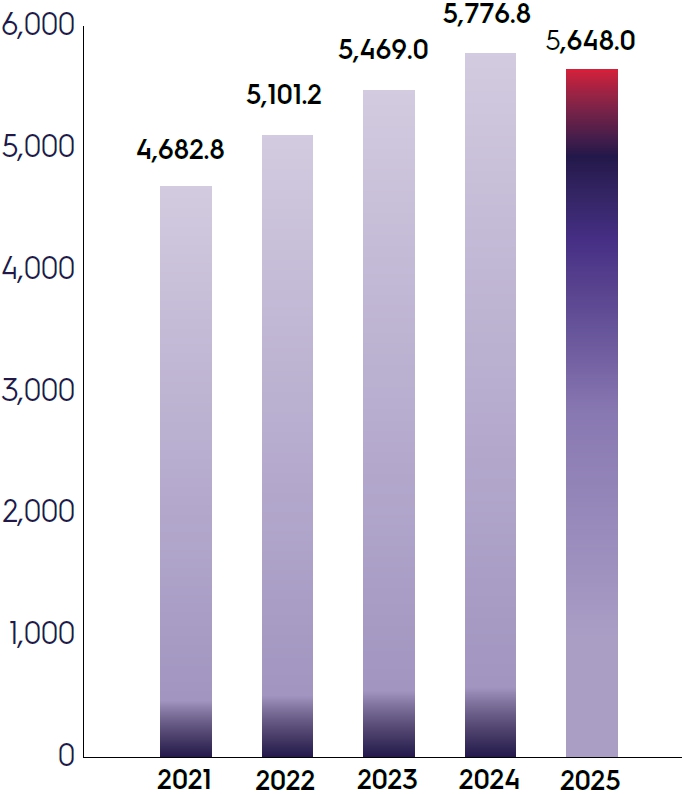
Consolidated revenue totalled €5,648.0 million, down 2.2% compared with 2024. Changes in scope had a €12.2 million positive impact (acquisitions of Aurexia and Neocase). Currency fluctuations had a negative impact of €15.0 million. At constant scope and exchange rates, the contraction in revenue was 2.2%. The scheduled conclusion of the SFT programme(1) had a 0.1-point negative impact.
The fourth quarter saw a return to positive growth, with organic revenue growth of 1.8%. This performance was driven by a return to a positive trend in France and the United Kingdom and continuing positive momentum in Spain, Italy and Switzerland as the Financial Services sector expanded and business picked up in the Aeronautics, Defence, Space & Security and Public Sector verticals. The Public Sector vertical was particularly buoyant in France in the last quarter of the year. Consulting also confirmed its return to growth, with revenue growth quickening to 5.1% in the fourth quarter.
In 2025, the Group saw a sharp increase in business connected with the roll-out of generative and agentic AI for its clients. In the course of the year, the vast majority of the Group’s key accounts launched one or more AI projects involving Sopra Steria. In France, the number of clients who had launched AI projects rose by 44%. Furthermore, Sopra Steria succeeded in its bid for one of the most significant supplier approvals in the country to date. More specifically, the number of consultants in the AI for Business practice rose by 50% in 2025.
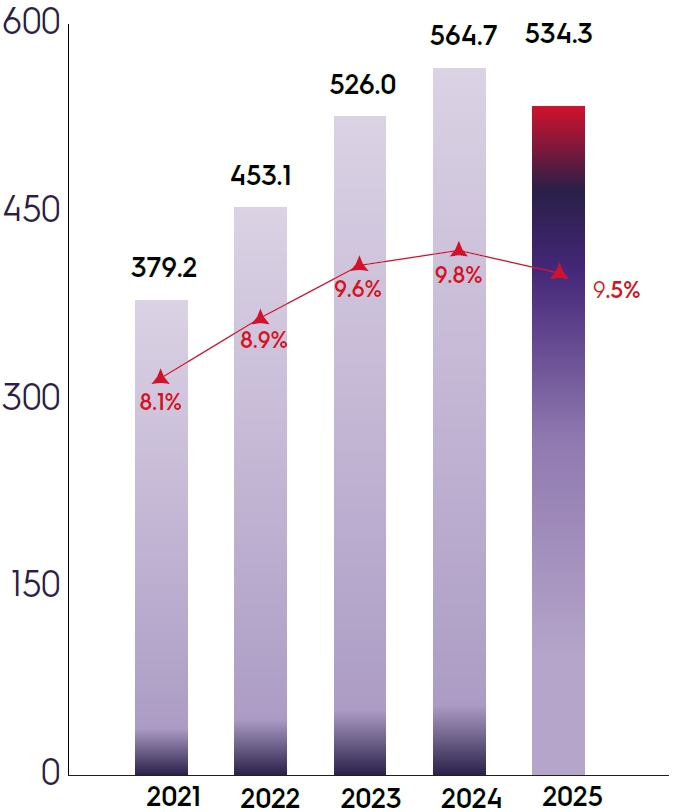
Operating profit on business activity came in at €534.3 million, giving an operating margin on business activity of 9.5% (vs 9.8% in 2024). This included a 0.3-point dilutive effect arising from higher social security contributions announced in France and the UK in early 2025.
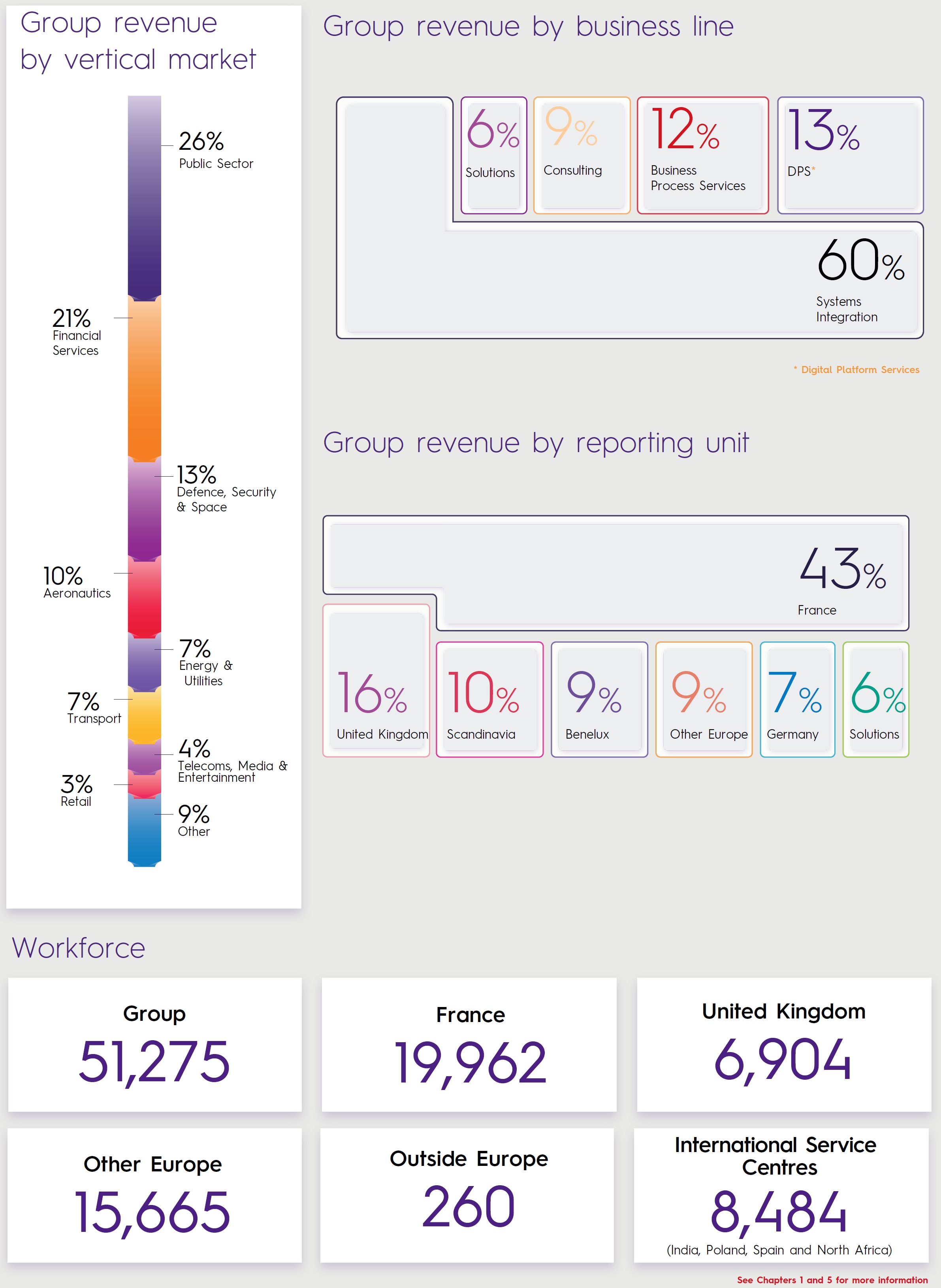
In France (43% of the Group total), revenue came in at €2,409.9 million, equating to negative organic growth of 1.5%. Following a 2.5% decline over the first nine months of the year, growth came in at 1.6% in the fourth quarter. This return to growth was driven by a clear improvement in business in the Aeronautics sector, strong momentum in the Public Sector and an upturn in growth in the Defence, Space & Security and Transport verticals. Consulting also improved significantly relative to the first nine months of the year, with revenue stable in the fourth quarter. The operating margin on business activity for the reporting unit came in at 9.0%, stable year on year, despite higher social security contributions affecting operating profit on business activity in 2025.
In the United Kingdom (16% of the Group total), revenue was €909.9 million, equating to negative organic growth of 4.3%. Following an 8.3% decline over the first nine months of the year, revenue surged 8.8% year on year in the fourth quarter, mainly thanks to strong growth in the NHS SBS and SSCL platforms and a significantly less challenging base effect. The operating margin on business activity for the reporting unit came to 9.6% (versus 12.1% in 2024).
In Europe (35% of the Group total), revenue decreased 2.8% on an organic basis (down 3.2% in the first nine months of the year) to €1,990.6 million. The scheduled conclusion of the SFT programme had a 0.2-point negative impact on the reporting unit in 2025. Business continued to grow in Spain, Italy and Switzerland in the fourth quarter, while trends in Germany, Scandinavia and Benelux were more or less in line with the first nine months of the year. The operating margin for the reporting unit came to 8.7% (versus 9.1% in 2024).
The Solutions reporting unit (6% of the Group total) posted revenue of €337.6 million, representing organic growth of 2.6%. The Human Resources Solutions business (which accounted for 64% of the reporting unit’s revenue) grew by 3.2%. The reporting unit’s operating margin on business activity came in at 16.7%, up 4.2 points from 2024. All the reporting unit’s businesses (Human Resources, Property Management and Specialised Lending Solutions) contributed to this improvement.
-
9. Group organisation
Sopra Steria Group’s governance consists of a Board of Directors, Chairman and Chief Executive Officer.
The organisation is supported by a permanent operational and functional structure as well as temporary structures for the management of particular deals and projects.
Sopra GMT, the holding company that takes an active role in managing the Group, takes part in conducting Group operations through:
- its presence on the Board of Directors and the three Board committees;
- a tripartite assistance agreement entered into with Sopra Steria and 74Software, (formerly Axway Software), concerning services relating to strategic decision-making, coordination of general policy between Sopra Steria and 74Software, and the development of synergies between these two companies, as well as consulting and assistance services, particularly with respect to finance and control.
9.1. Permanent structure
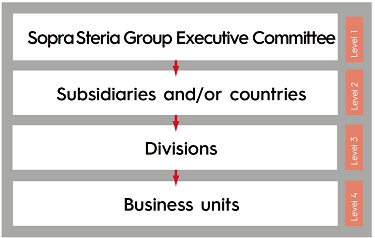
The Group’s permanent structure is composed of four operational levels and their associated functional structures.
The executive management transition was overseen by a small team organised around Xavier Pecquet (Interim CEO), Dominique Lapère (Chief Operating Officer) and Louis-Maxime Nègre (Head of Human Resources) until the arrival of Rajesh Krishnamurthy, who was appointed as the Group’s Chief Executive Officer with effect from 1 February 2026.
The Executive Committee is led by the Chief Executive Officer. It consists of the heads of the main operating and functional entities.
The 16 members of Sopra Steria Group’s Executive Committee supervise the Group’s organisation, management system, major contracts and support functions and entities. The Executive Committee is involved in the Group’s strategic planning and implementation. 3 of its members are women.
- Rajesh Krishnamurthy, Chief Executive Officer (from 1 February 2026)
- Fabrice Asvazadourian, Consulting
- Ayman Awada, Financial Services
- Yvane Bernard-Hulin, Legal
- Hervé Forestier, France
- Dominique Lapère, Operations
- Axelle Lemaire, Corporate Responsibility
- Béatrice Mandine, Communications
- Étienne Merveilleux du Vignaux, Finance
- Louis-Maxime Nègre, Human Resources
- John Neilson, United Kingdom
- Éric Pasquier, Software & Solutions
- Xavier Pecquet, Operations (Chief Executive Officer until 31 January 2026)
- Kjell Rusti, Scandinavia
- Mohammed Sijelmassi, Technology
- Grégory Wintrebert, Institutional Relations & Partnerships
The Group Management Committee consists of the members of the Group Executive Committee, together with 33 operational directors and functional directors. 8 of the Group Management Committee’s members are women.
- a specific line of business (consulting and systems integration, development of business solutions, infrastructure management and cloud services, cybersecurity services and business process services);
- geographic area (country).
These entities are managed by their own Management Committee, comprising in particular the Director and management of Level 3 entities.
Each division is made up of business units, which are the organisation’s primary building blocks. They operate as profit centres and enjoy genuine autonomy. They have responsibility for their human resources, budget and profit and loss account. Management meetings focusing on sales and marketing strategy and human resources are held weekly, and the operating accounts and budget are reviewed on a monthly basis.
The operational organisation is strengthened by operational support entities responsible for managing major transformations:
- the Key Accounts Department, responsible for promoting the Key Accounts policy. The role of this department is to coordinate the commercial and production approaches for our major clients, particularly when different entities are involved;
- The Institutional Relations & Partnerships Department, responsible for cultivating relationships with public and private decision-makers and other stakeholders;
- the Digital Transformation Office (DTO), responsible for designing and managing the Group’s digital transformation. It also manages the Group’s innovation approach;
- the Industrial Department, responsible for industrialising working methods and organising subcontracting on X-shore platforms. It also checks that projects are properly executed.
The Group’s functional divisions are the Human Resources Department, the Communications & Marketing Department, the Corporate Responsibility & Sustainable Development Department, the Internal Control Department, the Finance Department, the Legal Department, the Real Estate Department, the Purchasing Department and the IT Department.
These centralised functions ensure Group-wide consistency. Functional managers transmit and ensure commitment to the Group’s core values, serve operating entities and report directly to Executive Management.
The Group’s functional structures standardise management rules (information system resources, IT systems, financial reporting, etc.) and monitor the application of policies and rules. In this manner, they contribute to overall supervision and enable the operating entities to focus on business operations.
Sopra Steria manages complex and large-scale programmes and projects in a market where delivery commitments are increasing and becoming globalised. The Group has an increasingly wide range of skills to support multi-site projects that generate strong gains in productivity with delivery models that guarantee clients an optimal cost structure.
- production culture: passing on know-how and expertise in the field;
- choice of personnel: human resources are central to the approach, providing training, support and skills development for each employee;
- organisation: the Industrial Department and its representatives in the business units control production quality and performance, identify and manage risks, support project managers and roll out industrialised production processes;
- state-of-the-art industrial-scale foundation: the Delivery Rule Book (DRB), the Digital Enablement Platform (DEP) and the Quality System across the Group’s various entities;
- global delivery model: rationalising production by pooling resources and expertise within service centres, with services located based on the needs of each client (local services and skill centres in various entities, shared service centres nearshore in Spain and Poland, and offshore shared service centres in India).
-
2. Risk factors and internal control
- 1. Risk factors
- 2. Insurance
- 3. Internal control and risk management
- 4. Procedures relating to the preparation and processing of accounting and financial information
1. Risk factors
1.1. Risk identification and assessment
Within the Group, risk management plays an integral part in business management processes at all levels, from project units to the corporate level. Risks are first managed at a local level, where they are likely to occur, before being considered on a global basis, in cases where they are managed at Group level, depending on the Group’s ability to take corrective action or to accept them.
In any event, the level of risk must remain consistent with the Group’s corporate plan, support its position and help it to achieve its medium-term growth objectives. Taking risks that potentially extend beyond the control of the entity concerned requires approval from a higher level. For example, in the case of business opportunities, local management must seek the Group’s opinion and support if the amounts involved, the lack of sufficient resources, the scale of the investment, the maturity and organisational framework of the client and/or changes to the business model are likely to have repercussions on the Group’s performance and/or reputation.
The engineering methodologies used by the Group’s business lines are predicated on the risk-based approach, helping disseminate a culture of risk management.
Risks are therefore identified and the implementation of associated mitigation plans assessed and monitored on an ongoing basis by the various operational and functional units via the risk management system. This system, a pillar of the Group’s risk management approach, is based on regular weekly, monthly and annual steering meetings held at every level of the organisation, corresponding to monthly, annual and multi-year planning horizons (see description in Section 3.3.2 of this chapter, pages 52 to 54). These meetings help the Group maintain an overall view that takes into account and mobilises the necessary expertise for processing opportunities and risks at every level (strategy, market, operations, social, compliance, etc.). They are synchronised so as to facilitate higher-level consolidation.
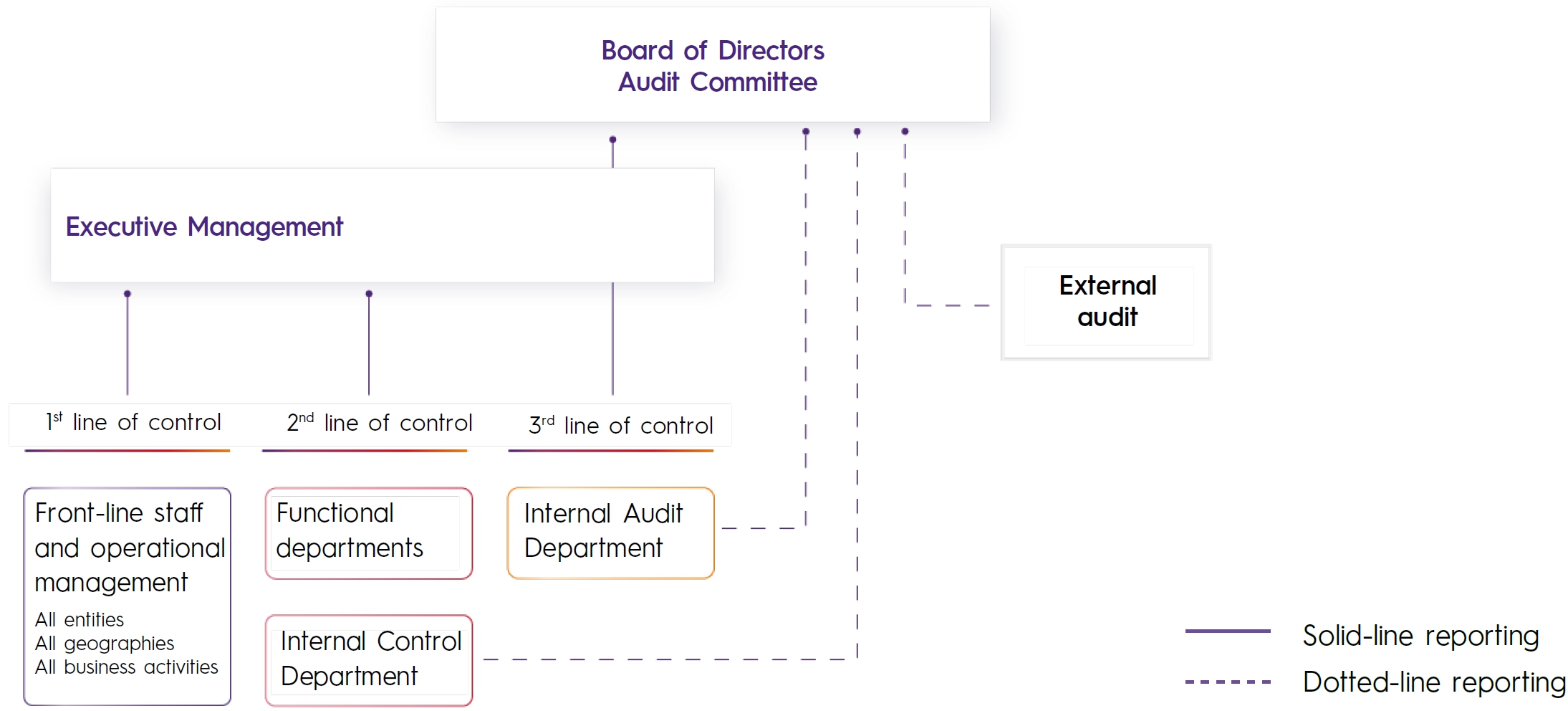
Every year, when annual steering meetings are held, information gathered at Group level is used to update the general mapping of risks. This exercise, coordinated by the Internal Control Department, consists of identifying the risks that could limit Sopra Steria’s ability to achieve its objectives and fulfil its corporate plan, as well as assessing their likelihood of occurrence and their negative effect.
Risks are assessed on a scale of four levels: low, medium, high or very high, in terms of likelihood; and minor, moderate, major or severe for severity. In terms of severity, several aspects are taken into account: the financial effect on operating profit, the level of operational disruption and the extent of reputational repercussions. The time horizon used is three years.
This analysis is based on contributors’ expertise, analysis of historical and forecast data and monitoring of changes in the external environment. The Group’s main operational and functional managers are involved through individual interviews and group validation workshops. The results are then discussed and approved by the Group’s Executive Committee. Next, the Internal Control Department presents them to the Audit Committee of the Board of Directors.
The risk mapping covers all internal and external risks and includes both financial and non-financial issues. Specific mappings helps enhance the general risk mapping, in particular mapping for corruption and influence-peddling risks, and the risks covered by the duty of vigilance and those identified by the double materiality assessment of sustainability matters. Special attention is paid to ensuring consistency in results despite the fact that there may be minor variations in the methodological approaches used depending on regulatory frameworks.
The most significant risks specific to Sopra Steria are set out below by category and in decreasing order of criticality (based on the crossover between likelihood of occurrence and the estimated extent of their severity), taking account of implemented mitigation measures. This presentation of residual risks is not intended to show all of Sopra Steria’s risks. The assessment of this order of materiality may be changed at any time, in particular due to the emergence of new external factors, changes in operations or a change in the effects of risk management measures.
-
2. Insurance
The Group’s insurance policy is closely linked to its risk prevention and management practices, in order to ensure coverage for its major risks. The Group’s Legal Department is responsible for the centralised management of its insurance programme.
The aim of Sopra Steria Group’s international insurance programmes is to provide, in compliance with local regulations, uniform and adapted coverage of the risks facing the Company and its employees for all Group entities at reasonable, optimised terms. With this in mind, the Company set up its own captive reinsurance company in late 2021.
The scope and coverage limits of these various insurance programmes are reassessed annually in light of changes in the size of Sopra Steria Group, developments in its business activities as well as changes in the insurance market and based on the results of the most recent risk mapping exercise. The insurance programmes provide sufficient coverage for risks with high financial stakes.
All Group companies are insured with leading insurance companies for all major risks that could have a material impact on its operations, business results or financial position.
This programme covers all of the Group’s companies for monetary consequences arising as a result of their civil and professional liability in connection with their activities, due to bodily injury, material or non-material damage caused to its clients and third parties.
-
3. Internal control and risk management
This section of the report outlines Sopra Steria’s internal control and risk management systems. These systems are based on the reference framework issued by the AMF. A specific subsection addresses the preparation of accounting and financial information.
The management control system is one of the fundamental components of internal control at Sopra Steria Group. It supports risk management and the internal dissemination of information as well as the various reporting procedures and the implementation of controls.
3.1. Objectives and framework for the internal control and risk management system
In order to address the identified risks presented in the previous section, Sopra Steria Group has adopted a governance structure as well as a set of rules, policies, procedures and checks together constituting its internal control and risk management system.
In accordance with the AMF reference framework, the internal control and risk management system, which is under the responsibility of the Group’s Chief Executive Officer, is designed to provide reasonable assurance regarding the achievement of objectives in the following categories:
- compliance with laws and regulations;
- implementation of instructions, guidelines and rules set forth by Executive Management;
- proper functioning of the Company’s internal processes, particularly those intended to safeguard its assets;
- quality and reliability of financial and accounting information.
More generally, the Group’s internal control and risk management system contributes to the control of its business activities, the effectiveness of its operations and the efficient use of its resources.
This system is updated on a regular basis, in application of a continuous improvement process, in order to best measure the level of risk to which the Group is exposed as well as the effectiveness of the action plans put in place to mitigate risks.
-
4. Procedures relating to the preparation and processing of accounting and financial information
4.1. Coordination of the accounting and finance function
By keeping the number of legal entities, and therefore accounting entities, relatively low, the Group can drive reductions in operating costs and minimise risks.
The Group’s Finance Department oversees Sopra Steria’s accounting and finance function and reports directly to Executive Management.
The responsibilities of the Group Finance Department mainly include the production of the accounts, financial controlling, tax issues, financing and cash management, and participation in financial communications. Each subsidiary has its own finance team that reports functionally to the Group’s Finance Department.
Supervision of the accounting and finance function by Executive Management and the Board of Directors
The Finance Department reports to the Group’s Executive Management. As with all other Group entities, it follows the management reporting and controlling cycle described above: weekly meetings to address current business activities, and monthly and quarterly meetings to conduct a detailed review of figures (actual and forecast), the organisation of the function and the monitoring of major projects.
Executive Management is involved in the planning and supervision process as well as in preparing to approve the financial statements.
The Board of Directors is responsible for the oversight of accounting and financial information. It reviews and approves for publication the interim and annual financial statements. It is supported by the Audit Committee, as described in Section 1.3.3, “Committees of the Board of Directors” of Chapter 3, “Corporate governance” of this Universal Registration Document (pages 90 to 93).
The configuration and maintenance of the accounting and financial information system are centralised at Group level. Central teams manage access permissions, and update them at least once a year. The granting of these permissions is validated by finance teams at the subsidiaries.
All Group companies prepare, at a minimum, complete quarterly financial statements on which the Group bases its published quarterly revenue figures and interim financial statements.
Monthly cash flow forecasts for the entire year are regularly prepared for all companies and consolidated at Group level.
The accounting policies applied within the Group are presented in the notes to the consolidated financial statements in this document. When the interim and annual financial statements are approved, the Audit Committee ensures that these policies and presentation have been applied by the Finance Department and the Statutory Auditors.
-
3. Corporate governance
- 1. Organisation and operation of governance
- 2. Compensation of company officers
- 3. Standardised presentation of compensation paid to company officers
- 4. Result of the shareholder consultation on the compensation of executive company officers (General Meeting of 21 May 2025)
- 5. Departures from the recommendations of the AFEP-MEDEF Code
This chapter describes the organisation and operation of governance as well as the compensation policy for company officers and its application during financial year 2025. It lists and explains any points of divergence from or partial compliance with the recommendations of the AFEP-MEDEF Code. (1)
1. Organisation and operation of governance
1.1. Executive company officers
On 19 June 2012, the Board of Directors voted to separate the roles of Chairman and Chief Executive Officer. This decision has since been confirmed at each appointment or reappointment of an executive company officer, most recently on 10 December 2025. This separation of duties remains the best way of addressing the Group’s strategic and operational priorities. Given the close relationship between the Chairman of the Board of Directors and the Chief Executive Officer, there is close collaboration and an ongoing dialogue between them. The current governance structure therefore helps streamline management of the Company. It means that the Group is able to act as quickly as needed and ensures decisions are taken with due care, while taking into account strategic priorities.
The Chairman is tasked with managing strategy, while the Chief Executive Officer is responsible for operations.
- guides the Group’s strategy;
- assists Executive Management with the transformation of the Group;
- oversees investor relations and manages the Board’s relations with shareholders.
- makes proposals on the Group’s strategy in agreement with the Chairman;
- supervises the implementation of decisions adopted;
- ensures the operational management of all Group entities.
The Nomination, Governance & Corporate Responsibility Committee conducts an annual review of the succession plans for the Chairman of the Board of Directors and the Chief Executive Officer so any unforeseen vacancies can be dealt with appropriately. As part of this process, it meets with the Chairman of the Board of Directors. It makes sure the plans cover existing requirements and the Group’s culture. It assesses the relevance of any proposed changes.
Succession planning for the role of Chairman was incorporated into the formal assessment of the Board of Directors decided upon in 2025.
In connection with the renewal of his term of office, the succession plan for the Chairman of the Board of Directors was reviewed and approved by the Nomination, Governance & Corporate Responsibility Committee, then by the Board of Directors at its meeting on 25 February 2026. It distinguishes between the case of an unforeseen vacancy in the role and that of a vacancy arising from the Chairman’s term of office coming to an end.
The plan is aimed not only at ensuring continuity in the role but also, beyond that, at optimising decisions from an overall perspective taking into account the situation, the Group’s needs, and interactions among the various governance bodies. The goal is to ensure that the Board of Directors is always in a position to be able to choose the candidate best suited to the context.
In 2025, the established succession plan in the event of an unforeseen vacancy in the position of Chief Executive Officer was implemented without modification following the resignation of the Chief Executive Officer, Cyril Malargé, on 8 October. The Board of Directors, at a meeting convened the same day, appointed Xavier Pecquet as Chief Executive Officer until the arrival of a new Chief Executive Officer recruited from outside the Group.
The Committee also debates action to be taken in the short and medium term in view of reappointments and expiring terms of office. In this context, the issue must be approached from a different angle: consideration is given not only to ensuring the continued functioning of each governance body but also, beyond that, to optimising decisions from an overall perspective taking into account the situation, the Group’s needs, and interactions among the various governance bodies. The goal is to ensure that the Board of Directors is always in a position to be able to choose, for each role, the candidate best suited to the situation and the environment.
This aspect was incorporated into the formal assessment of the Board of Directors decided upon in 2025.
Pierre Pasquier currently serves as Chairman of the Board of Directors. He carried out activities on a full-time basis throughout the year. This included overseeing the work of the Board and other assignments entrusted to him.
The Chairman’s assignments include the governance of strategy, acquisitions and the Board of Directors’ relations with shareholders. He is involved in several areas that are key to the Group’s future and transformation (HR, digital and industrial transformation; key organisational and operating principles; employee share ownership; promotion of Group values and compliance). This list of key matters is approved following consultation with the Chief Executive Officer.
The Chairman is responsible for maintaining balance between the Group’s various stakeholders: shareholders, employees and the community. He ensures that the Group’s social and environmental priorities are properly taken into account.
- The AFEP-MEDEF Code is the code to which the Company refers pursuant to Article L. 22-10-10 of the French Commercial Code. It is available on the website of France’s Haut Comité de Gouvernement d’Entreprise (www.hcge.fr).
In crisis situations, the ability to prioritise issues, uphold the Group’s values, and consider its options from a longer-term perspective thanks to the commitment provided by the core shareholder is absolutely critical.
The various matters placed under the Chairman’s responsibility require thorough knowledge of operational realities. Close relations with the Chief Executive Officer and the members of the Executive Committee facilitate information-sharing. This facilitates effective coordination on:
- decisions required for the implementation of the medium-term strategic plan and the Group’s transformation;
- monitoring of the implementation of such decisions over the long term.
- the roles defined in the internal rules and regulations of the Board of Directors;
- compliance with the respective prerogative powers of the Chairman of the Board of Directors and the Chief Executive Officer;
- a very good fit between the holders of the two positions;
- a mutual trust-based relationship.
In carrying out all of his assignments, the Chairman seeks out advice from former executives and may draw on certain resources across the Group.
He is also supported by a permanent team at Sopra GMT, the holding company that manages and controls the Group. This company was established by the founders of Sopra Steria Group. More than 75% of its share capital is held by members of the two family groups. A financial investor acquired a stake alongside the founders to enable the implementation of Sopra Steria Group’s strategic refocusing project in 2024. Sopra GMT’s sole activity is to provide strategy, advisory and support services to the two companies in which it holds an ownership interest. Its non-current assets consist exclusively of its equity stakes in those companies.
Of the five Sopra GMT employees, four of them have spent much of their careers with Sopra Steria Group. This team has therefore gained knowledge of the Group, its main managers and its organisational structure that an external service provider could not have. Its position within Sopra GMT means this team has an outside perspective and greater independence. These resources enhance the Board of Directors’ ability to oversee the smooth running of the Company.
The team was initially formed when 74Software(1) was spun off. It performs duties for Sopra Steria Group and 74Software, in which Sopra Steria Group still retains an ownership interest of 11%. Sopra GMT provides both companies with its support and ensures synergies and best practices are implemented.
The members of this team carry out duties not undertaken by Sopra Steria Group: oversight of acquisitions, corporate secretarial affairs for the Board of Directors and its Committees. They may also assist Sopra Steria Group’s functional divisions. They are also active participants in various steering committees (acquisitions, corporate responsibility and sustainable development, internal control, internal audit, employee share ownership). They may join working groups tackling key issues for the Company. They provide the benefit of their technical expertise and an independent opinion.
The costs rebilled by Sopra GMT comprise the portion of payroll and related operating costs for employees assigned to the tasks performed for Sopra Steria Group. They also comprise, under the same conditions, any external expenses incurred by Sopra GMT (such as specialised advisors’ fees). As such, this organisational method does not increase the expenses borne by Sopra Steria Group. If the assignments handled by Sopra GMT’s employees were not entrusted to them, they would need to be allocated again within Sopra Steria Group.
Pierre Pasquier’s compensation at Sopra GMT reflects his oversight of the assignments performed by the Sopra GMT team for Sopra Steria Group and 74Software(1). His compensation is not rebilled to these two companies.
Sopra Steria Group charges Sopra GMT fees for providing premises, IT resources, and assistance from the Group’s functional divisions as well as providing appropriate expertise for Sopra GMT’s assignments.
The work performed by this team and the principle for the rebilling to the Company of the costs incurred are covered in a framework agreement for assistance. The General Meeting approved the implementation of this related-party agreement. The Board of Directors reviews it annually.
Around 85% of Sopra GMT’s total operating expenses are rebilled. The remaining 15% comprises the expenses arising from Sopra GMT’s own internal operations. Expenses are rebilled on a cost-plus basis including a 7% margin. By definition, Sopra GMT generally records a small operating loss. The annual breakdown varies according to the respective needs of Sopra Steria Group and 74Software(1). On average, since 2011, two thirds of the amounts rebilled have concerned Sopra Steria Group.
The Board of Directors reviewed the implementation of this agreement at its meeting on 22 January 2026. It unanimously agreed to maintain the previously granted authorisation for the current financial year. The members of the Board of Directors associated with Sopra GMT (Pierre Pasquier, Éric Pasquier and Kathleen Clark) did not take part in the discussion or vote on this decision.
Cyril Malargé resigned from his position as Chief Executive Officer on 8 October 2025. On the same day, a small team was established under the leadership of Xavier Pecquet, a member of the Group’s Executive Committee, who was appointed Chief Executive Officer, to oversee the transition until the assumption of duties of the new Chief Executive Officer. Throughout this period, this team – comprising Xavier Pecquet, Dominique Lapère (Chief Operating Officer), and Louis-Maxime Nègre (Head of Human Resources) – worked in close coordination with Éric Pasquier, Vice-Chairman of the Board of Directors and Managing Director of Sopra GMT. Drawing on its experience and in-depth knowledge of the Group, the team was fully involved in managing the operations and continuing the implementation of the Group’s strategy. To this end, it was supported by the Group’s executive bodies and management.
- Following the acquisition of Sopra Banking Software, the shareholders of Axway Software voted on 6 December 2024 to change the company’s name to 74Software (with 74Software continuing to use Axway Software as one of its trademarks).
On 11 December 2025, the Board of Directors appointed Rajesh Krishnamurthy as Chief Executive Officer, with effect from 1 February 2026, on the recommendation of the Nomination, Governance & Corporate Responsibility Committee.
To formulate its recommendation, each Committee member met with the two leading candidates selected by the Chairman of the Board of Directors and the Chairwoman of the Committee. Following consultation with Sopra GMT, these two candidates were presented to the Committee, bringing the search process – which had been conducted with support from a specialised consultancy from a broad pre-selected pool of candidates – to a close.
The Committee members commended the quality of both proposals. They highlighted the candidates’ personalities, experience, knowledge of the sector and skills, and concluded that both were capable of performing the role of Chief Executive Officer in the context of Sopra Steria Group. They chose to recommend the appointment of Rajesh Krishnamurthy. The Board of Directors, unanimously approved this recommendation.
The Chief Executive Officer has authority over the entire Group. He directs, administers and coordinates all of its activities. To this end, he is supported by the Group’s Executive Committee and its Management Committee. These Committees comprise key operational and functional managers from Sopra Steria Group and its subsidiaries as well as the Chief Executive Officer.
The Chief Executive Officer has the broadest possible powers to act in all circumstances in the name of Sopra Steria Group SA, the parent company of Sopra Steria Group. He/she represents the Company in its dealings with third parties.
Certain decisions relating to strategy implementation and internal organisation require prior approval by the Board of Directors or its Chairman. Decisions “that are highly strategic in nature or that are likely to have a significant impact on the financial position or commitments of the Company or any of its subsidiaries” are defined in the internal rules and regulations of the Board of Directors (see Chapter 8, “Additional information” of this Universal Registration Document, page 396).
-
2. Compensation of company officers
2.1. General principles
While paying particular attention to the stability of the principles used to determine and structure compensation for executive company officers, the Board of Directors re-examines their compensation packages on an annual basis to verify their fit with the Group’s requirements. In particular, the Board checks that compensation policy:
- continues to be in keeping with the Company’s best interests;
- contributes to the Company’s long-term success, taking into account its social and environmental priorities;
- is in keeping with the Company’s business strategy.
The Board also checks that compensation policy complies with the recommendations laid down in the AFEP-MEDEF Code. To this end, it is supported by the Compensation Committee, which helps it prepare its decisions in this area.
The Board of Directors considers that applying the compensation recommendations laid down in the AFEP-MEDEF Code of Corporate Governance protects the Company’s interests and encourages executives’ contribution to business strategy and the Company’s long-term success.
The Compensation Committee usually meets three to five times between October and February to help the Board prepare its decisions.
The Board of Directors generally discusses the Company’s strategic plan during the same period, taking into account its social and environmental priorities. For the past several years, the Group has been pursuing an independent, sustainable, value-creating plan that combines growth and profitability. Priorities are adjusted each financial year based on the current state assessment undertaken at the end of the previous year.
The Committee reviews the current compensation policy applicable to company officers. It then reviews estimates of the extent to which objectives have been met by the Chief Executive Officer. These forecasts are refined in the course of the Committee’s various meetings. At the beginning of the year, the Compensation Committee notes the extent to which quantifiable targets set for the previous financial year have been achieved. It assesses the extent to which qualitative objectives have been met. To this end, it meets with the Chairman of the Board of Directors and familiarises itself with any information that might be used in this assessment.
The Committee also takes into consideration the Group’s compensation policy and decisions on fixed and variable compensation of the members of the Group Executive Committee, as brought to their attention by the Chief Executive Officer. It takes into account comparisons with other companies made available to it. However, sector consolidation has significantly reduced the number of companies allowing for a direct and relevant comparison.
The Committee also considers ways in which employees may be given a stake in the Company’s financial performance. It assesses the suitability of share ownership plans for all employees and long-term incentive plans for managers of the Company and its subsidiaries. The Board of Directors considers that employee and executive share ownership makes a lasting contribution to the Company’s priority focus on independence and value creation. It provides extra motivation and ensures that employees’ and executives’ interests are fully aligned with those of the Company’s shareholders.
The Board of Directors has not, to date, specified the number of shares that must be held and registered in the name of the Chairman of the Board of Directors, who co-founded the Company. Shares held directly or indirectly through Sopra GMT by the Chairman in a personal capacity or by the Chairman’s family group make up more than 10% of the Company’s share capital.
- to retain at least 50% of the performance shares actually awarded to him during his term of office;
- to achieve the objective, by July 2029, of him holding shares in the Company in an amount equivalent to 100% of his annual fixed compensation.
When the Board of Directors reviews the budget for the current financial year, the Company’s quantitative targets are a known quantity. The Compensation Committee takes them into account when determining the Chief Executive Officer’s quantitative targets for the financial year. It holds a further meeting with the Chairman of the Board of Directors to discuss potential qualitative objectives.
The Compensation Committee then presents its recommendations to the Board of Directors, which discusses them without the interested parties in attendance. These recommendations relate to the variable compensation of the Chief Executive Officer for the previous financial year, the fixed compensation of the Chairman of the Board of Directors, and the fixed and variable compensation of the Chief Executive Officer for the current financial year. The Committee also presents its observations on how compensation is apportioned among the Directors and any proposed adjustments. The total amount of the compensation provided for in Article L. 225-45 of the French Commercial Code subject to approval by the shareholders is agreed when the Board of Directors meets to prepare for the General Meeting of Shareholders.
As regards variable compensation, the Compensation Committee proposes the quantifiable criteria to be taken into account together with any qualitative criteria, as the case may be. It makes certain that the targets adopted are mainly quantifiable and that criteria are precisely defined. As regards quantifiable criteria, it generally determines:
- a threshold below which variable compensation is not paid;
- a target level at which 100% of compensation linked to the criterion in question becomes payable; and
- where applicable, an upper limit if there is the possibility that a target may be outperformed.
The performance assessment method used to determine annual variable compensation is based on a comparison between actual performance and the objectives, broken down into threshold, target and cap, where applicable. This assessment is carried out without any offsetting between objectives.
Outperformance is possible only in respect of quantifiable financial targets, provided that all such targets are achieved at a minimum of 100%, in order to avoid any offsetting between targets. In the event of outperformance, annual variable compensation is in any event capped at 150% of annual fixed compensation.
Conversely, the Board of Directors may consider that the Group’s performance does not allow for payment of variable compensation in respect of the financial year. In such a case, it does not take into account the extent to which qualitative objectives have been met. It proposes to the shareholders that no variable compensation be paid in respect of that financial year.
Lastly, in the event of exceptional circumstances (such as an exogenous shock) leading to the suspension of the normal system of variable compensation for employees and Group Executive Committee members, the Compensation Committee would review the situation of the Chief Executive Officer. It could recommend to the Board of Directors that it ask the shareholders at the General Meeting to approve the addition of a bonus to the Chief Executive Officer’s variable compensation if that would serve the Company’s interests, subject to an upper limit of 100% of his annual fixed compensation.
Long-term incentive plans are based on awarding rights to shares. They are subject to the condition of being with the Company over a period of time and performance conditions. The objectives are set in the same way as for variable compensation.
Independently of the compensation policy, the Company covers or reimburses company officers’ travel expenses (transportation and accommodation).
The procedure for determining compensation policy applicable to executive company officers and the timing of that procedure are intended to ensure that all useful information is taken into account when recommendations are drawn up and when the Board of Directors makes its final decision. This ensures that such decisions are consistent among themselves and aligned with the Company’s strategy.
The Nomination, Governance & Corporate Responsibility Committee and the Compensation Committee have one member in common.
The compensation policy applies to newly appointed company officers. However, in exceptional circumstances, such as to enable the replacement or appointment of a new executive company officer, the Board of Directors may waive application of the compensation policy. Such waivers must be temporary, aligned with the Company’s interests and necessary to secure the Company’s long-term success or viability. Furthermore, this option may only be adopted where there is consensus among the members of the Board of Directors as to the decision to be taken (i.e. no votes against). This may result in the awarding of items of compensation currently defined in the compensation policy as not applicable (non-compete payment and supplementary pension plan, for example). These items would be put to the vote at the following General Meeting.
-
3. Standardised presentation of compensation paid to company officers
3.1. AFEP-MEDEF Code tables
OVERVIEW OF COMPENSATION, OPTIONS AND SHARES GRANTED TO PIERRE PASQUIER, CHAIRMAN OF THE BOARD OF DIRECTORS (TABLE 1 – AFEP-MEDEF CODE OF CORPORATE GOVERNANCE FOR LISTED COMPANIES, DECEMBER 2022) STATEMENT SUMMARISING THE COMPENSATION OF PIERRE PASQUIER, CHAIRMAN OF THE BOARD OF DIRECTORS (TABLE 2 – AFEP-MEDEF CODE OF CORPORATE GOVERNANCE FOR LISTED COMPANIES, DECEMBER 2022) 2024 2025 Amount awarded Amount paid Amount awarded Amount
paidFixed compensation €500,000 €500,000 €550,000 €550,000 Annual variable compensation - - - - Exceptional compensation - - - - Compensation allotted in respect of directorship (L. 22-10-14) €30,724 €35,679 €34,040 €30,724 Benefits in kind €11,970 €11,970 €7,980 €7,980 TOTAL €542,694 €547,649 €592,020 €588,704 Pierre Pasquier is the Chairman and CEO of Sopra GMT, the holding company for Sopra Steria Group. In respect of these duties (leading the Sopra GMT team and chairing the Board of Directors), he received compensation of €130,000 in 2025. In addition, he received compensation under Article L. 225-45 of the French Commercial Code in the amount of €15,273 in respect of financial year 2025.
This compensation was paid by Sopra GMT and was not rebilled to Sopra Steria Group (see Section 1.1.4, “Overview of the activities of the Chairman of the Board of Directors in 2025” of this chapter, page 62).
As Chairman of the Board of Directors of 74Software, as indicated in its Universal Registration Document, Pierre Pasquier also received fixed compensation from that company in the amount of €200,000 and compensation in respect of Article L. 22-10-14 of the French Commercial Code of €27,575.
OVERVIEW OF COMPENSATION, OPTIONS AND SHARES GRANTED TO CYRIL MALARGÉ, CHIEF EXECUTIVE OFFICER UNTIL 8 OCTOBER 2025 (TABLE 1 – AFEP-MEDEF CODE OF CORPORATE GOVERNANCE FOR LISTED COMPANIES, DECEMBER 2022) The rights to performance shares granted to Cyril Malargé in 2025 are null and void due to his resignation with effect from 8 October 2025.
STATEMENT SUMMARISING THE COMPENSATION OF CYRIL MALARGÉ, CHIEF EXECUTIVE OFFICER UNTIL 8 OCTOBER 2025 (TABLE 2 – AFEP-MEDEF CODE OF CORPORATE GOVERNANCE FOR LISTED COMPANIES, DECEMBER 2022) 2024 2025 Amount awarded Amount paid Amount awarded Amount paid Fixed compensation €500,000 €500,000 €410,870 €410,870 Annual variable compensation €139,500 €290,000 - €139,500 Exceptional compensation €100,000 - - €100,000 Compensation allotted in respect of directorship (L. 22-10-14) - - - - Benefits in kind €13,551 €13,551 €6,181 €6,181 TOTAL €753,051 €803,551 €417,051 €656,551 The relative proportions of fixed and variable compensation in the annual compensation awarded to the Chief Executive Officer (excluding benefits in kind) were immaterial. Cyril Malargé, who resigned with effect from 8 October 2025, did not receive any severance, bonus, or variable compensation.
OVERVIEW OF COMPENSATION, OPTIONS AND SHARES GRANTED TO XAVIER PECQUET, CHIEF EXECUTIVE OFFICER WITH EFFECT FROM 8 OCTOBER 2025 (TABLE 1 – AFEP-MEDEF CODE OF CORPORATE GOVERNANCE FOR LISTED COMPANIES, DECEMBER 2022) STATEMENT SUMMARISING THE COMPENSATION OF XAVIER PECQUET, CHIEF EXECUTIVE OFFICER WITH EFFECT FROM 8 OCTOBER 2025 (TABLE 2 – AFEP-MEDEF CODE OF CORPORATE GOVERNANCE FOR LISTED COMPANIES, DECEMBER 2022) 2024 2025 Amount awarded Amount paid Amount awarded Amount paid Fixed compensation N/A N/A €101,279 €101,279 Annual variable compensation N/A N/A €45,743 - Exceptional compensation N/A N/A €400,000 - Compensation allotted in respect of directorship (L. 22-10-14) N/A N/A - - Benefits in kind N/A N/A €6,851 €6,851 TOTAL N/A N/A €553,873 €108,130 Xavier Pecquet was appointed Chief Executive Officer with effect from 8 October 2025. His annual fixed compensation (€436,501), annual variable compensation (€196,425, or €45,743 for the period from 8 October to 31 December 2025), and the objectives set for him in 2025 as a member of the Executive Committee remained unchanged. The Board of Directors decided to award him exceptional compensation of €400,000 in recognition of the effectiveness with which he led the interim Executive Management team, drawing on its cohesion with the Group’s executive bodies and, more generally, its management.
STATEMENT OF COMPENSATION RECEIVED BY NON-EXECUTIVE COMPANY OFFICERS (TABLE 3 – AFEP-MEDEF CODE OF CORPORATE GOVERNANCE FOR LISTED COMPANIES, DECEMBER 2022) 2024 2025 (amounts rounded to the nearest euro) Amount
awardedAmount
paidAmount
awardedAmount
paidAstrid Anciaux Compensation allotted in respect of directorship €25,953 €26,471 €24,027 €25,953 Other compensation - - - - Hélène Badosa Compensation allotted in respect of directorship (reversion to a trade union) €32,127 €36,652 €35,764 €32,127 Other compensation - - - - William Beaumond
(nominated by the European Works Council on 11/07/2024)Compensation allotted in respect of directorship €10,814 - €26,430 €10,814 Other compensation - - - - Sonia Criseo Compensation allotted in respect of directorship €23,790 €8,824 €31,805 €23,790 Other compensation - - - - Pascal Daloz Compensation allotted in respect of directorship €15,139 €8,824 €18,101 €15,139 Other compensation - - - - Charlotte Dennery
(appointed by the shareholders at the General Meeting of 21/05/2025)Compensation allotted in respect of directorship - - €9,611 - Other compensation - - - - André Einaudi Compensation allotted in respect of directorship €17,302 €26,471 €25,444 €17,302 Other compensation - - - - Michael Gollner Compensation allotted in respect of directorship €55,645 €64,778 €61,694 €55,645 Other compensation - - - - Éric Hayat Compensation allotted in respect of directorship €45,998 €41,649 €37,285 €45,998 Other compensation - - - - Noëlle Lenoir Compensation allotted in respect of directorship €33,335 €35,681 €33,158 €33,335 Other compensation - - - - Éric Pasquier Compensation allotted in respect of directorship €48,790 €50,925 €35,561 €48,790 Other compensation - - - - Sylvie Rémond Compensation allotted in respect of directorship €71,566 €64,163 €79,849 €71,566 Other compensation - - - - Marie-Hélène Rigal-Drogerys Compensation allotted in respect of directorship €89,178 €81,492 €95,934 €89,178 Other compensation - - - - Jessica Scale Compensation allotted in respect of directorship €45,998 €45,863 €37,285 €45,998 Other compensation - - - - Sopra GMT Compensation allotted in respect of directorship €55,544 €55,073 €54,024 €55,544 Other compensation - - - - Yves de Talhouët Compensation allotted in respect of directorship €29,582 €26,115 €28,352 €29,582 Other compensation - - - - Rémy Weber Compensation allotted in respect of directorship €25,953 €8,824 €31,636 €25,953 Other compensation - - - - Other terms of office ended before 2025 Compensation allotted in respect of directorship €42,562 €82,516 - €42,562 Other compensation - - - - TOTAL €669,276 €664,321 €665,960 €669,276 The difference between the total amount of compensation stated in Article L. 225-45 of the French Commercial Code to be allocated for 2024 and 2025 (€700,000) and the totals shown in the table above is due to the amount awarded to Pierre Pasquier in respect of his role as Director (€30,724 in 2024 and €34,040 in 2025). These amounts are shown in Table 2, “AFEP-MEDEF Code of Corporate Governance for Listed Companies, December 2022”.
For financial year 2025, in accordance with the compensation policy approved at the General Meeting of 21 May 2025, the breakdown of compensation awarded to Directors for their service between the Board of Directors and its committees was as follows, unchanged from previous years:
- 60%: Board of Directors;
- 20%: Audit Committee;
- 10%: Compensation Committee;
- 10%: Nomination, Governance & Corporate Responsibility Committee.
- as regards Sopra GMT, a legal entity serving as a Director, the implementation of the tripartite framework agreement for assistance entered into between Sopra GMT, Sopra Steria Group and 74Software in 2011 resulted in the invoicing to Sopra Steria Group by Sopra GMT of a net amount of €1,629,893 excluding VAT (see Section 1.1.5 of this chapter, page 61, and the Statutory Auditors’ special report on related-party agreements provided at the end of Chapter 6, “2025 Parent company financial statements” of this Universal Registration Document, pages 371 to 372;
SHARE SUBSCRIPTION AND PURCHASE OPTIONS GRANTED TO EACH EXECUTIVE COMPANY OFFICER DURING THE FINANCIAL YEAR (TABLE 4 – AFEP-MEDEF CODE OF CORPORATE GOVERNANCE FOR LISTED COMPANIES, DECEMBER 2022) SHARE SUBSCRIPTION AND PURCHASE OPTIONS EXERCISED BY EACH EXECUTIVE COMPANY OFFICER DURING THE FINANCIAL YEAR (TABLE 5 – AFEP-MEDEF CODE OF CORPORATE GOVERNANCE FOR LISTED COMPANIES, DECEMBER 2022) PERFORMANCE SHARES AWARDED TO EACH EXECUTIVE COMPANY OFFICER DURING THE FINANCIAL YEAR (TABLE 6 – AFEP-MEDEF CODE OF CORPORATE GOVERNANCE FOR LISTED COMPANIES, DECEMBER 2022) Name of
executive
company
officerNumber and
date of planNumber of
Sopra Steria
Group shares
in awards
granted
during the
yearValue of
shares
according
to the method
used for the
consolidated
financial
statementsVesting date Availability
datePerformance conditions Cyril Malargé 29/04/2025 3,000 €467,910 01/07/2028 01/07/2028 1) Growth in Sopra Steria Group’s consolidated revenue in financial years 2025, 2026 and 2027 2) Consolidated operating profit on business activity as a percentage of Sopra Steria Group’s revenue in financial years 2025, 2026, and 2027 3) Proportion of women in the Group’s senior management positions (Level 5 & 6 positions) 4) Reduction in annual travel-related greenhouse gas emissions (business travel and commuting) TOTAL - 3,000 €467,910 - - - The 3,000 rights to performance shares granted to Cyril Malargé in 2025 are null and void due to his resignation with effect from 8 October 2025. They represented 0.01% of the Company’s share capital.
PERFORMANCE SHARES NO LONGER SUBJECT TO A HOLDING PERIOD DURING THE FINANCIAL YEAR FOR EACH EXECUTIVE COMPANY OFFICER (TABLE 7 – AFEP-MEDEF CODE OF CORPORATE GOVERNANCE FOR LISTED COMPANIES, DECEMBER 2022) RECORD OF SHARE SUBSCRIPTION OR PURCHASE OPTIONS GRANTED – INFORMATION ON SHARE SUBSCRIPTION OR PURCHASE OPTIONS (TABLE 8 – AFEP-MEDEF CODE OF CORPORATE GOVERNANCE FOR LISTED COMPANIES, DECEMBER 2022) OVERVIEW OF PERFORMANCE SHARE GRANTS – INFORMATION ON PERFORMANCE SHARES (TABLE 9 – AFEP-MEDEF CODE OF CORPORATE GOVERNANCE FOR LISTED COMPANIES, DECEMBER 2022) See Section 5.4, “Share-based payments” of Chapter 5, “2025 consolidated financial statements” and Section 4.2.2, “Free share plan” of Chapter 6, “2025 parent company financial statements” of this Universal Registration Document (pages 290 to 291 and 343 to 344, respectively).
2024 Sopra Steria Group performance
targets and criteriaThreshold Target Results % Achieved Weighting % Achieved
(Year)Organic growth in revenue 2.4% 4.4% -0.5% 0.0% 10% 53.33% Operating profit on business activity as % of revenue 9.5% 10.0% 9.8% 60.0% 10% Free cash flow €300m €380m €432.1m 100% 10% 2025 Sopra Steria Group performance
targets and criteriaThreshold Target Results % Achieved Weighting % Achieved
(Year)Organic growth in revenue -2.5% 1.2% -2.2% 8.1% 10% 52.70% Operating profit on business activity as % of revenue 9.0% 10.0% 9.5% 50.0% 10% Free cash flow
As % of consolidated revenue5.0% 6.0% 6.0% 100% 10% CSR conditions Threshold Target Results Weighting % Achieved 2022-2024 (Proportion of women in senior management positions at the Group) 18.0% 19.0% 21.4% 10% 100% 2023-2025 (Proportion of women in senior management positions at the Group) 19.5% 21.0% 22.4% 10% 100% 2025-2027 (annualised objectives) ■ 2025 (Proportion of women in senior management positions at the Group)
21.4% 22.4% 22.4% 5% / 3 years 100% ■ 2025 (Reduction in annual travel-related greenhouse gas emissions (business travel and commuting) compared to 2024)
-2.0% -2.5% -4.3% 5% / 3 years 100% STATEMENT SUMMARISING THE MULTI-YEAR VARIABLE COMPENSATION OF EACH EXECUTIVE COMPANY OFFICER (TABLE 10 – AFEP-MEDEF CODE OF CORPORATE GOVERNANCE FOR LISTED COMPANIES, DECEMBER 2022) EMPLOYMENT CONTRACTS, SUPPLEMENTARY PENSION PLANS, ALLOWANCES OR BENEFITS DUE ON THE CESSATION OF DUTIES OR A CHANGE IN DUTIES, NON-COMPETE CLAUSES (TABLE 11 – AFEP-MEDEF CODE OF CORPORATE GOVERNANCE FOR LISTED COMPANIES, DECEMBER 2022) Executive company
officersEmployment
contractSupplementary
pension planAllowances or
benefits due or
likely to fall due as
a result
of the cessation
of duties or a
change in dutiesNon-compete
paymentYes No Yes No Yes No Yes No Pierre Pasquier
Chairman
Term of office began: 2026
Term of office ends: 2028
Cyril Malargé
Chief Executive Officer
Term of office began: 2022
Term of office ends: 2025Xavier Pecquet
Chief Executive Officer
Term of office began: 2025
Term of office ends: 2026
Rajesh Krishnamurthy
Chief Executive Officer
Term of office began: 2026Employment
contract
(permanent)Supplementary
pension planAllowances or benefits
due or likely to
become due as a
result of the cessation
of duties or a change
in dutiesNon-compete
paymentOther company
officersYes Company Yes No Yes No Yes No Amount
paid
in 2025Astrid Anciaux Sopra Steria Benelux €287,898 Hélène Badosa Sopra Steria Group €47,309 William Beaumond Sopra Steria Group €43,916 Éric Pasquier Sopra Steria Group €669,637 Board members may be linked to the Company or any of its subsidiaries by an employment contract if said contract was entered into before the Board member became a company officer. Such an employment contract is mandatory for Directors representing the employees and for Directors representing employee shareholders.
-
4. Result of the shareholder consultation on the compensation of executive company officers (General Meeting of 21 May 2025)
RESULT OF THE SHAREHOLDER CONSULTATION ON THE COMPENSATION OF PIERRE PASQUIER, CHAIRMAN OF THE BOARD OF DIRECTORS For Against Abstain Resolution Ordinary General Meeting Votes % Votes % Votes 7 Approval of the fixed, variable and exceptional items of compensation making up the total compensation and benefits of any kind paid during the financial year ended 31 December 2024 or allotted in respect of that period to Pierre Pasquier, Chairman of the Board of Directors 21,653,053 98.51% 327,096 1.49% 2,292 9 Approval of the compensation policy for the Chairman of the Board of Directors 20,673,540 96.19% 818,956 3.81% 489,975 RESULT OF THE SHAREHOLDER CONSULTATION ON THE COMPENSATION OF CYRIL MALARGÉ, CHIEF EXECUTIVE OFFICER For Against Abstain Resolution Ordinary General Meeting Votes % Votes % Votes 8 Approval of the fixed, variable and exceptional items of compensation making up the total compensation and benefits of any kind paid during the financial year ended 31 December 2024 or allotted in respect of that period to Cyril Malargé, Chief Executive Officer 20,938,900 95.28% 1,038,263 4.72% 5,278 10 Approval of the compensation policy for the Chief Executive Officer 20,264,170 94.30% 1,225,443 5.70% 492,834 -
5. Departures from the recommendations of the AFEP-MEDEF Code
At its meeting of 25 February 2026, the Board of Directors, after hearing the report of the Nomination, Governance & Corporate Responsibility Committee, noted the departures from the recommendations of the AFEP-MEDEF Code presented in the table below.
AFEP-MEDEF Code
recommendationsSopra Steria Group practices and rationale Operation of the Board of Directors Status and compensation of company officers Recommendation 24.
The Board of Directors shall set a minimum number of shares that executive company officers must hold in registered form until the end of their term of office.
The Board of Directors has not, to date, specified the number of shares that must be held and registered in the name of the Chairman of the Board of Directors, who co-founded the Company. Shares held directly or indirectly through Sopra GMT by the Chairman in a personal capacity or by the Chairman’s family group make up more than 10% of the Company’s share capital. Recommendation 23.1.
When an employee becomes an executive company officer, it is recommended to terminate his or her employment contract with the company or with a group company. The employment contract can be terminated either . through contractual termination or resignation.
In 2025, this exception applied to Cyril Malargé, who resigned as Chief Executive Officer effective 8 October 2025, and to Xavier Pecquet, a member of the Executive Committee, who was appointed Chief Executive Officer from 8 October 2025 until the assumption of duties of the current Chief Executive Officer.
Both had been long-standing employees of Sopra Steria Group when they were appointed Chief Executive Officer. They therefore had an employment contract in abeyance for the entire duration of their company officer position. Rajesh Krishnamurthy, the current Chief Executive Officer hired from outside the Company, does not have an employment contract.
Since 1 February 2026, this recommendation of the AFEP-MEDEF Code is no longer applicable, and the Company is now in compliance with the AFEP-MEDEF Code on this point as well.
-
4. Sustainability Report
- Preamble
- 1. General information
- 2. Environmental information
- 3. Social information
- 4. Governance information
- 5. Business- and segment-specific information
- 6. Assurance report on sustainability reporting
- 7. Cross-reference tables
- 8. Social and environmental metrics
- 9. Overview of Sopra Steria’s sustainability performance approach
Preamble
A word from the Head of Sustainability & Corporate Social Responsibility
“Tying Sopra Steria’s corporate project to sustainability and resilience imperatives drives value creation.”
Amid a geopolitical environment characterised by unprecedented instability, 2025 brought some sudden, major movements. The global landscape polarises, with the truth increasingly blinding into the falsehood in the flow of information, another planetary boundary being crossed, diversity, equity and inclusion policies being openly called into question. At the same time, the real promise and astonishing acceleration of artificial intelligence is becoming increasingly apparent. The upgrade in technological sophistication is so rapid that questions over its economic, financial, social and environmental impacts remain unresolved. These evolutions are redefining the conditions for value creation, the context in which economic actors operate, and raising questions about their ability to steer a responsible course. Such a context compels self-reflection.
Sopra Steria Group has lived up to its commitments as regards sustainability performance. The Company is focused on long – term development, takes into account positive and negative externalities arising from its activities and fully embraces its social responsibility. We are steadily realising our ambition of becoming a trusted, independent alternative in the digital technology sector. We therefore firmly believe that tying Sopra Steria ’ s corporate project to sustainability and resilience imperatives drives value creation. This approach also reinforces the relevance of our differentiated positioning and our competitiveness in the European market.
The close ties between digital sovereignty and sustainability are becoming clearer: sustainability, energy efficiency, the circular economy, contributing to vitally important sectors, providing essential public services and maintaining a regional presence are all responses to the risk of dependencies and new vulnerabilities. In this way, the Group is endeavouring to integrate sustainability performance into the action areas set out in its strategy, one step at a time.
In 2025, Sopra Steria backed up its words with action, deepening its efforts to optimise sustainability performance despite a particularly challenging economic environment. The Group delivered the improvements set out the previous year - year 1 of the CSRD - balancing short-term operational challenges with longer-term social and environmental goals.
The results speak for themselves. The financial year 2025 brought significant progress. We are working to make the development of responsible digital technology a tangible element of Sopra Steria ’ s positioning, reflected in employee training, commitments to our clients and the Group ’ s ambitious drive for certification.
Partnerships on cybersecurity and digital sovereignty are multiplying. Our carbon reduction efforts have been translated into structured action plans across all entities. At the same time, we continue to improve our HR principles and processes to better support our employees which is essential to collective performance and commitment. The gender equality programme had been rolled out. Group is harnessing AI in all its facets: functional, operational and commercial. We are investing in upskilling our engineers and measuring the environmental impact of our language models, refusing to succumb to blind techno-optimism. Our new solidarity policy – whose mission is to “support disadvantaged young people and their families in navigating their day-to-day digital life” – has enabled many employees to get involved during their working time to support non-profits working for the public good.
There is still progress to be made, notably to create more opportunities for women in the Company, particularly in executive positions. Respecting the transparency envisioned by European regulations, with the clarity that guides our decisions, we know we can count on our employees to be drivers of change and sustainable transformation. The Chief Sustainability Officers who are now in place across all our geographies and subsidiaries help us navigate the roadmap orchestrated by the Group.
This year, Sopra Steria is once again reaffirming its priorities, underpinned by a combination of digital technology, long-term development and sustainability performance. This second Sustainability Report highlights both our renewed commitments and how far we have come in achieving them. Rest assured: we still have a long way to go. The current environment only strengthens our determination to keep moving forward.
-
1. General information
1.1. Strategy
Sopra Steria’s sustainability approach is underpinned by the Company’s mission: “Together, building a positive future by putting digital to work for people”.
As Europe’s leading digital services provider, the Group believes it has a responsibility to help build a secure future, where digital transformation is achieved sustainably. To this end, it seeks to lay the groundwork for a more energy-efficient, trust-based and committed digital world:
- More energy-efficient, to control the growing impacts of digital technology;
- Trust-based, to innovate for the benefit of all;
- Committed, to serve society and promote digital inclusion.
This drive for continuous improvement is punctuated by specific initiatives and driven by employees’ expertise and commitment. The sustainability initiatives described in this chapter help ensure that the Group is attractive and resilient, both now and over the long term. Sopra Steria thus stands out for its ability to combine digital excellence, a deep understanding of sector-specific client priorities, and sustainability performance.
As the Group has grown and technology has become increasingly important, Sopra Steria has become convinced that its sustainability performance forms a central marker of its positioning and its value proposition.
Sopra Steria has positioned itself on the market as a trusted independent operator. In the face of global tech giants, the Group is harnessing sustainable technological transformation to address its clients’ industrial, societal and environmental challenges.
Sopra Steria’s Board of Directors has progressively approved sustainability-related strategic priorities in order to solidify this positioning. These strategic priorities are presented in Section 5.3 of Chapter 1, “Business and strategy overview”, of this document.
The Group is committed at the highest level to its goal of making all reasonable and necessary efforts to better integrate sustainability into its strategy. To this end, in 2024, the Group launched a two-step approach to:
- Integrate sustainability performance into strategic action areas. These action areas are presented in Section 5.3 of Chapter 1, “Business and strategy overview”, of this document;
- Monitor the relationship between strategy and sustainability performance to support and accelerate projects deemed high priority for sustainability performance and/or financial performance. This approach is detailed in Section 1.1.3.2 of this chapter.
Sopra Steria is recognised for its leadership in its activities and range of solutions as a digital services company. Details of the Group’s business and solutions are presented in Section 4.1 of Chapter 1, “Business and strategy overview”, of this document.
Sopra Steria’s core value proposition is fundamentally linked to its knowledge of the main markets and on its ability to apply and adapt its expertise to the geographical and cultural environments of its key accounts in Europe.
This regional and sectoral presence is clearly reflected in Sopra Steria’s organisational structure. The Company has introduced verticals, which are responsible for developing expertise and adapting activities for its clients’ sectors. These verticals are adapted to local organisations and realities at each of the Group’s 164 sites across nearly 3 countries.
Sopra Steria’s business sectors and verticals are presented in more detail in Section 4.2 of Chapter 1, “Business and strategy overview”, of this document..
Sopra Steria Group has undergone a transformation process supported by a unified and transformative new operating model. The target operating model is based on seven pillars, guided by strategy, corporate culture and the drive to continuously improve performance:
- Guiding principles;
- Organisational principles;
- Managerial leadership;
- Macro-process with roles and responsibilities;
- Key metrics;
- Management of solutions and partnerships;
- Information system.
Sopra Steria’s value chain is an operational expression of the Company’s strategy, positioning and business model. Sopra Steria’s digital services value chain is based on the following key components:
- Upstream: a relatively limited volume of physical goods, mainly IT hardware and sourced services, with manufacturing and maintenance in turn relying on primary resources;
- Own operations: the development of trust-based relationships with stakeholders, starting with employees, and adequate alignment of employees’ skills and expertise with the Group’s strategy;
- Downstream: the development of trust-based relationships with clients.
To consistently generate value for its stakeholders, Sopra Steria has organised itself to support the resilience of its value chain and business model.
For example, securing essential purchases is managed by the Purchasing Department. The Human Resources Department ensures that trusting relationships are maintained with employees. And every employee helps to safeguard the quality of relationships with clients as part of the operating and business model defined by the Industrial Department and the Key Accounts Department.
- for its employees, by contributing to their employability and career development;
- for clients, by making their business models more efficient and resilient;
- for investors and financial partners through the revenue generated.
Sopra Steria’s revenue is presented in Chapter 5 of this document. This revenue is generated directly by the consulting and digital services business conducted in each of the markets it targets. Sopra Steria does not generate any revenue directly from fossil fuels, chemicals production, controversial weapons or tobacco-growing and production.
A breakdown of Sopra Steria’s revenue by geography, by business and by vertical (client market) is also presented in Sections 3.1, 4.1 and 4.2 of Chapter 1, “Business and strategy overview”, of this document.
Sopra Steria’s close relationships with its stakeholders are a key component of its positioning as a trusted European digital services company. Sopra Steria regularly engages with its value chain stakeholders, or with their representatives, in order to properly take their perspectives into account and guide strategic decisions.
Value chain Upstream Sopra Steria operations Downstream Main stakeholders Suppliers and
subcontractorsSopra Steria
employeesFinancial partners Local communities Clients and end-
usersStakeholders Service providers, subcontractors, suppliers of goods, digital services and supplies Employees and employee representatives Shareholders, investors, banks, financial analysts Regions where the Group operates, participants of partner non-profits and philanthropy programmes Public- or private-sector clients, clients of clients (businesses or consumers) Types of dialogue Discussions and negotiations during invitations for tender and contract follow-up;
Operational monitoring meetings and order monitoring;
Discussions of non-financial performance expectations and assessments (via EcoVadis).
Bodies with employee representatives (for information, consultation or participation);
Surveys initiated by employee representatives;
Great Place To Work® employee satisfaction surveys initiated by the Group;
Listening process
Internal communications and direct feedback from employees.
Annual General Meeting of Shareholders;
Meeting with institutional shareholders;
Organisation of conferences and roadshows.
Participation in local events;
Meetings with local elected officials and public authorities;
Interactions with supported non-profits;
Membership in and meetings with specialised federations.
Sales pitches and CSR questionnaire responses;
Negotiations during invitations to tender and contract drafting;
Consultation and project tracking committees;
Annual Customer Voice survey: Interviews with over 650 clients.(1)
Stakeholder consulted regarding the double materiality assessment Yes Yes Yes Yes – through in-house Solidarity Officers. Yes – through business clients. Principal expectations Uphold and adhere to contractual commitments;
Maintain good business relationships;
Develop partnerships;
Boost and spotlight CSR performance efforts.
Make employee well-being and favourable working conditions a core component of the Group’s strategy.
Promote fair treatment, equal opportunities and diversity and combat discrimination in all its forms.
Guarantee a healthy work-life balance.
Attract and retain talent.
Forge relationships with shareholders and investors based on trust, be a reliable source of relevant information that facilitates decision-making. Support regional development and protect at-risk individuals;
Contribute to digital education and help reduce the digital divide.
Continue providing quality services and solutions tailored to client and industry demands while accounting for end-user satisfaction. Examples of information presented to Executive
Management or the Executive Committee
Quarterly meetings with Executive Management (strategic calls for tenders, purchasing monitoring). Presentation of the Group’s Great Place To Work® survey findings.
Monitoring of metrics on bringing more women into top management roles and the total workforce.
Full-year and half-year results and Q1 and Q3 revenue presented on bilingual (French and English) conference calls. Presentation of results of the 2024 solidarity policy and the 2025 roadmap.
Approval of the corporate volunteering programme
Customer satisfaction monitoring;
Process for escalating project alerts via the Industrial Department.
Examples of responses by Sopra Steria to the expectations identified Launch of a support channel dedicated to sustainable procurement and support for suppliers to develop CSR initiatives. Signature of a new collective bargaining agreement on gender equality in France (scope: “Unité Économique et Sociale” 84% of the scope excluding acquisitions) and launch of a dedicated programme at Group level.
New agreement on jobs and career management agreement signed in France (scope: UES 84% of the scope excluding acquisitions).
Presentation of objectives and financial targets at Capital Markets Day in December 2024. Full-year guidance released to the market. Strengthening the Group’s organisational approach to the “Regional presence” sustainability matter.
Implementation of an international call for projects to support local non-profit initiatives put forward by countries.
Launch of a Client Advisory Board.
Launch of a group to share information and facilitate dialogue on sustainable procurement with our clients’ purchasing departments.
Pursuant to the CSRD and Articles L. 2312-17 and L. 2312-25 of the French Labour Code, consultation with the Works Council on the 2024 Sustainability Report was conducted in April 2025, as part of the statutory annual consultation on the Group’s business performance and financial position. For the 2025 Sustainability Report, this consultation will be carried out in the same way in April 2026.
In addition to these specific mechanisms for dialogue, Sopra Steria has created a Group-wide Advisory Board, the Independent Expert Group (IEG). Its purpose is to provide the Sustainability & Corporate Social Responsibility Department with external insight into the Group’s sustainability performance. In 2025, the IEG met once to discuss the following topics:
- quality of, and areas for improvement in, the Group’s reports and major publications between 2024 and 2025;(1)
- trends and recommendations to better manage sustainability performance in 2026 as regards the environment, diversity and equal opportunities, and solidarity, as well as to continue integrating sustainability performance into operations and business line activities.
In 2025, the SCSR Department took the IEG’s insights into account both during the 2026 priority planning exercise and to improve the clarity of this year’s Sustainability Report. At 31 December 2025, the IEG consisted of the following three members:
Biography: Dr Jan Corfee-Morlot is an expert in environmental and climate issues. She previously headed up the OECD’s environment and climate development programme and served as lead author for the Intergovernmental Panel on Climate Change (IPCC) and editor of the journal Climate Policy. She is an expert consultant on environmental policy and strategy.
Frédéric Tiberghien is an honorary member of France’s Council of State, where he has served on the social and public works sections; he was deputy chair of the latter, which has particular responsibility for environmental matters. In addition to chairing the ORSE (Observatoire de la Responsabilité Sociétale des Entreprises – Observatory for Corporate Social Responsibility), which he founded in 2000, he has run a number of companies. He is a member of the Conseil Supérieur de l’Économie Sociale et Solidaire (High Council for the Social Economy – CSESS), Banque de France’s Observatoire sur le Financement des Entreprises (Corporate Finance Observatory) and the Consultative Commission on Retail Investors of the Autorité des Marchés Financiers (AMF).
Biography: Marie-Ange Verdickt, who previously served as Head of Research and Socially Responsible Investment at La Financière de l’Échiquier, serves as a director for listed companies and also works with nonprofits that champion social development.
- 2024 Sustainability Report (Chapter 4 of the URD); 2025 Progress Report; 2025 study “AI & Environment: Clearing the Information Fog”.
The double materiality assessment carried out for the first time in 2024 served to establish a shared vision and definition of sustainability performance for Sopra Steria. This approach paved the way for corporate social and environmental responsibility to be fully integrated into the company’s strategy and operations. Sopra Steria is progressively tightening and formalising the links between its sustainability performance, its financial performance and its established leadership in a world undergoing rapid and far-reaching transformation. The matrix is gradually becoming a key decision tool helping Executive Management steer the Group’s strategic direction.
- a financial point of view (x-axis): effects of sustainability matters on the company’s business;
- an impact point of view (y-axis): effects of the company’s business on people or the environment.
The double materiality assessment is based on “gross” impacts. This means it does not account for prevention and mitigation actions taken by the Company to address the matters identified. It is therefore left to the reader to evaluate the quality of the sustainability approach, as set out in this chapter.
Impacts, risks and opportunities (IROs) related to material sustainability matters, as well as their interaction with the Group’s strategy, business model and value chain, are described in the introduction of each section of this Sustainability Report (“Presentation of the context, material impacts, risks and opportunities”).
The results presented apply across all Group operations and regions, as the characteristics of its activities are relatively uniform. However, certain regions and types of business may be relatively more exposed: for example, certain sites in the south of France, in Spain and in India require special attention with regard to climate change adaptation. In addition, certain sectors served by the Group, such as defence and security, are particularly sensitive to cybersecurity and digital sovereignty issues.
To date, the method applied to assess the Company’s material sustainability matters has not brought to light any current financial effects. As appropriate to changes in EU legislation and efforts by the financial centre in the field of sustainability accounting, a more in-depth assessment of financial materiality may be undertaken in the future.
Sopra Steria has implemented a continuous improvement approach to help integrate sustainability performance into its strategy and operations. There are two elements to this approach:
- Monitoring the relationship between strategy and sustainability performance. The goal here is to check that the Group’s strategic projects are aligned with its sustainability approach.
- Support and accelerate the priority projects. with the greatest impact on the company’s financial and sustainability performance, within the framework of its strategy.
This approach reflects Sopra Steria’s determination to manage its financial and sustainability performance in a mirrored, more coordinated manner. The business is convinced that this is a vital stage in affirming its positioning as a trusted alternative. This long-term positioning is aimed at increasing its ability to resist major changes, both now and in the future. The progress associated with this approach, which was initiated in 2024, are set out in the specific sections on each material sustainability matter.
Main strategic
action area(1)Material sustainability matter Links identified Development of consulting activities Developing responsible digital technology Supporting clients in meeting their sustainability obligations as well as in managing their own impacts, risks and opportunities, particularly through responsible digital technology. Acceleration in digital technology: Being at the cutting edge of the market in all of the Group’s services and business models Developing responsible digital technology Leveraging the potential of technology in services and solutions while taking into consideration clients’ impacts, risks and opportunities. Cybersecurity and digital sovereignty Business conduct and compliance Acceleration in digital technology: Strengthening the Group’s technology assets Reducing and mitigating the carbon footprint Raising awareness of digital technology’s impact on the Group’s environmental trajectory as well as issues of sovereignty and cybersecurity for the Company and its stakeholders. Cybersecurity and digital sovereignty Acceleration in digital technology: Transforming the Group’s operating models Regional presence Updating the operating model to integrate the associated impacts on employees and their representatives, the environment and geographical regions. Social dialogue Employee protection and trust Developing responsible digital technology Standardising integration of sustainable design and digital accessibility into the Group’s activities. Acceleration in digital technology: Educating all of the Group’s employees in digital culture, practices and skills Priority placed on training and skills development Expediting the roll-out of training to ensure workers’ employability, equal opportunities, and skills development in responsible digital technology and AI to meet client needs. Developing responsible digital technology Equal opportunities and diversity Acceleration in digital technology: Keeping an eye on the market in order to clarify the Group’s digital strategy and target the best technology partners Developing responsible digital technology Increasing monitoring for market changes in technology and scientific advancements, standards and solutions related to sustainability matters, and developing collaborative partnerships with other digital services players. Reducing and mitigating the carbon footprint Climate change adaptation Vertical approach Developing responsible digital technology Roll-out of the “Responsible digital technology” programme and cybersecurity and digital sovereignty objectives, so as to tailor services and solutions to each sector’s context. Cybersecurity and digital sovereignty Contribution to essential public services Development of solutions Developing responsible digital technology Applying internal responsible digital technology implementation methods when developing solutions. Acquisition policy Business conduct and compliance Developing responsible digital technology Considering impacts, risks and opportunities relative to business conduct and compliance and responsible digital technology requirements during acquisitions In 2025, Sopra Steria carried out a first assessment and prioritisation exercise, which will need to be adjusted on the basis of experience acquired. In particular, this prioritisation exercise takes into account Sopra Steria’s current and target performance, the effectiveness of policies and action plans, and changes in the internal and external environment.
Material sustainability
matterPlanned projects Priority placed on training and skills development Support the effectiveness of action plans by: (1) setting up an inter-entity steering committee specifically to monitor training plans covering areas of strategic importance to the Group, and (2) rolling out best-in-class local training at the international level. Developing responsible digital technology Support integration of the “Responsible digital technology” roadmap into priority operations and verticals. Over the years, Sopra Steria has developed a robust Group-wide approach, which has resulted in the company being recognised for the transparency and performance of its sustainability commitments. The aim of Sopra Steria’s approach is to achieve continuous improvement through: the use of more effective management systems; the development of in-house skills; the integration of innovative solutions and the emergence of new standards, practices and methods.
Non-financial
rating agenciesAgency rating
scaleTrack record 2023 2024 2025 MSCI ESG AAA to CCC AA since 2019 7.9/10 7.5/10 7.5/10 AA Leader AA Leader AA Leader Bloomberg ESG Percentile Leading since 2022 57.2/100 57.9/100 92.1/100 Leading Leading Leading Sustainalytics ESG Risk ratings “Negligible risk” = 0 to
“Severe risk” = 40+Low risk since 2020 14.8/100 13.3/100 18/100 Low risk Low risk Low risk ISS ESG A+ to D- Prime since 2024 C+ Medium B- Prime B Prime ISS QualityScore Governance 1 (best) to 10 (worst) 6 3 3 S&P Global Percentile out of 280 companies in sector In the top 6 in 2025 88/100 94/100 89/100 EthiFinance ESG Out of 100 Part of the Gaïa Index for over 10 years 78/100 81/100 85/100 CDP and EcoVadis ■ CDP – Climate Change A to D- On the A List for the 9th year running A List A List A List ■ CDP – Supplier Engagement Rating A to D- On the CDP Supplier Engagement Leaderboard (A) for the 4th year running Supplier Engagement Leaderboard (A) Supplier Engagement Leaderboard (A) Supplier Engagement Leaderboard (A) ■ EcoVadis Out of 100 Ranked in the top 1% of companies assessed for the 7th year running 86/100 92/100 94/100 Platinum Platinum Platinum -
2. Environmental information
Climate change poses considerable challenges at global level, requiring governments, businesses and civil society to work together to protect future generations. The European Union has responded to the United Nations appeal aimed at keeping global warming below 1.5°C by passing a law that includes a requirement to achieve a net-zero emissions economy by 2050. As a European Group and major technology player, Sopra Steria is part of this effort and has defined an environmental policy aligned with the Paris Agreement. This is a long-term commitment: the company has been implementing climate change mitigation and adaptation initiatives since 2008 to ensure that the environment is a major focus of its sustainability performance. With a renewed commitment to continuous improvement and high standards, Sopra Steria has progressively drawn up rigorous action plans covering reducing greenhouse gas emissions, climate change adaptation, the circular economy, protecting biodiversity, and engaging with stakeholders along the entire value chain. Through this report, the Group reaffirms its commitment to integrating environmental best practices into its operations, digital services and supply chain. It is keen to expand the use of digital technology both as a tool for measuring its environmental footprint and as a catalyst for the development of solutions that can help create a more sustainable world. The actions described below contribute to the following UN Sustainable Development Goals (SDGs): 6, 7, 9, 11, 12, 13 and 15.
2.1. Climate change [E1]
At a time when energy consumption and greenhouse gas emissions arising from the use of technology are steadily increasing, digital services companies have a vital role to play. For a long time, the performance of digital services companies was assessed against the three criteria of quality, cost and timeliness. Today, environmental impact is also seen as a benchmark of excellence. Following the double materiality assessment Sopra Steria formally recognized the material importance of climate change for both its financial performance and its sustainability performance (see Section 1.1.3.1, “Results of the double materiality assessment”, of this chapter). This exercise was an opportunity for the Group to formulate a pragmatic, committed vision of environmental issues as they pertain to digital technology: seeking to understand every facet of the technology to be able to question the purposes for which it is used, understand its impact, make activities more sustainable and harness it as a solution.
Description of the materiality of “Reducing and mitigating the carbon footprint”
for Sopra Steria (ESRS E1)Time horizon
under
considerationStage of the value
chain giving rise to
the IRONegative impact Greenhouse gas emissions related to the production, electricity consumption and maintenance of digital infrastructure and equipment, with an impact enhanced by the increased use of AI. Short term Upstream value chain Negative impact Deteriorating working conditions or health of the Group’s employees who may be exposed to the effects of climate change. Long term Sopra Steria’s own operations Risk (A) Political and Regulatory Risk: Potential for the growing demands of environmental regulations and non-financial rating systems to generate regulatory compliance risks or impair stakeholder trust. Medium term Sopra Steria’s own operations and downstream value chain Risk (B) Market Risk: Potential loss of competiveness, markets and appeal linked to insufficient environmental performance relative to industry actors, particularly in the context of increased usage of digital technology and the development of AI. Medium term Sopra Steria’s own operations and downstream value chain Risk (C) Reputational Risk: Potential for failure to sufficiently take into account climate change issues in planned acquisitions to lead to controversies or jeopardise the company’s capacity to achieve its objectives. Medium term Entire value chain Risk (D) Physical risk: Inability to manage major disruption linked to the effects of climate change on the value chain, in particular in the event of a natural disaster. Long term Entire value chain Opportunity Products and services: Increase in market share linked to solutions that help clients accelerate their sustainability transition (see Section 5.2, “Developing responsible digital technology” of this chapter) Short term Sopra Steria’s own operations and downstream value chain Sopra Steria identifies and categorises climate-related risks in accordance with the guidelines of the TCFD (Task Force on Climate-Related Financial Disclosures), distinguishing physical risks and transition risks. The Company’s resilience analysis covers its entire value chain (operations, Tier 1 suppliers and clients) and assesses transition risks (Political, Regulatory, Market, Technological and Reputational risk) and physical risks (both acute and chronic). The analysis is performed for three climate scenarios: Net-Zero Emissions by 2050 scenario, a sustainable development scenario and the IPCC’s pessimistic scenario (RCP(1) 8.5 or SSP(2)5-8.5). This analysis is reviewed annually. Time horizons consist of short term (less than one year), medium term (one to five years) and long term (more than five years), in line with the Net-Zero 2040 target approved by SBTi (Science Based Targets initiative).
Risk
categoryRisk sub-
categoryMaterial
riskTime
horizonDescription of scenario and its effects on Sopra Steria Transition risks Market (B) MT Under the RCP 8.5 scenario, demand for low-carbon services and solutions falls in countries and regions where carbon is weakly regulated (“business as usual”). Elsewhere, demand is growing. In the IEA(3) NZE 2050 scenario and the SDS(4), demand for low-carbon services and solutions is increasing in the majority of countries where the Group operates – representing an opportunity. Policy and regulation (A) MT Under the IEA NZE 2050 scenario and the SDS, national and regional regulatory frameworks are aligned and consistent. This harmonisation expands markets and facilitates compliance while stimulating demand for low-carbon solutions. Conversely, increases in fossil fuel taxes, new regulatory constraints and increased non-financial reporting requirements push up costs.
Under the RCP 8.5 scenario, inconsistent requirements across geographical areas make compliance more complex and market development more challenging, leading to higher costs. However, the European Union has maintained relative consistency by setting out a common regulatory framework.
Reputation (C) MT Sopra Steria’s market positioning reflects its leadership in managing the environmental impact of climate change and its preparedness for stricter policies and regulations. Under the IEA NZE 2050 scenario and the SDS, this positioning gives Sopra Steria a commercial edge and prepares it for increased stakeholder attention to climate change.
Under the RCP 8.5 scenario, weak carbon regulations in some countries and regions reduce the commercial edge derived from Sopra Steria’s positioning, while stricter carbon regulations elsewhere strengthen it.
Physical risks Acute (D) LT Under all scenarios: more frequent and severe extreme weather events can affect the accessibility and use of the Group’s offices and data centres.
Under the SSP5-8.5 scenario, heat waves impair the health and hinder the transport of employees and their families. Extreme weather events such as floods may also disrupt the networks and operations of the Group’s suppliers, particularly essential services and data centres.
- Representative Concentration Pathways
- Shared Socioeconomic Pathways
- International Energy Agency
- Sustainable Development Scenario
The three climate scenarios considered take into account uncertainties over physical risks and transition risks arising from a variety of sources. Uncertainties about physical risks:
- Climate projections: Climate models give only a range of possible future climate conditions (e.g. changes in temperature and precipitation patterns) and not a precise set of conditions;
- Data limitations: Gaps and inaccuracies in data used to assess climate risk and asset resilience make such assessments uncertain.
- Regulatory changes: Future climate-related regulations and policies affect compliance and operating costs, but their nature and impact are unknown;
- Economic conditions: Climate change and associated regulatory changes result in fluctuations in economic conditions that affect investment decisions and resource availability;
- Stakeholder reactions: How stakeholders (e.g. investors and clients) will react to climate-related risks and sustainability initiatives is uncertain, resulting in uncertainty as to their investment and spending plans.
Climate-related impacts, risks and opportunities are identified and assessed using the process presented in Section 1.3.1 of this chapter. However, with regard to climate change, the process has a few specificities, namely climate scenario analysis, and risk categorisation according to the TCFD recommendations. These specificities are set out under “Resilience analysis” in this section. This approach is also applied to opportunities, which are grouped into six categories: resource efficiency, energy sources, products and services, markets, resilience and financial opportunities.
In response to the material sustainability matters, the Group has established an approach setting out associated strategic priorities and delivering continuous improvement in the results achieved. This approach takes into account material matters related to climate change and is presented in Section 1.1.1 (overview) and Section 1.1.3.2 (detailed view) of this chapter.
Sopra Steria’s climate policy provides a framework covering both climate change mitigation and adaptation. This policy is designed to manage material impacts, risks and opportunities identified in the double materiality assessment.
The policy’s scope extends to all of Sopra Steria’s operations and covers all countries, relevant stakeholders and the entire value chain, from offices and data centres to suppliers, partners and clients. This extended coverage aims to ensure that climate concerns are taken into account at every level of the Company’s operations.
Climate policy is signed off at the Company’s highest level of governance, with responsibility for implementation falling to the Sustainability & Corporate Social Responsibility (SCSR) Department, supported by Chief Sustainability Officers present in the Group’s countries and subsidiaries (CSOs).
The Group’s policy related to “Climate change” ensures compliance with current and emerging regulations. In addition, the policy is based on internationally recognised standards and frameworks such as the SBTi, the United Nations Sustainable Development Goals (in particular SDG 13: “Climate action”; SDG 7: “Affordable and clean energy”; and SDG 9: “Industry, innovation and infrastructure”), ISO 14001, and the Verified Carbon Standard (VCS) for contributions to carbon neutrality.
This policy has three primary objectives: supporting the transition to a low-carbon economy, with a target of achieving net-zero emissions by 2040; adapting effectively to climate change; and developing low-carbon solutions to support clients and society.
These objectives are translated into projects and actions within the two programmes designed by the Group to implement the policy: the transition plan and the adaptation plan. These programmes are structured around five key principles of action:
- Decarbonising the Group’s entire value chain, in particular: suppliers and partners, offices, data centres, business travel, commuting, and services the Group provides to its clients;
- Continuously assessing the Group’s exposure to climate risk and bolstering its adaptability to climate change by supporting the resilience of buildings, data centres, infrastructure and supply chains;
- Incorporating environment-related concerns into the value proposition by developing and providing solutions that support the sustainability trajectories of the Group’s clients. These issues are addressed in Section 5.2 of this chapter;
- Raising awareness throughout the value chain, training employees in climate-related issues and involving them in addressing such issues.
- Strengthening the Group’s impact beyond its value chain by financing projects that positively contribute to combating and adapting to climate change.
Sopra Steria’s climate policy encourages shared environmental responsibility to ensure that stakeholders are aligned with the Group’s sustainability-related goals. The climate policy accordingly takes into account the interests of its stakeholders, including employees, clients, suppliers, technology partners, investors and public authorities thanks to regular consultations and interactions. The stakeholder priorities addressed by this policy deal with, among other subjects, employee protection and safety, the contribution to clients’ sustainability objectives, suppliers’ involvement, regulatory compliance and transparency vis-à-vis investors. This systemic approach aims to ensure that the climate policy is comprehensive and adapted to the needs of those who are impacted by or involved in its implementation.
Sopra Steria has designed and implemented a climate transition plan, allowing transformation to begin on its activities, making them more sustainable in a low-carbon world. This plan is aligned with the aforementioned objectives laid down by the United Nations (SDGs), the Paris Agreement (compatibility with the target of limiting global warming to 1.5°C) and the European Union. Its goal – validated by SBTi – is to achieve net-zero emissions by 2040. The climate transition plan includes a number of action plans and describes the full range of measures aimed at reducing greenhouse gas emissions arising from the Company’s own operations, stakeholders in its value chain and employee travel. The trajectory that has been set adds to the credibility of Sopra Steria’s environmental policy and its alignment with European requirements.
To achieve the net-zero target, with effect from 2040, the Group plans to offset the remaining 10% of residual GHG emissions arising from its entire value chain. However, the current priority is to reduce emissions. Consequently, the Group has not yet put in place a structured approach guiding its contribution to carbon neutrality. Given the long-term horizon of this approach, readers are reminded that the Group will need to take into account evolving methodological and scientific standards, as well as market conditions, to do so. The context in which these objectives have been set and implemented is set out in Section 1.4.2 of this chapter.
The Group discloses data on its Scope 1, 2 and 3 GHG emissions annually in accordance with the GHG Protocol and shows how these emissions have changed year on year. This allows progress towards achieving climate objectives to be monitored.
Scope Decarbonisation levers Main actions Scopes 1+2
(offices and on-site data centres)- Reduce energy consumption
- Prioritise renewable energy sources
- Prevent fugitive emissions
Action plan – “Energy efficiency and renewables”
- Continue the energy savings plan
- Promote the use of renewable energies in the Group’s countries and entities and buy Energy Attribute Certificates (EACs) to achieve 100% renewable electricity
- Improve energy efficiency in offices and on-site data centres, for example by selecting new buildings in accordance with the highest environmental standards (BREEAM®, HQE™, LEED®)
- Use eco-efficient data centres with an effective cooling system and a constantly improving PUE (Power Usage Effectiveness)
Action plan – “ISO 14001”
- Gradually expand the scope of site certification to the entire Group
Maintain and modernise cooling equipment
Scope 3
(Scopes 3-1: “Supply chain” and 3-8: “Off-site data centres”)
(Scopes 3-6: “Business travel” and 3-7: “Commuting”)
- Streamline purchasing
- Ensure purchased services are carbon-efficient
- Optimise travel
- Replace the most emissions-intensive modes of transport
Action plan – “Sustainable procurement”
- Structure the procurement decarbonisation strategy, by improving in-scope emissions accounting to obtain reliable data and involving key suppliers to reinforce their commitment to reducing carbon
- Take into account sustainability criteria when selecting suppliers and making purchasing decisions
- Minimise the Group’s IT footprint (for example, by purchasing equipment with a lower environmental impact and lengthening the lifespan of some equipment)
- Opt for off-site data centres that use electricity from renewable sources with a low PUE
Action plan – “Sustainable transport”
- Promote low-emissions transport options for business travel
- Gradually transition from a vehicle fleet with combustion engines to electric vehicles
- Put in place incentives to support the use of lower-carbon modes of transport
Multiple scopes - Raise awareness
- Help reduce the carbon footprint beyond our value chain
Action plan – “Employee awareness and training”
- Increase awareness and train employees on a variety of climate change issues, especially energy consumption, transport and responsible digital technology
Action plan – “Taking action beyond our value chain”
- Offset all emissions relating to the Group’s direct activities
- Finance innovative projects with a positive environmental impact
To ensure that its transition plan takes into account locked-in emissions,(1) Sopra Steria has identified three sources of emissions in this category: data centres, clients’ IT infrastructure and property/travel. Emissions from these sources are likely to be locked in throughout the life span, of the associated assets. These locked-in emissions may therefore slow the pace of progress towards achieving the carbon reduction targets that have been set. Furthermore, the transition context may be constrained by unforeseeable new regulations, costs arising from purchases of assets in this category or unpredictable market developments. To account for this, the Group’s preferred approach is to use data centres powered by renewables, sustainable IT design, low-carbon offices and more sustainable forms of transport.
To implement the Group’s transition plan, operating expenses (OpEx) and capital expenditures (CapEx) are incurred to financially support the different levers and action plans described above.
- Locked-in emissions: Estimates of GHGs generated by the operation of assets and products with a long lifespan, measured from the reporting year to the end of their operating lifetimes.
2025 2024 Lever / Action plan Operating
expenses
(OpEx)Capital
expenditure
(CapEx)Operating
expenses
(OpEx)Capital
expenditure
(CapEx)Sustainable procurement 0.57 0 0.21 0 Energy efficiency and renewables 1.36 10.80 0.56 20.95 Sustainable transport 1.47 14.09 0.90 28.11 ISO 14001 0.93 0 3.96 0 Training employees on climate-related issues 0.22 0 0.04 0 Taking action beyond our value chain 0.25 0.23 N/A N/A Total (in millions of euros) 4.74 25.12 5.66 49.06 For financial year 2025, only actual financial data has been used. Details on these expenses are presented later in this section for each action plan. The reduction in allocated expenditure between 2024 and 2025 is due to a number of factors. CapEx allocated to the “Energy efficiency and renewables” plan was down in 2025. Although three new very environmentally friendly buildings were approved in France in 2025, they will not be recognised in the financial statements until 2026. The reduction in CapEx under the Sustainable Transport Plan reflects a smaller volume of vehicle acquisitions in 2025, following an unusually high level of investment in 2024. Finally, the decline in OpEx related to ISO 14001 certification stems from the use in 2025 of actual, consolidated data covering the full organisational scope, replacing the higher estimates applied in 2024.
The climate transition plan is an integral part of a set of policies, plans and initiatives aimed at maintaining and improving the Group’s environmental performance. This set of policies, plans and initiatives is developed in line with the Group’s business strategy, operations, and financial, control and reporting processes. In particular, the climate transition plan plays a key role in supporting the objective of reaching net-zero by 2040. Sopra Steria’s transition plan is fully embedded in the sustainability governance framework put in place by the Group and presented in detail in Section 1.2 of this chapter.
Disclosure of the transition plan is also embedded in the process used to produce the Group’s Sustainability Report. Sopra Steria submitted its Sustainability Report in its entirety to the Board of Directors, including the transition plan.
This level of commitment to reducing carbon has already seen Sopra Steria achieve a number of significant milestones:
- 2013: Steria is the first digital services company in France to gain a climate change score of 100A from the CDP. The Group has now appeared on the CDP’s “A List” for the past nine years;
- 2014: Steria offset all the emissions coming from its direct operations (offices, data centres and business travel);
- 2017: Sopra Steria is the first digital services company to adopt a long-term emissions reduction target, aligned with an SBTi-approved 2°C trajectory;
- 2019: Emissions reduction target raised to align with a 1.5°C trajectory;
- 2023: Validation of a new SBTi Net Zero 2040-aligned objective.
It should be noted that Sopra Steria is not excluded from the benchmarks aligned with the European Union’s Paris Agreement (EU Paris-aligned Benchmarks).
Each action plan relies on a dedicated monitoring system, built around objectives/targets, actions, allocated resources and associated metrics. This system ensures rigorous management and continuous evaluation of the efficiency of the policies and actions implemented. The measures presented below do not include a description of any remediation actions. It is considered that the Group’s material impacts do not cause harm requiring such actions.
Action plan Key actions Scope Time
horizonKey advances in 2025 CLIMATE TRANSITION PROGRAMME a. Sustainable procurement See the table entitled “Decarbonisation levers and main actions related to the Group’s objectives” in Section 2.1.2.2 of this chapter. All Group entities Short and medium term Conducting in-depth analysis of the carbon footprint of purchases, reinforcing the sustainable procurement policy and improving carbon-accounting for purchases
Lengthening the lifespan of equipment
Tightening up monitoring in coordination with the SCSR, Purchasing and IT departments
Rolling out a responsible digital technology purchasing guide
b. Energy efficiency and renewables All Group entities
Main data centre
Short term Quarterly follow-up of energy consumption and actions implemented to reduce it
Monthly follow-up of PUE and actions implemented to improve energy performance
c. Sustainable transport All Group entities Short and medium term Implementation of a Group-wide Sustainable Transport Plan, appointment of entity and site transport officers and organisation of quarterly workshops and dialogue with entities
Development and roll-out of a “Sustainable transport” e-learning course
Inclusion of a transport-related CSR criterion in the Group Performance Index used to determine variable compensation for the CEO and managers
d. Environmental management (ISO 14001) All Group entities Short and medium term Start of roll-out, focusing on France, and preparation for the certification of the Kléber head office site in Paris where Group Executive Management and other functions are stationed
Development and roll-out of an “ISO 14001” e-learning course
e. Employee awareness and training All Group entities Short term International roll-out of the Climate Fresk, scaling up of sustainable design training, organisation of the Freskathon f. Taking action beyond our value chain Finance innovation through the sustainability-linked loan programme
Continue exploring partnerships in order to contribute to carbon neutrality
All Group entities Short and medium term Finance an innovative project with a positive environmental impact through the sustainability-linked loan programme
Offset all emissions relating to the Group’s direct activities
PROGRAMME – CLIMATE CHANGE ADAPTATION Climate change adaptation Assess exposure to physical risks, prioritise buildings that comply with adaptation standards, and maintain an insurance programme that covers a portion of climate risks All Group entities Short term In-depth analysis to identify major physical risks in order to draw up the Group’s consolidated adaptation plan Purchases account for 82% of Sopra Steria’s total carbon footprint, with IT purchases representing 39% share of total purchases. The Group Purchasing Department, in partnership with the SCSR Department and the IT Department, has initiated a sustainable procurement monitoring plan to help reduce the Group’s emissions. As part of this approach, Sopra Steria takes action to raise supplier awareness, support and engage suppliers in reducing their carbon impact. This action plan was launched in 2021 and will remain in place until 2030.
The “Sustainable procurement” action plan is aligned with the Group’s SBTi-validated targets. It aims to reduce Scope 3 emissions by 37.5% by 2030 (relative to a 2019 baseline).
Roll-out of EcoVadis CSR assessments of suppliers will continue in 2026, with the aim of covering 80%(1) of target supplier expenditure incurred and an eligibility criterion of €150k.
- Continuing to streamline server infrastructure by centralising servers and pooling resources while also continuing to evaluate equipment through life cycle assessments based on internal inventories.
- Helping suppliers reduce their GHG emissions:
- At the identification, selection and contracting stage, by signing the Supplier & Partner Code of Conduct; 100% of suppliers working with the “France” reporting unit signed this Group Code of Conduct, and 100% of the Group’s new contracts include environmental, social and human rights requirements;
- Throughout the partner relationship: extensive conversations with certain suppliers to encourage them to disclose their GHG emissions figures and evaluate their performance via EcoVadis.
A Group whistleblowing system is in place for reporting environmental risks posed by key suppliers eligible via EcoVadis.
- In 2025, over €894 million of supplier expenditure was assessed via the EcoVadis platform, representing 773 suppliers. This action plan is also supplemented by a “Sustainable procurement” training plan for buyers.
Sopra Steria has initiated new foundational work to strengthen its plan to decarbonise purchasing by 2030. This initiative is aimed at activating and measuring suppliers’ carbon reduction efforts and highlighting tangible examples. It is underpinned by two complementary pillars:
- The ability to measure emissions from purchases, notably by collecting supplier-specific data;
- Mobilising suppliers in the supply chain through support, engagement and a more extensive individual assessment.
In 2026, Sopra Steria should be in a position to set targets and trajectories for 2030 by purchasing category, aligned with targets established for Scope 3.
To address IT procurement, Sopra Steria has drawn up a plan to reduce impacts covering the period 2026-2028 based on its carbon assessment and life cycle analyses of its IT assets. This plan highlights important areas of action such as lengthening the lifespan of some equipment and reducing the impact of remote third-party services. It involves putting in place new sustainable procurement requirements for digital goods and services. These requirements are formalised in a specific guide aimed at:
- Increasing transparency as regards the impact of digital services provided by third parties;
- Obtaining projected improvement plans from suppliers;
- Monitor supplier commitments relating to responsible digital technology.
Implementing the “Sustainable procurement” action plan requires both financial and human resources, expressed in terms of full-time equivalent (FTE), both at the level of Group functions and in specific countries and entities. It also requires operating expenses, notably to cover the costs of external support and the subscription to the EcoVadis platform needed to monitor supplier performance. The sum of these operating expenses (OpEx) is presented in the table showing financial resources allocated to the transition plan in Section 2.1.2.2 of this chapter, under the “Sustainable procurement” heading.
In 2025, Sopra Steria reduced its emissions related to purchases by 15%, and reduced its total Scope 3 GHG emissions by 33% relative to 2019, and by 12% relative to 2024. This reduction is mainly due to updates to generic emissions factors for different purchase categories and the more extensive use of supplier-specific carbon intensity data. The share of primary data increased from 4% in 2024 to 14% in 2025. The sale of the subsidiary SBS in 2024 resulted in a 3.3% reduction in emissions from purchases in 2025, independently of other transition plan action levers.
Scope 3 metrics, including for Scope 3.1, are presented in the table showing emissions by scope in Section 2.1.2.5 of this chapter.
In 2025, suppliers covered by EcoVadis CSR assessments accounted for 79% of total supplier spend incurred; 773 suppliers were assessed, equating to 66% of eligible suppliers.
- Change relative to 2024 (85%) following the change in scope resulting from the divestment of SBS in September 2024.
In 2022, in light of the global energy crisis, Sopra Steria launched its “Energy efficiency and renewables” action plan. This plan applies to all entities and is aligned with the Group’s long-term GHG emissions reduction trajectory. It aims to reduce energy consumption at offices and to increase the proportion of renewable energies in the Group’s energy consumption.
The energy efficiency and renewables action plan is aligned with the Group’s low-carbon trajectory. In particular, it contributes to the reduction of the Group’s Scope 1 and 2 carbon footprint. Sopra Steria has set itself the following targets:
- Maintain the minimum threshold for the proportion of the Group’s electricity consumption from renewable sources at 95% (offices and on-site data centres);
- Reduce energy consumption at offices by 20% in 2030 compared with 2021.
These objectives were drawn up in accordance with the “Tertiary Decree” in France (Decree of 23 July 2019 on the obligation to reduce final energy consumption in tertiary sector buildings) before being voluntarily extended to cover the entire Group. They were set in conjunction with the Real Estate Department so as to identify levers directly influencing energy consumption. The action plan takes into account external growth due to new acquisitions.
The baseline year chosen was 2021. Energy consumption had been unusually low that year due to the pandemic.
The Group’s Real Estate Department and Sustainability & Corporate Social Responsibility Department are collaborating closely to factor energy issues into real estate portfolio management and development. Ever since it was launched, the “Energy efficiency and renewables” action plan has been built around three priorities, broken down into the following principles of action:
- Limiting the temperatures and operating times of heating systems in winter and cooling systems in summer in keeping with the specific needs of each country and site;
- Optimising air conditioning systems while ensuring adequate levels of comfort.
- Limiting lighting to what is strictly necessary and adapting it to activity levels in offices and other premises
- Replacing traditional bulbs with LED bulbs and installing motion sensors.
In this way, the Group systematically prioritises energy-efficient buildings and looks for certified buildings of recent construction. For example, the technical requirements for the work launched in Annecy to carry out the extensive renovation of the Group’s long-standing headquarters target both HQE™ “Exceptional” and BREEAM® “Excellent” certification. More generally, an objective has been set of ensuring that 85% of the portfolio of new or recently constructed buildings in France complies with the RE 2020 or RT 2012 construction standards by 2028 (compared with 55% in 2020). Furthermore, the Group is working on developing an objective that can be applied across its entire scope.
- Using IT tools while applying strict rules on energy consumption and minimising the energy impact of data storage.
- Implementation of Building Energy Management Systems (BEMSs) in certain buildings in the United Kingdom to optimise the lifespan and operation of various pieces of equipment such as lighting, heating and air conditioning;
- In India, replacement of ventilation pipes and ducts to optimise their operation, together with concurrent installation of solar panels.
Sopra Steria is also seeking to improve the PUE and energy efficiency of its data centres by optimising air conditioning systems and server room planning. The main data centre site has a multi-year action plan to reduce electricity consumption. In particular, this plan includes the replacement of cooling units and pumps, and the installation of a free cooling system. In addition, the site is ISO 14001 and 50001 certified and is a signatory of the EU Code of Conduct for Data Centres.
To roll out and monitor these actions, a specific organisational governance structure has been put in place. This consists of energy experts, environment officers and entity Chief Sustainability Officers and is coordinated by the central SCSR team.
At the same time, Sopra Steria sources a high proportion of the electricity consumed by its offices and data centres from renewable sources. This is achieved by purchasing green electricity contracts directly from suppliers, accounting for around 20% of overall electricity consumption. The remaining 80% of consumption is covered by guarantees of origin.
In keeping with the levers already actioned, the Group is keen to more actively manage its energy supplies and encourage the more systematic use of local green energy contracts. Plans are in place for 2026 to jointly develop and implement an overall framework to help countries and sites choose green energy suppliers who are in step with the Group’s ambitions. Meanwhile, optimisation of data centre room planning will continue.
Implementing the energy efficiency and renewables action plan requires both operating expenses (OpEx) and capital expenditure (CapEx). OpEx covers the human resources needed to oversee and implement the plan, expressed in FTE, both centrally and in the relevant countries and entities; energy improvement actions; maintenance of facilities; and purchases of Energy Attribute Certificates (EACs). CapEx mainly consists of increased rental payments on high-energy-performance buildings. These include five buildings with BREEAM® “Excellent” or HQE™ “Exceptional” certification in France, Belgium and the United Kingdom, two of which have received an energy performance diagnostic of A, as well as investments in energy improvements. All these expenses are set out in Section 2.1.2.2 under “Energy efficiency and renewables”.
The key performance indicators for this plan are energy consumption in offices (including common areas) and the share of renewables in electricity consumption.
Energy consumption covers electricity, fuel (fuel oil, diesel and natural gas) and district heating.
A report is drawn up each quarter and shared and discussed with local energy officers before being presented more widely at meetings. These meetings are aimed at sharing not only results but also actions and best practices so that everyone can play their part in meeting objectives.
In 2025, energy consumption fell compared to 2024. The decrease was mainly attributable to efforts made under the energy efficiency and renewables action plan. The sale of SBS in 2024 resulted in a 4% energy-related reduction in 2025, independently of other action levers.
Employee transport, including commuting and business travel, accounts for 13% of Sopra Steria’s total emissions, all entities combined. Sustainable transport represents a key way of reducing the Group’s carbon footprint. In early 2025, it drew up a formal action plan to define a common framework to promote best practices and the use of lower-impact modes of transport.
The transport action plan is aligned with the Group’s low-carbon trajectory to reduce the Group’s Scope 3 carbon footprint. Sopra Steria has set itself the following targets, which are aligned with its SBTi commitments:
- Target for 2027: Reduce transport-related emissions by 15% relative to 2024 (65% reduction relative to 2019);
- Target for 2030: Reduce transport-related emissions by 20%relative to 2024 (70% reduction relative to 2019);
- Target for 2040: Reduce transport-related emissions by 40% relative to 2024 (90% reduction relative to 2019).
In setting these objectives, the Group consulted stakeholders internally, through interviews and workshops with employees, and externally, through the analysis of the commitments and practices of competitors (based on a benchmarking exercise).
- Integrate transport into the Group Environmental Performance Index, representing 5% of the Chief Executive Officer’s managers’ variable compensation;
- Roll out a dedicated “Sustainable transport” e-learning course to raise employee awareness of the environmental implications of travel, inform them of the Group’s commitments and offer practical solutions to help them use more sustainable modes of transport;
- Continue to support the Company vehicle fleet transition to electric or low-emissions vehicles;
- Strengthen specific local organisational governance arrangements pertaining to the Sustainable Transport Plan, based on quarterly steering committee meetings and operationally managed by local transport officers and CSOs;
- Promote sustainable modes of transport and set policies that prioritise low-emission modes of transport;
- Promote financial incentives and biking schemes adapted to specific local needs to encourage employees to adopt sustainable modes of transport (biking, public transport, electric vehicles);
- Prioritise selecting sites that are well served by public transport, and adapt site facilities to make it easier for employees to use sustainable modes of transport when commuting.
Incorporate the transport policy into the Group’s processes and systems to ensure it is implemented consistently at all levels.
Implementing the “Sustainable transport” action plan requires both operating expenses (OpEx) and capital expenditure (CapEx). OpEx consists of the human resources needed to oversee and implement the plan, expressed in FTE, both centrally and in the relevant countries and entities. It also covers other operational initiatives, such as maintenance costs for electric vehicle charging stations, the roll-out of the “Sustainable transport” e-learning course, and funding for the sustainable transport allowance, particularly in France. CapEx relates to upgrading the Group’s fleet of electric and low-emissions (less than 50 gCO2/km) vehicles. This translates into a substantial increase in the proportion of new electric and low-emissions vehicles in the Group’s fleet in, going from 30% in 2024 to 80% in 2025. CapEx also includes specific upgrades related to sustainable transport, such as installing charging stations at sites. The whole of these expenditures is presented in the table of financial resources allocated to the transition plan in Section 2.1.2.2 of this chapter, under the “Sustainable transport” heading.
- Business travel, at Group level and by entity/country (Scope 3-6);
- Employee commuting and remote working, at Group level and by country/site (Scope 3-7).
In 2025, GHG emissions generated by business travel undertaken by Sopra Steria employees were 7% lower than in 2024, while emissions related to commuting and remote working were 4% lower. Overall transport-related emissions declined by 5% year on year.
The sale of SBS in 2024 resulted in a 4.6% reduction in transport-related emissions in 2025, independently of other action levers.
Particular attention has been taken to obtain actual data to track these metrics, enabling more granular monitoring of actions related to the Sustainable Transport Plan. The proportion of actual versus estimated data rose to 87% for business travel (up 11% relative to 2024) and 94% for commuting (up 14% relative to 2024), mainly as a result of the employee survey on this topic being expanded to cover new geographies.
In 2025, Sopra Steria continued to make limited use of internal carbon pricing as a tool for raising awareness about sustainable transport issues. However, pilot testing on the use of internal carbon pricing for business travel in France and the United Kingdom over the last few years has not at this stage demonstrated a sufficient impact to justify implementing the Sustainable Transport Plan. Sopra Steria plans to adjust the trials carried out in order to continue to evaluate the potential of internal carbon pricing as an additional tool for raising awareness and changing behaviour.
The international standard ISO 14001 provides a framework for designing and implementing an EMS and continuously improving environmental performance. At 31 December 2025, 40% of Sopra Steria’s sites representing 69% of the Group’s workforce have secured ISO 14001 certification. The “ISO 14001” action plan covers all entities and geographies.
Following a collaborative process involving the SCSR Department and the Real Estate Department to ensure that the objectives being considered were feasible, the Group has set itself the following medium-term targets:
- Target for year-end 2026: At least 70% of Group employees to be based at sites that are ISO 14001-certified (or in the process of being certified);
- Target for year-end 2028: At least 80% of employees to be based at such sites;
- Target for year-end 2030: At least 95% of employees to be based at such sites.
- In 2025, set up quarterly Group steering committee meetings involving all CSOs and country ISO 14001 contacts to share best practices and integrate future certifications into local roadmaps. The purpose of these meetings is to share not only results but also actions and practices so that everyone can play their part in meeting objectives.
- In France during 2025, start the centralised roll-out of the ISO 14001 standard and begin the certification process for the Kléber head office site in Paris.
- Roll out a Group-wide “ISO 14001” e-learning course in French and English to develop skills company-wide.
- From 2026, obtain certification for an additional site in Belgium, four additional sites in the United Kingdom and further sites in France and Germany.
- Between 2028 and 2030, increase the number of sites with ISO 14001 certification, with roll-out to additional locations in Italy and France.
Implementing the action plan related to ISO 14001 certification only requires certain operating expenses (OpEx). These include the human resources assigned to managing the certifications, estimated in terms of full-time equivalent (FTE) at Group level and for the relevant countries and entities. Operating expenses also include costs that are essential for ensuring compliance and maintaining certifications, i.e. costs related to audits, certification, monitoring of regulations, and the implementation of the ISO 14001 e-learning course and external training on this topic. These costs are consolidated in the table of financial resources allocated to the transition plan presented in Section 2.1.2.2 of this chapter, under the “ISO 14001” heading.
The key performance indicators for monitoring this plan are the proportion of certified sites and the proportion of employees working at certified sites. A report is published each year and shared and discussed with local energy officers before being presented more widely.
Sopra Steria is committed to raising awareness of environmental issues among its employees and providing employee training on these issues. The Group offers dedicated training accessible to all on a number of topics such as combating climate change and adopting responsible digital technology. Through this training, each and every employee has the opportunity to become an agent of change. The SCSR Department has also launched Sustain.hub, an in-house platform which brings together all the company’s sustainability action plans, information and news. The SCSR Department regularly organises events such as Live Sustain, which involves over 3,000 people.
The main components of this action plan are the Climate Fresk and the 2tonnes workshop. It is applicable to all Group entities.
By 2027, the Group aims to have trained 7,000 employees on climate-related issues. The baseline year is 2022, the year that awareness-raising on climate-related issues was first introduced.
The target was set following consultation between the Academy, the Sustainability & Corporate Social Responsibility Department and an external service provider, after analysing the level of roll-out in France.
Climate Fresk was rolled out in France in 2022 and began to be extended across the entire Group in 2024. A number of actions have been implemented since then:
- Training sessions organised for Climate Fresk workshop trainers.
- Coaching sessions run by expert trainers at country level to train up new workshop trainers.
- Organisation of local “Freskathon” events to promote the workshops. The 2025 edition involved nine countries (Germany, Spain, Italy, India, France, Belgium, the Netherlands, the United Kingdom and Poland) and more than 150 participants.
- Gathering ideas and initiatives from employees at the end of each Climate Fresk workshop to help strengthen collective engagement and turn ideas into practical action.
- Deployment since 2023 of the 2tonnes workshops in France and follow-up.
To roll out and monitor these actions, a specific organisational governance structure has been put in place. It consists of Climate Fresk workshop trainers, CSOs and local Academy coordinators, and is managed by the central Sustainability & Corporate Social Responsibility (SCSR) team.
The scope of this action plan will be reviewed to include additional training programmes. In addition to Climate Fresk and the 2tonnes workshop, a number of training courses help equip employees with a deeper understanding of environmental issues and encourage more targeted action.
These include the “Sustainable transport” and “ISO 14001” e-learning courses launched in 2025, as noted in the corresponding action plans, the “Sustainability passport” e-learning course and other in-house training delivered in the Group’s entities and countries.
It should be noted that Digital Collage and the training course on sustainable design for digital services are presented in Section 5.2, “Developing responsible digital technology”, of this chapter on responsible digital technology.
The action plan related to employee awareness and training is funded through operating expenses (OpEx). These expenses are mainly usage fees for Climate Fresk and 2tonnes licences, coaching expenses for the countries, organising international Climate Fresk events and costs relating to “Train the Trainers” programmes. They also include travel-related expenses incurred by workshop trainers for the purposes of implementing training and rolling it out across the Group. These costs are consolidated in the table of financial resources allocated to the transition plan presented in Section 2.1.2.2 of this chapter, under the “Awareness and training” heading.
The key performance indicator for monitoring this plan is the number of employees and workshop trainers trained. Raw data is collected and analysed each month and a report is shared with country- and entity-specific local officers at monthly meetings.
- Change relative to the figure for 2024 (2,520 employees) following the inclusion of new data. A Group-wide collection process will be rolled out by the end of the first quarter of 2026 to ensure that all data is properly collected for all countries.
SBTi defines the Beyond Value Chain Mitigation (BVCM) initiative as a mechanism through which companies can accelerate their overall net-zero transformation by going beyond simply achieving science-based targets. By participating in this initiative, Sopra Steria intends to be seen as a leading player in climate action among its clients, its suppliers and its employees.
- Each year, finance at least one innovative project that generates measurable positive environmental impacts, via the sustainability-linked loan programme.
- Fund carbon offset schemes to help achieve climate neutrality for direct operations.
In 2026, the Group plans to reconsider the relevance of carbon offset schemes (see the “Main actions (medium term)” paragraph of this section).
- Continue pursuing the sustainability-linked loan programme for its second year in order to raise additional funding for innovation and support startups and companies developing positive-impact solutions.
- Continue working with partners specialised in net-zero pathways. In 2010, Sopra Steria launched an approach aimed at contributing to carbon neutrality. Since 2020, the Group has been contributing to an afforestation project under the banner of the UN’s Climate Neutral Now programme. As part of this project, its direct activities achieved Climate Neutral Now certification in 2021. The GHG emissions sequestered under this project are checked by the Verified Carbon Standard (VCS) and have obtained Compliance Certification Board (CCB) certification. Some countries have also implemented other types of initiatives to locally offset part of their greenhouse gas emissions.
- Contribute to climate finance, especially via the Wind Capital investment fund specialised in financing sustainable technologies, supported by Sopra Venture Capital.
In 2026, the Group will continue to pursue its approach aimed at contributing to carbon neutrality with regard to the emissions generated by its direct activities (offices, data centres, business travel). As before, it will participate only in contribution projects displaying a high level of integrity. It will comply with the fundamental carbon principles and striking a balance between environmental protection, economic growth and stakeholders’ social responsibility. Sopra Steria will endeavour to contribute solely to certified projects with reliable partners, in particular Gold Standard projects.
Implementing the “Taking action beyond our value chain” action plan involves both operating expenses (OpEx) and capital expenditure (CapEx). OpEx consists of the human resources needed to oversee and implement this action plan, expressed in FTE, currently positioned at Group level only, as well as disbursements under the sustainability-linked loan programme. CapEx consists of sustainable investments and climate-focused innovation. The total is presented in the table of financial resources allocated to the transition plan, in Section 2.1.2.2 of this chapter, under the “Taking action beyond our value chain” heading.
- Number of innovative projects with an environmental impact financed via the sustainability-linked loan programme: in 2025, two innovative projects received financing of €100k each in the form of donations. The first project centres on environmental impact and the second on social impact; in 2024, two projects with a focus on environmental impact received financing.
- The amount of GHG emission reductions or removals in relation to direct activities (offices, data centres, and business travel) resulting from climate change mitigation projects outside the value chain. This amount corresponds to Scopes 1, 2 (market-based), 3-6 and 3-8. This metric is presented in the table below.
2025 2024 Amount of GHG emission reductions or removals in relation to direct activities (offices, data centres and business travel) (% of the Group’s total emissions) 5.3 5.3 Retrospective 2019 2024 2025 % 2024/2025 2030 2040 Annual objective
(as %) / Baseline
year: 2019Scope 1 GHG emissions Gross Scope 1 GHG emissions (tCO2e) 4,719 2,746 1,931 -30% 54% 90% -65% Proportion of Scope 1 GHG emissions from regulated emission trading schemes (%) 0 0 0 0% Scope 2 GHG emissions Gross Scope 2 GHG emissions (location-based) (tCO2e) 16,611 9,644 7,208 -25% Gross Scope 2 GHG emissions (market-based) (tCO2e) 1,857 366 395 8% Significant Scope 3 GHG emissions TOTAL GROSS INDIRECT (SCOPE 3) GHG EMISSIONS (TCO2E) 382,696 291,091 255,780 -12% 37.5% 90% -33% 1 Products and services purchased 270,835 248,879 211,068 -15% 2 Property, plant and equipment 3 Energy-related emissions not included in Scopes 1 and 2 5,464 4,670 3,523 -25% 4 Goods transport (upstream) 5 Waste 296 33 35 6% 6 Business travel 34,687 12,267 11,374 -7% 7 Employee commuting and remote working 66,778 23,051 22,091 -4% 8 Off-site data centres 1,250 111 108 -3% 9 Goods transport (downstream) 10 Processing of sold products 11 Use of sold products 12 End of life of sold products 13 Tenants 494 164 275 68% 14 Franchises 15 Investments 2,892 1,916 7,306 281% TOTAL GHG EMISSIONS Total GHG emissions (location-based) (tCO2e) 404,026 303,481 264,919 -13% N/A N/A N/A Total GHG emissions (market-based) (tCO2e) 389,272 294,203 258,106 -12% N/A N/A N/A The table above concerns all the Group’s countries and entities. Moreover, by way of derogation from the principle adopted by Sopra Steria of alignment between financial and non-financial statements, and with the intention of providing transparent environmental information that reflects the actual carbon impact (see Chapter 3 of the GHG Protocol, “Setting Organizational Boundaries”), Scope 1, 2 and 3 emissions calculations include the scope of subsidiaries as soon as the Group takes control of them. Aurexia and Neocase are therefore included in the scope of these calculations.
The methodology used is compliant with the GHG Protocol (Homepage | GHG Protocol(1)). For Scopes 1 and 2, 85% of the data presented is actual data. As regards the main categories of Scope 3, the amount under Category 1 is an estimate based on financial data, while the amounts under other categories are mostly based on the collection of physical data.
In 2025, Sopra Steria held an 11.07% stake in 74Software. Scope 3, Category 13, relating to “Emissions arising from investments” corresponds to the emissions of 74Software as a tenant of office space belonging to Sopra Steria. Sopra Steria’s share of the other emissions of 74Software is also reported under Scope 3, Category 15. The impact of 74Software was estimated at around 66,000 tCO2e of GHG emissions for Scopes 1, 2 and 3 (upstream). Accordingly, emissions relating to Sopra Steria amounted to 7,306 tCO2e (11.07% * 66,000 tCO2e).
2025 2024 Total emissions intensity per employee (tCO2e for Scopes 1, 2 & 3, per employee) 5.03 5.77 Direct emissions intensity (offices, data centres and business travel) per employee (tCO2e for Scopes 1, 2, 3-6 & 3-8, per employee) 0.27 0.30 Total emissions intensity per million euros of revenue (tCO2e for Scopes 1, 2 & 3 per €m) 45.70 50.93 In 2025, Sopra Steria began the process of drawing up a consolidated Group climate change adaptation plan. This work proceeded in two phases. The first of the two project stages involved assessing physical risks to the company’s sites and data centres by applying the OCARA(1) method. Based on the risks identified, a consolidated adaptation plan will be articulated, during the second project phase, which will continue in 2026. The aim of these projects is to reduce the critical and major risk exposure levels, while reinforcing and extending the measures already implemented by the Group.
These adaptation methods should also deliver related benefits for climate change mitigation, biodiversity, health and pollution control, conservation of water and resources, and the resilience of local stakeholders. This action plan covers all Group entities.
- 2025: Gross risk analysis carried out on 100% of sites and data centres;
- 2027: In-depth assessment (net risk assessment) carried out at 100% of sites and data centres identified as high-risk(2) for 2030;
- 2030: Specific adaptation plan drawn up at 100% of sites and data centres confirmed by the in-depth assessment to be high-risk for 2030;
- 2030: Business continuity plans updated for 100% of sites and data centres confirmed by the in-depth assessment as high-risk for 2030 to take into account identified climate risks.
- Identify the types of climate risks that could affect employees, productivity and assets such as buildings and data centres, particularly in vulnerable areas such as Spain, southern France and India, which are exposed to heat waves and flooding.
- Prioritise modern, resilient buildings that comply with the most recent climate change adaptation standards. Thanks to the close collaboration between the Real Estate Department and Sustainability & Corporate Social Responsibility Department, the adaptation priorities have been factored into real estate portfolio management and development.
- Audit sites and ensure they are equipped with robust services such as efficient air conditioning, in keeping with the ISO 14001 certification action plan.
- Maintain a comprehensive insurance programme covering property damage and operating loss should the risks linked to climate change materialise.
- Conduct in-depth assessments on at-risk sites and data centres to assess net risk.
- Start deploying priority actions under a consolidated adaptation plan for the physical risks identified.
- Gradually extend the analysis to other types of transition-related risk (technology risk, market risk, regulatory risk, reputational risk).
- Proportion of sites and data centres that have undergone a gross risk analysis: 100% at year-end 2025.
- Proportion of sites and data centres identified as high-risk for 2030 that have carried out an in-depth assessment;
- Proportion of sites and data centres confirmed by the in-depth assessment to be high-risk for 2030 that have drawn up a specific adaptation plan;
- Proportion of sites and data centres confirmed by the in-depth assessment as high-risk for 2030 that have updated their business continuity plan to take into account identified climate risks.
-
3. Social information
Sopra Steria’s business model is based on building trust-based interpersonal relationships and social dialogue, with the top priority being to uphold and promote human rights. The Group upholds the principles and fundamental entitlements of the Universal Declaration of Human Rights adopted by the United Nations General Assembly in 1948 and has been a signatory of the United Nations Global Compact since 2004. It also upholds the fundamental conventions of the International Labour Organization (ILO) and is committed to:
- Complying with European and domestic labour law, and collective bargaining agreements in each country where the Group operates or, if necessary, putting in place measures intended to improve labour relations;
- Ensuring compliance with the freedom of association and the right to collective bargaining in each relevant country, as well as the elimination of forced or compulsory labour and the effective abolition of child labour.
Sopra Steria promotes a responsible corporate culture and implements procedures aimed at strengthening its human rights commitments across the value chain. This approach also includes employees of its partners, end-users of Sopra Steria’s clients, and the populations of countries where the Group is active.
Furthermore, the Group firmly condemns modern slavery and human trafficking as well as discrimination in respect of recruitment and employment. These commitments are formalised through its Code of Ethics (for more information, see Section 4.1, “Ethics and compliance” of this chapter). In keeping with these commitments, a human resources policy and a corporate social responsibility policy were implemented to safeguard the health and safety of every employee and ensure that everyone is treated with dignity and respect at work. The goal is to foster a supportive work environment where everyone feels recognised and valued irrespective of origin, gender, age or disability. Sopra Steria also implemented approaches and action plans meant to benefit local communities and end-users. Consistent with a shared value creation approach, these actions contribute to the following Sustainable Development Goals (SDGs): 1, 3, 4, 5, 7, 8, 9, 10, 11 and 17.
3.1. Sopra Steria employees [S1]
The digital sector is a strategic sector affecting every aspect of the economy and society. Its transformation has accelerated as usages have diversified and associated challenges – among them cybersecurity, responsible digital technology and fast-growing technologies like artificial intelligence – have multiplied. The Group is transforming itself to constantly improve our ability to meet clients’ expectations, combining the services and solutions it offers as part of an end-to-end approach and maintaining a responsible, sustainable long-term vision. That being the case, Sopra Steria aims to continuously develop its employees’ adaptability and skills in response to technological changes and market developments.
The Group implements a business model that is intrinsically linked to employee training and skills, engagement and performance everywhere it operates. The double materiality assessment (see Section 1.1.3.1, “How Sopra Steria defines sustainability performance” of this chapter) has revealed that social matters pertaining to employees are particularly material because of both their direct impact on employees and the connections between this social dimension and the Group’s financial performance.
Description of the materiality of “Priority placed on training and skills” for Sopra
Steria (ESRS S1)Time horizon
under
considerationStage of the
value chain giving
rise to the IRONegative impact Impact of inadequate management of training and skills on employability and the development of employees’ career, in particular as regards technological capabilities, which require regular and rapid updates. Medium term Sopra Steria’s own operations Risks Operational, financial and reputational risk if there is a mismatch between strategy, client needs and available skills, particularly in the areas of responsible digital technology and AI. Medium term Sopra Steria’s own operations Opportunities Reputational benefits of an effective career and skills management programme in terms of attracting and retaining talent. Medium term Sopra Steria’s own operations Description of the materiality of “Employee protection and trust” for Sopra Steria
(ESRS S1)Time horizon
under
considerationStage of the
value chain giving
rise to the IRONegative impacts Consequences of inadequate management of work-related stress, discrimination and harassment on employee health. Short term Sopra Steria’s own operations Impacts on employees’ health and work-life balance in a demanding work environment, particularly in cases of heavy workloads and high levels of stress. Medium term Sopra Steria’s own operations Risks Competitive risk, potential financial or criminal penalties and risk of employee disengagement given the lack of effective systems for preventing and managing psychosocial risks, discrimination and harassment. Short term Sopra Steria’s own operations Opportunities Reputational benefits of proximity management promoting trust, social interaction and employee satisfaction in terms of attracting and retaining talent. Short term Sopra Steria’s own operations Description of the materiality of “Equal opportunities and diversity” for Sopra Steria
(ESRS S1)Time horizon
under
considerationStage of the
value chain giving
rise to the IRONegative impact Effects of unequal access to promotions and career development opportunities, according to gender, origin, age or disability. Short term Sopra Steria’s own operations Risks Reputational risk, operational risk and potential financial penalties linked to underrepresentation of certain profiles, which may give rise to recruitment difficulties, especially by diminishing the organisation’s appeal to a variety of talent. Short term Sopra Steria’s own operations Opportunities Benefits in terms of performance, attractiveness and reputation thanks to a system that promotes equal opportunities in recruitment and career development, thereby fostering talent retention. Medium term Sopra Steria’s own operations Description of the materiality of “Social dialogue” for Sopra Steria (ESRS S1) Time horizon
under
considerationStage of the value
chain giving
rise to the IRONegative impact Impact on employees’ ability to be represented in social dialogue and to assert their expectations and claims. Medium term Sopra Steria’s own operations Risk Operational risk of internal labour unrest or of project standstills, and reputational risk linked to a breach of trust or of confidentiality. Medium term Sopra Steria’s own operations Taking into consideration the activities and characteristics of the Group’s employees (see Section 3.1.2.4, “Workforce characteristics” of this chapter), the impacts, risks and opportunities pertain to all employees and non-employees, regardless of activity or geographical location. Given the nature of its business, the Group has little exposure to the risk of being implicated in direct or indirect human rights violations, including forced labour and child labour.
Sopra Steria’s workforce mainly consists of employees on permanent contracts with at least a master’s degree or equivalent. A minority of employees are employed on temporary contracts or work-linked training contracts, or filling in for other employees (see Section 8, “Social and environmental metrics” of this chapter). Non-employees represent a minority of the Group’s workforce – less than 1% – and are mainly self-employed workers and external providers. This category is not material owing to the limited number of relevant individuals, reflecting in particular a lack of material human rights impacts.
The double materiality assessment (see Section 1.1.3.1, “How Sopra Steria defines sustainability performance” of this chapter) did not show any other categories of employees particularly exposed to the identified risks other than women, who are underrepresented in the digital sector. This analysis also showed that identified impacts, while rare, can have lasting effects if they arise. The Group ensures that its internal practices do not cause or contribute to any material negative impacts for its employees, by embedding assessment and prevention mechanisms within its operational processes. Material negative impacts only occur occasionally.
At this stage, no material negative impacts arising from the Group’s transition plan for climate change mitigation (see Section 2.1.2.2, “Group transition plan” of this chapter) have been identified.
Sopra Steria’s general human resources policy supports the corporate plan by providing a common reference framework at Group level, covering all business areas, entities and countries. It defines the Group’s strategic direction with respect to its employees and contributes to employee impact, risk and opportunity management.
It also takes into account equal opportunities and diversity of talent in all its fields and guarantees there is no discrimination.
- The Core Competency Reference Guide and the Compensation Reference Guide provide a shared framework for understanding professions, appraising employees and supporting career development.
- Recruitment, based on the principles of equal opportunity and non-discrimination, leverages the Employee Value Proposition (EVP) and the employer brand to attract top talent.
- Career management motivates employees, involves them in the Group’s corporate plan and offers them dynamic careers thanks to management and structured processes.
- Skills management and training allow the Group to anticipate market changes and develop skills to optimise the workforce and guarantee employability.
- Specific development plans such as the programme for high-potential employees;
- Developing employee engagement and satisfaction to foster motivation and strengthen a sense of belonging and buy-in to the Group’s corporate plan by drawing on a management culture of regular feedback.
Social dialogue is also taken into account and maintained in the employee representative bodies established at European and at local level, as well as in the different entities.
Sopra Steria’s human resources policy is regularly updated by the Group’s Human Resources Department, with support from the Sustainability and Corporate Social Responsibility Department, in keeping with the strategic priorities set by Executive Management. In rolling out and implementing this policy, the Group Head of Human Resources is supported by the network of country and subsidiary Heads of Human Resources.
This policy is communicated to all relevant stakeholders to ensure that it is consistently understood and implemented. It is shared with those in charge of deploying it and accessible to all employees via the intranet. It is supplemented by the Group’s recruitment policy, which is aimed at recruiters.
Material
matter(s) coveredObjectives for 2025 Results
for
2025Results
for
2024Year-on-year
changeBaseline value
(2021)1. Priority placed on training and skills
100% of employees attend at least one training session every year 100%(1) 100% Stable 10% Management & Leadership programme fully rolled out at Group level 100% 100% Stable 41.7% of scope 2. Equal opportunities and Diversity Increase the proportion of women in the Executive Committee 18.7% 18.7% Stable 17.6% Increase the proportion of women in the 3% most senior positions (Level 5 and up) 22.4% 21.4% +1.0% 17.7% Increase the proportion of women in the 10% most senior positions (Level 4 and up) 22.8% 22.3% +0.5% 19.4% Increase the proportion of women managers (Level 3 and up) 26.6% 26.3% +0.3% N.A. Increase the proportion of employees with disabilities to 3.30% (scope: France) 4.14% 3.94% +0.20% 2.96% 100% of employees have access to a non-discrimination training module 100% 100% Stable 96.3% 3. Employee protection and trust 100% of employees have access to a workplace well-being programme(2) 100% 100% Stable 97.7% Overall satisfaction rate: Ranking in the European and global Great Place To Work® rankings (new objective set following the Great Place To Work® survey) 71%(3) No surveys carried out in 2024 - 75%(3)
(Baseline: 2023)4. Social dialogue Proportion of employees covered by a collective bargaining agreement:
Maintaining effective social dialogue and successfully implementing collective bargaining agreements
(The scope as defined by the CSRD includes countries with more than 50 employees and representing more than 10% of the total workforce)
55.7% of the “Group” scope
55.1% of the “Group” scope
+0.6% - - 100% of employees trained, excluding those on a long-term leave of absence during the year in question (estimate).
- The workplace well-being programme includes training in the form of talks and workshops on issues relating to health and work-life balance.
- This overall satisfaction rate includes results for the Group and the United Kingdom, which have been consolidated based on findings from two surveys.
Targets shown are defined according to the Group’s strategic priorities. They are set, measured and tracked over a given period. Relevant stakeholders (Executive Management, the Human Resources Department, the Sustainability & Corporate Social Responsibility Department and employee representatives, etc.) are involved in solution-building depending on the topic. The findings are presented to the stakeholders annually, along with feedback to identify areas for improvement.
In addition, at 31 December 2025 Sopra Steria had achieved one of the objectives set by the Group’s Board of Directors relating to the proportion of women in management positions: women to account for at least 22% of positions at Level 5 and above. This change represents a significant increase in the number of women in top management roles over the period under review.
As regards the second objective set by the Board, concerning the proportion of women on the Executive Committee, the actual percentage achieved is 18.7% (3 women out of a total of 16 members), below the expected threshold of 30%. This situation is mainly due to the stability of the Executive Committee’s composition and limited opportunities to replenish its membership over recent governance cycles. In light of this reality, Sopra Steria is committed to continuing and stepping up its efforts to substantially improve the proportion of women in the Company, in particular on its executive bodies and in senior management positions (see “Gender equality programme” in Section 3.1.5.2 of this chapter).
Furthermore, the Group’s Chief Executive Officer, who took up his post on 1 February 2026, will be proposing a new objective to the Board of Directors for increasing the proportion of women, as explicitly set out in part a., “Gender equality programme” of Section 3.1.5.2 of this chapter.
Lastly, a new target was set in 2023 in relation to the findings of the Great Place To Work® survey on the material matter of employee protection and trust. The introduction of the Trust Index demonstrates the Company’s commitment to monitoring the effectiveness of its human resources policy and adjusting related targets if needed. A description of how the Group uses the Great Place To Work® survey is set out below.
Material matter(s)
coveredObjectives for 2026-2028 Baseline value (2025) 1. Priority placed on training and skills Complete at least 5 training days (35 hours) on average per employee per year 25.1h Complete at least 1 day of training in artificial intelligence, or 7 hours per employee per year 7h Complete at least 2 training days, or 14 hours per average per year, on leadership and technological developments impacting the digital sector (targets: top management between 2026 and 2028) 3.5h 2. Equal opportunities and Diversity Increase the proportion of women in the Executive Committee 18.7% Increase the proportion of women in the 3% most senior positions (Level 5 and up) 22.4% Increase the proportion of women in the 10% most senior positions (Level 4 and up) 22.8% Increase the proportion of women managers (Level 3 and up) 26.6% Increase the proportion of employees with disabilities to 3.30% for the “France” scope 4.14% 100% of employees have access to a non-discrimination training module 100% 3. Employee protection and trust 100% of employees have access to a programme to promote quality of life and well-being at work 100% Overall employee satisfaction rate (objective: feature in the European and global Great Place To Work® rankings) 71% 4. Social dialogue Coverage rate for collective bargaining agreements.
Maintain effective social dialogue and successfully implement collective bargaining agreements
(This scope as defined by the CSRD includes countries with more than employees and representing more than 10% of the total workforce)
55.7% of the “Group” scope As part of its overall transformation and continuous improvement approach, the Group continues to conduct annual consultations with employees through a feedback approach featuring two main satisfaction and perception surveys. They aim to evaluate engagement, satisfaction and quality of life at work through relationships between employees, colleagues and managers:
- Great Place To Work® (target: employees on permanent and temporary contracts, interns and work-linked training students present for at least three months);
- Happy Trainees World (target: interns and work-linked training students).
These two surveys aim to evaluate engagement, satisfaction and quality of life at work through relationships between employees, colleagues and managers. They are managed by the Group Head of Human Resources, and follow-up is led by Executive Management and the Executive Committee. A network of country and/or subsidiary CEOs and Heads of Human Resources assist with the deployment and implementation of any actions resulting.
In late 2025, a total of 47,781 employees were invited to complete the Group’s last survey. The analysis of the findings allowed an improvement plan to be developed jointly by employees and management as a whole. This Group-wide plan is structured around three key priorities with the following action plans:
- Taking action at Group level: Sharing the Group’s strategic vision; setting in motion a proactive policy of promoting and recognising employees at annual HRC (HR Committee) meetings; ensuring that the leadership model is applied; maintaining a clear and transparent communication strategy with employees;
- Taking action on the front lines: Putting in place a decentralised structure.Each country has appointed a team leader with responsibility for identifying and deploying a specific action plan for initiatives such as introducing interactive communications via live events, highlighting HR systems and processes, testimonials, enriching local HR programmes and implementing initiatives to address areas for improvement identified at the local level by the survey;
- Coordinating progress: Creating a dedicated Group-level unit to help countries implement action plans and encourage the sharing of best practices. It relies in particular on strong collaboration with the community of Great Place To Work® Project Leaders, through year-round monthly meetings and an annual in-person kick-off event.
As regards the findings of the year-end 2025 survey, the high participation rate (81%) once again highlighted the fact that employees are committed to the continuous improvement and transformation approach instigated by the Group. The survey assesses the overall perception of the Group as a workplace, including culture, practices and environment. 71% of employees think Sopra Steria is a great place to work. The Trust Index is 70%, and 34 entities were certified in 2025.
- Safety: “Safety conditions are met” (95%);
- Diversity: Sopra Steria is one of the top performers in the Great Place To Work® ranking in terms of fair treatment (“People here are treated fairly regardless of their ethnic origin”: 91%; “People here are treated fairly regardless of their sexual orientation”: 93%; “People here are treated fairly regardless of their gender”: 86%);
- Teamwork: “People care about each other” (80%), “New recruits are made to feel welcome” (86%), and “I can count on colleagues or other staff members for help” (81%);
- Integrity: “Management is honest and ethical in its business practices” (77%);
- Engagement: “Employees feel they make a difference to the organisation” (73%) and “are willing to give extra to get the job done” (74%).
- Work-life balance: “We are encouraged to maintain a healthy work-life balance” (72%).
The main improvement drivers defined by the Group as part of the management of its HR policy are: closer management involvement, greater recognition of achievements and better support for career progression.
This year, Sopra Steria also achieved Happy Trainees World certification, ranking third with a participation rate of 61% (up 3.2 points on 2024). Its overall score was 4.20/5 (up 0.13 points on 2024), and the recommendation rate was 92.5% (up 4.5 points on 2024). The Group’s TraineesIndex® score was 84.7%, up from 80.8% for the overall 2026 index and 81.3% for IT and digital firms. The Group has also achieved certification in six regions of Asia and Europe: Belgium, France, India, Italy, the Netherlands and Spain.
For many years, the Group’s growth relied on a proactive employment policy of recruiting and developing employees’ skills. This policy, along with a working environment that favours professional development and employee well-being, contributes to attract and retain talent.
External growth is also a strong driver of the Group’s development and increased business volumes. Through acquisitions in 2025, the Group strengthened its range of services and solutions and can offer a global response to its clients’ needs in terms of transformation and competitiveness.
At 31 December 2025, the Group employed 51,275 people from over 26 countries, forming a network of multicultural, multiskilled teams. This change in the headcount compared with 2024 is due in part to acquisitions completed during the year. Sopra Steria completed the acquisition of Aurexia on 30 April 2025. It should be noted that Aurexia and Neocase, the acquisition of which was finalised on 30 November 2025, are only included in the scope used to calculate the total workforce for 2025.
In 2025, 8,313 new employees were recruited (vs 7,436 in 2024), in a context of slowed market growth. Permanent contracts remain the most common form of contract. This confirms the Group’s long-standing commitment to offer stable jobs while promoting access to employment for young people on permanent contracts and work-linked training.
Employees are mainly based in the following geographies: Benelux, France, Germany, India, Italy, Norway, Poland, Spain and the United Kingdom. This scope accounted for 95.9% of the Group’s total workforce in 2024 outside of acquisitions, (vs 94.0% in 2024) (see Section 8, “Workforce and environmental indicators” of this chapter, in the table entitled “Workforce by geographic area”).
The Group’s employee turnover rate is 14.3%, which reflects the momentum of the business. The Group recorded 8,281 departures in 2025 compared to 8,177 in 2024 (including ending of fixed-term contracts). Excluding transfers between companies, 82.3% of departures were voluntary (versus 84.4% in 2024). Women accounted for 25.2% of voluntary departures and 30.6% of all the Group’s departures in 2025. The turnover calculation method includes departures of employees who joined the Company less than 6 months ago. The denominator includes the permanent and fixed-term end-of-month workforce excluding suspended contracts and excluding 2025 acquisitions, as well as new employees hired in 2025. To facilitate comparison, this method was also applied to calculate employee turnover in financial year 2024, presented in this chapter.
It should be noted that in the breakdown of the workforce by gender required by AR 11 paragraph 23 (a), AR 55, no figure is currently available for the “Other” category put forward by the CSRD, but the Group is taking steps to provide it in future years.
Key employment figures(1) 2025 2024 Total workforce (acquisitions included) 51,275(3) 50,988(3) Total FTE (excluding interns) 50,192 49,803 Permanent contracts 97.9% 97.7% Temporary contracts 2.1% 2.3% Full-time workforce (permanent contracts) 94.0% 94.1% Part-time workforce (permanent contracts) 6.0% 5.9% New arrivals 8,313 7,436 Employee turnover(2) 14.3% 14.1% Average length of service for employees on permanent contracts (in years)
7.7 7.5 - These metrics are calculated on the basis of headcount from actual data extracted directly from information systems. No estimates are made.
- Excludes transfers and includes departures of employees who arrived less than six months previously.
- See Chapter 5, “2025 Consolidated financial statements”
Metrics in 2025 Women Men Total Number of employees (including acquisitions) 16,873 34,402 51,275 Number of employees (excluding acquisitions) 16,777 34,265 51,042 Number of employees on permanent contracts (excluding acquisitions) 16,431 33,532 49,963 Number of employees on temporary contracts (excluding acquisitions) 346 733 1,079 Number of non-guaranteed hours employees 0 0 0 - To ensure that the information reported is of high quality and representative, Sopra Steria has chosen not to report metrics relating to the proportion of full- and part-time employees on temporary contracts for this second year of CSRD reporting.
Unless stated otherwise, social metrics are calculated on the basis of the number of employees on permanent and temporary contracts. The following definitions are used:
- Full-Time Equivalent (FTE): Unit of measurement used to state the workload or number of positions based on full-time employment;
- Permanent contract: Full-time or part-time employment contract entered into with an employee for an indefinite period.
- Fixed-term contract: Full-time or part-time employment contract entered into with an employee and expiring at the end of a specific period or on completion of a specific task lasting an estimated period.
The scope of 2025 workforce-related reporting covers entities over which the Group has both financial and operational control. The NHS joint venture is thus included in all metrics. The precise scope is given for each metric (coverage rate).
Sopra Steria applies a consistency principle to the financial and non-financial information provided in the Universal Registration Document, except for the summary tables of social metrics closing the present chapter, currently being harmonised.
3.1.3.1. Policy related to priority placed on training and skills development [S1-1 including MDR-P]
The Group faces major changes owing to the digital revolution, the take-off in hybrid working and the changing expectations of employees and applicants. In addition, the acceleration in technological innovation, such as generative artificial intelligence, is driving rapid changes in society and in the digital sector, creating a steady stream of new opportunities.
In response to developments in the sector and in line with the United Nations’ Sustainable Development Goals (4: “Quality education”; and 8: “Decent work and economic growth”), the Group aims to continuously strengthen its employees’ skills, support their career development to guarantee employability and anticipate changes in professions. The skills and career management policies are aligned with the broader human resources policy and are shared with all the stakeholders. These policies support the Group’s corporate plan and strategic priorities, with a common framework (Group Core Competency Reference Guide) facilitating insights into employees’ professions and career development (see Section 3.1.2, “General Human Resources policy” of this chapter).
These various approaches address identified impacts, risks and opportunities by pursuing the following objectives:
- Anticipating the skills required to meet business transformation needs and clients’ expectations;
- Maintaining employability and supporting employees’ career development;
- Promoting in-service training as a tool for maintaining technological, business and methodological excellence;
- Maintaining a shared culture of purpose that strengthens relationships;
- Strengthening the Employee Value Proposition to attract and retain talent.
Career management relies on close collaborative relationships between managers and employees. Using a structured framework shared across all of the Group and its businesses, managers provide support and regular assessment in order to build a career path for each employee aligned with their goals, their skills and with client needs.
- Promoting a shared corporate culture that encourages entrepreneurial spirit and enabling employees to take initiative;
- Developing individuals’ skills, taking into account each employee’s motivations and potential;
- Providing a structured appraisal and career development framework, with regular monitoring of career progress;
- Identifying and supporting high-potential employees through specific actions to support their career development.
Career management revolves around Executive Management’s strategic priorities and reflects in practical measures being taken by Human Resources teams and managers, in tandem with the corporate plan. It entails regular support for employees with advancing their professional development through closer management involvement, while encouraging their active participation in identifying their development needs and skills.
Maintaining and developing skills concerns all employees and is based on a “learning company” model. This model aims to create a supportive environment for continuous learning and is based on the following principles:
- Sharing the Group’s corporate culture through induction and training programmes aligned with its identity and core values;
- Development of specific and cross-functional skills, including methodologies, technologies and soft skills to enhance employability;
- Access to self-training resources on digital platforms to facilitate continuous, independent training;
- Knowledge-sharing through an internal community of trainers and facilitators.
Skills management is informed by the strategic priorities set every year by Executive Management. Training plans are adapted by each entity to their specific characteristics and local regulations in accordance with the Group’s global policy. Sopra Steria Academy (Corporate Academy and local Academies) ensures that key principles are transmitted and that training courses are adapted to the specific requirements of each region. In 2025, the “My Skills” skills management system continued to be rolled out, helping to identify functional and technical skills profiles in order to draw up tailor-made development plans. These efforts were coordinated by the Group Head of Human Resources, who is supported by a network of Heads of Human Resources and local experts to implement these initiatives.
3.1.3.2. Actions and resources related to priority placed on training and skills [S1-4 including MDR-A]
The first objective is to anticipate the skills required in order to meet changing business needs and client expectations, in particular through the “People Dynamics” approach. This approach aims to maintain employability and support employees in their professional development.
Actions Achievements in 2025 1) Identifying far-reaching changes affecting the Group’s businesses over a horizon of 1 to 3 years (emerging jobs where there is positive pressure, and/or that are sustainable or sensitive) In place in all geographies.
Planning for business transformation
All business areas have specially adapted professional development programmes to support the upskilling of employees in their area of expertise and for their grade. These programmes are backed up by a variety of training options.
The Academy regularly refreshes these options to meet the needs identified by the People Dynamics approach, especially from a medium-term skills perspective. This change relates to the following objectives:
■Boosting the development of technical skills and certifications (agility, cloud computing, data, artificial intelligence, responsible digital technology, green IT, accessibility, SAP);
■ Pushing ahead with the deployment and personalisation of professional training in technology sectors (Engineer, Solution Building, Architecture, Product Expertise);
2) Drawing up new HR action plans to integrate, maintain and develop skills that meet the Group’s current and future needs ■ Continuing to develop business and industry expertise;
■ Continuing to identify new skills to maintain employability.
Highlights:
In 2025, the Group stepped up the development of core competencies in AI:
■AI new training programme for all employees (31,537 hours of training, 14,897 employees trained); additional modules available on digital platforms for providing insights into the key principles and challenges involved (17,642 hours of training, 29,005 modules completed) for the “Group” scope.
■ Design and deployment of “Intermediate”- and “Advanced”-level training for employees in technical fields (7 training courses in France and 9 training courses for the entire Group).
■ Roll-out of dedicated new training platforms to support the development of Solution Builders (15,000 licences within the Group, 17,546 hours of training) and Solution Architects (1,500 licences within the Group, 5,099 hours of training).
■ New AI training programmes for specific business areas (ARC, Sales, DA, assistants, etc.) and departments (CSR, Legal, VSF, etc.).
■Increase in the number of NextGen certifications (AWS, Google Cloud, Microsoft) through targeted outreach, closer monitoring, increased coaching and optimised support on partner platforms: 2,203 certifications awarded in France.
3) Providing a targeted personal development plan Highlights:
■ The deployment of skills development courses targeted at high-potential employees in all countries.
■ The language training platform GoFluent opened up to all employees to underpin the Group’s broader international outlook and support collaboration in complex and varied intercultural environments (55,000 licences, more than 20,000 hours of training).
The second objective is to promote in-service training, which is regarded as a key tool for maintaining technological and methodological excellence within the Group.
Actions Achievements in 2025 1) Adopt a learning company model by promoting self-training, knowledge-sharing, experimenting and on-the-job learning
2) Allowing employees to continuously update and share their expertise
Expertise (skills and know-how) is shared through initiatives including training provided by over 2,304 in-house trainers, who embody the Group’s values and uphold the highest standards of professional excellence.
140,592 hours of professional training in business areas.
Highlights:
■ Enhancement of the catalogue of international training courses to clarify the range and ensure its alignment with the Group’s strategic priorities. Following the analysis, 30 new training courses were added, with a special emphasis on NextGen technologies.
■ Learning World Tour: For its fifth edition, this event, aimed at all employees, brought together nearly 2,200 participants from 21 countries to explore the theme of “Digital Renaissance: How new technologies are transforming and impacting technology, people and sustainability” for the “Group” scope.
The third objective is to maintain a shared culture that strengthens relationships within the Sopra Steria community, while enhancing the appeal of the Employee Value Proposition in order to attract and retain talent.
Actions Achievements in 2025 1) Facilitate the integration of new employees through an updated on-boarding programme
2) Globalise the Group’s range of training, sharing the corporate plan, Group fundamentals, compliance rules and business line and technical training programmes
3) Offering the Management & Leadership programme to all Group managers
Welcoming new employees
“Immediate Boarding” induction course for new employees according to their level of seniority.
Management & Leadership programme
This programme aims to develop a shared leadership culture and help managers understand the Group’s strategic priorities.
Highlights:
■ In 2025, a “Group Onboarding” training programme was created and made available to entities to complement local induction training for new employees. The goal of this initiative is to harmonise how the Group is presented (its corporate project, its values) and create a greater sense of pride in being part of it.
■ The CSR range was expanded to cover international markets, with initiatives including the Climate Fresk, the Digital Collage and courses in sustainable design and sustainability (see Section 2.1 – 2.1.2.4, “Action plans and resources related to ‘Climate change’” and Section 5.2 − 5.2.1, “Action plan and resources related to ‘Responsible digital technology’” of this chapter).
■ In 2025, a review was launched on the Group’s leadership model and the role expected of managers, with plans to roll out guidance to top management by 2026, starting with the Executive Committee, reaffirming the Group’s aim of preparing future leaders.
The objective of the actions taken is to maintain and develop skills, as well as to promote effective career management. To date, no negative impact has been observed, so no specific corrective actions have been required.
The Group invests heavily in training and skills development each year and considers the financial resources allocated to this matter to be significant. Additional analysis will have to be carried out to better assess, quantify and qualify these expenses at the Group level in the coming years.
In 2025, training expenditure for the SSG entity in France came to 6.63% of the Group’s total payroll, covering 26.3% of the “Group” scope.
Following a year of economic contraction, which notably affected training hour volumes, the Group has established new steering committees including the Heads of Human Resources from the various entities, alongside dedicated KPIs for managers effective from the start of 2026. Furthermore, locally developed “best-in-class” training programmes are being rolled out Group-wide, with particular emphasis placed on cultivating key competencies in artificial intelligence across the organisation.
Metrics presented below are used by Sopra Steria to measure and track the effectiveness of actions taken to manage impacts, risks and opportunities related to “Priority placed on training and skills” (see Section 3.1.1, “Presentation of the context, important material impacts, risks and opportunities” of this chapter) and achieve associated targets (see Section 3.1.2.2, “Targets related to the policy” of this chapter).
The Group provides a common performance appraisal system based on ongoing dialogue between employees and their managers and resulting in individual development plans by a Human Resources Information System to facilitate steering and decision-making processes. In 2025, Sopra Steria made changes to the method it uses to assess employee performance, and this now takes into account the full extent of their contribution to the Group.
This Overall Contribution encompasses a number of aspects: extent to which the objectives of the assignment have been met, assessment of the employee’s maturity with respect to their benchmark job, the development of their skills, their involvement in training and certification programmes, their input into Group-wide activities and their adherence to the Group’s values.
- Performance evaluations were conducted for employees on permanent contracts who joined the company before 1 July 2025. The appraisal process follows the framework set out in the Group’s Core Competency Reference Guide, and is based on the same principles of collegiality, frequency and equal treatment. In 2025, 90% of employees were assessed. This corresponds to 96.6% of the Group scope (CIMPA entities outside France; Bulgaria; Sweden; Denmark; and acquisitions made in 2025 are excluded from the scope). The Overall Contribution principle is gradually being rolled out across the Group with the aim of harmonising employee assessment procedures. It is important to note, however, that assessment methods and criteria may still vary between countries.
- 3,550 employees promoted, including 34.6% of women (vs 4,146 employees promoted in 2024, including 34.7% of women). The number of promotions represents 7.1% of the permanent contract workforce who were with the Group throughout the year (vs 8.6% in 2024), covering 97.9% of the “Group” scope.
- 13 international transfers to 6 different destinations (vs 40 international transfers to 10 destinations in 2024)
Metrics 2025 2024 Total number of hours and average number of hours per employee 1,287,529 25.1 1,466,587 28.8 Total number of hours and average number of hours per employee – Women 447,013 26.5 513,135 30.9 Total number of hours and average number of hours per employee – Men 840,516 24.4 953,452 27.7 In line with the UN Global Compact’s Sustainable Development Goals 3: “Good health and well-being”, and 8: “Decent work and economic growth”, the Group applies certain ethical principles, which are set out in its Code of Ethics (see Section 4.1.3, “Policies related to ‘Business conduct’”) and cover all its activities, entities and countries where it operates. They are based on the observance of fundamental principles and rights defined by international standards and guidelines.
- Combat child labour and exploitation, human trafficking, and forced labour and any other form of compulsory labour;
- Comply with labour law and international regulations and standards regarding occupational health and safety. Adhere to collective bargaining agreements in each country where the Group operates;
- Create a safe, respectful and inclusive working environment. Combat all forms of discrimination and harassment;
- Uphold the freedom of expression and of association and the exercise of trade union rights in each country.
The Group pursues a global approach aiming to ensure a safe work environment respectful of diversity and equal treatment for everyone. It is particularly committed to respecting these principles starting with the recruitment process and continuing throughout its employees’ time with the Group to ensure they have fulfilling careers. Sopra Steria is committed to safeguarding the health and safety of each of its employees and ensuring that everyone is treated with dignity at work (see Section 3.1.7, “Information beyond materiality – Action plan related to ‘Health and safety at work’”).
Sopra Steria has also launched a quality of life at work approach and fosters a working environment and managerial culture respectful of work-life balance so it can attract and retain talent. This balance is also ensured by taking into consideration diverse family and parenting arrangements (see Sections 3.1.5.2, “Action plans related to ‘Employee protection and trust’ [S1-4 including MDR-A]” and 3.1.5.3, “Metrics related to ‘Employee protection and trust’ [S1-15 and S1-17 including MDR-M]”).
This approach is described in the human resources policy (see Section 3.1.2, “General Human Resources policy” of this chapter).
These combined approaches address the impacts, risks and opportunities of the “Employee protection and trust” material matter.
- Fostering working conditions that promote employee fulfilment, including working at a healthy pace, work-life balance, and offering opportunities for growth and mobility within the Group, both in France and internationally;
- Preventing any type of discrimination, harassment and violence at work as well as work-related stress, while developing employee engagement;
- Ensuring the appropriate management of sensitive incidents (discrimination, harassment and violence at work as well as work-related stress).
Oversight of these objectives is under the responsibility of Executive Management, with input from all the Group’s functional and operational departments. The Human Resources Department, Internal Control Department and Sustainability & Corporate Social Responsibility Department work together to define policies, deploy them and track their effectiveness.
Following several months of cooperation between all the Group’s entities and countries, the first international internal mobility policy was ratified by all the in-country Executive Management teams. This policy, which was applied from January 2026 onwards, aims to:
- Provide brighter future prospects for employees through more varied and smoother career paths (change of subsidiary, change of country, etc.)
- Support business needs during the implementation of transnational projects or where skills need to be transferred from one team to another
- Offer fair and transparent prospects to employees by introducing common rules between entities/countries (policy governed by 12 common principles).
This policy is supported by the start-up of an internal application platform open to 100% of the Group’s employees, and all opportunities must now be advertised on it.
The primary objective is to create a working environment conducive to the fulfilment of employees, while introducing a work rhythm that helps employees maintain a healthy work-life balance.
Actions Achievements in 2025 1) Permanently adopting hybrid working conditions specific to each geographical region and client needs 2 days’ remote working per week in all the Group’s geographical locations, depending on the context.
Collective bargaining agreement on remote working and guide to best practices in France
2) Promoting the right to disconnect for all employees Signatory of the “Right to Disconnect” Charter
In Austria, Belgium, Canada, France, Germany, Hong Kong, Italy, Luxembourg, Spain, Sweden, United Kingdom
3) Tracking the effectiveness of policies deployed as well as employee engagement and satisfaction through both Group-wide and local surveys Measurement of the engagement and satisfaction of Group employees via the Great Place To Work® survey. (see Section 3.1.2.3, “Tracking effectiveness of HR policy through employee engagement and satisfaction” of this chapter). 4) Supporting employees during parenthood by offering them solutions adapted to their needs Collective bargaining agreement in favour of gender equality signed in January 2025 in France (scope: UES). With implementation of paid leave for a child’s illness and wages maintained during paternity leave. Facilitation of requests for switches to part-time work for employees requesting to do so.
Working condition adjustments for pregnant women: hours shortened from the third month of pregnancy with a remote working option (in France).
Childcare support scheme (in particular spaces in nurseries) in France and India.
Signatory to the National Parenthood Charter (since 2022).
5) Taking employees’ individual situations into account, allowing flexibility in the way they organise work Flexible working hours and mandatory attendance times
Voluntary part-time working for employees on permanent contracts: 6.0%
Leave donation scheme for employees who are caregivers or in the event of a death in the family (child or dependent spouse) in France
6) Offering employees a social protection scheme Social protection measures vary between entities and may include paid parental leave or disability leave, unemployment benefits and retirement planning, for the “Group” scope. The second objective is to prevent any type of discrimination, harassment and violence at work as well as to implement actions to anticipate and limit work-related psychosocial risks, while developing employee support.
Actions Achievements in 2025 1) Awareness and training for all employees regarding non-discrimination and risk prevention (including work related psychosocial risks) Guide to preventing sexual harassment and sexist behaviour at work, available on the intranet in France.
Guide to preventing work-related psychosocial risks (PSR), available on the intranet in France.
2) Providing employees with assistance systems and a network of professionals to tackle on-the-ground issues An independent psychological support unit that is always available, anonymous, confidential and free of charge in France and India.
Group Global assistance programme providing travel insurance and repatriation to expatriate employees and employees on business travel.
Network of professionals available to employees: social workers, nurses, occupational health staff, ergonomics specialists, advisors, managers, employee representatives for the “Group” scope.
3) Managing teams supportively and valuing day-to-day work to encourage employee engagement Roll-out of the InnerConnect programme for middle and top management and listening process, see “Details on the latest initiatives to boost manager and employee engagement in 2025” for the “Group” scope.
Training programme and tools to support managers (hybrid working, practical guides, coaching, etc.) and promote employee engagement for the “France” scope.
The third objective is to ensure the appropriate management of incidents of discrimination, harassment and violence at work as well as work-related psychosocial risks.
Actions Achievements in 2025 Provide employees with a whistleblowing system in all Group entities The Group whistleblowing procedure covers issues of discrimination and harassment, of which the different grounds are outlined in the process, as well as risks related to human rights violations (see Section 4.1.3, “Policies related to Business conduct” of this chapter). Each whistleblowing report is followed up with an investigation. If the investigation proves conclusive, punitive measures can range from disciplinary action up to dismissal.
The procedure guarantees protection for whistle-blowers.
No fine, penalty or compensation for damages relating to an incident of discrimination or harassment or due to a complaint was paid during 2025.
Internal and external local whistleblowing systems are also in place, in line with specific local regulations.
To date, no complaints have been filed against the Group with National Contact Points for the OECD Guidelines for Multinational Enterprises. No financial penalties were imposed on the Group.
To support top managers in their leadership role and to help them consider their managerial practices from a broader perspective, a series of “InnerConnect” webinars was launched in September 2025. Five hour-long webinars were held for 7,000 managers. International external specialists discussed various topics, including trust and confidence between manager and employee, interpersonal communication, and recognition for hard work. During each session, Sopra Steria managers were also asked to share their feedback.
Rounding out the resources made available to middle and top managers concerning the importance of listening to employees within the Group, especially through the annual Great Place To Work® survey, an e-learning module was launched in September 2025. It aims to provide training for 100% of new managers as part of their onboarding process.
In October 2025, Sopra Steria launched a podcast, a new internal communication format that gives a voice to employees of different nationalities within the Group. With a new episode every two weeks, the podcast aims to offer a different perspective on working life within the Group, featuring views on a variety of topics (business expertise, career advancement, parenting, work-life balance, etc.). The podcast is available internally on the Group’s intranet and on streaming platforms for external audiences.
In 2025, the Group continued its drive to launch new career websites in an effort to modernise the application process. Improvements were made in Sweden, India, the Netherlands, Belgium, Spain and Italy.
In 2025, Sopra Steria updated its Employee Value Proposition to reflect its new promise of “Projects that matter, opportunities that empower”. This promise is the product of a six-month refinement process through workshops attended by Executive Committee members, managers, employees and potential applicants. One of the aims of the exercise was to develop an employee value proposition common to all the Group’s entities and countries, including companies recently acquired (CS Group, Ordina, Tobania), to support efforts to raise Sopra Steria’s profile as a major tech player in Europe and to showcase its expertise in NextGen technologies, including AI.
The TechCare awareness and training programme aims to prevent accidents, improve health and safety, promote well-being at work and improve work-life balance. TechCare is a multimodal programme (consisting of virtual classes, e-learning, webinars, guides, etc.) tailored to various target audiences (recruiters, employees, managers, work-related stress contacts, assistants, etc.). It is structured around three key areas:
- Health and safety to prevent physical and work related psychosocial risks: fire safety, how to proceed in the event of an accident, preventing digital eye strain and work-related stress, etc. (see Section 3.1.7, “Information beyond materiality – Health and safety at work”).
- Well-being at work to guarantee a healthy work environment, encouraging employees to engage in physical activity and sports, take care of themselves and others, and manage their emotions through a range of topics: relaxation, ergonomics and yoga workshops, and webinars on how to reduce the negative effects of stress, sedentary behaviours, screen work and repetitive movements, as well as learning to disconnect;
- Supporting new hybrid working models: remote and on-site management.
Employee engagement, confidence, motivation, expertise and skills are key factors in the Group’s success. It will only be successful if it manages to attract and retain talent over the long term by offering rewarding and motivating career opportunities. Work-life balance and consideration for parenthood and family matters are part of essential action plans to contribute to this success, as is compensation, which is a management tool based on recognising each individual’s contribution to the Group’s performance (see Metrics related to “Compensation and employee share ownership”, Section 3.1.5). Several key metrics are analysed.
- 53.7% of scope: France, Norway, Spain (includes Sopra Steria España only)
- Birth and adoption leave only
- Including birth and adoption leave, parental leave, and sick child leave
Sopra Steria provides its employees with a range of leave arrangements to address family circumstances requiring their presence, including maternity leave, paternity leave, parental leave and family carer’s leave. The duration and compensation arrangements may vary in accordance with applicable national legal frameworks and collective bargaining agreements. To ensure that the information reported is of high quality and representative, Sopra Steria has chosen not to report metrics relating to the proportion of employees who have taken family leave for the entire “Group” scope in this second year of CSRD reporting. This reflects the Group’s commitment to standardising reporting practices in the long term in order to ensure the reliability of data relating to this metric across all the countries where it operates. In the interest of transparency and as part of a continuous improvement approach, the Group has nevertheless chosen to report this data for the “France”, “Spain” and “Norway” scopes, which accounted for 53.7% of the Group’s workforce in 2025 (compared to 31% for data reported in 2024). The Group is currently implementing an action plan to collect information throughout the rest of the countries where it operates, with the aim of reporting reliable consolidated data in the coming years. For detailed information on compensation metrics related to ESRS S1-16, see Section 3.1.5.2, “Compensation and employee share ownership” programme”of this chapter.
- 53.7% of the “Group” scope: France, Norway, Spain (Sopra Steria España only)
- Including sexual and psychological harassment.
Whistleblowing reports relating to human rights violations are handled by the Internal Control Department (see Section 4.2.1, “Duty of vigilance and vigilance plan” of this chapter).
To ensure that the information reported is of high quality and representative, Sopra Steria has chosen to report metrics related to whistleblowing reports and investigations for a partial scope for this second year of CSRD reporting. To be able to report this data for the entire Group in coming years, it is important to take into account the diversity of whistleblowing processes that exist according to each local context, culture, business sector and employee awareness. Furthermore, methods for collecting and processing whistleblowing reports may vary from one entity and/or subsidiary to another. These differences may be due to varying legislative frameworks or the use of external service providers to process whistleblowing reports in certain countries. These factors complexify the consolidation and analysis of reliable and comparable data Group-wide, at this stage, as there is no global tool for consolidating such data at Group level. Sopra Steria has therefore chosen to report this data for the “France”, “Norway” and “Spain” scopes, which accounted for 53.7% of the Group’s workforce in 2025 (vs 39.1% in 2024). It should be noted that no social alerts were reported for Norway or Spain in 2025. In France, the whistleblowing data collection and monitoring process is overseen by the country’s HR and Legal Department, through a regularly updated report monitoring file. The Group is implementing an action plan to collect information throughout the rest of the countries where it operates, with the aim of reporting reliable consolidated data within a common framework in the coming years. At present, it is not possible to obtain a full Group-level picture of alerts reported across all countries, because multiple channels (some of which are external) are in use.
Lastly, regarding health and safety at work, more details are provided in Section 3.1.7, “Information beyond materiality – Health and safety at work”.
As part of its general human resources policy, Sopra Steria reaffirms its commitment to promoting diversity and equal opportunities, based on preventing and combatting all forms of discrimination. This goal is aligned with the Group’s CSR commitments: putting people at the centre of everything it does, ensuring that everyone is treated with dignity and respect at work, fostering a healthy and supportive working environment and maintaining work-life balance.
The DEI by Design(1) approach aims to embed these goals structurally in all HR policies, in particular by adopting an inclusive recruitment and career management policy. In 2025, this approach was structured around Group programmes, each with dedicated projects and action plans. This programme-based approach is new and may be adjusted and improved in subsequent periods. The programmes and action plans are broken down as follows:
- Gender equality programme;
- Disability inclusion programme;
- Non-discrimination programme, with action plans dedicated to:
The Group’s approach is part of an overall, Group-wide effort to champion all forms of diversity and combat any discrimination. These priorities are aligned with the “Equal opportunities and diversity” factors identified as “material” within the framework of the double materiality assessment (see Section 3.1.1, “Presentation of the context, material impacts, risks and opportunities” of this chapter). As part of this approach, the Group commissioned an external firm to audit its recruitment processes and practices. The audit was carried out in July 2025 and covered the entire scope of deployment of the SmartRecruiters system. The purpose was to ensure that no discriminatory practices are applied and that recruitment is based on objective criteria, and to propose remedial actions, when necessary.
The policy is led jointly by the Group Human Resources and the Sustainability & Corporate Social Responsibility Departments, with input from the Executive Committee. Operational implementation of the policy is supported by a network of local Human Resources Departments, Chief Sustainability Officers (CSOs) and Diversity, Equity & Inclusion Officers (DEI-Os). Ongoing dialogue with stakeholders, through engagement in civil society, international organisations, non-profits and/or NGOs helps to nurture continuous improvement in this commitment. This commitment is reflected through memberships of relevant networks and by signing charters and partnerships (aligned with Sustainable Development Goal 17: “Partnerships for the goals”). These memberships cover 100% of the “Group” scope.
A structural imbalance persists in the digital sector. According to the World Economic Forum’s Global Gender Gap Report for 2024,(1) women account for only 28.2% of positions in technology and engineering. Gender equality is a strategic priority for Sopra Steria, which seeks to attract, develop and retain all talented people, and to propose responsible and high-performance solutions perfectly tailored to meeting client expectations.
In 2024, the Group began working on drawing up a formal gender equality programme. The goal is to provide a common and foundational reference framework for all entities. It is rooted in the principle of non-discrimination.
It contributes to SDGs 4, 5 and 10 and builds on Sopra Steria’s status as a signatory of the United Nations Global Compact. It is structured around seven fundamental principles:
- Foster a corporate and management culture favouring gender equality;
- Improving the proportion of women at all levels of the Company;
- Implement a recruitment process that increases the proportion of women within our teams;
- Creating a work environment that allows employees to achieve a good work-life balance;
- Apply a zero-tolerance policy to discrimination and to harassment;
- Achieving pay equity between women and men with equal skills and performance levels;
- Promoting and exemplifying a culture of gender equality through committed networks.
- View source here: https://www3.weforum.org/docs/WEF_GGGR_2024.pdf
Firstly, Heads of Human Resources in all entities were informed of the programme principles. They were then communicated to all employees on 8 March 2025. Lastly, the precise measures were presented to the Heads of Human Resources of the entities in October 2025. In the first quarter of 2026, DEI-Os, in conjunction with the Heads of Human Resources, will continue rolling out local action plans and monitoring metrics.
Between 2024 and 2025, the Group reached a new milestone in putting this programme into practice. Work began on training managers and teams to increase the consideration of gender equality stakes in managerial practices and HR processes. At the same time, the level of programme oversight and ownership has been increased, with greater input from entities in monitoring and implementing initiatives. Gender metrics are now monitored more regularly and more cohesively. They are incorporated in management dashboards in order to bring to light more effectively any deficiencies, trends and areas for action. This greater maturity marks a shift from framework building (2024) to deployment (2025).
Steering, deployment and tracking the effectiveness of the gender equality programme is part of the global governance framework set out in Section 3.1.5, “Equal opportunities and diversity” of this chapter. The impact measurement also takes into account employees’ perceptions through the Great Place To Work® survey, which includes questions specifically related to gender equality (see Section 3.1.2.3, “Tracking effectiveness of HR policy through employee engagement and satisfaction [S1-4]” of this chapter).
In France, the Act 2018-771 (on the “freedom to choose one’s professional future”) introduced the requirement for companies to report their gender equality index (on a scale of 1 to 100). This index is calculated based on five criteria measuring gender gaps at the company and actions taken to address them. The index is calculated across the scope of companies in the UES (Sopra Steria Group SA, Sopra Steria I2S, Sopra HR Software and Sopra Financing Software), and includes employees on permanent and fixed-term contracts who were present for at least 6 months during the reference period. In 2025, the score was 89/100. Sopra Steria also discloses the results on its corporate website,(1) in compliance with the Rixain Act.
Actions Achievements in 2025 Engage the community and encourage sharing of best practices internally and externally The Group’s Business/Employee Resource Groups (B/ERG) are coordinated, committed organisational units. In 2025, they had 7,589 employees, with 56% of active members involved in championing and improving gender equality in the digital sector. These networks are the most widely represented in the Group.
■ In France, the Passer’Elles network celebrated its 10th anniversary during 2025 by holding a country-wide event.
■ In Spain, Carmen Garcia Roger gave a speech entitled “From Technology to Space: Challenging the Limits of Talent”. She is Spain’s first female candidate to have been selected for the ESA’s parastronaut programme. Showcasing of role models to encourage talents irrespective of their gender.
■ In Switzerland, a partnership was established with the Voie F non-profit to break down barriers to digital technologies for women experiencing hardship, and a motivational workshop was organised.
Launch Group-wide awareness campaigns To mark International Women’s Day on 8 March, Sopra Steria launched a Group-wide campaign spotlighting local initiatives, including the Girl Tech Fest in Norway and the Women Connect Event in the Benelux countries. The Group also presented to all employees the seven core principles underpinning gender equality. Promote female role models in tech to spark interest and contribute to raising the proportion of women studying science ■ In Germany, Sopra Steria organised a Girls’ Day event in 2025. The initiative aims to invite girls to visit its offices to present the STEM (Science, Technology, Mathematics and Engineering) jobs within the Group, particularly in the space sector.
■ In Spain, the 5th edition of the #Mujeresqueinspiran campaign in 2025 spotlighted inspirational female employees within the organisation, with awareness-raising workshops focused on bias and stereotypes and a seminar on how to overcome the imposter syndrome.
■ In Poland, Sopra Steria was an official partner for the Women in Tech Summit 2025. Magdalena Rączka, our Service Delivery Manager, gave a talk on career management.
Train all employees on gender equality issues In 2025, 7,329 employees at Group-level completed training on gender equality issues (vs 6,188 in 2024). A total of 2,130 employees completed training on the prevention of sexual harassment (compared to 4,026 in 2024).
Designing of the mandatory gender equality training modules began in 2025. The modules will be available to all employees, with specific modules for managers.
Provide employees with a whistleblowing system at all Group entities Sexual harassment and sexist behaviour are covered by the Group whistleblowing system described in Section 3.1.4, “Employee protection and trust” of this chapter. Actions Achievements in 2025 Implement short- and medium-term actions to reduce existing gender pay gaps The gender pay gap is a metric monitored across the Group to identify any unjustified disparities. Corrective actions are implemented when necessary during Human Resources Committee (HRC) meetings. Managers and HR staff present at HRC meetings continue to be made aware of this approach.
■ In the United Kingdom, Spain and Switzerland, the gender pay gap is tracked and reported annually, as required by local legislation.
■ In Germany, analyses of compensation at equivalent positions are carried out during the recruitment process to ensure fairness.
■ In France, a specific budget to reduce unjustified pay gaps has been allocated over three years as part of the new gender equality agreement signed in January 2025.
Implement metrics to monitor the proportion of women at all levels of the Company In 2025, there was a slight increase in the proportion of women in the workforce, as they accounted for 32.9% (vs 32.5% in 2024). This increase also appeared in recruitment figures, as 32.6% of new recruits were women (vs 30.7% in 2024). The ratio of men and women promoted within the Group is stable: women accounted for 34.6% of promotions in 2025 (vs 34.7% in 2024) and 65.4% were men.
26.6% of managers (Levels 3 to 6) are women (compared with 26.3% in 2024). Among the 10% most senior positions (Level 4, 5 and 6), 22.8% were held by women (vs 22.3% in 2024). Among the 3% most senior positions (Level 5 and 6), 22.4% were held by women (vs 21.4% in 2024).
Conduct diagnostic assessments with external experts to identify areas for improvement and assess the relevance of Sopra Steria’s approach with respect to gender equality The Gender Equality European & International Standard (GEEIS), initially obtained in 2022, was re-obtained by the Group in 2024 after a two-year follow-up audit. This international standard established by Arborus examines HR policies from a gender equality perspective based on a common framework applicable to all types of organisations and all geographies.
■ In Italy, Sopra Steria has held UNI/PdR 125:2022 accreditation since 2023. The certification is awarded by organisations accredited by Accredia.
Support women’s career development through various programmes To raise the proportion of women in management positions, 254 women were supported in 2025 under various programmes (versus 431 women in 2024): 125 in France with Start’Her and Boost’Her; 102 in the United Kingdom with the 30% Club; and 27 in India via Saarthi These programmes may include training and mentoring by more experienced employees. The table below shows the metrics that Sopra Steria uses to measure and track the effectiveness of actions taken to manage impacts, risks and opportunities related to “Equal opportunities and diversity” (see Section 3.1.1, “Presentation of the context, material impacts, risks and opportunities” of this chapter) and achieve associated targets (see Section 3.1.2.2, “Targets related to the human resources policy” of this chapter). In particular, among the diversity factors identified in the double materiality assessment and listed in the policy, these metrics evaluate the management of impacts, risks and opportunities generated “according to gender” for employees.
2025 2024 Gender Absolute
value% Absolute
value% Board of Directors Women 9 50.0% 8 47.1% Men 9 50.0% 9 52.9% Executive Committee(1) Women 3 18.7% 3 18.7% Men 13 81.3% 13 81.2% 3% most senior positions(2) 
Women 393 22.4% 369 21.4% Men 1,360 77.6% 1,355 78.6% 10% most senior positions(3) Women 1,297 22.8% 1,221 22.3% Men 4,384 77.2% 4,257 77.7% Managers(4) Women 4,116 26.6% 3,983 26.3% Men 11,366 73.4% 11,173 73.7% New hires Women 2,713 32.6% 2,283 30.7% Men 5,600 67.4% 5,153 69.3% Workforce(5) Women 16,873 32.9 % 16,589 32.5% Men 34,402 67.1% 34,399 67.5% - Composition of the Executive Committee on 31 December 2025.
- Corresponds to the “top management level” as stated in ESRS S1-9: Level 5 and 6 positions.
- Corresponds to Level 4, 5 and 6 positions.
- Corresponds to Level 3, 4, 5 and 6 positions.
- Acquisitions included.
The Group’s approach aimed at promoting inclusion of people with disabilities at work meets the UN Global Compact’s Sustainable Development Goals 4: “Quality education”; 9: “Industry, innovation and infrastructure”; and 10: “Reduced inequalities”. It is based on the principle of non-discrimination and aims to promote access to employment within the Group for employees with disabilities.
The matters of accessibility and supporting people with disabilities have been fully incorporated into the Group’s equal opportunities and diversity approach. Commitment to this cause is reflected by its membership in the ILO Global Business and Disability Network, joined in 2021. Sopra Steria strongly believes in promoting access to jobs for people with disabilities and enabling them to remain in employment through concrete and long-term initiatives.
In 2025, Sopra Steria published its first multi-year digital accessibility blueprint. This document sets out its approach, for the period 2025-2027, aimed at improving the accessibility of digital services for the Group and, more broadly, actions aimed at achieving greater digital accessibility (see Section 5.2, “Developing responsible digital technology” of this chapter).
The Group is committed to complying with legal frameworks regarding the employment of people with disabilities in the countries where it operates. The wide range of legal definitions of disability within the different countries made collecting consistent and comparable data at Group level relatively complex. Further progress was made with rolling out an action plan to produce consolidated data in the medium term. As part of this approach, the goal is to define and deploy a common and integrated foundational framework at Group level. The establishment of a common set of practices and metrics across all entities has deepened Sopra Steria’s engagement with people with disabilities, irrespective of what these are.
Actions Achievements in 2025 Engaging the community and encouraging sharing of best practices internally and externally The Group’s Business/Employee Resource Groups (B/ERG) are coordinated, committed organisational units. In 2025, they had 7,589 employee members, for the most part in Europe. Disability-related and neurodiversity issues were the focus for 9% of members committed to improving accessibility within the Group. Contribute to a more inclusive ecosystem through awareness-raising among individuals directly affected by a disability-related situation In France, via the HandiTutorat academic tutoring programme, 92 secondary school students with disabilities were offered support in 2025 (more than 670 students have received support since 2013). A total of 20 grants were awarded to students with disabilities, with 100% of grant applications approved. Supporting employees with disabilities through a specific feedback and support plan ■ In France, the Mission Handicap (disability task force) introduced a listening and support plan with 467 employees in 2025, with 2,150 active adjustments made and a local network of 62 correspondent officers covering the entire country.
■ Scandinavia produced its own podcast dedicated to the prevention of mental health issues, awareness-raising and discussion of the related challenges.
Working with entities specialised in employing staff with disabilities In France, Sopra Steria works with the sheltered employment sector (STPA) to be a leading responsible partner and prioritise committed suppliers. This collaboration with the STPA, through co-contracting and/or subcontracting, is made possible via:
■ A purchase procedure in favour of STPA companies;
■ A catalogue of STPA suppliers;
■ A partnership with Union Nationale des Entreprises Adaptées;
■ 100% of buyers trained in purchasing practices taking equal opportunities into account.
Train recruiters in accommodating employees with disabilities Training recruiters to account for disabilities is an essential component of an inclusive and consistent approach. Local initiatives are in place in several countries to hone teams’ recruitment skills and foster fairer practices. These courses adopt a Group-wide approach to bias, prejudice and stereotypes that can influence hiring decisions. The finer details vary according to the local situation:
■ A course on inclusive recruitment ran in the Benelux countries;
■ Initiatives to cut down on stereotypes and eliminate prejudice were launched in India;
■ Courses on diversity in recruitment were held in Poland, and a neurodiversity module was created;
■ Efforts to build diversity into recruitment practices were introduced in Spain;
■ A campaign took place in the United Kingdom to raise awareness about an ascent of Everest on crutches.
■ In France, 100% of recruiters trained in taking disability into account during the recruitment process.
Encouraging innovation to make daily life easier for people with disabilities Sopra Steria has joined forces with the Handitech Trophy since 2017 to highlight the potential benefits of digital innovation for addressing disability-related issues. The intended impact is to demonstrate that business imperatives, innovation and disability inclusion within the workplace are mutually compatible. In 2025, the Digital Innovation prize was awarded to Cantoo Web, which is developing a digital inclusivity service focused on educational tools and materials. This system is intended to support the studies of students with disabilities. Awareness and training to promote access to employment for people with disabilities In 2025, across the Group, 7,519 employees completed training on disability-related topics.
■ In France, the Mission Handicap (disability task force) runs awareness-raising campaigns every year, including HanDigital Week*, which coincided with the 2025 European Disability Employment Week. These highlights helped build greater understanding of what it is like to live with a disability and to nurture an inclusive culture within the Group. In 2025, there was a focus on visual and auditory disabilities.
Formalising Group commitments and aligning them with international and national standards Sopra Steria has been a member of the International Labour Organization’s (ILO) Global Business and Disability Network (GBDN) since 2021.
■ In France, a company-level agreement was signed for the 2024-2026 period promoting employment of people with disabilities.
■ In the United Kingdom, Disability Confident Leader accreditation at Level 3 of the Disability Confident scheme was obtained in 2024. Disability Confident is a UK government scheme encouraging inclusive corporate practices for people with disabilities.
Sopra Steria tracks the effectiveness of actions taken to manage impacts, risks and opportunities related to “Equal opportunities and diversity” (see Section 3.1.1, “Presentation of the context, material impacts, risks and opportunities” of this chapter) and achieve associated targets (see Section 3.1.2.2, “Targets related to the human resources policy” of this chapter).
In particular, among the diversity factors identified in the double materiality assessment and listed in the policy, these metrics address the management of impacts, risks and opportunities generated “according to disability status” for Group employees.
In total, there are 1,533 people with disabilities within the Sopra Steria Group. Data used to calculate this metric are collected in accordance with local legislation. In countries where data collection is prohibited by legal standards, it is obtained on a voluntary self-reporting basis guaranteeing respondents’ anonymity, as part of the Great Place To Work® satisfaction surveys for example.
In 2025, people with disabilities accounted for 4.14% of Sopra Steria France’s workforce, up 0.20 points from 2024 (3.94%). Overall, women make up 41.2% and men 58.8% of the population. The employment rate of people with disabilities (in France) is defined as the sum of employees on a full-time equivalent basis with an uplift applied for workers aged 50 and over. The number depends on their working time, how much of the year they work, how long their recognised status has been valid, and their age. Workforce numbers used are also calculated according to the rules defined by Agefiph. The result corresponds to the total for the year under review.
The Group’s approach aimed at promoting inclusion of LGBTQIA+ people at work meets the UN Global Compact’s Sustainable Development Goal 10: “Reduced inequalities.”
- Ensuring that all employees are treated equally regardless of their sexual orientation and gender identity;
- Promoting an inclusive culture for LGBTQIA+ people.
This approach is underpinned by training initiatives as part of a more holistic, cross-functional approach. These help to shed light for managers and employees on how to eliminate discrimination and adopt more inclusive positions. As well as developing joint skills and shared benchmarks, they serve to firmly anchor fairer business practices.
Actions Achievements in 2024 Engaging the community and encouraging sharing of best practices internally and externally The Group’s Business/Employee Resource Groups (B/ERG) are coordinated, committed organisational units. In 2025, they had 7,589 employee members, for the most part in Europe. More than 9% of active-member LGBTQIA+ allies are involved in ensuring a safe, inclusive and appealing working environment for everyone.
■ In the United Kingdom, the PLUS network produces a monthly podcast on LGBTQIA+ topics.
Train and raising awareness to prevent all forms of discrimination linked to sexual orientation or gender identity In 2025, across the Group, 4,143 employees completed training on LGBTQIA+ issues (compared to 2,309 in 2024).
■ In Norway, during Pride Month in June, a week-long initiative was held featuring discussions and activities to forge a stronger sense of togetherness, raise awareness and champion inclusion of LGBTQIA+ people, with musical events held on-site, an online and offline communication campaign and participation in the Oslo Pride Business Forum.* All employees in Oslo joined in events for this initiative.
Support employees to enable them to express themselves fully, without having to hide their sexual orientation or gender identity In the United Kingdom, a guide on transgender identity was produced and distributed to the whole work community. Formalise Group commitments and align them with national standards via strategic partnerships The Group has teamed up with external organisations working to promote LGBTQIA+ inclusion, such as Sopra Steria’s collaboration with Parks in Italy and Sopra Steria UK’s with Gendered Intelligence. Partner organisations include L’Autre Cercle in France and Rainbow Registered in Canada. Employees’ gender identity and sexual orientation may be sensitive and confidential. To keep this information safe and secure, Sopra Steria measures and tracks the effectiveness of measures implemented. (see the “Achievements in 2025” column of the previous table). This tracking is done to manage impacts, risks and opportunities related to “Equal opportunities and diversity” (see Section 3.1.1, “Presentation of the context, material impacts, risks and opportunities” of this chapter) and achieve associated targets (see Section 3.1.2.2, “Targets related to the human resources policy” of this chapter).
Promoting age diversity within Sopra Steria is vital to ensuring an equal and sustainable vision in the long term. By taking into account perspectives from different generations, the Group prioritises more balanced decision-making. These perspectives equip it to tackle future challenges while capitalising on conclusions drawn from past experiences. This approach also contributes to efforts to attract and retain talent, as it creates an open, tolerant environment where the value of all generations is recognised.
- Achieving an age-diverse workforce;
- Attracting young talent;
- Facilitating a suitable transition to retirement;
- Supporting people in the lead-up to their retirement.
These objectives address Sustainable Development Goals 4 (“Quality education”) and 10 (“Reduced inequalities”) of the UN Global Compact. These objectives highlight the importance of ensuring that future generations can access the same resources and opportunities as current generations.
Actions Achievements in 2025 Engaging the community and encouraging sharing of best practices internally and externally The Group’s Business/Employee Resource Groups (B/ERG) are coordinated, committed organisational units. In 2025, they had 7,589 employee members, for the most part in Europe. Over 16% of their members are working on a Group-wide basis to advance equal opportunities and eliminate discrimination. Maintain balance in the representation of different generations 26.7% of the workforce was under 30 years of age (compared with 27.5% in 2024) and 20.1% was over 50 (compared with 19.6% in 2024). Promote jobs in the digital field to attract more young people, welcome more interns and work-linked training students, etc. 1,251 interns (vs 1,208 in 2024) and 1,236 apprentices (vs 1,189 in 2024) throughout the 2025 financial year across the Group.
In 2025, Sopra Steria achieved the Happy Trainees World certification, ranking third with a participation rate of 61%. Its overall score was 4.20/5, and the recommendation rate was 92.5%.
■ In Spain, more than 5,000 students from 8 countries entered the 2025 final of the International Student Challenge. 850 projects promoting the responsible use of AI were submitted. After the challenge was over, several students joined Sopra Steria’s teams on an internship or permanent contract. The next edition will take place in 2026/2027.
■ In France, #BreakTheCode* is a coding and algorithm cracking contest held every year for students in Brest and Rennes. Almost 160 students from 14 engineering schools and universities in the Brittany region entered the 2025 event.
Contribute to retraining in the digital field to foster access to employment In Tunisia, 38 people on reskilling programmes (including 21 women) received support in 2025 as they retrained in digital technologies. Awareness and training on age diversity In 2025, across the Group, 1,675 employees completed training related to age diversity. Facilitate the transition to retirement through a specific information programme A phased retirement system introduced to facilitate the transition to retirement. In 2025, 600 employees (primarily in Europe) attended a pension information session (compared to 1,107 in 2024). The table below shows the metrics that Sopra Steria uses to measure and track the effectiveness of actions taken to manage impacts, risks and opportunities related to “Equal opportunities and diversity” (see Section 3.1.1, “Presentation of the context, material impacts, risks and opportunities” of this chapter) and achieve associated targets (see Section 3.1.2.2, “Targets related to the human resources policy” of this chapter).
In particular, among the diversity factors identified in the double materiality assessment and listed in the policy, these metrics address the management of impacts, risks and opportunities generated “according to age” for Group employees.
The average age of employees on permanent contracts was 39.6 in 2025, compared to 39.4 in 2024. The age pyramid below shows a breakdown of the Group’s workforce (excluding acquisitions) by age. Local differences chiefly reflect the nature of the Group’s main activities in each country.
Compensation is a management tool based on recognising contribution to the Group’s performance. It is built on the principle of fair treatment and supported by a system of personalised performance appraisals for each employee.
Guidelines pertaining to the components of compensation and its progression are common across the Group. They are described in the human resources policy and based on the Group Core Competency Reference Guide, the Compensation Reference Guide and the Employee Value Proposition. They are structured around:
- Fixed compensation, defined according to the level of responsibility consistently with the Group’s Core Competency Reference Guide;
- Variable compensation based on, among other things, CSR criteria and overall performance to encourage individual and collective performance for some employees such as managers, sales staff and experts;
- An international Group employee share ownership programme to give all employees a greater stake in the Group’s performance.
At 31 December 2025, all the investments managed on behalf of employees accounted for 6.0% of the share capital (vs 6.2% at 31 December 2024) and 8.2% of voting rights (vs 8.2% at 31 December 2024).
The most recent We Share plans in 2022 and 2023 were implemented under the same conditions as previous plans set up in 2016, 2017 and 2018. Employees received a matching contribution of one free share for every share purchased. The offer was limited to a total of 200,000 shares: 100,000 shares purchased by employees and 100,000 free shares granted by Sopra Steria as a matching contribution.
The shares granted under these plans are purchased on the market by the Group. They help give employees a lasting stake in the corporate plan and the Group’s performance. In addition to their motivational power, employee share ownership plans help foster a sense of belonging and inclusion, as around 96% of the total workforce is eligible for these Group-wide programmes.
Employee compensation is compliant with local regulations. It exceeds the minimum wage (where one exists) in the countries where the Group operates. Sopra Steria offers its employees a compensation package exceeding the international reference standards. The compensation offered meets the CSRD adequate wage requirements.(1) The Group also carries out compensation surveys to ensure that the compensation is appropriate. Given these established practices and the absence of any significant divergence, this issue is not considered material for the Group. Additionally, depending on the country, employees are eligible for certain benefits and social protection measures such as healthcare, incapacity and invalidity cover, family leave and supplementary pension provision. Compensation principles are implemented in each entity in accordance with the local context and legal obligations, and taking into account changes prompted by social dialogue.
The Group uses the metrics presented below to measure and track the effectiveness of actions taken to manage impacts, risks and opportunities related to “Equal opportunities and diversity” (see Section 3.1.1, “Presentation of the context, material impacts, risks and opportunities” of this chapter) and achieve associated targets (see Section 3.1.2.2, “Targets related to the human resources policy” of this chapter). In particular, these metrics aim to oversee and manage the impacts, risks and opportunities generated by “unequal access to promotions” among Group employees.
Sopra Steria aims to ensure that the metrics related to compensation are of high quality, reliable and representative. These metrics must enable the Group to fully meet the compliance requirements laid down in CSRD. They must also serve as tools for steering the Group as part of a continuous improvement approach and for providing a clear and stable understanding of performance from one year to the next.
With this in mind, the Group has initiated work to harmonise calculation methodologies among its various entities and facilitate collection of relevant data. An initial assessment was undertaken in 2025 taking into account the different forms of fixed and variable compensation within the Group, including benefits of any kind.
With the Group’s Executive Management still in transition, consolidated data on the annual pay ratio could be reported once the approach set out above has been completed.
The gender pay gap calculated with the CSRD methodology is based on full-time equivalent annual compensation (for permanent and temporary contracts, excluding work-linked training students). At present, for the reasons outlined previously, the calculation does not include variable components of compensation. The Group is collecting the necessary data so that it can, in the future, report a metric encompassing all components of compensation.
This method produces an unadjusted gender pay gap for the Group of 14.1% in favour of men, which cannot be interpreted in the same way as the adjusted pay gap reported on a voluntary basis.
In 2025, Sopra Steria took decisive action to begin quantifying and subsequently reducing the gender pay gap across all entities and countries. It was found that the ratio required by CSRD cannot be used to analyse average pay gaps for people in comparable situations or to understand the overall effects of gender on employee compensation as part of a consolidated approach to managing pay. Through workshops involving representatives from HR departments, DEI Officers and experts on compensation, a shared statistical methodology was drawn up to develop a ratio tailored to Sopra Steria’s organisation and business. Drawing on external expertise specialising in pay equity, Sopra Steria produced an adjusted pay gap that takes into account objective and comparable criteria influencing compensation in the digital services sector: level, business line, segment, location, performance and length of service.
This methodology is based on the principle of multiple linear regression applied at country and entity level. The results consolidated at Group level is based on fixed compensation for permanent and temporary contracts, excluding interns and apprentices. The use of this adjusted metric is independent of any methodologies applied under specific collective bargaining agreements to correct individual situations. The adjusted ratio is designed to track progress achieved and yet to be achieved. Sopra Steria has opted to report it voluntarily. While the resulting pay gap at Group level is marginally in favour of men, it cannot be interpreted in the same way as the pay gap calculated under the CSRD method.
- Under the CSRD, an adequate wage means a wage that provides for the satisfaction of the needs of the worker and his / her family in the light of national economic and social conditions.
Social dialogue is a key driver of performance and engagement, promoting an organisation serving a supportive collective aligned with the Group’s values. As a signatory to the UN Global Compact, the Group is committed to upholding freedom of association, exercising trade union rights, recognising the right of collective bargaining and protecting employee representatives. This commitment is based on ILO conventions and compliance with regulation implemented in each country where the Group operates. It is embedded in the Group’s Code of Ethics, which is available in the “Ethics and Compliance” section of the Group’s website – www.soprasteria.com – and thus accessible to all stakeholders.
Related to these commitments, the “Social dialogue” section of Sopra Steria’s Human Resources policy covers matters relating to the Company’s strategy and its business, financial and employee policy. It is aligned with Sustainable Development Goal 8: “Decent work and economic growth.” This approach addresses material impacts, risks and opportunities related to “Employee protection and trust” and “Equal opportunities and diversity”, in particular by tracking and pursuing the following objectives:
- Strengthen collaboration with employee representatives in order to anticipate regulatory and organisational changes;
- Maintain regular and constructive dialogue with employee representative bodies at Group level.
Responsibility for social dialogue lies with the Chief Executive Officer and the Head of Human Resources in each country. Local representatives are responsible for:
- Holding regular updates with representatives of management and staff to respond to employees’ expectations; in France, these regular updates are held on a monthly basis. Elsewhere, it tends to take place on a quarterly basis.
- Establishing all bodies required by legislation in force in their country.
Employee representatives are involved in setting priorities with regards to social dialogue. Social dialogue is monitored for effectiveness through regular discussions between stakeholders, drawing on feedbacks from employees and their representatives. Information is collected at site/project level before being centralised for analysis. Responses are provided to employee representatives and then shared with all employees (by email and saved on the intranet).
The discussions provide a mechanism for assessing the effectiveness of actions taken and identifying areas for improvement to ensure a collaborative and evolving approach.
This is part of a continuous improvement process aimed at reinforcing the Group’s social governance while maintaining a good balance between employees’ expectations and the company’s strategic imperatives. It is part of the general Human Resources policy and is shared with the relevant stakeholders according to the same principles. A quantitative objective related to social dialogue will be set in the coming years.
The Group seeks to implement measures intended to improve labour relations and social dialogue, including in countries with no institutional framework, ensuring the recognition of employee representatives’ status.
In the event of reorganisational projects, Group entities make sure to lead change and guide transformation in collaboration with employee representatives. Therefore, entities can use various supporting and development mechanisms such as internal career mobility and trainings. The topics covered by the collective bargaining agreements (e.g. gender equality, jobs and career management, profit-sharing, remote working, sustainable transport allowance, etc.) increase employees’ sense of belonging within the Company, improve working conditions, ensure all employees are committed to the corporate plan and contribute to overcoming transformation challenges.
The following channels of dialogue are open to employees: committees involving employee representatives (in the form of information, consultation or participation meetings, depending on the issue at hand); surveys commissioned by employee representatives; employee satisfaction surveys at the employer’s initiative (via Great Place To Work®); internal communications and direct employee feedback.
Expectations relayed by employee representatives are recorded during periodic meetings with the employee representative bodies and collective bargaining meetings. Feedback is formally recorded in meeting reports, opinions or statements. The feedback is subsequently analysed, and may be taken into account in agreements or procedures implemented by the company. For some topics, fulfilment of the commitments made is assessed by monitoring committees.
In Europe, an agreement was signed in 2022 to create a European Works Council (EWC) for the Group. Established in 2023, the EWC upholds employee representation and social dialogue at the European level. The council met twice in 2025 to guarantee the right to information regarding cross-border subjects for employees in the European Union and European Economic Area. Austria, Belgium, Bulgaria, Denmark, France, Germany, Luxembourg, the Netherlands, Norway, Poland and Sweden – which cover 62.5% of the “Group” scope – are the main countries involved.
- Signature of a new collective bargaining agreement on gender equality on 7 January 2025 in France (scope: UES). Practical measures are implemented to: provide even greater support for parents, address gender pay gaps, achieve progress in the recruitment and promotion of women, increase the proportion of women in management roles and offer fast-track career advancement plus a more ambitious training policy, especially for NextGen technologies.
- New agreement on jobs and career management agreement was signed on 10 December 2025 in France (UES scope).
The following metrics related to social dialogue cover countries with more than 50 employees and accounting for more than 10% of the total workforce, according to the thresholds set by the CSRD. Countries that fit these criteria are France, India and the United Kingdom, which are presented in the table below. Other countries with thresholds lower than those of the CSRD are also concerned by social dialogue: Germany, Italy, Belgium, Spain. In total, 75.2% of employees are covered by collective bargaining agreements.
Coverage rate Collective bargaining coverage Social dialogue % of employees covered Employees – EEA(1) (for countries
with >50 employees representing
>10% total workforce)Employees – Non-EEA (estimate
for regions with >50 employees
representing >10% total workforce)Workplace representation (EEA
only) (for countries with >50
employees representing >10% total
workforce)0-19% - India, United Kingdom - 20-39% - - - 40-59% - - - 60-79% - - - 80-100% France - France Collective bargaining agreements Results for 2025 Scope covered by a collective bargaining agreement 55.7% of employees covered in 2025 according to the thresholds set by the CSRD for countries with > 50 employees representing > 10% of the total workforce (France, United Kingdom, India: see table)
In total, 75.2% of Group employees are covered by collective bargaining agreements (compared with 78.4% in 2024)
Details on the “France” scope (39.1% of the “Group” scope) 32 agreements signed (compared with 29 in 2024)
208 agreements in force (compared with 203 in 2024)
Health and safety matters are currently close to the impact materiality threshold and will likely exceed it in coming years.
Accordingly, the Group decided to launch a diagnostic assessment in order to map the risks and requirements, identify best practices in each country and analyse existing data. To mark the launch of this new approach, it has included a dedicated section in its Sustainability Report for interested stakeholders.
People are a core priority for the Group, and it implements local initiatives to guarantee the health, safety and dignity of its employees, while complying with the regulations in every country in which it operates, thereby contributing to SDG 3: “Good health and well-being”. It aims to provide a safe working environment for employees – on-site, for remote work and during assignments or business travel. It pays special attention to health and safety internationally. Progressively, the Group is preparing to officially introduce a common health and safety policy overseen by a dedicated governance framework with correspondents in every country, as well as long-term action plans.
To date, Norway, the United Kingdom, Spain, Italy and Poland are covered by ISO 45001 certification, accounting for 34.1% of the Group’s workforce. What’s more, France, Germany, India, Italy, the Netherlands, Spain and Switzerland are covered by ISO 9001 quality management certification, which also extends to health and safety issues in certain entities (91.3% of the Group’s workforce). In addition, locally organised health and safety committees may meet several times a year in the countries referred to above.
France is progressively implementing a structured policy covering health, safety and well-being at work, championed by the TechCare programme, the cornerstone of its strategy for occupational risk prevention and sustainable performance.
This policy is underpinned by a holistic approach to mitigating occupational risks, covering physical risks, work-related psychosocial risks, workplace ergonomics and efforts to reduce physical inactivity, both on-site and when working remotely.
The TechCare programme places the priority on preserving physical and mental health and making lasting improvements to working conditions, through awareness, training and support initiatives tailored to the specific challenges faced by our business lines and organisations.
This approach forms part of a strategy of continuous prevention, in keeping with regulatory requirements and internal and external stakeholder expectations.
In France, 13,430 employees, representing 67.3% of the relevant workforce, were made aware of and trained in matters related to health (including work-related psychosocial risks), safety and well-being at work in 2025.
To ensure that the information reported is of high quality, reliable and representative, and to comply with legal constraints in multiple countries relating to collecting sensitive and confidential data on health, Sopra Steria has chosen not to report metrics related to health and safety at the Group level. It has nevertheless chosen to report this data for the “France” scope, which accounted for 39.1% of the total workforce in 2025.
- Frequency rate of workplace accidents in France: Calculated in business days, using the following formula: (Number of workplace accidents with work stoppage × 1,000,000) / Total number of hours worked by total workforce.
- Severity rate of workplace accidents in France: (Number of working days lost due to workplace accidents × 1,000) / Total number of hours worked by total workforce in the year. Medical leaves continuing on and medical leaves as a result of workplace accidents that occurred the previous year are not counted.
- Absenteeism rate: Calculated in business days and on the basis of the average full-time equivalent workforce. It takes into account absences for illness, workplace accidents and accidents while travelling. It corresponds to the ratio of the number of actual calendar days’ absence and the number of work days theoretically available.
-
4. Governance information
Sopra Steria is committed to rigorous governance and exemplary business conduct. The Group’s commitments include applying strict ethical principles, abiding by compliance rules and establishing responsible interactions with its value chain, in particular its suppliers and subcontractors, in accordance with its vigilance plan. These actions contribute to the following Sustainable Development Goals (SDGs): 8, 10 and 16.
4.1. Business conduct and compliance [G1]
The process of identifying material impacts, risks and opportunities is presented in Section 1.3.1 of this chapter. Following the double materiality assessment, business conduct and compliance were identified as “material” issues for Sopra Steria. These issues were assessed as being material only in terms of their financial materiality, given their potential financial effects. They were not assessed as being material in terms of their impacts.
Description of the materiality of “Business conduct and compliance”
for Sopra Steria (ESRS G1)Time horizon
under
considerationStage of the
value chain giving
rise to the IRORisk Breakdowns in communicating the culture and ethical practices within the Group, especially during induction phases for new hires or during periods of external growth, which could lead to undesirable practices or a deterioration in stakeholder relations. Short term Sopra Steria’s own operations Risk Reputational and/or financial damage that may result from breach of anti-corruption laws. Short term Entire value chain Opportunity Recognition of the importance of the Group’s ethics and compliance programmes for economic development Medium term Sopra Steria’s own operations Sopra Steria has decided to bring together business ethics and compliance, internal control and risk management within the Internal Control Department (see Chapter 2, “Risk factors and internal control”, of this document). This department appears before the Audit Committee and the Nomination, Governance & Corporate Responsibility Committee every year.
This structure allows for centrally coordinated and Group-wide governance. It also enables the Company to carry out any necessary checks and efficiently manage risks and potential whistleblowing.
- The Internal Control Department oversees business ethics and compliance issues and coordinates all stakeholders involved in compliance and internal control across the Group. The Internal Control Director is the primary reference point for the whistleblowing system in her capacity as Group Compliance Officer. The Internal Control Department manages programmes aimed at preventing corruption, influence peddling, money laundering and fraud, as well as those concerning the compliance of operations with economic sanctions and export controls, and lastly, the duty of vigilance.
- This department is supported by a network of 16 Internal Control & Compliance Officers in charge of internal control, business ethics and compliance. The details of this network are presented in Chapter 2, “Risk factors and internal control”, of this document. They are appointed in all Group entities and help to relay information in conjunction with local teams.
- It is also supported in disseminating policies and practices by the Group-level functional and operational departments, each with expertise in its own area: the Human Resources Department, Legal Department, Purchasing Department, Finance Department, Security Department, and Sustainability & Corporate Social Responsibility Department. Each of these departments also has its own correspondents at each of the Group’s entities. Regular steering meetings are held each month, bringing together these departments and Executive Management to monitor programme implementation and decide on any changes to be instigated.
- Following external growth transactions, the Group systematically rolls out its compliance and business conduct programmes at the entities acquired. Starting in the integration phase, the Group’s policies, codes and procedures, in particular those relating to ethics and the prevention of corruption, are gradually rolled out. In parallel, awareness-raising actions and targeted training (where applicable) are implemented to ensure that the entity’s practices are aligned with internal and regulatory requirements.
- The Internal Control Department and the Internal Audit Department also meet at least once a month to exchange updated information, notably concerning the identification of associated risks and the audit plan.
The policies described below cover the Group’s entire scope of consolidation. They are revised as often as necessary and in any event at least every three years, under the responsibility of the Internal Control Department. They may notably be updated as a result of regulatory developments, internal audit findings or internal whistleblowing alerts.
As Sopra Steria Group grows, it remains committed to complying with legislation and regulations in the countries where it operates. It also abides by ethical principles that reflect its culture and values, detailed in the “Integrated presentation of Sopra Steria” section of the introduction to this document. These principles include, in particular, professional excellence, respect for others and a proactive approach. These core principles and Sopra Steria’s values are presented in the Code of Ethics.
This is also supported by an Anti-Corruption Code of Conduct, a Code of Conduct for Stock Market Transactions, a Supplier & Partner Code of Conduct, and a common core of rules, procedures and checks applicable to the entire Group. This structure is presented in full in Chapter 2, “Risk factors and internal control”, of this document.
Sopra Steria, as a signatory to the United Nations Global Compact since 2004, has adopted certain ethical principles based on respecting the fundamental entitlements described in the Universal Declaration of Human Rights.
Sopra Steria’s Code of Ethics, which includes a foreword written by the Chairman of the Board of Directors, constitutes the reference framework within which the Group operates. It applies to all Sopra Steria employees and company officers and is supported by Group management, which ensures that it is duly observed.
Managers who sit on the Group Management Committee and entity-level (country and subsidiary) management committees sign an annual digital declaration renewing their commitment to abide by and enforce the Code of Ethics within their scope of responsibility.
Sopra Steria regularly raises awareness among all employees about buying into and abiding by the Group’s values and fundamental principles and the rules set out in the Code of Ethics. These awareness-raising campaigns and training courses take place principally through induction seminars, career development sessions and events sharing the Group’s fundamentals, organised by Sopra Steria Academy, the Group’s in-house training organisation.
Sopra Steria expects all those with whom it has a business relationship, including clients, partners, suppliers and subcontractors, to abide by the principles of its Code of Ethics, irrespective of the countries in which they operate.
The code is publicly available on the Ethics and Compliance page of the Group’s website at www.soprasteria.com.
As it applies to its upstream chain, Sopra Steria requires agreement to the ethical principles set out in the Supplier & Partner Code of Conduct. The purpose of the Code of Conduct is to define requirements in terms of business ethics, respect for fundamental human rights, and the environment. It sets out Sopra Steria’s commitments to its suppliers and partners as well as what the Group expects of them. It requires suppliers and partners to abide by the principles of the UN Global Compact in respect of, inter alia, human rights and fundamental freedoms, labour law, the environment and anti-corruption measures. The Code of Conduct also includes provisions designed to ensure that suppliers’ and partners’ own supply chains abide by these commitments, as well as a declaration concerning conflicts of interest. The document is available on the Group’s website: www.soprasteria.com.
Sopra Steria rolled out a whistleblowing procedure for all Group entities. This whistleblowing procedure is open at all times to all employees and external stakeholders, including in particular the Group’s clients, suppliers, subcontractors and business partners. It may be used to flag up any situations that could be contrary to the law, the Code of Ethics or the Code of Conduct or that could harm the Group’s reputation. It also covers situations that could pose a threat to the public interest.
Key areas covered by the whistleblowing procedure relate to corruption and influence peddling, fraud, financial offences, breaches of competition law and risks relating to human rights and fundamental freedoms, health and safety and environmental damage. The whistleblowing procedure also applies more specifically to all forms of discrimination, in particular discrimination based on gender identity, appearance, sexual orientation, religion, nationality or assumed origin.
Any person may bring any concerns they have to their line manager, their line manager’s manager, their entity’s Compliance Officer, the Compliance Officer of their local functional division or the Group Compliance Officer, as they see fit. As an alternative to these usual communication channels, they may choose to use Sopra Steria’s whistleblowing procedure. An email address is provided within each entity, managed by a designated individual approved by the Group’s Internal Control Department, which is responsible for the whistleblowing procedure.
Concerns can be raised anonymously. Concerns are processed if the events are described in sufficient detail and the matter is deemed serious. The necessary steps and the conditions for the use of the whistleblowing procedure are described on the Group’s intranet.
Concerns can also be raised directly with the Group’s Internal Control Department by writing to the following email address: ethics@soprasteria.com. This reporting channel is also available on the Ethics and Compliance page of the Group’s website at www.soprasteria.com.
In accordance with the operating rules governing the Group’s whistleblowing procedure, whistleblowing reports are responded to within the following timescales:
- Receipt of reports is acknowledged within seven business days;
- The validity of reports is confirmed within a reasonable time frame following their receipt;
- Initial feedback on action that has been or will be taken in response to reports is provided within three months of the date on which receipt of the report was acknowledged;
- Reports are closed within a reasonable time frame based on the complexity and severity of the matters reported.
Based on the investigation’s findings, a decision may be made in conjunction with the Human Resources Department, Legal Department and/or Internal Control Department to commence disciplinary, legal or administrative proceedings against the relevant individual.
Data security, integrity and confidentiality are assured, and the identity of the whistleblower is protected. Sopra Steria guarantees that all information exchanged, including the identity of the whistleblower and any other relevant persons, will remain confidential. Access to details from whistleblowing reports is restricted to a limited number of people. All such access must be approved in advance by the Internal Control Department, which manages access. Precautionary steps are also taken to safeguard against any conflict of interest, thus guaranteeing impartiality while reports are investigated. Whistleblowers are protected against reprisals, discrimination and disciplinary sanctions of any kind related to their whistleblowing. This protection extends to any person related to the whistleblower or their whistleblowing.
Records of reports received under the whistleblowing procedure are kept in accordance with applicable legislation and/or regulations.
Sopra Steria has implemented a compliance programme to safeguard against risks associated with corruption and influence peddling. These measures help protect the Group’s reputation and maintain the trust of its internal and external stakeholders. The Group applies a zero-tolerance policy with respect to corruption and influence peddling. To this end, Executive Management is highly involved in the implementation and monitoring of the Group’s programme to prevent corruption and influence peddling. This firm commitment takes shape in particular through the Group’s specific Anti-Corruption and Influence-Peddling Code of Conduct, the direct oversight of the programme at the Internal Control Department’s steering meetings with Executive Management, informational meetings for senior managers and regular communications campaigns targeting all Group employees. For example, each year Executive Management reiterates its commitment to all Group employees on UN International Anti-Corruption Day, which takes place on 9 December.
Executive Management has established a Group-wide organisational structure in charge of managing, monitoring and controlling the framework. The structure is made up of a network of Compliance Officers. It implements programmes on compliance, business ethics, internal control and risk management issues within each entity.
- A specific mapping exercise to identify risks of corruption and influence peddling, updated every two years or as soon as is necessary following a major Group-level event. This risk mapping was updated as planned in the first half of 2024 and will be updated again in 2027, with the possibility of advancing the update in the event of a significant change in scope;
- A specific Anti-Corruption and Influence-Peddling Code of Conduct, including a foreword by the Chairman of the Board of Directors and the Chief Executive Officer and illustrated with real-world examples, as a supplement to the Code of Ethics. It has been translated into five languages and covers the entire Group;
- A disciplinary system based on the Code of Conduct enforceable against all employees through its inclusion in the Group’s internal rules and regulations, or through any other mechanism in force at Group entities;
- Specific, formal procedures, allowing in particular for the implementation of the first- and second-level controls, in order to respond to situations identified as potentially exposed to risk. For example: policies on hospitality and gifts and procedures covering conflicts of interest, recruiting former public agents and countries under vigilance;
- A strict procedure for assessing third parties, including suppliers and subcontractors. In this regard, the Group implements its purchasing procedure and a Supplier & Partner Code of Conduct to ensure that all new regulations, and more specifically those connected with the “Sapin II” Act and the duty of vigilance, are covered. Specific procedures are also in place to assess countries under vigilance;
- A guide to preventing conflicts of interest, made available to all Group employees, aimed at helping employees and managers eliminate any doubt as to the impartiality of decisions made in the course of Sopra Steria’s business and find appropriate solutions should conflicts of interest arise;
- Whistleblowing procedure (described above);
- Employee training, including for the most at-risk roles (management, sales, finance, purchasing); see Section 4.1.4 of this chapter;
- Strengthened control and audit procedures: The specific controls are described in the procedures developed under the programme for the prevention of corruption and influence peddling. They may be either ongoing or periodic. In addition to the first-level controls carried out in the form of self-checks by the employees concerned and by line managers, most controls are performed by the functional divisions. Depending on the area, they may be carried out by the Finance Department, Internal Control Department, Industrial Department, Legal Department or Human Resources Department. The Internal Audit Department assesses these procedures when auditing Group subsidiaries and entities. It does so by running through some 30 specific checks and, in accordance with the internal audit plan, carrying out specific audits of the compliance programme.
With regard to tax matters, Sopra Steria Group is committed to complying with all laws and regulations in force in the countries in which it is present. Sopra Steria acts in line with its values and ethical principles of integrity, commitment and accountability. The Group pays its taxes and duties in the countries where it operates and/or creates value. This approach is pursued in accordance with international guidelines and standards, such as those of the OECD, particularly in relation to transfer pricing for cross-border transactions between Group companies. In this respect, the Group does not engage in tax evasion or any other practice contrary to its ethical standards. Sopra Steria does not make use of aggressive tax planning or any structuring methods for its transactions that would detach the tax location from the location of business activity. The Group does not operate in tax havens, i.e. countries or territories included on official lists of uncooperative jurisdictions drawn up by France and the European Union. It has no bank accounts in such territories. Furthermore, it refrains from creating entities that have no economic substance or business purpose. It is subject to regular inspections by the tax authorities, with whom it cooperates fully. The Group complies with the deadlines specified by tax authorities for providing responses to their queries, meets all of its reporting requirements and pays its taxes as required by law. To limit tax risks relating to its activities, and to take advantage of existing tax incentives, exemptions and relief, in accordance with tax laws and the reality of its activities, the Group may enlist the services of outside tax consultants. All advice received is evaluated internally to guarantee that its application remains consistent with the Group’s tax principles.
Sopra Steria is committed to conducting its business in compliance with competition law and regulations in all the countries where the Group operates. Employees are informed that if they have any questions or doubts about a competition-related topic, they must consult with their entity’s legal department. The Group Rules include instructions in this area. Updates to the associated training programme continued in 2025. New training will be rolled out in early 2026.
As a company listed on Euronext Paris, Sopra Steria has a Code of Conduct for Stock Market Transactions. This code sets out the rules that apply to stock market transactions as well as the use and protection of inside information. It reminds users that inside information is specific, non-public information whose disclosure could significantly influence the share price.
Sopra Steria undertakes not to engage or participate in any practice that constitutes the laundering of assets, revenue or capital. Financial transactions are entered into in strict compliance with anti-money laundering legislation and regulations. The Group is thus committed to exercising special care in assessing third parties in countries considered high-risk. A system to automate and reinforce procedures for verifying third-party bank details continued its roll-out in 2025.
Sopra Steria refrains from any activity contrary to applicable national and international laws, regulations or standards in relation to export controls, international sanctions and embargoes. The Group has a policy covering export controls, sanctions and embargoes. The policy has associated procedures relating to:
- management of authorisations, licences and their terms;
- security of technology transfers and sensitive information;
- monitoring of the involved parties, which are covered by compliance assessment procedures before any business relationship is entered into.
Through its Supplier & Partner Code of Conduct, Sopra Steria also requires its suppliers and subcontractors to comply with applicable regulations relating to export controls and international sanctions.
Objectives Put the Group’s corporate culture and ethical principles at the heart of its relationships with stakeholders by maintaining a training completion rate of ≥90% for employees and an EcoVadis score of ≥80/100 in the ethics area. Work with suppliers and partners who meet the Group’s ethical requirements by ensuring that over 80% of target expenditure obtains a positive EcoVadis assessment. Ensure regulatory compliance in a fast-changing international environment, with a target of zero major incidents. As part of its compliance programme to safeguard against risks associated with corruption and influence peddling, Sopra Steria has implemented a Group training programme. It was developed in light of the results of the mapping exercise to identify risks of corruption and influence peddling. In particular, this programme includes an e-learning course that is mandatory for all employees, which must be completed within 3 months of their arrival. It is available in five languages. This tailored in-house course consists of eight interactive modules covering the legal framework, the Code of Conduct and key contact points, hospitality and gifts, conflicts of interest, public agents, commercial intermediaries and countries under vigilance, donations, patronage, sponsorship, facilitation payments and the whistleblowing procedure. The course concludes with a mandatory quiz to check participants’ understanding of what they have learned. Follow-up training is provided every three years for the most at-risk roles: management, including the Executive Committee, as well as sales, finance and purchasing. Sopra Steria does not provide Directors with specific training on this topic. This training programme, which has been in place for several years, will be maintained for the coming years, with content updates to reflect changes in risk mapping.
The Supplier & Partner Code of Conduct is included in all invitations to tender sent out to suppliers. It must be signed before any contract can be entered into with Sopra Steria. It is attached to each contract and each purchase order issued by the Group. If a supplier refuses to sign up to the Group’s Code of Ethics on the basis that it has its own such code, Sopra Steria requires the latter to include principles equivalent to the Group’s. Furthermore, the Group has been evaluating key suppliers and partners for nearly ten years and plans to continue this approach for the long term. The framework has been extended to all the Group’s entities.
Assessments are carried out using the independent expert platform EcoVadis. The assessment relate to four areas: social issues and human rights, the environment, business ethics and sustainable procurement. It looks at policies in place, action plans and results achieved. It is a document-based analysis carried out by specialised analysts at EcoVadis.
This analysis provides the Group with a comprehensive overview of the CSR maturity of its suppliers. It highlights their strengths, areas for improvement and any unethical behaviours reported in the media.
Across the whole Group, 773 suppliers were assessed by EcoVadis in 2025, covering more than €894 million of expenditure. This accounts for 79% of target expenditure for 2025 (up by 2 points compared to 2024).
- The average score for Sopra Steria suppliers who had completed the assessment was 63 out of 100, nearly 13.7 points higher than the average score for all suppliers assessed via the EcoVadis platform.
- The average improvement across all suppliers reassessed in 2025 was 4.4 points.
- No suppliers scored less than the Group’s alert threshold of 24/100.
- 88% of suppliers assessed or reassessed by the Group achieved a score of at least 45/100. For reference, only about 61.5% of all businesses assessed by EcoVadis achieved this score.
- 67% of suppliers assessed by the Group were awarded an EcoVadis medal. For reference, only 41% of all suppliers assessed by EcoVadis received the same recognition.
- If the overall score and/or the score in any one of the four fields (social issues and human rights, ethics, environment, and sustainable procurement) is less than 45/100, the supplier is considered non-compliant with expectations. In this case, the supplier is asked to refer to the areas for improvement identified in the course of its assessment and to put in place a corrective action plan as soon as possible.
- For suppliers with a score of 24/100 or less, an alert is triggered by EcoVadis. This alert threshold concerns both the overall score and/or the score in the “Ethics” field. The Group Purchasing Department then contacts the supplier to put in place the necessary corrective actions and ask that the supplier undergo a new EcoVadis assessment within a period of three months.
- In 2025, Sopra Steria achieved a score of 88 out of 100 in the “Ethics” category of the EcoVadis assessment, compared with 90 out of 100 in 2024. The Group’s overall score is 94 out of 100, up 2 points compared to last year.
- Completion rate of the e-learning course which is mandatory for all employees: 90% at end-December 2025 (93% in 2024)
- Completion rate of the e-learning course which is mandatory for the most at-risk roles (management, sales, finance and purchasing): 90% at end-December 2025 (92% in 2024)
- Share of the 2025 target expenditure receiving a positive EcoVadis assessment (>45/100): 73% (down by 4 points from 2024).
To the best of the Company’s knowledge at the time of writing this sustainability statement, neither Sopra Steria, nor its subsidiaries nor any member of an administrative or management body have been found guilty of or been fined for corruption or influence peddling at any time in the last five years. Furthermore, no confirmed corruption incidents (0) were recorded via the Group’s whistleblowing procedure in 2025.
-
5. Business- and segment-specific information
Amid geopolitical, economic, social and environmental upheaval, digital technology has an important role to play. Sopra Steria firmly acknowledges this reality and is committed to sustainability performance as a defining feature of its positioning as a trusted, credible European alternative.
The model’s emphasis on local presence and relationships means employees are in a position to understand the specific challenges facing clients and “sectors of high criticality”. This approach runs counter to that exemplified by the standardised models offered by American digital giants. The Group repudiates the all-out pursuit of total digitalisation and technological dependence, focusing instead on resilience, pragmatism and strategic autonomy for its clients. To this end, Sopra Steria espouses frugal approaches and open, interoperable architectures hosted on European infrastructure. This approach is essential, not only to ensure control over the impacts of digital technology but also to maintain European technological expertise that creates value, is imbued with purpose and ensures resilience. Sopra Steria stands out thanks to its ability to combine industrial rigour with financial and sustainability performance.
This chapter highlights the sustainability matters specific to Sopra Steria as a European digital services company positioned as a trusted alternative to global giants, particularly in “sectors of high criticality”. Sopra Steria’s approaches related to cybersecurity, digital sovereignty and responsible digital technology contribute to the following Sustainable Development Goals (SDGs): 12, 16 and 17.
5.1. Cybersecurity and digital sovereignty
In 2025, 82% of Sopra Steria’s revenue was derived from verticals that are marketed in “sectors of high criticality”, as defined by NIS 2:(1) Public Sector; Aeronautics; Defence, Space & Security; Financial Services & Insurance; Energy; Transport.
In short, Sopra Steria’s strategy and business model must ensure protection of critical systems and sensitive information assets. The Group pursues this approach not only for itself but also, and above all, for its major institutional and private clients. At the same time, the “high criticality” of the sectors served implies a real but indirect responsibility to society and to individuals involved in or affected by the digital services provided.
This exposure is heightened by the international context, which is marked by the positions of the digital giants, interstate rivalry and problems caused by malicious operators. The European Union Agency for Cybersecurity (ENISA) highlights this tense climate, reporting an increase in cyberattacks. In response, recent changes in EU law necessitate an increase in control: the NIS 2 Directive, DORA regulatory framework(2) and GDPR(3).
Description of the materiality of “Cybersecurity and digital
sovereignty” for Sopra SteriaTime horizon under
considerationStage of the value chain
giving rise to the IRONegative impact Economic or moral damage to end-users or employees linked to the disclosure of the private and/or personal data or exposure to fake news, due to a security failure or sovereignty conflicts. Short term Entire value chain Risk Financial, operational and/or reputational losses due to a cyberattack caused by an error created directly or indirectly by the Group, or difficulty in implementing the Group’s distinctive strategy related to “cybersecurity and digital sovereignty”. Short term Entire value chain Opportunity Increased market share through the marketing of an end-to-end range of services and solutions for cybersecurity and digital sovereignty. Short term Sopra Steria’s own operations and downstream value chain The negative impacts are likely to affect various groups of individuals: Sopra Steria employees, suppliers, applicants likely to join the Group, clients and these clients’ end-users. Certain end-users may be more exposed depending on (1) the client’s business sector, (2) the nature of the project supplied by Sopra Steria, (3) the types of end-user of the relevant product or service, and (4) the legal framework.
- Network and Information Systems Directive – Directive (EU) 2022/0383 (network and IT systems security)
- Digital operational resilience for the financial sector – Regulation (EU) 2022/2554 of 14 December 2022
- General Data Protection Regulation (EU 2016/679)
The Group’s strategy aims to balance the need to achieve company objectives with the measures required to maintain a secure environment. With this approach, all information is used and stored securely, while protecting its confidentiality, integrity, availability and traceability.
As resilience is an essential driver of competitiveness, Executive Management determines the Group’s strategic priorities, objectives and positioning in terms of cybersecurity and its contribution to digital sovereignty in Europe. The implementation process is then delegated to the relevant management teams and entities. The Group has put in place a number of policies with their own governance and monitoring arrangements to cover all dimensions of cybersecurity and digital sovereignty. Executive Management also commits to implement the necessary human, technical and financial resources to ensure the security of its activities and the projects run by Sopra Steria’s teams. This approach takes into account client priorities as well as the Group’s financial and business priorities.
Objective Policy or approach Department or
entity in charge of
implementationThird-party
standards or
initiatives followedStakeholders
involvedStakeholders with
access to the
policy or approachEnsuring data security within the Group, including personal data Policy related to “Information security and protection” Group Security Department NIS2, DORA, CRA,(1)
ISO/IEC 27001,(2)
ISO/CEI 27005,(3)
ECSO,(4) InterCERT,
CESIN(5)Employees, suppliers, applicants, clients Available on the intranet; website; in contractual clauses Sopra Steria Group data protection governance template Group Legal Department GDPR(6) Employees, suppliers, applicants, clients Available on the intranet; external communication Implement a service portfolio covering the entire cybersecurity value chain Approach: Expanded range of cybersecurity services and solutions Cybersecurity business line GDPR, NIS 2,
ISO/IEC 27001,
ISO/CEI 27002(7),
ISO/CEI 27005Employees, clients Controlled internal and external communications for employees and clients Contribute to upholding and strengthening digital sovereignty in Europe Approach: Digital sovereignty All verticals Gaia-X, Edge and
Cloud(8), ECSO,
Campus CyberEmployees, suppliers, applicants, clients Controlled internal and external communications for employees, clients and public authorities Help to combat disinformation Approach: Cercle Pégase think tank, led by the Group Defence & Security vertical NIS 2 Employees, clients, general public Controlled internal and external communications for employees, clients and public authorities The Group considers the total financial resources allocated to the action plans related to the “Cybersecurity and digital sovereignty” policy to be material. In-depth analysis will have to be completed to better quantify and qualify the expenses related to each action plan (see Section 1.3.2.1 of this chapter).
- Network and Information System Security (NIS2), Digital Operational Resilience Act (DORA),Cyber Resilience Act (CRA)
- Information security management systems
- Information security risk management
- European Cyber Security Organisation
- Club des Experts de la Sécurité de l’Information et du Numérique
- General Data Protection Regulation: Regulation (EU) 2016/679 of the European Parliament and of the Council of 27 April 2016 on the protection of natural persons with regard to the processing of personal data and on the free movement of such data, and repealing Directive 95/46/EC
- International Organization for Standardization: Information security, cybersecurity and privacy protection — Information security controls.
- European Alliance for Industrial Data
As presented in its policy, Sopra Steria has set qualitative objectives, some of which are supplemented by quantitative targets. These targets apply through 2026 and may be reviewed at the end of this period. They cover the entire scope of consolidation.
Objective Quantitative target for 2026 Results for 2025 Results for 2024 Results for 2023 Ensuring data security within the Group, including personal data Security Score Card: Maintain a score above the average in the information services sector +7 points (out of 100) above the sector average +8 points (out of 100) above the sector average Average for the sector CyberVadis score: Maintain a score of at least 795 Next assessment in 2026 985 795 The Group considers these targets to be an appropriate and independent solution for monitoring the effectiveness of its policies, taking into account the changing environment, its own current and past performance, and sector performance. The agencies periodically assess Sopra Steria’s management system and external assets visible on the internet. The Group Security Department regularly monitors developments in this area, but does not involve other stakeholders in defining these targets.
The items relating to financial resources allocated to the action plans are detailed in Section 5.1.2 “Policy related to ‘Cybersecurity and digital sovereignty’” of this chapter.
Group information security is detailed in a framework document that is updated every year. The document is sent directly to all Group employees by the Security Department via direct communication and available on the Group intranet. It covers all Group entities and is organised around the following principles:
- Deliver a trust framework via continuous assessment: application of the Group Information Classification and Processing Policy, physical and logical access controls for the workforce and implementation of proportionate measures that aim to mitigate the risks;
- Protect staff, processes, technology and client interests according to the risks encountered by these assets and in compliance with the applicable standards.
- Comply with the legal and regulatory requirements of the jurisdiction in which the data is held, stored or processed.
- Adapt, assess and document when information security measures are defined by clients within the contractual framework and when they differ from Sopra Steria’s fundamental security measures.
- Deliver a trust and compliance framework through a dedicated organisational structure that exists throughout the life cycle of each project and at every hierarchical level: Under the management of their Chief Information Security Officer, each entity and subsidiary determines the organisation, governance, implementation processes and control methods for the security policy in its area of responsibility. These choices are subject to final validation by the Group CISO.
- Protect by adopting and applying the best practices and standards in the market, such as “Information security management systems – Requirements” (ISO/IEC 27001), “Information security controls” (ISO/IEC 27002) and “Guidance on managing information security risks” (ISO/IEC 27005). In particular, the application of these actions is tied to the most recent technological developments, including the growing use of the cloud and new AI models.
- Adapt by:
- Raising employee awareness of information security when they join the Group or throughout their careers to develop a culture of security.
- Leading a monitoring unit – under the joint responsibility of the Security Department and the Cyber Entity – to monitor the vulnerability assessment. This work is summarised and updated on the Security Information Platform and is available to employees.
- Working with interprofessional bodies to strive for a better understanding of cyber risks: InterCERT, CLUSIF (a French association of information security professionals), CESIN (a French association of digital and information security experts) and the European Cyber Security Organisation (ECSO).
Implementing the action plan requires a significant human effort: As well as applying the processes and setting out the governance structure, stakeholders need to be involved and engaged, including each and every company employee.
Sopra Steria undertakes to protect the confidentiality and security of the personal data it stores and processes in accordance with applicable laws with regard to data protection. Particular attention is paid to General Data Protection Regulation: Regulation (EU) 2016/679 of the European Parliament and of the Council of 27 April 2016 on the protection of natural persons with regard to the processing of personal data and on the free movement of such data (“GDPR”)
A governance structure has been defined to ensure compliance, manage the related objectives, clarify stakeholder responsibilities, define relevant policies and procedures, provide the appropriate internal audit capacity and promote an internal data protection culture. All Group employees can access this governance structure via an area on the Group intranet managed by the Group Legal Department.
- The Group Data Protection Manager determines the compliance policies, creates the action plans, leads and supports at a local level and supervises the implementation of the data protection Compliance Programme across all subsidiaries. The Group Manager reports on these activities to the Group Legal Department;
- Data Protection Officers (DPOs) or Single Points of Contact (SPOCs) have been appointed at each Group subsidiary. They are responsible for the following:
- Compliance with requirements in their entities;
- For sharing their actions and any issues encountered with the Group Manager, especially in the event of a data breach;
- Corresponding with the Personal Data Owners (representatives of the DPO/SPOC in the functions and business units) and supporting them as they apply the legal framework.
- Implementing specific tools to track personal data processing carried out within the Group.
- Implementing specific procedures to indicate and manage any presumed or actual personal data breach that may occur within the Group.
- Communicating information bulletins to every group of people concerned whose data is or may be processed by Sopra Steria (employees, applicants, clients and suppliers).
- Provision of standard contracts and clauses covering the protection of personal data in the context of contractual relationships with clients, subcontractors and suppliers.
- Putting in place an intragroup data transfer agreement ensuring that data is shared securely between Sopra Steria subsidiaries.
- Organising controls and periodic audits of the implementation of the programme.
- Dedicated training plan:
- Each employee that joins the workforce must complete a mandatory data protection e-learning module within three months of starting their role;
- For employees who need in-depth training because of their role (e.g. Personal Data Owners).
In 2025, Sopra Steria updated and tightened certain documents and processes related to the protection of personal data, in particular:
- The policy related to personal data retention, with operational tables specifying retention periods that apply to the various categories of personal data processed;
- The procedures aimed at ensuring that requests from individuals wishing to exercise their rights are managed effectively;
- The subcontractor assessment process whereby subcontractors are asked to complete GDPR and security compliance questionnaires as part of the selection process.
- Having fully harmonised personal data protection tools across the Group;
- Better integrating AI-related regulatory(1) and ethical issues into the Group’s governance structure;
- Improving the mapping of record management to take into account information relating to processing carried out by AI systems or models, in accordance with applicable legislation.
The Group keeps abreast of the latest personal data protection practices as it implements its action plans. The Group is a member of the French Association of Data Protection Officers (AFCDP).
In 2025, the Group’s cybersecurity teams were brought together within the Group Cybersecurity business line. This new business line brings together more than 2,300 employees. This entity plays a strategic role in the Group’s transformation, with the goal of Sopra Steria becoming one of the top five European cybersecurity players by 2028.
The business line has a strong presence in Europe: France, the Nordic countries, Germany, Benelux, the United Kingdom and Spain. It is also expanding into Italy, Switzerland, Singapore and North America. Its organisational structure is based on a “follow-the-sun” model underpinned by X-shore capabilities in India, Poland and Spain. This enables the Company to guarantee 24/7 support and provide ongoing high value-added services. Our European roots transcend geography, reflecting the Company’s commitment to sovereignty, trust and regulatory compliance.
Sopra Steria wishes to support major public- and private-sector clients through its new cybersecurity approach. To do so, the Group is drawing on its complete portfolio of sovereign services and solutions as well as its unique, value-focused operating model. This range of solutions covers the entire cybersecurity life cycle:
- Prevention: the technologies, expertise and processes needed to anticipate and neutralise threats before they reach criticality. Thanks to a combination of cutting-edge solutions, targeted training and expert advice, Sopra Steria helps organisations strengthen their defence, raise awareness among their employees and build a more secure digital environment.
Strategy, Governance, Risk Management, Compliance, Audit, Training & Awareness, Penetration Testing, Crisis Management
- Protection: the technologies, expertise and processes that are essential to securing critical infrastructure. By incorporating advanced solutions that protect data, networks and applications, Sopra Steria employes an in-depth approach that is constantly adapting to new threats.
- Detection and Response: advanced monitoring, threat analysis and incident response tools to guarantee real-time protection.
This range of solutions is further enhanced by sovereign solutions developed by trusted entities such as CS Group and our Defence & Security business unit, including:
- Seducs, a secure, tailored operating system designed to respond to the rigorous demands of critical and sensitive environments
- Trusty, a comprehensive range of trusted services protecting exchanges, data and access, in compliance with regulatory frameworks in force, including: TrustyKey (for the management of IGC/PKI keys), TrustyTime (EAL3+ certified software integrated into an HSM), TrustyArchive (electronic archiving and proof of integrity) and TrustyServerSeal (a solution for applying and validating electronic seals)
- Mactan Ops, an advanced security information and event management (SIEM) system tailored to the complex, heterogeneous and changing information systems of operators of vital importance (OIVs in French) and critical or sensitive organisations, enabling event information to be collected and centrally managed, analysed to detect attack patterns and securely transferred to an SOC,
- With comprehensively archived and fully auditable logs dedicated solutions for the financial services sector, meeting the requirements of the DORA regulation as regards digital operational resilience,
- Post-quantum cryptography solutions aimed at anticipating technological developments and ensuring the long-term effectiveness of security mechanisms.
To help drive innovation and sovereignty, the Cybersecurity business line is closely supported by Sopra Steria Ventures, the Group’s corporate venture capital fund. Through strategic investments, in particular via the Brienne IV fund, Sopra Steria is reinforcing its access to cutting-edge technologies and the European cybersecurity ecosystem. The Group’s approach also involves forming key partnerships, such as that with Yogosha, which sees the Group combine its expertise with the agility of a leading bug bounty platform. The association of the Cybersecurity business line and Sopra Steria Ventures will help the Group accelerate innovation, enhance its range of solutions, and strengthen its market position in a lasting manner.
Sopra Steria and its teams are proud to be recognised by markets as a leading provider of cyber resilience services (NelsonHall) and to be among those companies recognised by governments: Sopra Steria is one of the few players to hold all three ANSII certifications (PASSI, PDIS and PRIS). This recognition by markets and governments is testament to Sopra Steria’s ability to serve as a trusted partner to the Group’s public- and private-sector clients, helping them navigate a complex and constantly evolving threat landscape.
Acting as a single team and harnessing collective expertise, Sopra Steria is accelerating its growth, investing in next-generation AI-powered platforms and supporting its clients with a cyber-resilient and resolutely European ecosystem.
The idea of sovereignty applies first and foremost to states and the state administration. It is defined as their ability to exercise their powers, guarantee the continuity of essential functions and protect their fundamental interests. In the context of digital technology, the concept also extends to companies that contribute directly to state sovereignty. They play a decisive role in designing, operating and securing critical infrastructure, technology and services forming part of the domestic and European socioeconomic fabric. This is particularly evident in the energy, telecommunications, transport, defence and security sectors.
The pursuit of digital resilience and control over dependencies is leading the ecosystem to also embrace the idea of digital autonomy. This is intended to respond to the growth in extra-European technologies, more stringent security requirements and the emergence of pivotal European regulatory frameworks. Digital autonomy means adopting a proportionate approach to managing different levels of control, depending on the criticality of use cases, applicable regulatory requirements and identified risks, while aligning with the European Union’s objective of strategic autonomy.
Against this backdrop, Sopra Steria has a special responsibility as a major French digital services company and a leading player in Europe. Thanks to the central role it plays in value chains, the Group is in a position to serve as both a model and a catalyst, both through its own technological and organisational choices and through the support it provides to its clients and the ecosystem. In this way, it plays a part in:
- Shaping a common framework for thinking about concepts connected with digital sovereignty and autonomy, in connection with the institutional ecosystem;
- Shedding light on the risks associated with technological dependence;
- Proposing pragmatic action plans incorporating best practices and tools that help increase control over digital dependencies (cloud computing, software, data management, outsourcing of skills, etc.) in collaboration with the Group’s suppliers and technology partners.
Furthermore, the Group provides day-to-day support on matters of national security in the countries where it operates. This involves:
- Ensuring compliance with regulatory frameworks aimed at ensuring that personal and industrial data is protected;
- Taking into account the extraterritoriality of some legislation governing the storage and use of data;
- Continuously building systems’ resilience to cyber threats.
Sopra Steria is thus permanently adapting its practices, solutions and governance. The purpose is to respond to growing demands in relation to security, compliance and business continuity. The Group intends to remain consistent with national security priorities and Europe’s ambitions in terms of strategic autonomy.
This responsibility is now reflected in pivotal actions taken by the Group. The purpose of these actions is to incorporate digital sovereignty as an integral part of its strategy and solutions and of the support it provides to public- and private-sector stakeholders.
Sopra Steria is a major player in data spaces, a member of the board of Gaia-X and the European leader in data space implementation.
Through the Simpl programme, Sopra Steria is helping DG Connect implement an open source data centre solution. The Group is working on structuring, implementing and running industry data spaces.
It is involved in major economic sectors such as aerospace via Decade-X and nuclear via Data4NuclearX, as well as banking and defence, where Sopra Steria has put together a white paper for the European Defence Agency on the benefits of Data Spaces for Defence.
As regards Data4NuclearX more specifically, the consortium’s goal is to strengthen the performance, security and sovereignty of the data exchanged by the nearly 2,000 companies that make up France’s nuclear sector. Given the development of the nuclear sector, where data exchanges could increase tenfold within the next five years, reaching an estimated total volume of 25 million exchanges per year, this is a crucial issue. One of the first operational applications concerns data used to track equipment manufacturing. This first step will accelerate decision-making and reduce lead times. Numerous gains are expected, with benefits across the entire supply chain: improved quality, increased control over schedules and traceability, faster resolution of incidents. Within the project, Sopra Steria is drawing on its expertise in architecture and development, working alongside the other members of the consortium to design and implement the specific components required.
On 18 February 2026, Sopra Steria and SAP partnered a strategic alliance for digital sovereignty. Through this partnership, signed at the Munich Security Conference, Sopra Steria and SAP are setting a strategic milestone for Europe by strengthening the governance and control of its critical digital systems. This initiative is based on the SAP Sovereign Cloud — designed for domains where data processing, operational responsibility and legal jurisdiction have become security and regulatory issues, especially for defence, aerospace, public administration and critical infrastructure.
In 2025, Sopra Steria co-founded ESTIA (European Sovereign Tech Industry Alliance), a pan-European coalition of 11 major tech and telecoms players. The coalition endeavours to develop a sovereign cloud ecosystem in Europe. The alliance, announced at the European Digital Sovereignty Summit, champions a coherent vision of digital sovereignty in response to the European Union’s reliance on non-European infrastructure. It is focused on a legal definition of “sovereign cloud” in future regulatory frameworks (notably the Cloud and AI Development Act), data location and protection, the principle of a European preference in public procurement, and strengthening European industrial policy. Through the European Sovereign Cloud Pledge, ESTIA is calling for coordinated political and industrial action to ensure the resilience, transparency and continuity of cloud services for citizens, businesses and public authorities. This initiative is aligned with Sopra Steria’s strategy of strengthening Europe’s digital strategic autonomy, in line with its commitments on security, digital trust and control over key technologies.
In 2025, Sopra Steria, alongside a number of the Group’s major clients, was involved in the work of the Alliancy “do tank”. This work focused on managing technological dependencies and freedom of action. Part of a joint public-private solution-building approach involving public-sector players, industrial operators and experts, this contribution aims to expose public policy issues to operational realities as a way of devising practical recommendations that promote resilience and control over digital dependencies.
Alongside these commitments, Sopra Steria is strengthening its pivotal role within the institutional digital trust ecosystem. Since autumn 2025, Sopra Steria has been serving as chair of the Alliance pour la Confiance Numérique (ACN), which brings together French and European players in the cybersecurity, digital identity, sovereign cloud and trusted AI spaces. Through this responsibility, Sopra Steria is playing a part in crafting a common position for the sector, in close dialogue with national and European institutions, and accelerating collective momentum in support of resilience, trust and European digital strategic autonomy.
Within the European ecosystem, Sopra Steria is also involved in the digital ecosystem, through its venture capital entity. Sopra Steria Ventures (SSV) is the Group’s strategic partnerships and investments arm. It is specialised in new-generation technologies such as AI and quantum computing, and supports critical European sectors, for example aerospace, defence and security, financial services, the public sector, and transport. SSV has recently invested in promising startups like Alice & Bob and renowned funds such as Tikehau Capital and Quantonation. The team works closely with the startups to bring their technologies to maturity and create synergies with Sopra Steria’s clients, talent and partners. This helps Sopra Steria boost innovation and position itself as a key partner to global leaders in security and hyperscalers.
Beyond these initiatives, Sopra Steria is actively involved in the legal, standards-related and geopolitical aspects of digital sovereignty, guided by the belief that technological expertise also presupposes the ability to infiuence European regulatory frameworks and standards. The Group has served on the Board of Directors of the European Cyber Security Organisation (ECSO) since 2020, thus contributing to structured dialogue between public- and private-sector cybersecurity operators and with the European Commission. Sopra Steria has also served on the Board of Directors of the AeroSpace and Defence Industries Association of Europe (ASD) since 2023 to support the competitive and sovereign development of the defence and security sectors in Europe. Furthermore, the Group actively champions digital sovereignty issues within DigitalEurope, the leading industry body representing the digital industry in its dealings with European institutions. Sopra Steria contributes to the work of DigitalEurope’s Finance Executive Council and Public Sector Executive Council, strategic forums for discussion between European executives and decision-makers. These commitments reflect Sopra Steria’s aim of having a lasting influence on the development of shared standards and European strategic priorities in relation to digital trust, security and autonomy.
Sopra Steria is recognised as one of the national players involved in combating information manipulation. Having made major progress in 2025, the Group is now ahead of the competition and recognised as a trusted partner to sovereign actors and businesses.
In June 2024, Sopra Steria and Sopra Steria Next confirmed the creation of the Cercle Pégase think tank following its first initiatives starting in May 2023. In so doing, the Group recognises the information security threat to state sovereignty and is backed by its expertise both in terms of technology and consultancy. The Cercle Pégase is dedicated to protecting information, through the fight against disinformation and information manipulation, and cyber influence (L2I).
It was created to promote and contribute ideas to the development of a French strategy to combat disinformation. It supports efforts to simplify and frame this field by creating an organisational structure and methods combined with tools and processes. It does this through a collective approach that welcomes all stakeholders: industry, politics, institutions, media and academia.
In 2025, thanks to this in-depth thinking and the development of a robust industrial ecosystem, Sopra Steria secured a conceptual and technological competitive edge. Sopra Steria strengthened its ties to the research community (CNRS, INRIA, laboratories), won a number of tenders, notably with the French Ministry of the Armed Forces, and generated significant media impact through dialogue at the highest levels.
In addition, Sopra Steria is working with its partners – many of which are startups, SMEs and mid-caps – to develop an end-to-end detection and response system to help companies combat cyberattacks, including those generated using artificial intelligence. This solution – a platform named SENSEE – aims to help organisations:
- Upstream, to produce content at the design stage that is reliable and can be verified;
- Downstream, to detect and respond to cyberattacks generated with or without AI.
It employs a number of advanced technologies to analyse the emergence and viral spread of new online information, particularly on public social media through:
- Cohort analysis system to detect early warning signs;
- Real-time subject detection system that uses AI to identify subjects brought up by cohort members on social media;
- Influence forecasting to anticipate subjects that are spreading, based on engagement levels;
- Warning system that the client can set up to suit their needs.
Sopra Steria solutions enable organisations to stay at the forefront of information security. The Group has developed a number of artificial intelligence systems trained in deepfake detection, as well as fact-checking services that combine human and AI analysis.
Sopra Steria intends to extend its lead in 2026 and beyond. With this in mind, its priorities include carrying out an internal diagnosis of IT vulnerabilities, expanding its systems across the whole of Europe and working to address the issue of “young people and digital technology” to protect young people from risks associated with excessive screen time.
-
6. Assurance report on sustainability reporting
ASSURANCE REPORT ON SUSTAINABILITY REPORTING AND VERIFICATION OF DISCLOSURE REQUIREMENTS SET OUT IN ARTICLE 8 OF REGULATION (EU) 2020/852
This report (verification opinion) is issued in our capacity as Sopra Steria Group’s Statutory Auditor (ACA Nexia) and independent third party (Cabinet de Saint Front). It concerns sustainability reporting and the disclosure requirements set out in Article 8 of Regulation (EU) 2020/852, relating to the financial year ended 31 December 2025, included in the Group Management Report and set out in Chapter 4 of the Universal Registration Document.
Our work, which relates to these disclosures, was carried out in an evolving landscape characterised by uncertainty regarding the interpretation of certain texts and the development of market practices.
In accordance with Article L. 233-28-4 of the French Commercial Code, Sopra Steria Group is required to include the aforementioned information in a separate section of its Universal Registration Document.
This information(1) gives an understanding of the impacts of Sopra Steria Group’s activity on sustainability matters, as well as how these matters influence changes to its business, results and consolidated financial position. Sustainability matters include environmental, social and corporate governance matters.
In accordance with paragraph II of Article L. 821-54 and L. 822-24 of the aforementioned code, our mission is to carry out the work required to issue a notice of limited assurance, covering:
- compliance with the requirements arising from sustainability information standards adopted by the European Commission pursuant to Article 29b of Directive (EU) 2013/ 34 of the European Parliament and of the Council of 26 June 2013, as amended by Directive (EU) 2022/2464 of the European Parliament and of the Council of 14 December 2022 (henceforth referred to as ESRS [European Sustainability Reporting Standards]), of the process implemented by Sopra Steria Group to ascertain the reported information, which include, where applicable, the obligation to consult the Works Council set out in the final paragraph of Article L. 2312-17 of the French Labour Code;
- compliance of sustainability information provided in Chapter 4 of the Group’s Universal Registration Document with the requirements of Article L. 233-28-4 of the French Commercial Code, including with the ESRS; and
- compliance with the disclosure requirements set out in Article 8 of Regulation (EU) 2020/852.
This mission is conducted in compliance with ethical rules, including independence, the quality rules defined in the French Commercial Code and, for Cabinet de Saint Front, the REV01 CSRD programme of 10 November 2025.
It is also covered by the Haute Autorité de l’Audit (French audit regulator) guidelines: “Assurance engagement on sustainability reporting and verification of disclosure requirements set out in Article 8 of Regulation (EU) 2020/852”.
In the three separate parts of the report that follow, we have presented – for each focus area of our mission – the verification method used, the conclusions drawn and, based on those conclusions, the areas to which we paid particularly close attention and the due diligence procedures we implemented in those areas. We would like to draw your attention to the fact that we have not included a conclusion about these elements in isolation and that the areas of diligence described are part of the global context used to draw the conclusions put forward against each of the three focus areas of our mission.
Finally, when we believe it necessary to highlight any of the sustainability information supplied by Sopra Steria Group in the Group Management Report, we include a section with our observations.
As our mission is to give limited assurance, the nature of the work (choice of control technique), its extent (scope) and its duration are less than required to give reasonable assurance.
This mission does not aim to guarantee the viability or the quality of Sopra Steria Group management. It does not aim to give an assessment, which would go beyond compliance with the ESRS information requirements regarding the suitability of choices made by the Sopra Steria Group in terms of action plans, targets, policies, scenario analyses and transition plans.
Furthermore, in the case of forward-looking information, which is by nature uncertain, actual future performance will sometimes differ significantly from the forward-looking information presented in the Group Management Report.
Our mission does, however, aim to draw conclusions regarding the process through which reported sustainability information is ascertained, the information itself, and the information reported in accordance with Article 8 of Regulation (EU) 2020/ 852, as to the lack of identification or indeed the identification of errors, omissions and inconsistencies of a significance such that they could influence decisions taken by those who read the information that we have verified.
Our mission does not cover compliance by the entity with legislation and regulations concerning the vigilance plan published in accordance with Article L. 225-102-1 of the French Commercial Code.
Sustainability information and the information laid down in Article 8 of Regulation (EU) 2020/852 may be subject to inherent uncertainties relating to the level of scientific knowledge and the quality of external data used. Some information is sensitive to choices of methodology, assumptions and estimates used in preparing that information and set out in the Group Management Report.
Compliance with requirements arising from the ESRS of the process put in place by Sopra Steria Group to ascertain the information reported, which include the obligation to consult the Works Council provided for by the final paragraph of Article L. 2312-17 of the French Labour Code
- the process defined and implemented by Sopra Steria Group, including the obligation to consult the Works Council provided for by the final paragraph of Article L. 2312-17 of the French Labour Code, enabled it, as required by the ESRS, to identify and assess its impacts, risks and opportunities related to sustainability matters and to identify those material impacts, risks and opportunities that led to the publication of sustainability information in Chapter 4 of the Universal Registration Document; and
- the information provided regarding this process is also compliant with the ESRS.
Our checks did not reveal any material errors, omissions or inconsistencies in respect of the compliance of the process implemented by Sopra Steria Group with the ESRS.
We present below the items to which we paid particular attention when assessing compliance with the ESRS of the process put in place by Sopra Steria Group to determine disclosures.
The information about how the entity updates its double materiality assessment, concluding that there was no material change in the financial year that would require the double materiality process to be revised, is referred to in Section 1.3.1 of Chapter 4 of the Group’s Universal Registration Document.
By interviewing management and other individuals we considered appropriate and by inspecting available documentation, we:
- familiarised ourselves with analyses undertaken by the entity, in particular its assessment of internal and external factors considered;
- critically reviewed documentation covering analyses undertaken by the entity and the approach implemented by the entity to identify internal and external factors to be considered;
- assessed the appropriateness of the internal and external factors considered by the entity in light of our knowledge of the entity and its specific circumstances;
- assessed whether the available sector analyses and competitive benchmarks we considered relevant called into question the actual and potential impacts, risks and opportunities identified by the entity;
- assessed the appropriateness of the process put in place by the entity to assess impact materiality and financial materiality so as to determine material disclosures (including the setting of thresholds) in light of our knowledge of the entity and its specific circumstances;
- assessed the appropriateness of the description given in this regard in Section 1.3.1 of Chapter 4 of the Universal Registration Document.
Compliance of sustainability information provided in Chapter 4 of the Universal Registration Document with the requirements of Article L. 233-28-4 of the French Commercial Code, including with the ESRS.
Our work involved checking that, in compliance with the current laws and regulations, including the ESRS:
- the information provided makes it possible to understand the methods used in the preparation and governance of the sustainability information included in Chapter 4 of the Universal Registration Document, including methods of ascertaining information relating to the value chain and the disclosure exemptions applied;
- the information is presented in a way that makes it clear and comprehensible;
- the scope used by Sopra Steria Group concerning this information is appropriate; and
- based on a sample, selected using our analysis of compliance risks for the information provided and the expectations of its users, that the information presented does not include any errors, omissions or incoherences that are material, i.e. liable to influence the judgement or the decisions of users of the information.
Our checks did not reveal any material errors, omissions or inconsistencies in respect of the compliance of the sustainability information provided in Chapter 4 of the Group’s Universal Registration Document with the provisions of Article L. 233-28-4 of the French Commercial Code, including with the ESRS.
Disclosures in respect of climate change (ESRS E1) are presented in Section 2 of Chapter 4 of the Group’s Universal Registration Document.
We present below the items to which we paid particular attention in respect of the compliance of this information with the ESRS.
- on the basis of interviews with the Operations Department, the Strategy Department and the France, Spain and Germany reporting units, assessing the description of environmental policies, actions and targets;
- assessing the appropriateness of the information presented in the environmental section of the sustainability information included in the Group Management Report and its overall consistency with our knowledge of the entity;
- We familiarised ourselves with the internal control procedures put in place by the entity to ensure the consistency of the information reported;
- We assessed the consistency of the scope measured for the greenhouse gas emissions assessment with the scope of the consolidated financial statements, the activities under operational control and the upstream and downstream value chain;
- We familiarised ourselves with the protocol for preparing the greenhouse gas emissions inventory used by the entity to draw up the greenhouse gas emissions assessment and assessed the way it was applied, across a selection of emissions categories and sites, for Scopes 1, 2 and 3;
- We assessed the suitability of emissions factors used to calculate the associated conversions, as well as the calculation and extrapolation assumptions, given that such information may be subject to inherent uncertainties relating to the level of scientific or economic knowledge and the quality of external data used;
- For physical metrics (such as energy consumption), we reconciled a sample of the underlying data used to prepare the greenhouse gas emissions assessment with the relevant documents;
- We used analytical procedures;
- As regards the estimates that we considered to be fundamental used by the entity to prepare its greenhouse gas emissions assessment:
- Through discussions with those responsible for the metrics, we familiarised ourselves with the methodology used to calculate the estimates and the sources of information on which they are based;
- We assessed whether the methods had been implemented consistently or whether any changes had been made since the previous period, and whether these changes were appropriate;
- We checked the arithmetical accuracy of the calculations used to prepare the information.
Disclosures in respect of the Group’s own workforce (ESRS S1) are provided in Section 3.1, “Sopra Steria employees [S1]” of Chapter 4 of the Group’s Universal Registration Document.
We present below the items to which we paid particular attention in respect of the compliance of this information with the ESRS.
- familiarised ourselves with the process of collecting qualitative and quantitative information and compiling it for processing with a view to publishing material disclosures in the Sustainability Report;
- reviewed the available underlying information;
- implemented procedures consisting in verifying that this information had been properly consolidated;
- familiarised ourselves with the internal control and risk management procedures put in place by the Group, though we did not test the design or operational effectiveness of those controls;
- reviewed the geographical and legal scope across which the information has been prepared;
- assessed whether the methods and assumptions used by the entity to determine disclosures are appropriate in light of ESRS S1;
- drew up and implemented analytical procedures appropriate to the information under review in line with changes in business activity; reviewed, on the basis of sampled information, the evidence provided together with the corresponding information;
- checked the arithmetical accuracy of calculations used in preparing the information, after applying rounding rules where applicable.
- whether the description of the policies, actions and targets implemented by the entity covered the following areas: training and skills development, diversity and equal opportunities, employee protection and trust and social dialogue;
- the description of how employees of the Company can report their concerns and how issues are monitored and escalated, notably via the whistleblowing procedure.
- Lastly, we assessed the appropriateness of the information presented in Section 3 of Chapter 4 of the Universal Registration Document and its overall consistency with our knowledge of the entity.
Regarding the quantitative metrics selected by the Company and identified by the symbol ✔, we performed, at the request of the Company and in line with its proactive approach, the same types of procedure as those described in the “Type of checks carried out” section above for compliance of sustainability information provided in Chapter 4 of the Group’s Universal Registration Document with the requirements of Article L. 233-28-4 of the French Commercial Code, including the ESRS, but in a more in-depth manner, in particular with respect to the number of tests conducted.
The selected sample thus represents an average of 54% of the workforce for social and environmental metrics identified by the symbol ✔.
We believe that these procedures enable us to express a reasonable assurance conclusion with respect to the metrics selected by the Company and identified by the symbol ✔.
In our opinion, the metrics selected by the Company and identified by the symbol ✔ have been prepared, in all material respects, in accordance with the ESRS and the Guidelines specified in the Sustainability Report.
Our work involved checking the process used by Sopra Steria Group to determine whether the activities of the entities included within the scope of consolidation were eligible and aligned.
It also involved verifying the information reported in accordance with Article 8 of Regulation (EU) 2020/852, which meant checking:
- the information is presented in accordance with the presentation rules set out to ensure it is clear and comprehensible;
- based on a sample, that the information provided does not include any errors, omissions or incoherences that are material, i.e. liable to influence the judgement or the decisions of users of the information.
Our checks did not reveal any material errors, omissions or inconsistencies in respect of compliance with the requirements set out in Article 8 of Regulation (EU) 2020/852.
- We veri ed the main checks carried out to ensure compliance with the relevant requirements of Article 8 of Regulation (EU) 2020/852.
- through discussions with those responsible for Taxonomy data, familiarised ourselves with the methodology used to calculate estimates and the sources of information on which they are based.
- assessed whether the methods had been implemented consistently.
-
7. Cross-reference tables
7.1. Mapping of CSRD disclosure requirements covered
Reference of CSRD requirement covered Chapter and
section no.BP-1 General basis for preparation of the sustainability statement No. 4 _ 1.4.3 BP-2 Disclosures in relation to specific circumstances No. 4 _ 1.4.4 GOV-1 The role of the administrative, management and supervisory bodies No. 4 _ 1.2.1; No. 3 _ 1.2.2, 1.2.3, 1.2.4. GOV-2 Information provided to and sustainability matters addressed by the undertaking’s administrative, management and supervisory bodies No. 4 _ 1.2.2 GOV-3 Integration of sustainability-related performance in incentive schemes No. 4 _ 1.2.3; No. 3 _ 2 GOV-4 Statement on due diligence No. 4 _ 4.2.2 GOV-5 Risk management and internal controls over sustainability reporting No. 4 _ 1.2.4 SBM-1 Strategy, business model and value chain No. 4 _ 1.1.1 SBM-2 Interests and views of stakeholders No. 4 _ 1.1.2 SBM-3 Material impacts, risks and opportunities and their interaction with strategy and business model No. 4 _ 1.1.3 IRO-1 Description of the process to identify and assess material impacts, risks and opportunities No. 4 _ 1.3.1 IRO-2 Disclosure Requirements in ESRS covered by the undertaking’s sustainability statement No. 4 _ 1.3.2 MDR-P Policies adopted to manage material sustainability matters All sections relating to material matters in Chapter 4 MDR-A Actions and resources in relation to material sustainability matters MDR-M Metrics in relation to material sustainability matters MDR-T Tracking effectiveness of policies and actions through targets E1 GOV-3 Integration of sustainability-related performance in incentive schemes No. 4 _ 1.2.3; No. 3 _2 E1 SBM-3 Material impacts, risks and opportunities and their interaction with strategy and business model No.4 _ 2.1.1 E1 IRO-1 Description of the processes to identify and assess material climate-related impacts, risks and opportunities No. 4 _ 2.1.1 E1-1 Transition plan for climate change mitigation No. 4 _ 2.1.2.2 E1-2 Policies related to climate change mitigation and adaptation No. 4 _ 2.1.2.1 E1-3 Actions and resources in relation to climate change policies No. 4 _ 2.1.2.4 E1-4 Targets related to climate change mitigation and adaptation No. 4 _ 2.1.2.3 E1-5 Energy consumption and mix No. 4 _ 2.1.2.4 E1-6 Gross Scopes 1, 2, 3 and Total GHG emissions No. 4 _ 2.1.2.5 E1-7 GHG removals and GHG mitigation projects financed through carbon credits No. 4 _ 2.1.2.4 E1-8 Internal carbon pricing No. 4 _ 2.1.2.4 E5 IRO-1 Description of the processes to identify and assess material resource use and circular economy-related impacts, risks and opportunities No. 4 _ 2.2.1 E5-1 Policies related to resource use and circular economy No. 4 _ 2.2.2.1 E5-2 Actions and resources in relation to resource use and circular economy No. 4 _ 2.2.2.3 E5-3 Targets related to resource use and circular economy No. 4 _ 2.2.2.2 E5-4 Resource inflows No. 4 _ 2.2.2.4 E5-5 Resource outflows No. 4 _ 2.2.2.4 S1 SBM-3 Material impacts, risks and opportunities and their interaction with strategy and business model No. 4 _ 3.1.1 S1-1 Policies related to the Company’s workforce No. 4 _ 3.1.2.1; 3.1.3.1;
3.1.4.1; 3.1.5.1; 3.1.6.1S1-2 Processes for engaging with own workers and workers’ representatives about impacts No. 4 _ 4.2.2 S1-3 Processes to remediate negative impacts and channels for own workforce to raise concerns No. 4 _ 4.2.2 S1-4 Taking action on material impacts on own workforce, and approaches to managing material risks and pursuing material opportunities related to own workforce, and effectiveness of those actions No. 4 _ 3.1.2.3; 3.1.3.2;
3.1.4.2; 3.1.5.2; 3.1.6.2
S1-5 Targets related to managing material negative impacts, advancing positive impacts, and managing material risks and opportunities No. 4 _ 3.1.2.2 S1-6 Characteristics of the undertaking’s employees No. 4 _ 3.1.2.4 S1-8 Collective bargaining coverage and social dialogue No. 4 _ 3.1.6.3 S1-9 Diversity metrics No. 4 _ 3.1.5.2 S1-12 Persons with disabilities No. 4 _ 3.1.5.2 S1-13 Training and skills development metrics No. 4 _ 3.1.3.3 S1-15 Work-life balance metrics No. 4 _ 3.1.4.2 S1-16 Compensation metrics No. 4 _ 3.1.5.2 S1-17 Incidents, complaints and severe human rights impacts No. 4 _ 3.1.4.2; 4.2.2 S3 SBM-3 Material impacts, risks and opportunities and their interaction with strategy and business model No. 4 _ 3.2.1 S3-1 Policies related to affected communities No. 4 _ 3.2.2.1; 3.2.3.1 S3-2 Processes for engaging with affected communities about impacts No. 4 _ 4.2.2 S3-4 Taking action on material impacts on affected communities, and approaches to managing material risks and pursuing material opportunities related to affected communities, and effectiveness of those actions No. 4 _ 3.2.2.3; 3.2.3.3 S3-5 Targets related to managing material negative impacts, advancing positive impacts, and managing material risks and opportunities No. 4 _ 3.2.22; 3.2.3.2 S4 SBM-3 Material impacts, risks and opportunities and their interaction with strategy and business model No. 4 _ 3.3.1 S4-1 Policies related to consumers and end-users No. 4 _ 3.3.2.1 S4-2 Processes for engaging with consumers and end-users about impacts No. 4 _ 4.2.2 S4-3 Processes to remediate negative impacts and channels for consumers and end-users to raise concerns No. 4 _ 4.2.2 S4-4 Taking action on material impacts on consumers and end-users, and approaches to managing material risks and pursuing material opportunities related to consumers and end-users, and effectiveness of those actions No. 4 _ 3.3.2.3 S4-5 Targets related to managing material negative impacts, advancing positive impacts, and managing material risks and opportunities No. 4 _ 3.3.2.2 G1 GOV-1 The role of the administrative, management and supervisory bodies No. 4 _ 4.1.2 G1-1 Business conduct policies and corporate culture No. 4 _ 4.1.3 G1-2 Management of relationships with suppliers No. 4 _ 4.1.3 G1-3 Prevention and detection of corruption and bribery No. 4 _ 4.1.3 G1-4 Confirmed incidents of corruption or bribery No. 4 _ 4.2.2 -
8. Social and environmental metrics
Information marked with the ✔ symbol has been audited by the Independent Third Party to provide a reasonable assurance opinion. The figures presented are rounded, which may result in slight discrepancies in some totals.
Overview of social metrics
2025 2024 Scope/Topic Absolute value % Absolute value % Group 51,275 100.0% 50,988 100.0% France 19,962 38.9% 19,949 39.1% United Kingdom 6,904 13.5% 7,002 13.7% International (excluding France and the UK) 24,409 47.6% 24,037 47.1% ■ Of which: India 5,781 11.3% 5,294 10.4% ■ Of which: Spain 4,505 8.8% 4,334 8.5% ■ Of which: Germany 3,247 6.3% 3,452 6.8% ■ Of which: Norway 3,437 6.7% 3,355 6.6% ■ Of which: Poland 821 1.6% 811 1.6% ■ Of which: Italy 1,082 2.1% 1,040 2.0% ■ Of which: Belgium 1,698 3.3% 1,872 3.7% Scope/Topic 2025 2024 Absolute value % Absolute value % Group 51,042 100.0% 50,645 100.0% France 19,765 38.7% 19,949 39.4% United Kingdom 6,903 13.5% 6,977 13.8% International (excluding France and the UK) 24,374 47.8% 23,719 46.8% ■ Of which: India 5,781 11.3% 5,294 10.5% ■ Of which: Spain 4,505 8.8% 4,334 8.6% ■ Of which: Germany 3,247 6.4% 3,452 6.8% ■ Of which: Norway 3,435 6.7% 3,345 6.6% ■ Of which: Poland 821 1.6% 811 1.6% ■ Of which: Italy 1,082 2.1% 1,040 2.1% ■ Of which: Belgium 1,698 3.3% 1,872 3.7% Scope/Topic 2025 2024 Group 50,192 49,803 Women 16,184 15,849 Men 34,008 33,954 France 19,500 19,684 Women 5,714 5,754 Men 13,786 13,930 United Kingdom 6,566 6,662 Women 3,084 3,081 Men 3,482 3,582 International (excluding France and the UK) 24,126 23,457 Women 7,386 7,015 Men 16,739 16,442 ■ Of which: India 5,780 5,293 ■ Of which: Spain 4,466 4,299 ■ Of which: Germany 3,124 3,316 ■ Of which: Norway 3,423 3,331 ■ Of which: Poland 816 807 ■ Of which: Italy 1,070 1,028 ■ Of which: Belgium 1,668 1,835 Scope/Topic 2025 2024 Permanent contracts Absolute value % Absolute value % Group 49,963 97.9% 49,456 97.7% France 19,058 96.4% 19,157 96.0% United Kingdom 6,714 97.3% 6,722 96.3% International (excluding France and the UK) 24,191 99.2% 23,577 99.4% ■ Of which: India 5,746 99.4% 5,260 99.4% ■ Of which: Spain 4,505 100.0% 4,333 99.9% ■ Of which: Germany 3,214 6.4% 3,410 98.7% ■ Of which: Norway 3,429 99.8% 3,337 99.8% ■ Of which: Poland 769 93.7% 795 98.0% ■ Of which: Italy 1,078 99.6% 1,030 99.0% ■ Of which: Belgium 1,697 99.9% 1,872 100.0% Temporary contracts Group 1,079 2.1% 1,189 2.3% France 707 3.6% 792 4.0% United Kingdom 189 2.7% 255 3.7% International (excluding France and the UK) 183 0.8% 142 0.6% ■ Of which: India 35 0.6% 34 0.6% ■ Of which: Spain - - 1 0.0% ■ Of which: Germany 33 1.0% 42 1.2% ■ Of which: Norway 6 0.2% 8 0.2% ■ Of which: Poland 52 6.3% 16 2.0% ■ Of which: Italy 4 0.4% 10 1.0% ■ Of which: Belgium 1 0.1% - - Scope/Topic 2025 2024 Permanent contracts Group 97.9% 97.7% Women 32.2% 31.7% Men 65.7% 66.0% France 96.4% 96.0% Women 28.9% 28.7% Men 67.5% 67.3% United Kingdom 97.3% 96.3% Women 47.2% 45.6% Men 50.1% 50.7% International (excluding France and the UK) 99.2% 99.4% Women 30.6% 30.0% Men 68.6% 69.4% Temporary contracts Group 2.1% 2.3% Women 0.7% 0.8% Men 1.4% 1.6% France 3.6% 4.0% Women 0.9% 1.0% Men 2.7% 3.0% United Kingdom 2.7% 3.7% Women 1.4% 2.2% Men 1.3% 1.5% International (excluding France and the UK) 0.8% 0.6% Women 0.3% 0.2% Men 0.4% 0.4% Scope/Topic 2025 2024 Group 7.7 7.5 Women 7.5 7.4 Men 7.8 7.6 France 9.0 8.8 Women 9.0 8.7 Men 9.0 8.8 United Kingdom 8.5 8.6 Women 7.9 8.0 Men 9.1 9.1 International (excluding France and the UK) 6.4 6.2 Women 6.1 6.0 Men 6.5 6.2 ■ Of which: India 5.0 5.2 ■ Of which: Spain 6.5 6.3 ■ Of which: Germany 9.0 8.4 ■ Of which: Norway 4.3 4.0 ■ Of which: Poland 7.7 7.4 ■ Of which: Italy 7.9 7.6 ■ Of which: Belgium 6.9 6.3 Scope/Topic 2025 2024 Group 39.6 39.4 Women 39.1 38.9 Men 39.8 39.6 France 39.6 39.4 Women 39.2 38.9 Men 39.7 39.6 United Kingdom 44.9 44.5 Women 44.0 43.2 Men 45.7 45.6 International (excluding France and the UK) 38.1 37.9 Women 36.9 36.8 Men 38.6 38.4 ■ Of which: India 32.5 32.4 ■ Of which: Spain 40.0 39.5 ■ Of which: Germany 43.3 42.7 ■ Of which: Norway 37.8 37.7 ■ Of which: Poland 36.9 36.2 ■ Of which: Italy 41.1 41.1 ■ Of which: Belgium 38.1 37.4 Scope/Topic 2025 2024 Group 8,313 7,436 Women 2,713 2,283 Men 5,600 5,153 France 2,714 2,947 Women 717 843 Men 1,997 2,104 United Kingdom 1,122 849 Women 546 386 Men 576 463 International (excluding France and the UK) 4,477 3,640 Women 1,450 1,054 Men 3,027 2,586 ■ Of which: India 1,485 998 ■ Of which: Spain 812 809 ■ Of which: Germany 259 309 ■ Of which: Norway 737 748 ■ Of which: Poland 231 75 ■ Of which: Italy 146 86 ■ Of which: Belgium 199 198 Scope/Topic 2025 2024 Group 7,329 6,634 Women 2,377 2,014 Men 4,952 4,620 France 2,182 2,415 Women 573 704 Men 1,609 1,711 United Kingdom 1,002 740 Women 489 328 Men 513 412 International (excluding France and the UK) 4,145 3,479 Women 1,315 982 Men 2,830 2,497 ■ Of which: India 1,464 990 ■ Of which: Spain 811 802 ■ Of which: Germany 237 293 ■ Of which: Norway 667 678 ■ Of which: Poland 88 35 ■ Of which: Italy 123 79 ■ Of which: Belgium 198 198 Scope/Topic 2025 2024 Group 14.3% 14.1% France 11.5% 13.7% United Kingdom 15.6% 12.0% International (excluding France and the UK) 16.3% 15.1% ■ Of which: India 17.2% 16.5% ■ Of which: Spain 14.6% 15.4% ■ Of which: Germany 15.2% 14.8% ■ Of which: Norway 16.9% 16.9% ■ Of which: Poland 15.6% 16.1% ■ Of which: Italy 7.2% 8.9% ■ Of which: Belgium 22.7% 15.3% Scope/Topic 2025 2024 Group 1,287,529 1,466,587 France 530,369 564,062 United Kingdom 176,319 268,706 International (excluding France and the UK) 580,841 633,819 ■ Of which: India 164,710 208,380 ■ Of which: Spain 93,351 93,743 ■ Of which: Germany 51,441 48,945 ■ Of which: Norway 151,163 171,544 ■ Of which: Poland 21,989 25,717 ■ Of which: Italy 30,152 39,394 ■ Of which: Belgium 20,523 10,661 Scope/Topic 2025 2024 Group 447,013 513,135 France 161,843 177,954 United Kingdom 83,226 125,824 International (excluding France and the UK) 201,944 209,357 ■ Of which: India 57,594 58,768 ■ Of which: Spain 31,261 26,477 ■ Of which: Germany 18,787 16,843 ■ Of which: Norway 48,005 58,172 ■ Of which: Poland 13,331 15,743 ■ Of which: Italy 8,730 12,602 ■ Of which: Belgium 5,278 3,759 Scope/Topic 2025 2024 Group 840,516 953,452 France 368,526 386,108 United Kingdom 93,093 142,882 International (excluding France and the UK) 378,897 424,462 ■ Of which: India 107,116 149,612 ■ Of which: Spain 62,090 67,265 ■ Of which: Germany 32,653 32,102 ■ Of which: Norway 103,158 113,372 ■ Of which: Poland 8,657 9,974 ■ Of which: Italy 21,422 26,792 ■ Of which: Belgium 15,245 6,902 Scope/Topic 2025 2024 Group 25.1 28.8 France 26.6 28.3 United Kingdom 25.5 38.4 International (excluding France and the UK) 23.8 26.4 ■ Of which: India 28.5 39.4 ■ Of which: Spain 20.7 21.6 ■ Of which: Germany 15.8 14.2 ■ Of which: Norway 44.0 51.1 ■ Of which: Poland 26.8 31.7 ■ Of which: Italy 27.9 37.9 ■ Of which: Belgium 12.1 5.7 Scope/Topic 2025 2024 Group – Women 26.5 30.9 France – Women 27.1 30.0 United Kingdom – Women 24.8 37.5 International (excluding France and the UK) – Women 26.7 28.6 ■ Of which: India – Women 31.3 36.7 ■ Of which: Spain – Women 24.4 21.7 ■ Of which: Germany – Women 19.2 16.1 ■ Of which: Norway – Women 49.2 58.9 ■ Of which: Poland – Women 28.8 33.4 ■ Of which: Italy – Women 25.8 39.4 ■ Of which: Belgium – Women 12.5 8.2 Scope/Topic 2025 2024 Group – Men 24.4 27.7 France – Men 26.3 27.5 United Kingdom – Men 26.2 39.1 International (excluding France and the UK) – Men 22.5 25.4 ■ Of which: India – Men 27.2 40.5 ■ Of which: Spain – Men 19.3 21.6 ■ Of which: Germany – Men 14.4 13.4 ■ Of which: Norway – Men 41.9 47.9 ■ Of which: Poland – Men 24.2 29.3 ■ Of which: Italy – Men 28.8 37.2 ■ Of which: Belgium – Men 12.0 4.9 Scope/Topic 2025 2024 Absolute value % Absolute value % Group – Women 16,873 32.9% 16,589 32.5% France – Women 5,964 29.9% 5,922 29.7% United Kingdom – Women 3,354 48.6% 3,351 47.9% International (excluding France and the UK) – Women 7,555 30.9% 7,316 30.4% ■ Of which: India – Women 1,838 31.8% 1,603 30.3% ■ Of which: Spain – Women 1,281 28.4% 1,219 28.1% ■ Of which: Germany – Women 977 30.1% 1,048 30.4% ■ Of which: Norway – Women 975 30.0% 987 29.4% ■ Of which: Poland – Women 463 56.4% 471 58.1% ■ Of which: Italy – Women 339 31.3% 320 30.8% ■ Of which: Belgium – Women 423 24.9% 457 24.4% Scope/Topic 2025 2024 Group – Women 16,184 15,849 France – Women 5,714 5,754 United Kingdom – Women 3,084 3,081 International (excluding France and the UK) – Women 7,386 7,015 ■ Of which: India – Women 1,838 1,602 ■ Of which: Spain – Women 1,259 1,196 ■ Of which: Germany – Women 899 963 ■ Of which: Norway – Women 968 979 ■ Of which: Poland – Women 459 467 ■ Of which: Italy – Women 332 311 ■ Of which: Belgium – Women 410 438 Scope/Topic 2025 2024 Absolute value % Absolute value % Permanent contracts Group – Women 16,431 32.2% 16,032 31.7% France – Women 5,715 28.9% 5,727 28.7% United Kingdom – Women 3,257 47.2% 3,183 45.6% International (excluding France and the UK) – Women 7,459 30.6% 7,122 30.0% ■ Of which: India – Women 1,827 31.6% 1,590 30.0% ■ Of which: Spain – Women 1,281 28.4% 1,218 28.1% ■ Of which: Germany – Women 962 29.6% 1,032 29.9% ■ Of which: Norway – Women 973 28.3% 982 29.4% ■ Of which: Poland – Women 439 53.5% 464 57.2% ■ Of which: Italy – Women 337 31.1% 314 30.2% ■ Of which: Belgium – Women 423 24.9% 457 24.4% Temporary contracts Group – Women 346 0.7% 397 0.8% France – Women 171 0.9% 195 1.0% United Kingdom – Women 97 1.4% 151 2.2% International (excluding France and the UK) – Women 78 0.3% 51 0.2% ■ Of which: India – Women 11 0.3% 13 0.2% ■ Of which: Spain – Women - - 1 0.0% ■ Of which: Germany – Women 15 0.5% 16 0.5% ■ Of which: Norway – Women 1 0.0% 4 0.1% ■ Of which: Poland – Women 24 2.9% 7 0.9% ■ Of which: Italy – Women 2 0.2% 6 0.6% ■ Of which: Belgium – Women - - - - Scope/Topic 2025 2024 Group – Women 7.5 7.4 France – Women 9.0 8.7 United Kingdom – Women 7.9 8.0 International (excluding France and the UK) – Women 6.1 6.0 ■ Of which: India – Women 4.4 4.7 ■ Of which: Spain – Women 7.7 7.6 ■ Of which: Germany – Women 8.2 7.8 ■ Of which: Norway – Women 4.1 3.7 ■ Of which: Poland – Women 8.8 8.3 ■ Of which: Italy – Women 7.9 8.1 ■ Of which: Belgium – Women 5.6 5.3 Scope/Topic 2025 2024 Group – Women 39.1 38.9 France – Women 39.2 38.9 United Kingdom – Women 44.0 43.2 International (excluding France and the UK) – Women 36.9 36.8 ■ Of which: India – Women 31.1 31.1 ■ Of which: Spain – Women 41.5 41.3 ■ Of which: Germany – Women 41.1 40.7 ■ Of which: Norway – Women 36.9 36.8 ■ Of which: Poland – Women 37.3 36.6 ■ Of which: Italy – Women 41.1 41.3 ■ Of which: Belgium – Women 36.0 35.8 Scope/Topic 2025 2024 Absolute value % Absolute value % Group – Women 2,713 32.6% 2,283 30.7% France – Women 717 26.4% 843 28.6% United Kingdom – Women 546 48.7% 386 45.5% International (excluding France and the UK) – Women 1,450 32.4% 1,054 29.0% ■ Of which: India – Women 544 36.6% 311 31.2% ■ Of which: Spain – Women 203 25.0% 171 21.1% ■ Of which: Germany – Women 83 32.0% 96 31.1% ■ Of which: Norway – Women 196 26.6% 214 28.6% ■ Of which: Poland – Women 91 39.4% 37 49.3% ■ Of which: Italy – Women 55 37.7% 32 37.2% ■ Of which: Belgium – Women 62 31.2% 47 23.7% Scope/Topic 2025 2024 Absolute value % Absolute value % Group – Men 34,402 67.1% 34,399 67.5% France – Men 13,998 70.1% 14,027 70.3% United Kingdom – Men 3,550 51.4% 3,651 52.1% International (excluding France and the UK) – Men 16,854 69.0% 16,721 69.6% ■ Of which: India – Men 3,943 68.2% 3,691 69.7% ■ Of which: Spain – Men 3,224 71.6% 3,115 71.9% ■ Of which: Germany – Men 2,270 69.9% 2,404 69.6% ■ Of which: Norway – Men 2,462 71.6% 2,368 70.6% ■ Of which: Poland – Men 358 43.6% 340 41.9% ■ Of which: Italy – Men 743 68.7% 720 69.2% ■ Of which: Belgium – Men 1,275 75.1% 1,415 75.6% Scope/Topic 2025 2024 Group – Men 34,008 33,954 France – Men 13,786 13,930 United Kingdom – Men 3,482 3,582 International (excluding France and the UK) – Men 16,739 16,442 ■ Of which: India – Men 3,942 3,690 ■ Of which: Spain – Men 3,207 3,103 ■ Of which: Germany – Men 2,226 2,353 ■ Of which: Norway – Men 2,455 2,351 ■ Of which: Poland – Men 357 340 ■ Of which: Italy – Men 739 717 ■ Of which: Belgium – Men 1,259 1,397 Scope/Topic 2025 2024 Absolute value % Absolute value % Permanent contracts Group – Men 33,532 65.7% 33,424 66.0% France – Men 13,343 67.5% 13,430 67.3% United Kingdom – Men 3,457 50.1% 3,539 50.7% International (excluding France and the UK) – Men 16,732 68.7% 16,455 69.4% ■ Of which: India – Men 3,919 67.8% 3,670 69.3% ■ Of which: Spain – Men 3,224 71.6% 3,115 71.9% ■ Of which: Germany – Men 2,252 69.4% 2,378 68.9% ■ Of which: Norway – Men 2,456 71.5% 2,355 70.4% ■ Of which: Poland – Men 330 40.2% 331 40.8% ■ Of which: Italy – Men 741 68.5% 716 68.8% ■ Of which: Belgium – Men 1,274 75.0% 1,415 75.6% Temporary contracts Group – Men 733 1.4% 792 1.6% France – Men 536 2.7% 597 3.0% United Kingdom – Men 92 1.3% 104 1.5% International (excluding France and the UK) – Men 105 0.4% 91 0.4% ■ Of which: India – Men 24 0.4% 21 0.4% ■ Of which: Spain – Men - - - - ■ Of which: Germany – Men 18 0.6% 26 0.8% ■ Of which: Norway – Men 5 0.1% 4 0.1% ■ Of which: Poland – Men 28 3.4% 9 1.1% ■ Of which: Italy – Men 2 0.2% 4 0.4% ■ Of which: Belgium – Men 1 0.1% - - Scope/Topic 2025 2024 Group – Men 7.8 7.6 France – Men 9.0 8.8 United Kingdom – Men 9.1 9.1 International (excluding France and the UK) – Men 6.5 6.2 ■ Of which: India – Men 5.3 5.4 ■ Of which: Spain – Men 6.1 5.8 ■ Of which: Germany – Men 9.3 8.7 ■ Of which: Norway – Men 4.4 4.1 ■ Of which: Poland – Men 6.3 6.1 ■ Of which: Italy – Men 7.9 7.5 ■ Of which: Belgium – Men 7.4 6.6 Scope/Topic 2025 2024 Group – Men 39.8 39.6 France – Men 39.7 39.6 United Kingdom – Men 45.7 45.6 International (excluding France and the UK) – Men 38.6 38.4 ■ Of which: India – Men 33.2 33.0 ■ Of which: Spain – Men 39.4 38.8 ■ Of which: Germany – Men 44.2 43.6 ■ Of which: Norway – Men 38.2 38.1 ■ Of which: Poland – Men 36.3 35.8 ■ Of which: Italy – Men 41.0 40.9 ■ Of which: Belgium – Men 38.8 37.9 Scope/Topic 2025 2024 Absolute value % Absolute value % Group – Men 5,600 67.4% 5,153 69.3% France – Men 1,997 73.6% 2,104 71.4% United Kingdom – Men 576 51.3% 463 54.5% International (excluding France and the UK) – Men 3,027 67.6% 2,586 71.0% ■ Of which: India – Men 941 63.4% 687 68.8% ■ Of which: Spain – Men 609 75.0% 638 78.9% ■ Of which: Germany – Men 176 68.0% 213 68.9% ■ Of which: Norway – Men 541 73.4% 534 71.4% ■ Of which: Poland – Men 140 60.6% 38 50.7% ■ Of which: Italy – Men 91 62.3% 54 62.8% ■ Of which: Belgium – Men 137 68.8% 151 76.3% Scope/Topic 2025 2024 Group Under 30 21.2% 22.5% Between 30 and 50 56.5% 55.8% Over 50 22.3% 21.7% France Under 30 22.5% 24.1% Between 30 and 50 54.0% 53.5% Over 50 23.5% 22.4% United Kingdom Under 30 12.7% 13.5% Between 30 and 50 51.1% 50.0% Over 50 36.3% 36.5% International (excluding France and the UK) Under 30 22.6% 23.9% Between 30 and 50 60.1% 59.5% Over 50 17.3% 16.6% Of which: India Under 30 38.8% 39.1% Between 30 and 50 57.9% 57.9% Over 50 3.3% 3.0% Of which: Spain Under 30 16.5% 17.2% Between 30 and 50 63.3% 64.4% Over 50 20.2% 18.4% Of which: Germany Under 30 9.8% 11.5% Between 30 and 50 60.1% 58.9% Over 50 30.2% 29.6% Of which: Norway Under 30 24.2% 24.6% Between 30 and 50 60.1% 60.0% Over 50 15.7% 15.5% Of which: Poland Under 30 17.1% 21.1% Between 30 and 50 78.8% 75.9% Over 50 4.1% 3.0% Of which: Italy Under 30 18.6% 19.1% Between 30 and 50 53.6% 54.7% Over 50 27.8% 26.3% Of which: Belgium Under 30 22.6% 25.6% Between 30 and 50 60.7% 58.9% Over 50 16.7% 15.6% ORGANISATION OF WORK AND WORKING HOURS / PART-TIME WORK – EMPLOYEES ON PERMANENT CONTRACTS FROM 1 JANUARY TO 31 DECEMBER ✔ Scope/Topic 2025 2024 Group 6.0% 5.9% France 6.2% 6.2% United Kingdom 14.3% 12.9% International (excluding France and the UK) 3.5% 3.6% ■ Of which: India 0.0% 0.0% ■ Of which: Spain 3.3% 3.3% ■ Of which: Germany 12.6% 12.0% ■ Of which: Norway 0.9% 1.0% ■ Of which: Poland 1.8% 2.0% ■ Of which: Italy 3.5% 3.8% ■ Of which: Belgium 7.4% 7.9% ABSENTEEISM RATE, NUMBER OF OCCUPATIONAL ILLNESSES, FREQUENCY RATE AND SEVERITY RATE (SCOPE: FRANCE) -
5. 2025 consolidated financial statements
- Consolidated statement of net income
- Consolidated statement of comprehensive income
- Consolidated statement of financial position
- Consolidated statement of changes in equity
- Consolidated cash flow statement
- Notes to the consolidated financial statements
- Statutory Auditors’ report on the consolidated financial statements
Consolidated statement of net income
(in millions of euros) Notes Financial year 2025 Financial year 2024 Revenue 4.1 5,648.0 5,776.8 Staff costs 5.1 -3,588.8 -3,611.7 External expenses and purchases 4.2.1 -1,342.6 -1,387.3 Taxes and duties -33.7 -42.8 Depreciation, amortisation, provisions and impairment -169.9 -186.8 Other current operating income and expenses 4.2.2 21.3 16.5 Operating profit on business activity 534.3 564.7 as % of revenue 9.5% 9.8% Expenses related to stock options and related items 5.4 -20.5 -17.3 Amortisation of allocated intangible assets 8.2 -22.8 -32.5 Profit from recurring operations 491.0 514.9 as % of revenue 8.7% 8.9% Other operating income and expenses 4.2.3 -49.8 -54.7 Operating profit 441.2 460.3 as % of revenue 7.8% 8.0% Cost of net financial debt 12.1.1 -21.1 -35.4 Other financial income and expenses 12.1.2 -17.3 -3.2 Tax expense 6.1 -96.7 -96.8 Net profit/(loss) from associates 10 -1.9 -6.7 Net profit from continuing operations 304.2 318.2 Net profit/(loss) from discontinued operations 2.2 - -58.3 Consolidated net profit 304.2 259.9 as % of revenue 5.4% 4.5% Non-controlling interests 14.1.5 7.4 9.0 NET PROFIT ATTRIBUTABLE TO THE GROUP 296.8 251.0 as % of revenue 5.3% 4.3% EARNINGS PER SHARE ( IN EUROS ) NOTES Basic earnings per share 14.2 15.23 12.46 Diluted earnings per share 14.2 15.16 12.34 Basic earnings per share from continuing operations 14.2 15.23 15.36 Diluted earnings per share from continuing operations 14.2 15.16 15.21 Basic earnings per share from discontinued operations 14.2 0.00 -2.90 Diluted earnings per share from discontinued operations 14.2 0.00 -2.87 -
Consolidated statement of comprehensive income
(in millions of euros) Notes Financial year 2025 Financial year 2024 Consolidated net profit 304.2 259.9 Other comprehensive income: Actuarial gains and losses on pension plans 5.3.1 -38.5 3.1 Tax impact -2.9 2.6 Related to associates 10 - 0.0 Change in fair value of financial assets (non-consolidated securities) 46.0 -3.6 Subtotal of items not reclassifiable to profit or loss 4.6 2.1 Translation differences 14.1.4 -71.1 45.8 Change in net investment hedges 15.3 -15.2 Tax impact on net investment hedges -4.2 4.2 Change in cash flow hedges -19.4 6.1 Tax impact on cash flow hedges 4.8 -2.0 Related to associates - 2.1 Subtotal of items reclassifiable to profit or loss -74.6 41.0 Other comprehensive income, total net of tax -70.0 43.1 COMPREHENSIVE INCOME 234.2 303.0 Non-controlling interests 14.1.5 4.5 10.9 Attributable to the Group 229.7 292.2 -
Consolidated statement of financial position
ASSETS (in millions of euros) Notes 31/12/2025 31/12/2024 Goodwill 8.1 2,375.6 2,348.2 Intangible assets 8.2 233.6 238.5 Property, plant and equipment 8.3 125.8 148.7 Right-of-use assets 9.1 385.1 384.4 Equity-accounted investments 10 1.0 1.0 Other non-current assets 7.1 226.1 224.6 Retirement benefits and similar obligations 5.3 26.5 47.1 Deferred tax assets 6.3 104.6 115.1 Non-current assets 3,478.3 3,507.6 Trade receivables and related accounts 7.2 1,290.1 1,291.4 Other current assets 7.3 394.4 419.8 Cash and cash equivalents 12.2 511.8 423.4 Current assets 2,196.3 2,134.5 Assets held for sale -0.0 0.0 TOTAL ASSETS 5,674.6 5,642.2 LIABILITIES AND EQUITY (in millions of euros) Notes 31/12/2025 31/12/2024 Share capital 20.5 20.5 Share premium 531.5 531.5 Consolidated reserves and other reserves 1,536.7 1,375.4 Equity attributable to the Group 2,088.8 1,927.4 Non-controlling interests 59.0 57.1 TOTAL EQUITY 14.1 2,147.7 1,984.5 Financial debt – Non-current portion 12.3 520.5 616.7 Lease liabilities – Non-current portion 9.2 327.3 322.1 Deferred tax liabilities 6.3 45.1 42.0 Retirement benefits and similar obligations 5.3 201.4 199.7 Non-current provisions 11.1 45.3 88.3 Other non-current liabilities 7.4 24.8 19.4 Non-current liabilities 1,164.3 1,288.3 Financial debt – Current portion 12.3 238.1 188.8 Lease liabilities – Current portion 9.2 99.2 105.1 Current provisions 11.1 61.7 36.8 Trade payables and related accounts 349.2 354.2 Other current liabilities 7.5 1,614.5 1,684.5 Current liabilities 2,362.6 2,369.4 Liabilities held for sale -0.0 -0.00 TOTAL LIABILITIES 3,526.9 3,657.7 TOTAL LIABILITIES AND EQUITY 5,674.6 5,642.2 -
Consolidated statement of changes in equity
Consolidated Total reserves Other attributable Non- Share Share Treasury and retained comprehensive to the controlling (in millions of euros) capital premium shares earnings income Group interests Total AT 31/12/2023 20.5 531.5 -95.5 1,449.0 -28.8 1,876.7 48.4 1,925.1 Share capital transactions - - - - - - - - Share - based payments - - - 16.1 - 16.1 0.1 16.2 Transactions in treasury shares - - -115.4 -44.5 - -159.9 - -159.9 Ordinary dividends - - - -93.9 - -93.9 -2.3 -96.2 Changes in scope - - - 10.4 -12.8 -2.4 - -2.4 Other movements - - - 1.0 -2.2 -1.2 -0.1 -1.3 Shareholder transactions - - -115.4 -111.0 -15.0 -241.4 -2.2 -243.7 Net profit for the period - - - 251.0 - 251.0 9.0 259.9 Other comprehensive income - - - - 41.2 41.2 1.9 43.1 Comprehensive income for the period - - - 251.0 41.2 292.2 10.9 303.0 AT 31/12/2024 20.5 531.5 -210.9 1,589.0 -2.7 1,927.4 57.1 1,984.5 Share capital transactions - - - - - - - - Share - based payments - - - 14.9 - 14.9 0.6 15.5 Transactions in treasury shares - - 27.6 -29.1 - -1.5 - -1.5 Ordinary dividends - - - -90.2 - -90.2 -2.4 -92.6 Changes in scope - - - - - - - - Other movements - - - -3.7 12.1 8.4 -0.8 7.5 Shareholder transactions - - 27.6 -108.0 12.1 -68.4 -2.6 -71.0 Net profit for the period - - - 296.8 - 296.8 7.4 304.2 Other comprehensive income - - - - -67.1 -67.1 -2.9 -70.0 Comprehensive income for the period - - - 296.8 -67.1 229.7 4.5 234.2 AT 31/12/2025 20.5 531.5 -183.3 1,777.8 -57.7 2,088.8 59.0 2,147.7 -
Consolidated cash flow statement
(in millions of euros) Notes Financial year 2025 Financial year 2024 Consolidated net profit (including non-controlling interests) 304.2 259.9 Net additions to depreciation, amortisation and provisions 165.1 251.2 Unrealised gains and losses related to changes in fair value 8.6 -2.8 Expenses and income related to stock options and related items 5.4 15.5 15.4 Gain/(loss) on disposal -1.2 3.2 Share of net profit/(loss) of equity-accounted companies 10 1.9 6.7 Cost of net financial debt (including cost related to lease liabilities) 12.1.1 34.3 49.3 Dividends from non-consolidated securities -0.0 -0.3 Tax expense 6.1 96.7 98.2 Cash from operations before change in working capital requirement (A) 625.1 680.8 Tax paid (B) -79.4 -93.9 Change in operating working capital requirement (C) 4.6 69.5 Net cash from activities (D) = (A+B+C) 550.3 656.4 Purchase of property, plant and equipment and intangible assets -59.8 -74.8 Proceeds from sale of property, plant and equipment and intangible assets 3.7 0.7 Purchase of financial assets -5.0 -5.4 Proceeds from sale of financial assets 0.6 6.2 Cash impact of changes in scope -25.7 194.7 Dividends received (equity-accounted companies, non-consolidated securities) 0.0 0.3 Proceeds from/(Payments on) loans and advances granted 1.1 1.9 Net interest received 5.5 4.6 Net cash from/(used in) investing activities (E) -79.7 128.0 Proceeds from shareholders for capital increases -0.0 0.0 Purchase and sale of treasury shares -63.7 -132.4 Dividends paid to shareholders of the parent company 14.1.3 -90.2 -93.9 Dividends paid to the minority interests of consolidated companies -2.4 -2.3 Proceeds from/(Payments on) borrowings 13.1 -55.8 -139.0 Lease payments -121.4 -133.3 Net interest paid (excluding interest on lease liabilities) -30.1 -38.6 Additional contributions related to defined-benefit pension plans -10.5 -10.0 Other cash flows relating to financing activities 0.6 -0.9 Net cash from/(used in) financing activities (F) -373.4 -550.4 Impact of changes in foreign exchange rates (G) -8.8 -2.6 NET CHANGE IN CASH AND CASH EQUIVALENTS (D+E+F+G) 88.4 231.4 Opening cash position 422.9 191.5 Closing cash position 12.2 511.3 422.9 -
Notes to the consolidated financial statements
The Group’s consolidated financial statements for the year ended 31 December 2025 were approved by the Board of Directors at its meeting held on 25 February 2026.
The main accounting policies applied in the preparation of the consolidated financial statements are presented below. They have been applied consistently for all of the financial years presented.
The consolidated financial statements for the year ended 31 December 2025 have been prepared in accordance with International Financial Reporting Standards (IFRS) as published by the IASB and adopted by the European Union. Information on these standards is provided on the European Commission website: https://finance.ec.europa.eu/capital-markets-union-and-financial-markets/company-reporting-and-auditing/company-reporting_en.
New standards and amendments to existing standards adopted by the European Union, the application of which is mandatory for accounting periods beginning on or after 1 January 2025, concern the amendments to IAS 21 “The Effects of Changes in Foreign Exchange Rates” regarding lack of exchangeability. Their application does not have an impact on the Group’s financial statements or their notes.
- IAS 38 “Intangible Assets” – “Recognition of Intangible Assets Resulting from Climate-related Expenditure”;
- IAS 29 “Financial Reporting in Hyperinflationary Economies” – “Assessing Indicators of Hyperinflationary Economies”.
The Group chose not to apply any new standards and amendments to existing standards adopted by the European Union, the application of which is mandatory after 31 December 2025 and which may be applied early. This mainly related to amendments to IFRS 9 “Financial Instruments” and IFRS 7 “Financial Instruments: Disclosures” covering contracts to purchase renewable energy and notably clarifying the recognition and derecognition of financial assets and liabilities at the settlement date. They will have no impact on the Group’s financial statements.
The application of IFRS 18 “Presentation and Disclosure in Financial Statements” is mandatory for accounting periods beginning on or after 1 January 2027, subject to approval by the European Union. This standard notably introduces a significant change in the presentation of the income statement; new information to be disclosed in the notes to the financial statements, notably concerning performance measures; and more limited changes to the cash flow statement and the balance sheet.
The Group is in the process of evaluating the main changes resulting from the application of these new rules. At this stage, it has no plans to apply them early (i.e. in 2026).
The preparation of financial statements entails the use of estimates and assumptions in measuring certain consolidated assets and liabilities, as well as certain income statement items. Group management is also required to exercise judgment in the application of its accounting policies.
Such estimates and judgments, which are continually updated, are based both on historical information and on a reasonable anticipation of future events according to the circumstances. However, given the uncertainty implicit in assumptions as to future events, the related accounting estimates may differ from the ultimate actual results.
The main assumptions and estimates that may leave scope for material adjustments to the carrying amounts of assets and liabilities in the subsequent period are as follows:
- revenue recognition, in particular relating to solution-building contracts (see Note 4.1);
- post-employment benefits for staff (see Note 5.3);
- measurement of deferred tax assets (see Note 6.3);
- the recoverable amount of property, plant and equipment and intangible assets, and of goodwill in particular (see Note 8.1);
- lease terms and the measurement of right-of-use assets and lease liabilities (see Note 9);
- provisions for contingencies (see Note 11.1).
These accounting judgments and estimates take into account the trajectory for reducing GHG emissions and, in particular, the process of transitioning its activities towards meeting the Climate Neutral Now programme’s goal of climate neutrality. This trajectory is reflected in particular in the conditions of one of its credit facilities (see Note 12) and its latest free performance share plan (see Note 5).
With regard to the presentation of its consolidated financial statements, Sopra Steria Group applies Recommendation 2020-01 of the French Accounting Standards Authority (Autorité des Normes Comptables – ANC) of 6 March 2020 on the format of the income statement, the cash flow statement and the statement of changes in equity.
The format of the income statement was adapted several years ago to improve the presentation of the Company’s performance, with the addition of a financial aggregate known as “Operating profit on business activity” before “Profit from recurring operations”. This metric is used internally by management to assess performance. It corresponds to “Profit from recurring operations” before:
- the expense relating to the costs and benefits granted to the recipients of stock option, free share and employee share ownership plans;
- the amortisation of allocated intangible assets.
“Operating profit” is then obtained by taking “Profit from recurring operations” and subtracting “Other operating income and expenses”. The latter contains any material items of operating income and expenses that are unusual, abnormal, infrequent or unpredictable, presented separately in order to give a clearer picture of performance based on ordinary activities.
Finally, the Group splits out “EBITDA” in the breakdown of “Change in net financial debt”. This figure corresponds to “Operating profit on business activity”, after adding back in the depreciation, amortisation and provisions included in the latter metric.
Items included in the financial statements of each Group entity are measured using the currency of the primary economic environment in which that entity operates, i.e. its “functional currency”.
The consolidated financial statements are presented in euros, the functional and presentation currency of the Sopra Steria Group parent company.
The accounts of all Group entities whose functional currency differs from the Group’s presentation currency are translated into euros as follows:
- assets and liabilities are translated at the end-of-period exchange rate;
- income, expenses and cash flows are translated at the average exchange rate for the period;
- all resulting foreign exchange differences are recognised as a distinct equity component under “Other comprehensive income” and included in “Accumulated translation reserves” within equity (see Note 14.1.4).
In accordance with IAS 21 “The Effects of Changes in Foreign Exchange Rates”, translation gains and losses arising from the translation of net investments in foreign operations are recognised as a distinct component of equity. Translation gains and losses in respect of intercompany loans are considered an integral part of the Group’s net investment in the foreign subsidiaries in question.
When a foreign operation is divested, the cumulative translation difference is recycled to profit or loss as part of the gain or loss arising on disposal.
Goodwill and fair value adjustments arising on the acquisition of foreign operations are treated as assets and liabilities of the operation and, as such, are translated at the end-of-period exchange rate.
The applicable exchange rates for the translation of the main foreign currencies used within the Group are as follows:
€1 / Currency Average rate for the period Period-end rate Financial year
2025Financial year
202431/12/2025 31/12/2024 Norwegian krone 11.7173 11.6290 11.8430 11.7950 Swedish krona 11.0663 11.4325 10.8215 11.4590 Tunisian dinar 3.3735 3.3660 3.3972 3.3068 Moroccan dirham 10.5526 10.7539 10.7110 10.4919 US dollar 1.1300 1.0824 1.1750 1.0389 Singapore dollar 1.4756 1.4458 1.5105 1.4164 Swiss franc 0.9370 0.9526 0.9314 0.9412 Pound sterling 0.8568 0.8466 0.8726 0.8292 Brazilian real 6.3072 5.8283 6.4364 6.4253 Indian rupee 98.5239 90.5563 105.5965 88.9335 Polish zloty 4.2397 4.3058 4.2210 4.2750 Transactions denominated in foreign currencies are translated to the functional currency at the exchange rate applying on the transaction date. Foreign exchange gains and losses arising on settlement, as well as those arising from the translation of monetary assets and liabilities that are denominated in foreign currencies at the end-of-period exchange rate, are recognised in profit or loss under “Other current operating income and expenses” for transactions hedged against foreign exchange risk and under “Other financial income and expenses” for all other transactions.
Consolidation methods
Sopra Steria Group SA is the consolidating company.
The companies over which Sopra Steria Group has exclusive control are fully consolidated. An investor controls an investee where that investor is exposed, or has rights, to variable returns from its involvement with the investee and has the ability to affect those returns through its power over the investee. Consequently, an investor controls an investee if and only if all the following criteria are met:
- it has power over the investee;
- it is exposed – or has rights – to variable returns from its involvement with the investee;
- it has the ability to exercise its power over the investee in such a way as to affect the amount of returns it obtains.
Investments in entities over which the Group exerts significant influence (associates) are accounted for under the equity method. Significant influence is deemed to exist, unless clearly demonstrated not to be the case, when a parent company directly or indirectly holds 20% or more of the voting rights of the investee.
Intercompany transactions as well as balances and unrealised profits on transactions between Group companies are eliminated.
The accounts of all consolidated companies are prepared as at 31 December. Where applicable, those accounts have been restated to ensure the consistency of accounting and measurement rules applied by the Group.
The scope of consolidation is presented in Note 18.
- On 30 April 2025, the Group acquired 100% control over Aurexia – a management consulting firm specialising in financial services – and its subsidiaries. This business is part of the “France” cash-generating unit. The purchase price allocation is provisional. This acquisition did not have a material impact on the Group’s financial performance measures. It is taken into account in Note 8.1.
- On 1 December 2025, Sopra HR Software reinforced its positioning as a comprehensive provider of innovative HR solutions by acquiring the entire share capital of Neocase. This business is part of the “HR Software” cash-generating unit. The purchase price allocation is provisional. This acquisition did not have a material impact on the Group’s financial performance measures. It is taken into account in Note 8.1.
- On 17 December 2025, the Group announced that it had entered into exclusive negotiations to acquire Starion and Nexova on behalf of its subsidiary CS Group. This acquisition will reinforce its positioning in sovereign and secure digital services for the space and cybersecurity sectors. It had not been completed at the balance sheet date and had no effect in 2025.
Business combinations
The Group applies IFRS 3 “Business Combinations” to the identified assets acquired and liabilities assumed as a result of business combinations. The acquisition of an asset or a group of assets that does not constitute a business is recognised under the standards applicable to those assets.
The Group recognises all business combinations by applying the acquisition method, which consists in:
- the measurement and recognition at fair value of the identifiable assets acquired and liabilities assumed. The Group identifies and allocates these items on the basis of contract provisions, economic conditions, and its accounting and management policies and procedures;
- the measurement of any non-controlling interest in the acquiree either at its fair value or based on its share of the fair value of the identifiable assets acquired and liabilities assumed;
- the measurement and recognition at the acquisition date of the difference (referred to as goodwill) between:
- the purchase price of the acquiree plus the amount of any non-controlling interests in the acquiree, and
- the net amount of the identifiable assets acquired and liabilities assumed.
The decision of how to measure non-controlling interests is made on an acquisition-by-acquisition basis and leads to the recognition of either full goodwill (should the fair value method be used) or partial goodwill (should a share of the fair value of the identifiable assets acquired and liabilities assumed be used).
The acquisition date is the date on which the Group effectively obtains control of the acquiree.
The purchase price of the acquiree is the fair value, at the acquisition date, of the elements of consideration transferred to the seller in exchange for control of the acquiree, to the exclusion of any consideration for a transaction separate from the business combination.
If the initial accounting for a business combination can only be determined provisionally for the reporting period in which the combination takes place, the acquirer recognises the combination using provisional amounts. The acquirer must then recognise adjustments to those provisional amounts as the accounting for the business combination is completed, within 12 months of the acquisition date and retrospectively.
2.2 Sale of Sopra Banking Software and loss of significant influence over 74Software (formerly Axway Software) in 2024
At its meeting on 21 February 2024, the Board of Directors authorised the planned sale by the Group of most of Sopra Banking Software’s activities to 74Software (formerly Axway Software). This sale was concluded on 2 September 2024. This transaction also involved, on 19 July 2024, the sale to Sopra GMT of 3.6 million of the 6.9 million 74Software shares held by the Group. As a result of this transaction, the Group no longer exerts significant influence over 74Software. The remaining shares held were reclassified under “Non-consolidated securities” as financial assets measured at fair value through other comprehensive income (see Note 7.1). On this same date, in view of the capital increase with pre-emptive subscription rights undertaken by 74Software, in which the Group did not participate, the Group also sold to Sopra GMT the pre-emptive subscription rights attached to the 3.3 million 74Software shares it still held.
In the first half of 2024, this decision to refocus the Group’s activities on digital services and solutions, consulting and digital technology in its strategic markets (financial services, defence & security, aeronautics, space and the public sector) was reflected in the legal carve-out of the activities of Sopra Banking Software to be sold and the transfer of the activities retained to the Group’s entities.
The Group considered that it constituted a separate major line of business, classifying it as a discontinued operation, in accordance with IFRS 5 “Non-Current Assets Held for Sale and Discontinued Operations”.
This accounting treatment involved the following consequences and changes to the Group’s 2024 consolidated financial statements, presented in comparison with the 2025 financial statements:
- Net profit from the discontinued operations of Sopra Banking Software was presented within a separate item, “Profit/(loss) from discontinued operations”, in the consolidated statement of net income for financial year 2024 as from 1 January 2024. This includes the eight months when Sopra Banking Software was part of the Group, from 1 January to 1 September 2024. This item also includes the gain on disposal of the business.
- The cash flow statement remains unchanged and does not distinguish between cash flows from continuing operations and from discontinued operations. The impacts in 2024 of the Sopra Banking Software discontinued operation on cash flow for that period were as follows:
(in millions of euros) Financial year 2024 Net cash from/(used in) operating activities -25.8 Net cash from/(used in) investing activities 52.3 Net cash from/(used in) financing activities 39.1 Impact of changes in foreign exchange rates -1.1 NET CHANGE IN CASH AND CASH EQUIVALENTS 64.4 Opening cash position -64.4 Closing cash position 0.0 Furthermore, the sale to Sopra GMT of some of the Group ’ s 74Software shares and the reclassification of the remaining 74Software shares as “ Non-consolidated securities ” resulted in a gain on disposal of € 11.1 million. This was recognised in “ Other operating income and expenses ” included in “ Operating profit ” (see Note 4.2.3).
The Group increased its stake in Sopra Financial Technology GmbH to 100% on 2 January 2025. This transaction generated a € 9.8 million increase in “ Equity attributable to the Group ” , recorded under “ Other movements ” in the statement of changes in equity.
The Group also acquired 100% control over the HoloCare joint venture, formed in Norway with the University of Oslo in July 2025. It was previously accounted for under the equity method. The accounting impact of this change of control is not material.
(in millions of euros) France United Kingdom Europe Solutions Not allocated Total: Group 2025 2024 2025 2024 2025 2024 2025 2024 2025 2024 2025 2024 Revenue 2,409.9 2,437.9 909.9 962.1 1,990.6 2,049.0 337.6 327.8 0.0 0.0 5,648.0 5,776.8 Staff costs -1,596.2 -1,595.4 -495.1 -508.3 -1,306.5 -1,315.3 -191.0 -192.7 0.0 0.0 -3,588.8 -3,611.7 External expenses and purchases -588.4 -583.8 -263.6 -280.2 -432.7 -476.0 -57.9 -47.3 0.0 0.0 -1,342.6 -1,387.3 Operating profit on business activity 217.1 220.4 87.4 116.9 173.4 186.4 56.7 41.0 0.0 0.0 534.8 564.7 % of revenue 9.0% 9.0% 9.6% 12.1% 8.7% 9.1% 16.8% 12.5% 0.0% 0.0% 9.5% 9.8% Profit from recurring operations 199.9 201.6 79.1 107.8 157.0 165.7 55.5 39.9 0.0 0 491.4 514.9 % of revenue 8.3% 8.3% 8.7% 11.2% 7.9% 8.1% 16.4% 12.2% 0.0% 0.0% 8.7% 8.9% Operating profit 183.7 182.1 74.9 100.7 129.6 128.5 53.5 38.0 0.0 11.1 441.6 460.3 % of revenue 7.6% 7.5% 8.2% 10.5% 6.5% 6.3% 15.8% 12.2% 0.0% 0.0% 7.8% 8.0% The “ Not allocated ” segment is used to reconcile the Group ’ s operating profit and in 2024 included the gain on disposal of Axway Software shares described in Note 2.2 for € 11.1 million.
Under IFRS 8, segment information is based on internal management data used by the Chief Executive Officer, the company officer with ultimate responsibility for the Group’s operational decisions.
The Group organisational structure reflects both its businesses and the geographic distribution of its activities.
The segments presented correspond to four reporting units:
- the “France” reporting unit, comprising activities in this geographic area in the fields of Consulting, Systems Integration, IT Infrastructure Management, Cybersecurity and Product Lifecycle Management (Cimpa), and those of CS Group and its subsidiaries;
- the “United Kingdom” reporting unit, comprising activities in this geographic area in the fields of Consulting, Systems Integration, IT Infrastructure Management, Cybersecurity and Business Process Services;
- the “Europe” reporting unit, encompassing segments with the same business model in terms of their clients, range of services and solutions, organisation and operating margin. It comprises the Consulting, Systems Integration, IT Infrastructure Management and Cybersecurity activities in European countries other than France and those in the United Kingdom (Germany, Belgium, Denmark, Spain, Italy, Luxembourg, the Netherlands, Norway, Sweden and Switzerland), including the Sopra Financial Technology GmbH banking services platform in Germany;
- the “Solutions” reporting unit, comprising the Human Resources and Real Estate Management Solutions businesses and those of Sopra Solutions.
The above breakdown is based on geographic area and does not represent the reporting units presented in Note 3.1.
The above breakdown is based on geographic area and does not represent the reporting units presented in Note 3.1.
Revenue consists of services recognised on a percentage - of - completion basis. They include implementation, consulting and assistance services provided on a time-and-materials basis; outsourcing; infrastructure management; third-party application maintenance; and solution-building services. Revenue from the sale of right-of-use assets and access permissions is very marginal.
The transaction price allocated to performance obligations not yet satisfied at 31 December 2025 is determined by applying the exemptions provided by the standard, which enable the following performance obligations to be excluded in determining this value:
- those performed on the basis of the actual use of billable services: implementation, consulting and assistance services provided on a time-and-materials basis, outsourcing, infrastructure management, and third-party application maintenance (corrective maintenance);
- those included in a contract for which the initial expected term does not exceed one year: the Group only applies this exemption to software maintenance royalty-type services, for which the fixed term of the majority of contracts does not exceed one year.
On this basis, within the limits set by the standard, revenue not yet recognised that is allocated to performance obligations not yet fulfilled is only attributable to solution-building services under fixed-price contracts and, to a lesser extent, sales of licences for which control has not yet been transferred to customers. It amounted to at least €1,465.1 million at 31 December 2025. Most of it will be recognised in revenue in the following financial year.
Revenue recognition
The most material issue in the Group ’ s application of IFRS is the proper application of IFRS 15 “ Revenue from Contracts with Customers ” . Revenue recognition should reflect the transfer of control of goods or services promised to the customer in connection with projects for the amount of the consideration the Group expects in return.
- General principles applicable to customer contracts entered into with Group entities
iii. Identifying the contract with the customer
Revenue recognition for a contract or a group of contracts must meet five criteria: the contract must have commercial substance (generation of future cash flows for the Group), the parties must have approved the contract and have pledged to meet their respective obligations, the rights and obligations of each party are identified, the payment conditions are identifiable, and the customer has the ability and intention to pay that amount of consideration in exchange for the goods and services provided. The Group may need to begin performing contracts before they have been finally signed with the customer. In such cases, the key is to establish whether the Group is sufficiently covered by commitments given by the customer to be able to begin recognising revenue.
iv. Identifying the performance obligations in the contract
The Group is contracted by customers to implement projects that include various types of services. For example, the Group could provide solution-building services followed in a subsequent phase by maintenance services. The contract or group of contracts may include one or more performance obligations: single-service or multi-component arrangements. A performance obligation is distinct if it meets two conditions. First, the underlying good or service must be distinct in absolute terms: the customer can benefit from the good or service either on its own or through readily available market resources. The good or service must also be distinct with respect to the contract, necessitating an analysis of the transformation relationship between the various goods and services comprising the contract. This relationship does not exist if the good or service is not used to produce other goods or services covered in the contract; it does not significantly modify or customise another good or service promised in the contract; or it is not highly dependent on, or highly interrelated with, other goods or services promised in the contract. This identification step is important: it determines subsequent revenue recognition in respect of each individual performance obligation.
v. Determining the transaction price
Once the contract ’ s existence is validated and the various performance obligations identified, the contract ’ s transaction price must be determined and allocated to the various completed performance obligations.
The contract ’ s transaction price may include variable consideration, generally in the form of discounts, reductions, or penalties or, conversely, bonuses, and may be subject to the completion of project milestones. It can also include a financial component or a consideration payable to the client.
At the contract ’ s inception, variable consideration is only taken into account in the amount for which the Group deems it highly probable that there will not be a material decrease in revenue in subsequent periods, and provided it is not subject to factors outside the Company ’ s influence. This variable consideration is allocated to the performance obligations pro rata to their respective standalone selling price if it cannot be otherwise allocated.
A financial component included in the transaction price is identified if it is material and if the period between completion and payment exceeds twelve months or if the timing to fulfil the services diverges substantially from that of the payments. This material financial component results in an adjustment to revenue and is recorded as financial income in “ Other financial income ” , where the Group finances the customer, or as a financial expense in “ Other financial expenses ” , where the customer finances the Group through the payment of advances.
A consideration payable to the customer is deducted from the contract ’ s transaction price if it does not correspond to a separate service provided by the customer. Otherwise, it is recognised as an operating expense.
vi. Allocating the transaction price to the various performance obligations identified
The transaction price is allocated to each performance obligation identified in the contract pro rata to the standalone selling prices of each underlying good or service. The standalone selling price is the price of the performance obligation as if it were sold separately. It is generally based on list prices, similar past transaction prices and observable market prices. With certain multi-component arrangements, essentially relating to software solutions, the Group may need to estimate the licence ’ s standalone selling price using a residual approach; this corresponds to the contract ’ s transaction price less the standalone selling prices of the other performance obligations.
The amount allocated to each performance obligation identified in the contract is recognised in revenue when control of the underlying goods or services promised in the contract is transferred to the customer.
vii. Revenue recognition
The control of a good or service is transferred to the customer over time (requiring revenue recognition on a percentage-of-completion basis) solely if one of the following three criteria is met:
- the customer simultaneously receives and consumes the benefits of performance as it occurs;
- the performance creates or enhances an asset that the customer controls as the asset is created or developed;
- if neither of the first two criteria apply, the revenue generated by performance under a fixed-price contract can only be recognised on a percentage-of-completion basis if the asset created has no alternative use for the Group and the Group has an enforceable right to payment for the performance completed to date.
Services already performed but not yet, or only partially, invoiced are presented on the balance sheet in “ Customer contract assets ” under “ Trade receivables and related accounts ” . Services invoiced but not totally fulfilled are presented on the balance sheet in “ Customer contract liabilities ” under “ Other current liabilities ” . Customer contract assets and liabilities are presented on a net basis for each individual contract.
If a fixed-price contract becomes loss-making, the loss on completion is automatically provided for in “ Provisions for contingencies and losses ” on the basis of the costs required to fulfil the contract.
- Practical application: Revenue recognition for services performed by the Group on behalf of customers
i. Costs of obtaining a contract
The costs of obtaining a contract are recognised within “Customer contract assets” if two conditions are met: they would not have been incurred had the contract not been obtained, and they are recoverable. They can include sales commissions if these are specifically and solely linked to obtaining a contract and were not therefore granted in a discretionary manner.
ii. Costs of fulfilling a contract: Transition/transformation phases of third-party application maintenance, infrastructure management and outsourcing contracts, preparatory phase for licences in SaaS mode
The costs of fulfilling or implementing a contract are costs directly related to the contract, which are necessary to satisfying performance obligations in the future and are expected to be recovered. They do not meet the criteria defined in the general principles to constitute a distinct performance obligation.
Certain third-party application maintenance, infrastructure management or outsourcing contracts may include transition and transformation phases. In basic contracts, these activities are combined for the purpose of preparing the operating phase. They are not distinct from subsequent services to be rendered. In this case, they represent costs to implement the contract. They are capitalised and recognised in “Inventories and work in progress” (“Other current assets”).
Conversely, in more complex or sizeable contracts, the transformation phase is often longer and more significant. This generally occurs prior to operations or parallel to temporary operations to define a target operating model. In these situations, this service often represents a distinct performance obligation.
Licences in SaaS mode require preparatory phases (functional integration, set-up of the technical environment) in order to reach a target operating phase. These are not distinct performance obligations but represent costs to implement the contract that are capitalised and recognised in “Inventories and work in progress” (“Other current assets”).
The costs of fulfilling or implementing a contract capitalised in “Inventories and work in progress” (“Other current assets”) are released to profit or loss in a pattern consistent with revenue recognition and never give rise to the recognition of revenue.
iii. Implementation, consulting and assistance services provided on a time-and-materials basis; outsourcing; infrastructure management; and third-party application maintenance (corrective maintenance)
Revenue from implementation, consulting and assistance services provided on a time-and-materials basis; outsourcing; infrastructure management; and third-party application maintenance (corrective maintenance) is recognised, in accordance with the general principles, when the customer simultaneously receives and consumes the benefits of the service. Revenue is recognised based on time spent or another billable unit of work.
iv. Services covered by fixed-price contracts, including solution-building contracts
Revenue from services performed under fixed-price contracts is recognised over time (rather than at a specific date), in accordance with general revenue recognition principles, using the percentage-of-completion method in the following two situations:
- the services are performed in the customer’s environment or enhance a customer’s asset. The customer obtains control as the asset is created or developed;
- the contract provides for the development of highly specific assets in the Group’s environment (e.g. solutions) prior to implementation in the customer’s infrastructure. The contract also provides for settlement of the value of such services in the event of termination for convenience (where the customer is entitled to do so). The Group has no alternative use for the asset created and has an enforceable right to payment for performance completed to date.
Revenue and profit generated gradually by services performed under fixed-price contracts are recognised based on a technical estimate of the degree of completion, which is measured taking into account the person-days remaining to be performed.
v. Licences
Should the analysis of a contract in accordance with the general principles identify the delivery of a licence as a distinct performance obligation, control is transferred to the customer either at a point in time (grant of a right to use), or over time (grant of a right to access).
A right to access corresponds to the development of solutions in SaaS mode. Changes at any time made by the developer to the solution that expose the customer to any positive or negative effects do not represent a service for the customer. In this situation, revenue is recognised as and when the customer receives and consumes the benefits provided by performance.
If the nature of the licence granted to the customer does not correspond to the definition of a right to access, it is a right to use. In this situation, revenue from the licence shall be recognised on delivery when all the obligations stipulated in the contract have been met.
A licence sale in the form of a subscription may be considered the sale of either a right to access an asset or a right to use an asset, depending on the rights and obligations set out in the lease signed with the customer.
vi. Principal/Agent distinction
Should the analysis of a contract in accordance with the general principles identify the resale of goods or services as a distinct performance obligation, it is necessary to determine whether the Group is acting as an agent or a principal. It is acting as an agent if it is not responsible to the customer for satisfying the performance obligation and for the customer’s acceptance, if there is no transformation of the goods or services and there is no inventory risk. For example, transactions involving the purchase and resale of third-party licences without any other significant services may fall into this category. In certain situations, the same is true for services providing external expertise. In these cases, revenue is recognised by the Group for a net amount corresponding to the agent’s margin or a commission. Otherwise, where it obtains control of the good or service prior to its transfer to the end-customer, it is acting as a principal. Revenue is recognised for the gross amount and external purchases are recorded in full as an operating expense.
Aside from the staff costs detailed in Note 5, “Operating profit” mainly includes the following items:
(in millions of euros) Financial year 2025 Financial year 2024 Project subcontracting purchases -715.5 53.3% -761.2 54.9% Purchases held in inventory of equipment and supplies -17.8 1.3% -26.3 1.9% Purchases of goods for resale and changes in inventory -128.9 9.6% -121.3 8.7% Leases -110.2 8.2% -100.3 7.2% Maintenance and repairs -91.2 6.8% -95.4 6.9% Subcontracting -6.6 0.5% -6.0 0.4% Remuneration of intermediaries and fees -80.1 6.0% -78.8 5.7% Advertising and public relations -19.7 1.5% -18.4 1.3% Travel and entertainment -93.3 7.0% -95.2 6.9% Telecommunications -26.0 1.9% -26.6 1.9% Other expenses -53.3 4.0% -57.9 4.2% TOTAL -1,342.6 100% -1,387.3 100% Lease expenses only included costs excluded or exempt from the application of IFRS 16 “ Leases ” (see Note 9.1).
4.2.2. Other current operating income and expenses included in “Operating profit on business activity”
“Other current operating income and expenses” amounting to income of €21.3 million (income of €16.5 million in 2024) mainly comprised net foreign exchange gains of €4.0 million (€4.9 million in 2024), which covered the foreign exchange impact of other components of “Operating profit on business activity”. Actions taken in the real estate portfolio generated income of €10.2 million. These mainly consisted of renegotiating and terminating leases but also included sub-letting properties.
(in millions of euros) Financial year 2025 Financial year 2024 Expenses arising from business combinations (fees, commissions, etc.) -2.4 -0.7 Net restructuring and reorganisation costs -51.8 -50.6 ■ Separation costs -49.0 -45.3 ■ Integration and reorganisation of activities -2.8 -5.3 Asset impairment -1.9 -1.9 Other operating expenses -0.0 -11.9 Total other operating expenses -56.2 -65.1 Other operating income 6.4 10.4 Total other operating income 6.4 10.4 TOTAL -49.8 -54.7 In 2025, “Other operating income and expenses” mainly consisted of resource adaptation expenses in France, the United Kingdom, Germany, Benelux and Scandinavia (amounting to €14.8 million, €9.7 million, €7.3 million, €8.8 million and €4.9 million, respectively).
“Other operating income” also included the positive €5.5 million impact of pension plan amendments in the United Kingdom (see Note 5.3.1).
In 2024, “Other operating income and expenses” consisted of resource adaptation expenses in Germany, France and Belgium (amounting to €17.9 million, €17.9 million and €2.8 million, respectively).
“Other operating income” and “Other operating expenses” mainly consisted of €11.1 million in income arising from the sale of shares in 74Software (formerly Axway Software), resulting in the loss of significant influence, described in Note 2.2, as well as an expense of €8.8 million arising from contractual risks and the effects of discontinuing low-margin activities.
The Group recognises the amount of short-term employee benefits, as well as the contributions due in respect of its pension plans, under “Staff costs”. As the Group has no commitments beyond these contributions, no provisions are recognised for these plans.
The principles applicable to post-employment benefit expenses and similar items are presented in Note 5.3.2 for other long-term employee benefits and Note 5.3.1 for post-employment benefits.
Post-employment benefits mainly concern the Group’s obligations and defined-benefit pension plan towards its employees to provide retirement bonuses in France (10.9% of the Group’s total obligations) and defined-benefit pension plans in the United Kingdom (85.0% of the Group’s total obligations excluding plan assets) and in Germany (3.0%). For marginal amounts, they also include retirement bonuses in some other countries, as well as defined-benefit plans in the Netherlands and Belgium.
At 31 December 2025, “Post-employment benefits” represented a net liability of €158.2 million (€135.9 million at 31 December 2024).
In the United Kingdom, the Group has three post-employment defined-benefit plans, one of which is divided into three sections as a result of three prior plans being merged into one in 2020. One plan and two sections are closed to all new employees and the vesting of future benefits has ceased. The obligations under each plan and each section are asset-funded. For each plan, the benefits payable are primarily based on the plan member’s final salary or, in certain cases, an average of the member’s salary and any additional benefits. Each plan holds its assets in a trust fund for employees and is supervised by the regulating body defined in UK pension law. The plan trustees are corporate trustees whose directors include representatives of the plan members, representatives of the Company and independent members. External consultants are hired by the trustees to manage the plans on a day-to-day basis and deal with legal, investment policy and actuarial matters. Under UK law, the plans must be assessed every three years. This assessment is used as a basis to determine the contributions payable by the employer to the funds. The most recent assessment was completed in 2025. On the basis of the assessment, an agreement was drawn up regarding the level of contributions to be paid over the next three years.
In 2023, the Group implemented an asset-based funding mechanism to limit the amount of contributions payable each year.
Moreover, in the second half of 2025, the following three changes were made to certain sections of one plan to reduce the Group’s exposure to changes in the value of net liabilities and reduce the deficit:
- A pension buy-in, whereby an insurance policy is taken out covering plan obligations. The impact of introducing this mechanism was recognised in the consolidated statement of comprehensive income under “Other items not reclassifiable to profit or loss”.
- A pension increase exchange, whereby plan members give up future increases in their pensions in exchange for an immediate increase in benefits. This reduces inflationary risk. The offer and acceptance period for this option has now closed. The impact of its implementation led to a plan amendment generating income of €0.3 million recognised in “Other operating income and expenses” (see Note 4.2.3).
- A bridging pension option, whereby plan members receive a higher pension before statutory retirement age in the UK in exchange for a lower pension thereafter. Plan members must decide upon retirement whether to take up this option. The impact of this amendment was recognised in “Other operating income and expenses” (see Note 4.2.3) and equated to €5.2 million in income.
- asset management;
- inflation, to which pension benefits are indexed, although this risk is limited by the use of inflation-indexed financial instruments;
- interest rates insofar as the future cash outflows are discounted, although this risk is limited by the use of interest rate hedging instruments;
- changes in demographic assumptions such as mortality.
These plans distinguish between active members who are still vesting benefits, members who are still working but whose benefits are frozen, and retired members. These three member categories represent 2.3%, 40.7% and 57.0%, respectively, of total obligations.
The amount of obligations stood at €1,061.8 million at 31 December 2025. Projected benefit outflows by the funds are as follows, in millions of pounds sterling, over the next ten years:
- less than two years: £45.3 million;
- two to five years: £72.9 million;
- five to ten years: £136.3 million.
These outflows correspond to benefits provided and estimates for transfers of obligations (and the related assets), at the request of recipients, to external asset managers.
These plans include the payment of contributions to fund the deficit existing in the funds (contributions less mandatory deductions and fees) and to fund the current service cost for the financial year. In 2025, over 12 months, contributions paid totalled €11.6 million, including €10.4 million to fund the deficit.
In France, the defined-benefit plan concerns the payment of retirement bonuses. The Group recognises provisions for its employee benefit obligations, principally in accordance with the terms of voluntary and compulsory retirement under the Syntec collective bargaining agreement.
The resulting liability fluctuates according to demographic assumptions such as mortality rates (public statistics) and the discount rate (iBoxx eurozone index).
This plan is exposed to interest rate risk, inflation risk and the risk of changes in demographic assumptions.
In Germany, there are six plans, two of which are material (€29.3 million). Since these plans are not funded, they are covered by a provision. The purpose of the main plan is to pay a minimum pension equal to 14.1% of the salary paid up to the social security ceiling and 35.2% beyond that ceiling. This plan only involves employees who entered into service prior to 1 January 1986, and pension entitlements have been frozen since 30 September 1996. This plan is exposed to interest rate risk, inflation risk and the risk of changes in demographic assumptions.
There are also plans in Poland, Tunisia, the Netherlands and Belgium. The plans in the Netherlands and Belgium are funded and serve to pay an annuity to plan members on retirement; both plans are closed to new entrants. The other plans cover end-of-contract bonuses payable. These plans are grouped together under “Other”, with the plans in Benelux being the main contributors to this item.
a. Change in net liabilities arising from the main post-employment benefit plans in financial year 2025
(in millions of euros) Defined-benefit
pension funds –
United KingdomRetirement
bonuses – FranceDefined-benefit
pension funds –
GermanyOther Total CALCULATION ASSUMPTIONS FOR ACTUARIAL LIABILITIES Discount rate 5.55% 3.96% 3.46% to 4.02% 3.21% to 10.00% Inflation rate 2.64% N/A N/A N/A Salary increase rate 2.89% 2.50% 2.20% to 2.75% 3.00% to 10.00% Retirement age 65 67 63 to 67 Variable AMOUNTS RECOGNISED IN THE BALANCE SHEET Present value of the obligation at 31/12/2025 1,061.8 136.8 38.0 12.8 1,249.4 Fair value of plan assets at 31/12/2025 1,079.7 - 3.1 11.6 1,094.4 Net liability/(asset) on the balance sheet at 31/12/2025 -17.9 136.8 34.9 1.3 155.0 NET LIABILITY/(ASSET) COST COMPONENTS Current service cost 1.2 8.7 0.2 0.2 10.4 Past service cost -5.5 - - - -5.5 Losses/(gains) on plan settlements - 0.0 - - 0.0 Interest on obligation 60.1 4.6 1.5 0.4 66.7 Interest on plan assets -63.7 - -0.1 -0.4 -64.2 Total expenses recognised in the income statement -7.9 13.4 1.6 0.2 7.3 Effect of net liability remeasurements 46.8 -5.3 -3.0 0.0 38.5 ■ Return on plan assets (excluding amounts included in interest income) 44.3 - -0.0 0.0 44.3 ■ Experience adjustments 5.8 3.4 -2.2 -0.1 6.9 ■ Impact of changes in demographic assumptions 2.9 0.1 - 0.2 3.1 ■ Impact of changes in financial assumptions -3.4 -8.7 -0.8 -0.1 -13.0 ■ Impact of limits set on assets -2.9 - - - -2.9 Total expenses recognised in “Other comprehensive income” 46.8 -5.3 -3.0 0.0 38.5 CHANGES IN NET LIABILITY/(ASSET) Net liability/(asset) at 1 January 2025 -47.1 139.9 41.9 1.2 135.9 Changes in scope - 0.7 - - 0.7 Net expense recognised in the income statement -7.9 13.4 1.6 0.2 7.3 Net expense recognised in equity 46.8 -5.3 -3.0 0.0 38.5 Contributions -11.6 0.0 - -0.2 -11.8 ■ Employer contributions -11.6 - - -0.2 -11.8 ■ Employee contributions - 0.0 - - 0.0 Benefits provided - -11.8 -2.4 -0.0 -14.3 Exchange differences 1.9 0.0 - -0.0 1.9 Other movements - - - - - NET LIABILITY/(ASSET) AT 31 DECEMBER 2025 -17.9 136.8 38.0 1.3 158.2 For reference, net liabilities arising from the main post-employment benefit plans changed as follows in financial year 2024:
(in millions of euros) Defined-benefit
pension funds –
United KingdomRetirement
bonuses – FranceDefined-benefit
pension funds –
GermanyOther Total CALCULATION ASSUMPTIONS FOR ACTUARIAL LIABILITIES Discount rate 5.71% 3.17% to 3.40% 3.66% to 4.05% 3.51% to 10.00% Inflation rate 2.83% N/A N/A N/A Salary increase rate 3.13% 2.50% 2.00% to 2.75% 3.00% to 10.00% Retirement age 65 67 63 to 67 Variable AMOUNTS RECOGNISED IN THE BALANCE SHEET Present value of the obligation at 31/12/2024 1,121.3 139.9 41.9 13.7 1,316.8 Fair value of plan assets at 31/12/2024 1,168.4 - - 12.4 1,180.8 Net liability/(asset) on the balance sheet at 31/12/2024 -47.1 139.9 41.9 1.2 135.9 NET LIABILITY/(ASSET) COST COMPONENTS Current service cost 1.4 9.3 0.2 0.2 11.1 Past service cost 1.2 - - - 1.2 Losses/(gains) on plan settlements - - - - - Interest on obligation 58.3 4.7 1.4 0.5 64.8 Interest on plan assets -60.7 -0.0 -0.1 -0.4 -61.2 Total expenses recognised in the income statement 0.2 14.0 1.5 0.3 16.0 Effect of net liability remeasurements -0.4 -3.2 0.7 -0.1 -3.1 ■ Return on plan assets (excluding amounts included in interest income) 118.0 0.0 0.0 -0.1 117.9 ■ Experience adjustments 7.5 0.4 1.4 0.1 9.5 ■ Impact of changes in demographic assumptions -19.8 0.2 - - -19.6 ■ Impact of changes in financial assumptions -102.1 -3.9 -0.8 -0.1 -106.8 ■ Impact of limits set on assets -4.1 - - - -4.1 Total expenses recognised in “Other comprehensive income” -0.4 -3.2 0.7 -0.1 -3.1 CHANGES IN NET LIABILITY/(ASSET) Net liability/(asset) at 1 January 2024 -32.4 156.0 42.1 2.1 167.8 Changes in scope - -19.7 - -0.7 -20.4 Net expense recognised in the income statement 0.2 14.0 1.5 0.3 16.0 Net expense recognised in equity -0.4 -3.2 0.7 -0.1 -3.1 Contributions -12.6 - - -0.3 -12.9 ■ Employer contributions -12.6 - - -0.3 -12.9 ■ Employee contributions - - - - - Benefits provided - -10.4 -2.2 -0.1 -12.7 Exchange differences -1.9 - - 0.0 -1.9 Other movements - 3.2 -0.2 - 3.0 NET LIABILITY/(ASSET) AT 31 DECEMBER 2024 -47.1 139.9 41.9 1.2 135.9 In the United Kingdom, net assets arising from post-employment defined-benefit plans reflect the carrying amount of benefit obligations and the plan assets covering them. Changes in these assets and liabilities broke down as follows:
(in millions of euros) 31/12/2025 31/12/2024 Present value of the obligation at the beginning of the period 1,121.3 1,193.6 Changes in scope - - Translation adjustments -56.9 54.6 Current service cost 1.2 1.4 Past service cost -5.5 1.2 Interest 60.1 58.3 Employee contributions - - Effect of obligation remeasurements 5.7 -123.6 ■ Experience adjustments 5.8 7.5 ■ Impact of changes in demographic assumptions 2.9 -19.8 ■ Impact of changes in financial assumptions -3.0 -111.3 Plan amendments - - Transfers - - Benefits provided -64.1 -64.1 PRESENT VALUE OF THE OBLIGATION AT THE END OF THE PERIOD 1,061.8 1,121.3 Fair value of plan assets at the beginning of the period 1,168.4 1,226.0 Changes in scope - - Translation adjustments -58.8 56.5 Interest 63.7 60.7 Effects of plan asset remeasurements -41.1 -123.2 ■ Return on plan assets (excluding amounts included in interest income) -44.3 -118.0 ■ Impact of changes in financial assumptions 0.3 -9.3 ■ Impact of limits set on assets 2.9 4.1 Employer contributions 11.6 12.6 Employee contributions - - Transfers - - Benefits provided -64.1 -64.1 FAIR VALUE OF PLAN ASSETS AT THE END OF THE PERIOD 1,079.7 1,168.4 The discount rate used for employee obligations is based on the return on AA bonds in line with the duration of the liabilities rounded to the nearest hundredth. In the United Kingdom, the benchmark used is the Mercer yield curve.
A 0.50-point decrease in the discount rate would increase the benefit obligation by €63.3 million. A 0.50-point increase in the discount rate would reduce the benefit obligation by €57.6 million. A 10% decrease in the value of the assets would reduce their amount by €108.2 million, whereas a 10% increase would increase their amount by €108.2 million. These sensitivity estimates are made on the basis of all other things being equal.
At 31 December 2025, one section of a plan was in a net liability position, amounting to €8.6 million, and the others were in a net asset position, totalling €26.5 million. The Group considers the assets recognised to be recoverable by reducing the amount of future contributions.
In terms of sensitivity, a 0.50-point increase or decrease in the discount rate would decrease the benefit obligation by €8.8 million or increase it by €6.5 million, respectively.
Defined-benefit plans are paid for either directly by the Group, which funds the benefits to be granted, or via pension funds to which the Group contributes. In both cases, the Group recognises a pension liability corresponding to the present value of future payments, which is estimated by taking into consideration relevant internal and external factors as well as the laws and regulations specific to each Group entity.
Certain post-employment defined-benefit plans may comprise plan assets intended to settle the obligations. They are mainly administered by pension funds that are legally separate from the entities making up the Group. The assets held by these funds are mainly shares or bonds. Their fair value is generally calculated using their market value.
Obligations in respect of post-employment defined-benefit plans are measured annually using the actuarial valuation method known as the projected unit credit method, which stipulates that each period of service gives rise to an additional unit of benefit entitlement, and measures each unit separately to obtain the final obligation. These calculations include assumptions regarding life expectancy, employee turnover and projected future salaries.
The present value of retirement benefit obligations is determined by discounting future cash outflows using the rate for market yields on high-quality corporate bonds of the currency used to pay the benefit and a maturity close to the average estimated term of the retirement benefit obligation concerned.
The expense representing the current service cost for the period is recognised in profit or loss within “Staff costs”.
The effects of plan amendments, recognised through past service cost (cost of service in prior periods modified by the introduction of changes or new benefit plans), are recognised immediately in profit or loss within “Staff costs” when they occur.
Any gains or losses recognised in the event of defined-benefit pension plan curtailments or settlements are recognised in profit or loss when the event occurs within “Other operating income” or “Other operating expenses”, respectively.
An interest expense is recognised in profit or loss within “Other financial expenses” and corresponds to the cost of unwinding the discount of the retirement benefit obligations net of plan assets.
The assumptions used in the actuarial calculation of defined-benefit pension obligations involve uncertainties that may affect the value of financial assets and obligations to employees. Actuarial gains and losses arising from the effects of changes in demographic assumptions, changes in financial assumptions and the difference between the discount rate and the actual rate of return on plan assets, less their management and administrative costs, are recognised directly in equity under “Other comprehensive income”, and are not reclassifiable to profit or loss.
“Other long-term employee benefits” may include the portion available in more than one year of employee profit-sharing liabilities allocated to a current account and locked in for five years in France; long-service awards in Germany and India; pre-pension obligations in Germany and Belgium; and end-of-contract bonuses in Italy and India. Benefits for employees in India make up the largest portion of these liabilities for 2025, for €10.3 million (€10.2 million at 31/12/2024).
“Other long-term employee benefits” primarily consist of:
- long-term paid leave such as long-service or sabbatical leave;
- long-service awards;
- incentives and bonuses payable 12 months or more after the end of the period in which the employees render the corresponding service;
- profit-sharing liabilities. These are recognised at the present value of the obligation at the balance sheet date. For the year in which this profit-sharing is appropriated, the difference between the present value of the profit-sharing and the nominal value that will be paid to employees at the close of the lock-up period is recognised as a financial liability and balanced by an additional staff expense. It is then reversed as a deduction against financial expenses over the following five years;
- deferred compensation paid 12 months or more after the end of the period in which it is earned.
All expenses relating to other long-term benefits, including changes in actuarial assumptions, are recognised immediately in profit or loss within “Staff costs” in respect of the service cost and within “Other financial income and expenses” in respect of the cost of unwinding the discount.
The cost of the benefits granted to employees under stock option, free performance share and employee share ownership plans, which amounted to €20.5 million (€17.3 million in 2024), is charged to “Profit from recurring operations”. It mainly includes the cost of services rendered, together with associated social security contributions and management fees.
In 2025, as in 2024, it mainly consisted of a charge corresponding to benefits granted to employees in respect of free performance share plans.
Expenses related to the service cost of these plans totalled €9.3 million (compared with €13.7 million in financial year 2024).
June 2022 plan May 2023 plan June 2025 plan Date set up by General Management and/or the Board of Directors 1 June 2022 24 May 2023 29 April 2025 Number of shares that may be granted 200,950 136,880 143,800 Performance measurement period 1 January 2022 to 31 December 2024 1 January 2023 to 31 December 2025 1 January 2025 to 31 December 2027 Vesting period 1 June 2022 to 30 June 2025 24 May 2023 to 30 June 2026 21 May 2025 to 30 June 2028 Mandatory holding period following the grant of shares None None None Performance conditions stipulated in the plan 1) Consolidated revenue growth in financial years 2022, 2023 and 2024 1) Consolidated revenue growth in financial years 2023, 2024 and 2025 1) Consolidated revenue growth in financial years 2025, 2026 and 2027 2) Level of consolidated operating profit on business activity in financial years 2022, 2023 and 2024 2) Level of consolidated operating profit on business activity in financial years 2023, 2024 and 2025 2) Level of consolidated operating profit on business activity in financial years 2025, 2026 and 2027 3) Level of consolidated free cash flow in financial years 2022, 2023 and 2024 3) Level of consolidated free cash flow in financial years 2023, 2024 and 2025 - Additional grant condition Proportion of women in
senior management
positions at the Group at
31 December 2024Proportion of women in
senior management
positions at the Group at
31 December 2025CSR conditions (proportion
of women in senior
management positions at
the Group and
environmental criteria) at
31 December 2025, 2026
and 2027Number of potential shares that could have been granted as at 1 January 2025 182,550 127,766 0 Number of shares granted in 2025 - - 143,800 Number of shares retired in 2025 39,386 11,256 7,000 Number of shares vested at 31 December 2025 143,164 - - Number of potential shares that could have been granted as at 31 December 2025 0 116,510 136,800 Share price 162.00 183.30 178.00 Risk-free rate - - - Dividends 2.6% 3.0% 3.0% Volatility N/A N/A N/A (EXPENSE)/INCOME RECOGNISED IN THE INCOME STATEMENT FOR THE FINANCIAL YEAR (IN MILLIONS OF EUROS) 3.6 3.2 2.4 At the Combined General Meeting of 21 May 2025, the authorisation permitting the Company to buy back its own shares, with a limit of 10% of the number of shares making up Sopra Steria Group’s share capital at the time of the buyback (i.e. 2,054,770 shares on the basis of the share capital at 31 December 2024) was renewed, in particular to be used in connection with all employee and company officer shareholding programmes (share purchase options, free shares and any forms of share allotment to employees or company officers, such as a company savings plan).
Awards of free Sopra Steria Group shares are granted to some staff members, subject to their continued employment within the Group at the grant date, and may or may not be subject to conditions relating to the Group’s performance. Benefits granted under free share award plans constitute additional compensation and are measured and recognised in the financial statements.
At the end of each reporting period, the Group reviews the potential number of shares that could be awarded based on the recipients present and estimates regarding the achievement of non-market performance conditions provided for under the plans. The impact of this re-estimate is recognised in profit or loss as an offset against equity.
The value of free shares in awards granted to employees as compensation for services rendered is measured by reference to the fair value of the equity instrument at the grant date. This fair value is based on the share price at this same date. Non-market vesting conditions must not be taken into account when estimating the fair value of the shares at the measurement date. Where appropriate, the inability to collect dividends is also taken into account in the fair value calculation. Lastly, the cumulative expense recognised also takes into account the estimated number of shares that will eventually vest.
The expense related to share-based payments made to employees under free share plans is recognised on a straight-line basis in profit or loss over the vesting period, under “Expenses related to stock options and related items”, which enters into the calculation of “Profit from recurring operations”. Since this is an equity-settled plan, the double-entry for this expense is recognised in equity under the “Consolidated reserves and other reserves” heading.
Furthermore, in the United Kingdom, the Share Incentive Plan continued and incurred an expense of €1.2 million in 2025 (€1.4 million in 2024). In addition, during the same period, 5,745 eligible employees in the UK received an exceptional allocation of 5 shares each. This incurred an expense of €5.0 million.
The compensation information provided in the table above relates to the Chairman of the Board of Directors, the Chief Executive Officer and all Directors holding a salaried position within the Group.
“Post-employment benefits” correspond to retirement benefits established in accordance with collective bargaining agreements (see Note 5.3.1). There are no obligations toward senior executives with respect to post-employment benefits or other long-term employee benefits.
a. Current tax
The Group determines its current tax expense by applying the tax laws in force in countries where its subsidiaries and associates conduct their business and generate taxable revenues. The tax laws applied are those enacted or substantively enacted at the balance sheet date.
b. Deferred tax
Deferred tax is recognised on all temporary differences between the tax base and the carrying amount of assets and liabilities on consolidation.
Deferred tax assets are only recognised if it is probable that they will be recovered as a result of taxable profit expected in future periods within a reasonable time frame.
They are reviewed at each balance sheet date.
Tax assets and liabilities are measured based on the tax rates enacted or substantively enacted applicable to the reporting period during which the asset will be realised or the liability settled. Their effect is recognised in profit or loss as “Deferred tax” unless it relates to items recorded under “Other comprehensive income”, in which case the effect is also included among gains and losses recognised directly in equity. Deferred tax assets and liabilities, regardless of their expiry date, are offset when:
- the Group has the legal right to settle current tax amounts on a net basis; and
- the deferred tax assets and liabilities relate to the same tax entity.
(in millions of euros) Financial year 2025 Financial year 2024 Net profit 304.2 259.9 Adjustment for: - - ■ Net profit/(loss) from associates -1.9 -6.7 ■ Net profit/(loss) from discontinued operations - -58.4 ■ Tax expense -96.7 -96.8 Profit before tax 402.8 421.8 Statutory tax rate 25.83% 25.83% Statutory tax expense -104.0 -108.9 Permanent differences 4.4 -0.5 Change in uncapitalised loss carryforwards 0.6 -1.8 Impact of tax credits 9.5 9.3 Tax rate differences 2.5 3.8 Prior-year tax adjustments -0.9 9.0 CVAE (net of tax) -4.3 -4.7 Tax audit - - Tax on dividends paid - - Other tax -4.4 -2.8 ACTUAL TAX EXPENSE -96.7 -96.8 Effective tax rate 24.00% 22.94% The reconciliation between the statutory tax expense and the effective tax expense is conducted using the statutory tax rate in France for the Group’s parent company. This statutory tax rate consists of the 25.0 % corporate tax rate plus the 0.83% “Contribution Sociale de Solidarité des Sociétés” (C3S) social security tax.
Prior-year tax adjustments mainly correspond to differences relative to the tax treatments applied to the definitive statements filed. In 2024, these mainly concerned entities in the United Kingdom and Norway.
The “Cotisation sur la Valeur Ajoutée des Entreprises” (CVAE) – a tax on corporate value added, which is a component of the “Contribution Économique Territoriale” (CET) regional business tax in France – is recognised as part of the corporate income tax expense, as is the “Imposta Regionale Attività Produttive” (IRAP) regional production tax in Italy.
The Group operates in many countries with differing tax laws and tax rates. Within each country, tax rates may also vary depending on the tax policies implemented by local governments and can lead to differences between the current and deferred tax rates. Local weighted average tax rates applicable to Group companies can therefore vary from year to year depending on the relative level of taxable profit. These movements are reflected in “Tax rate differences”. This item also includes the difference between the aforementioned theoretical tax rate of 25.83% and actual tax rates applicable within jurisdictions where the Group operates.
Lastly, in France, in 2025, “Current tax” included the impact of the exceptional corporate income surtax on large companies for €4.7 million. It is recognised within the “Other tax” item.
In December 2022, the European Union published a directive aimed at implementing OECD tax reform and ensuring a global minimum rate of taxation to be determined by reference to the OECD Pillar Two rules. Transposed into French law by 31 December 2023, it is only applicable with effect from 1 January 2024. This reform had no impact for the Group in 2025, as in 2024.
(in millions of euros) 31/12/2024 Change
through profit
or lossChange
through OCIScope effect Currency
translation
effectOther 31/12/2025 Deferred tax arising from: Intangible assets -17.7 6.5 - - -0.0 - -11.4 Property, plant and equipment -14.0 -5.0 - - 0.6 - -18.4 Non-current financial assets -1.0 -0.6 - -0.8 0.0 - -2.4 Inventories, services in progress and invoices outstanding -6.2 -0.2 - - -0.0 - -6.3 Other current assets 7.2 -1.2 - - -0.2 - 5.9 Derivatives -1.8 -0.0 4.8 - -0.1 - 2.9 ■ With impact on the income statement 0.2 -0.0 - - -0.0 - 0.2 ■ With impact on OCI -2.1 - 4.8 - -0.1 - 2.7 Financial debt -1.2 0.3 - - - - -0.9 Retirement benefit obligations 47.7 -1.2 -0.6 0.2 -0.6 - 45.5 ■ With impact on the income statement 52.1 -1.2 -0.1 0.2 -0.7 - 50.3 ■ With impact on OCI -4.5 - -0.4 - 0.1 - -4.9 Provisions 0.4 0.5 -0.7 - -0.1 - 0.1 Assets and liabilities related to leased assets 7.3 -1.2 0.0 0.0 -0.0 - 6.2 Other current liabilities -5.6 -1.1 -1.5 - -0.1 - -8.3 Tax loss carryforwards 57.9 -13.9 - 3.0 -0.1 - 47.0 Net deferred tax asset/(liability) 73.1 -17.1 2.0 2.5 -0.6 - 59.7 Deferred tax included in assets held for sale -0.0 - - - - 0.0 - NET DEFERRED TAX ASSET/(LIABILITY) REPORTED IN THE BALANCE SHEET 73.1 -17.1 2.0 2.5 -0.6 0.0 59.7 Of which: Deferred tax recognised in profit or loss 79.6 -17.1 -2.4 2.5 -0.6 0.0 61.9 Deferred tax recognised in equity (OCI) -6.5 - 4.4 - -0.0 - -2.2 ■ Reclassifiable to profit or loss -2.1 - 4.8 - -0.1 - 2.7 ■ Not reclassifiable to profit or loss (retirement benefit obligations) -4.5 - -0.4 - 0.1 - -4.9 In France, in December 2023, Sopra Steria Group filed a request with the tax authorities for the right to transfer the tax losses carried forward by CS Group SA prior to 1 January 2023, following the merger of the two companies that took place on 31 December 2023. The acquisition of CS Group and its subsidiaries led to recognition of a €64.9 million deferred tax asset at the date of the acquisition. At present, this request is still being processed.
(in millions of euros) France Scandinavia Singapore Germany Other
countriesTOTAL 31 December 2024 435.6 34.0 48.4 29.7 21.4 569.2 Changes in scope 24.8 13.8 - - -0.1 38.5 Created 2.6 1.5 0.4 0.5 2.0 7.0 Used -55.7 -1.0 - -7.3 -0.3 -64.3 Expired - - - - - - Translation adjustments - 0.9 -3.0 - -0.7 -2.8 Other movements -2.1 - - - -0.6 -2.6 31 DECEMBER 2025 405.2 49.3 45.8 22.9 21.7 544.9 Deferred tax basis – Activated 164.8 14.4 0.2 - 6.8 186.2 Deferred tax basis – Non-activated 240.4 35.0 45.6 22.9 14.9 358.8 Deferred tax – Activated 42.6 3.2 0.0 - 1.2 47.0 Deferred tax – Non-activated 62.1 7.4 7.7 7.3 4.1 88.7 In France, a portion of the non-activated tax losses in deferred taxes – €55.9 million at 31 December 2025 (based on a tax rate of 25.83%) – consisted of the tax loss carryforwards prior to 1 January 2023 originating from CS Group SA.
In Scandinavia, the tax loss carryforwards of the companies established in Sweden and Denmark did not lead to the recognition of any deferred tax assets.
Lastly, tax losses for small companies located in Singapore, Brazil, Spain, Germany and the United Kingdom were not activated.
These items include non-current financial assets, trade receivables and related accounts, other current assets, other non-current liabilities, trade payables and other current liabilities.
The Group classifies its financial assets into the following categories:
- assets at fair value through other comprehensive income;
- assets at fair value through profit or loss; and
- assets at amortised cost.
Classification depends on the purposes for which financial assets were acquired. According to its management model, the Group’s management determines the appropriate classification of its financial assets upon their initial recognition, and performs a reassessment at each interim and annual reporting date.
The financial assets recognised by the Group consist of the items described below:
a. Assets at fair value through other comprehensive income
This category includes investments in equity instruments that the Group has chosen to irrevocably place in this category.
Changes in the fair value of these assets are recognised directly in equity and are not reclassifiable to profit or loss.
The Group has included in this category its investments in non-consolidated entities over which it exercises no control or significant influence.
b. Assets at amortised cost (loans and receivables)
Loans and receivables are non-derivative financial assets with fixed or determinable payments that are not quoted in an active market. They comprise the financial assets arising when the Group transfers funds, or provides goods and services, to an individual or entity. Loans and receivables are initially recognised at fair value and subsequently measured at amortised cost using the effective interest method.
The Group distinguishes between:
- long-term loans and receivables classified as non-current financial assets;
- short-term trade receivables and other equivalent receivables. Short-term trade receivables continue to be measured at the nominal amount originally invoiced, which usually equates to the fair value of the consideration to be received.
c. Assets at fair value through profit or loss
These are non-derivative financial assets which the Group has chosen not to measure through other comprehensive income.
This category comprises financial assets held for trading (i.e. acquired with a view to resale in the near term). They are mostly marketable securities and other cash equivalents.
Changes in the fair value of assets of this category are recognised in profit or loss within “Other financial income and expenses”.
d. Impairment of financial assets
At each balance sheet date, the Group assesses whether or not there exists objective evidence that a financial asset or group of financial assets may be impaired.
The Group assesses the credit risk associated with loans and receivables when they are issued. They may be subsequently impaired if the Group expects that their estimated recoverable amount is less than their carrying amount.
For trade receivables, these write-downs are charged to profit or loss as part of “Operating profit on business activity” and reversed in the event of an improvement in the recoverable amount. For loans and deposits, they are recorded within “Other financial income and expenses”.
(in millions of euros) Gross value Impairment Carrying amount 31 December 2023 36.7 9.9 26.8 Changes in scope 93.5 -0.0 93.5 Increases 3.8 0.3 3.5 Decreases -6.6 -0.0 -6.5 Revaluation -3.6 - -3.6 Translation adjustments and other movements 0.2 0.0 0.2 31 December 2024 124.0 10.1 113.9 Changes in scope 0.1 - 0.1 Increases 3.5 -0.3 3.8 Decreases -5.8 -4.6 -1.2 Revaluation 46.0 -0.7 46.7 Translation adjustments and other movements 0.2 -0.0 0.2 31 DECEMBER 2025 168.1 4.6 163.5 The value of the 11.07% stake in 74Software came to €136.7 million at 31 December 2025 (€90.9 million at 31 December 2024).
The majority of tax credit receivables concerned CIR (R&D tax credit) receivables in France. The reduction in these receivables was due to their reclassification as current tax receivables and their subsequent utilisation or reimbursement by the tax authorities.
“Deposits and other non-current financial assets” mainly include security deposits paid for leased premises and receivables relating to equity investments.
“Other non-current receivables” include €2.2 million (€4.2 million in 2024) in advances paid in the United Kingdom by the NHS SBS entity to new clients of its platform to facilitate their migration.
These deposits and other receivables are held at their nominal value, given that the effect of discounting is not material.
“Trade receivables and related accounts”, expressed in months of revenue, came to less than two months of revenue at 31 December 2025, as at 31 December 2024. This ratio is calculated by comparing “Trade receivables and related accounts” with revenue obtained using the countback method. “Trade receivables and related accounts” is obtained by eliminating VAT from the “Trade receivables” balance and subtracting the deferred income balance appearing under liabilities. An analysis of credit risk in light of the provisions of IFRS 9 “Financial Instruments” does not show any material impact.
Customer contract assets are described in Note 4.1. Changes during the period resulted in part from the appearance of billable amounts transforming assets into trade receivables, and in part from the recognition of revenue leading to the appearance of new customer contract assets.
(in millions of euros) 31/12/2025 31/12/2024 Inventories and work in progress 42.2 45.3 Advances and payments on account 3.7 7.1 Staff and social security 14.4 7.2 Tax receivables (other than corporate income tax) 111.2 108.4 Corporate income tax 133.1 147.4 Loans, guarantees and other financial receivables maturing in less than one year 1.1 1.5 Other receivables 9.4 15.4 Impairment of other receivables -1.1 -0.9 Prepaid expenses 79.1 82.2 Derivatives 1.4 6.3 TOTAL 394.4 419.8 Inventories and work in progress essentially result from the costs of fulfilling contracts (transition phases of third-party application maintenance, infrastructure management and outsourcing contracts; preparatory phases for licences in SaaS mode), as described in Note 4.1. Their increase results from the signature of new contracts and their decrease from the implementation of services for the Group’s clients.
“Tax receivables (other than corporate income tax)” include receivables relating to the CIR (R&D tax credit) in France, which will be utilised or reimbursed in 2026.
In 2025, “Other non-current liabilities” included funding requirements for the Group’s investments in corporate venture funds, for €8.0 million (€9.6 million at 31 December 2024).
At 31 December 2025, “Derivatives” consisted of interest rate and foreign currency hedges (see Notes 12.5.3 and 12.5.4).
(in millions of euros) 31/12/2025 31/12/2024 Liabilities on fixed assets – Portion due in less than one year 3.1 1.9 Advances and payments on account received for orders 33.9 78.8 Dividends payable 0.0 0.0 Employee-related liabilities 608.1 596.5 Tax liabilities 305.8 301.1 Corporate income tax 149.9 159.9 Customer contract liabilities 491.0 464.6 Other liabilities 14.3 79.9 Derivatives 8.4 1.9 TOTAL 1,614.5 1,684.5 Customer contract liabilities are described in Note 4.1. Changes arose in part from the transformation of former liabilities into revenue, and in part from the appearance of new liabilities due to services that have been invoiced but not yet performed. The majority of these liabilities existing at 31 December 2024 were converted into revenue during financial year 2025.
In October 2024, the Group entrusted an investment services provider with carrying out a €150 million share buyback. The buyback period was between 2 October 2024 and 20 May 2025. The shares bought back under this programme were retired. A €150 million liability was recognised in “Other liabilities” at the date on which it arose. At 31 December 2024, it stood at €40.7 million.
(in millions of euros) 01/01/2025 Acquisitions Adjustments for
business
combinationsDivestments Impairment Translation
adjustmentsOther
movements31/12/2025 France 866.6 34.0 - - - - - 900.6 United Kingdom 623.1 - - - - -31.2 - 591.9 Europe (1) 824.0 - - - - 1.5 - 825.6 Solutions (2) 34.4 23.1 - - - - - 57.5 TOTAL 2,348.2 57.2 - - - -29.7 - 2,375.6 (1) “Europe” comprises the following CGUs, which are tested separately: Germany, Scandinavia, Spain, Italy, Switzerland, Belux, Netherlands and Sopra Financial Technology. (2) “Solutions” comprises the following CGUs, which are tested separately: HR Software and Sopra Solutions. The €29.7 million negative change in respect of translation adjustments resulted from changes in the value of the euro against the following currencies:
The Group performed impairment tests at 31 December 2025 in line with standard practice. It began by reviewing its discount rate and perpetual growth rate parameters.
For each business combination, the Group may elect to recognise under its balance sheet assets either partial goodwill (corresponding only to its percentage of ownership interest) or full goodwill (also including the goodwill corresponding to minority interests) according to the method for business combinations presented in Note 2.1. This decision is made on an acquisition-by-acquisition basis.
Should the calculation of goodwill result in a negative difference (bargain purchase), the Group recognises the resulting gain entirely in profit or loss, after reassessing whether all assets and liabilities have been correctly identified.
Goodwill is allocated to cash-generating units for the purposes of impairment tests as set out in Note 8.1.3. Such tests are performed whenever there is an indication of impairment, and in any event at the balance sheet date of 31 December.
The Group then applied these parameters to its cash flow projections. These tests did not lead to any recognition of impairment.
The Group also tested 1.0-point changes in these assumptions. A 1.0-point decrease in the perpetual growth rate or a 1.0-point increase in the discount rate would not lead to any recognition of impairment. The combination of the two would result in the recognition of an impairment loss against the Belux CGU.
Finally, additional testing was also performed to measure sensitivity to key assumptions (such as the operating margin and revenue growth rate) for each cash-generating unit:
- 2-point decrease in the projected operating margin; or
- 2-point decrease in the projected growth rate.
These additional tests did not give rise to any impairment losses. The Belux CGU would reach equilibrium in the event of a 2-point decrease in the operating margin.
IAS 36 “Impairment of Assets” requires that an entity assess at each reporting date whether there is any indication that an asset may be impaired. If any such indication exists, the entity must estimate the asset’s recoverable amount.
Irrespective of whether there is any indication of impairment, an entity must also:
- test intangible assets with indefinite useful lives annually;
- test the impairment of goodwill acquired in a business combination.
In practice, impairment testing is above all relevant to goodwill, which constitutes the majority of Sopra Steria Group’s consolidated non-current assets.
Impairment testing is performed at the level of the cash-generating units (CGUs) to which assets are allocated. A CGU is the smallest identifiable group of assets that generates cash inflows that are largely independent of the cash inflows from other assets or groups of assets.
The Group’s segmentation into CGUs is consistent with the operating structure of its businesses, its management and reporting system, and its segment reporting (see Note 3). Impairment testing involves comparing CGUs’ carrying amounts with their recoverable amounts. A CGU’s recoverable amount is the higher of its fair value (generally market value) less costs of disposal and its value in use.
The value in use of a CGU is determined using the discounted cash flow (DCF) method:
- cash flows for an explicit forecast period of five years, with the first year of the period based on the budget;
- cash flows beyond the five-year explicit period are calculated by applying a perpetual growth rate to the last cash flow for the foreseeable period, reflecting the anticipated rate of real long-term economic growth adjusted for long-term inflation forecasts.
The discount rate is based on the weighted average cost of capital. This is compared with the estimates produced by financial analysts. The final discount rate used for each CGU is derived from this comparison and falls between the weighted average cost of capital and the average of analyst estimates.
Perpetual growth rates are based on an average of analyst estimates.
Impairment losses are recognised to the extent of any excess of a CGU’s carrying amount over its recoverable amount. Impairment losses are first allocated against goodwill and are charged to profit or loss as part of “Other operating income and expenses”.
The reversal of impairment losses for goodwill arising on fully consolidated investments is prohibited.
(in millions of euros) Gross value Amortisation 31/12/2025 31/12/2024 Business software / technologies 22.8 17.4 5.3 7.0 Customer relationships 340.7 207.5 133.2 154.1 Favourable contracts - - - - Brands 16.7 3.6 13.1 13.1 Software acquired and other intangible assets 240.7 158.7 82.0 64.2 TOTAL 620.8 387.2 233.6 238.5 Other intangible assets comprise technologies, customer relationships, favourable contracts, order backlogs and brands allocated as part of the purchase price allocation process for a business combination. Expenses relating to the amortisation of allocated intangible assets enter into the calculation of “Profit from recurring operations”.
(in millions of euros) Gross value Amortisation and
impairmentCarrying amount 31 December 2023 857.0 534.4 322.6 Changes in scope -169.5 -92.9 -76.6 Allocated intangible assets - - - Acquisitions 31.4 - 31.4 Disposals – Scrapping -26.0 -26.0 -0.0 Other movements 2.2 -0.1 2.3 Translation adjustments 10.5 7.8 2.7 Net additions to amortisation and impairment - 43.8 -43.8 31 December 2024 705.6 467.1 238.5 Changes in scope 3.3 1.1 2.2 Allocated intangible assets - - - Acquisitions 25.4 - 25.4 Disposals – Scrapping -101.9 -101.8 -0.1 Other movements 0.1 -6.1 6.2 Translation adjustments -11.7 -7.9 -3.8 Net additions to amortisation and impairment - 34.8 -34.8 31 DECEMBER 2025 620.8 387.2 233.6 a. Assets acquired separately
These are software assets recorded at cost. They are amortised using the straight-line method over one to ten years, depending on their estimated useful lives.
b. Assets acquired in connection with business combinations
These are software assets, customer relationships, brands and distributor relationships measured at fair value as part of a purchase price allocation for entities acquired in business combinations. They are amortised using the straight-line method over three to fifteen years, depending on their estimated useful lives. Acquired brands whose useful lives cannot be estimated are not amortised.
c. Internally generated assets
Pursuant to IAS 38 “Intangible Assets”:
- research and development costs are expensed in the financial year in which they are incurred;
- software development costs are capitalised if all of the following can be demonstrated:
- technical feasibility of completing the intangible asset for use or sale;
- intent to complete the intangible asset and use or sell it;
- ability to use or sell the intangible asset;
- generation of probable future economic benefits;
- availability of adequate technical, financial and other resources to complete the development and to use or sell the intangible asset;
- ability to reliably measure the expenditure attributable to the intangible asset during its development.
(in millions of euros) Land and buildings Fixtures and
fittings, furniture
and sundry
equipmentIT equipment TOTAL GROSS VALUE 31 December 2023 42.5 329.6 198.3 570.4 Changes in scope -0.0 -16.5 -17.2 -33.6 Acquisitions 1.3 19.2 22.9 43.4 Disposals – Scrapping -3.6 -20.3 -15.1 -39.0 Other movements -0.0 -5.7 5.3 -0.3 Translation adjustments 0.8 1.1 1.8 3.8 31 December 2024 41.0 307.5 196.1 544.6 Changes in scope - 0.3 0.5 0.8 Acquisitions 3.2 18.3 14.2 35.7 Disposals – Scrapping -5.5 -18.6 -15.6 -39.7 Other movements -0.8 -3.5 -8.5 -12.8 Translation adjustments -1.7 -2.2 -3.5 -7.4 31 December 2025 36.1 301.7 183.2 521.1 DEPRECIATION 31 December 2023 30.2 215.0 160.5 405.8 Changes in scope -0.0 -10.1 -12.8 -22.9 Additions 3.1 23.0 21.5 47.6 Disposals – Scrapping -3.6 -19.4 -14.7 -37.8 Other movements 0.1 -2.9 3.1 0.2 Translation adjustments 0.5 0.7 1.6 2.8 31 December 2024 30.3 206.3 159.3 395.8 Changes in scope - 0.2 0.3 0.5 Additions 2.7 23.6 19.1 45.4 Disposals – Scrapping -5.4 -15.2 -15.6 -36.2 Other movements -1.0 -0.0 -4.0 -5.1 Translation adjustments -1.2 -1.3 -2.7 -5.2 31 December 2025 25.4 213.6 156.2 395.3 CARRYING AMOUNT 31 December 2024 10.7 101.2 36.9 148.7 31 December 2025 10.7 88.1 27.0 125.8 The Group’s investments in property, plant and equipment (€35.7 million) mainly consisted of €19.9 million for fixtures and fittings and office equipment in France and abroad and €14.2 million for IT equipment.
Property, plant and equipment essentially consists of land and buildings, fixtures and fittings, office furniture and equipment, and IT equipment.
Property, plant and equipment is measured at cost (excluding any borrowing costs) less accumulated depreciation and any impairment losses. No amounts have been remeasured.
Depreciation is calculated using the straight-line method over the expected useful lives of each of the following fixed assets categories:
- buildings: 25 to 30 years;
- fixtures and fittings: 4 to 10 years;
- IT hardware and equipment: 3 to 8 years;
- vehicles: 4 to 5 years;
- office furniture and equipment: 4 to 10 years.
Depreciation is applied against assets’ cost after deducting any residual value. Assets’ residual values and expected useful lives are reviewed at each balance sheet date.
(in millions of euros) Premises Vehicles IT equipment Other property,
plant and
equipmentTOTAL GROSS VALUE 31 December 2023 777.9 88.4 29.5 4.3 900.1 Changes in scope -43.7 -8.1 -8.0 - -59.8 Acquisitions 49.8 35.7 3.1 0.1 88.7 Disposals – Scrapping -74.8 -20.8 -1.1 - -96.7 Other movements -1.3 -0.5 -3.9 0.2 -5.6 Translation adjustments -0.3 -0.1 -0.9 0.4 -1.0 31 December 2024 707.6 94.7 18.6 4.9 825.7 Changes in scope 1.5 - - - 1.5 Acquisitions 122.3 19.6 2.3 0.2 144.4 Disposals – Scrapping -139.6 -17.0 -4.9 -4.5 -166.0 Other movements 0.5 1.0 - - 1.5 Translation adjustments -4.2 -1.3 -0.0 -0.1 -5.6 31 December 2025 688.1 97.0 16.0 0.5 801.6 DEPRECIATION AND IMPAIRMENT 31 December 2023 377.3 45.9 16.1 3.6 443.0 Changes in scope -14.8 -3.4 -4.8 - -23.0 Additions 85.5 23.2 4.8 0.7 114.2 Disposals – Scrapping -61.6 -20.6 -1.1 - -83.3 Other movements -3.1 -1.8 -3.9 0.1 -8.8 Translation adjustments 0.7 -0.7 -1.0 0.3 -0.7 31 December 2024 384.0 42.7 10.0 4.6 441.3 Changes in scope 0.7 - - - 0.7 Additions 85.4 25.1 4.6 0.3 115.3 Disposals – Scrapping -110.7 -16.8 -4.9 -4.5 -136.9 Other movements -1.2 0.0 - - -1.2 Translation adjustments -2.1 -0.6 -0.0 -0.1 -2.8 31 December 2025 356.1 50.4 9.7 0.3 416.5 CARRYING AMOUNT 31 December 2024 323.6 52.0 8.5 0.3 384.4 31 December 2025 332.1 46.5 6.2 0.2 385.1 Several material leases for office buildings, mainly in France, were renegotiated or renewed, while others were terminated. These changes in the management of the real estate portfolio explain the volume of acquisitions and disposals in 2025. The increase in right-of-use assets for leased premises also reflects higher lease payments provided for in leases.
Leases
Leases are recognised in the balance sheet at the lease commencement date, which corresponds to the date at which the lessor makes the underlying asset available to the lessee, and results in the recognition of a balance sheet asset within “Right-of-use assets” and a liability within “Lease liabilities”. The value of lease liabilities corresponds to the present value of minimum future payments, discounted over the lease term using either the interest rate implicit in the lease or otherwise the incremental borrowing rate of the entity leasing the asset. The lease term chiefly reflects the non-cancellable period of the lease. The Group may adjust it, where it considers this to be reasonable, to reflect the period of a renewal or an extension option, which could be exercised, or an early termination option, which could be invoked where the corresponding penalties (contractual penalties and economic costs of doing so) would be more than negligible.
At the lease commencement date, the value of the right-of-use asset recognised in the balance sheet corresponds to the lease liability adjusted for any initial direct costs incurred in obtaining the lease, prepaid lease payments, incentives received from the lessor at that date, or costs to be incurred by the lessee in dismantling and removing the underlying asset.
Minimum future payments include fixed lease payments, variable lease payments that depend on an index or a rate, residual value guarantees, the exercise price of a purchase option, and termination or non-renewal penalties if the Group is reasonably certain to exercise or not exercise these options. Some of these values may change over the term of the lease, in which case the values of lease liabilities and right-of-use assets are revised upward or downward. They do not include any service components that may be included in the lease, which continue to be recognised as expenses.
In the balance sheet, “Lease liabilities” are split out into non-current and current portions. “Right-of-use assets” are amortised on a straight-line basis over the lease term or the useful life of the underlying asset if the lease transfers ownership of the asset to the lessee, or if the lessee is reasonably certain of exercising a purchase option. In the income statement, these amortisation expenses are included within “Depreciation, amortisation, provisions and impairment” under “Operating profit on business activity”. The “Net interest expense on lease liabilities” is split out from the line item “Other financial income and expenses”.
Finally, as an exception, short-term leases (lease term of 12 months or less) and leases of low-value assets (individual value less than 5,000 USD) are directly recognised as expenses and are therefore not restated in the balance sheet. Variable lease payments are also recognised as expenses according to the use or revenue generated by the use of the underlying asset.
The carrying amount of investments in associates is no longer material, mainly consisting of a joint venture in Germany with a value of €1.0 million.
For reference, in 2024, the sale of most of the activities of Sopra Banking Software involved the Group’s transfer to Sopra GMT of 3.619 million of the 6.914 million shares it held in 74Software (formerly Axway Software) and the Group’s sale to Sopra GMT of all its pre-emptive subscription rights to 74Software shares. Following these transactions, the Group’s stake in 74Software was reduced to 11.1% and it no longer exerted significant influence over the company. Lastly, in connection with these movements, the Group received €106.2 million, including €10.2 million for the sale of pre-emptive subscription rights and €95.9 million for the sale of 3.619 million 74Software shares.
Recognition and impairment of investments in associates
Investments in associates are initially recognised at cost, and their value is then adjusted to reflect changes in the Group’s share of their net assets. The remainder of this share appears under “Equity-accounted investments” on the asset side of the balance sheet. Its change over the financial year is recognised in profit or loss within “Net profit/(loss) from associates”.
Equity-accounted shares in a company constitute a single asset and must be tested for impairment in accordance with IAS 36 “Impairment of Assets”.
Goodwill on associates is included in the value of equity-accounted investments, the value of which is measured inclusive of goodwill. As such, goodwill on associates must not be tested for impairment separately.
At each balance sheet date, where there is an indication of impairment of an investment in an associate, the parent company must carry out an impairment test consisting of comparing the carrying amount of the relevant equity-accounted investment with its recoverable amount.
Under IAS 36, the recoverable amount of an investment in an associate is the higher of its value in use, calculated on the basis of future cash flows, and the fair value of the investment less costs of disposal. Where an associate’s shares are listed, fair value less costs of disposal is equal to market price less costs to sell: in the absence of any firm sale agreement, this is the price at which the shares are currently trading.
Any impairment losses are charged to profit or loss as “Other operating income and expenses”.
Where there is an improvement in the recoverable amount of an equity-accounted investment such that the impairment loss may be written back, the full amount of the impairment loss, including the portion relating to goodwill, must be written back.
(in millions of euros) 01/01/2025 Changes in
scopeAdditions Reversals
(used)Reversals
(not used)Other Translation
adjustments31/12/2025 Non-current
portionCurrent
portionDisputes 7.4 - 3.8 -2.1 -0.3 0.4 -0.0 9.1 8.2 1.0 Losses on contracts 29.8 - 6.7 -11.3 - -2.6 -0.3 22.3 2.9 19.4 Tax risks other than income tax 22.3 4.4 3.4 -19.7 -0.6 0.7 -0.1 10.4 8.9 1.6 Restructuring 2.6 - 6.5 -5.4 -0.0 -0.4 0.0 3.4 2.3 1.1 Cost of renovating premises 15.1 - 1.7 -1.0 -3.7 - -0.5 11.5 8.1 3.4 Other contingencies 48.0 - 33.3 -26.7 -5.7 2.6 -1.3 50.3 15.0 35.3 TOTAL 125.2 4.4 55.4 -66.2 -10.4 0.7 -2.1 106.9 45.3 61.7 Provisions for disputes mainly cover disputes before employment tribunals and end-of-contract bonuses for employees (€6.9 million at 31 December 2025, versus €5.0 million at 31 December 2024). The remainder corresponds to customer disputes, primarily in France, for €2.2 million.
Provisions for tax risks other than income tax mainly concern risks relating to the R&D tax credit in France.
Provisions for restructuring correspond to the cost of one-off restructuring measures, mainly in Germany (€1.1 million) and France (€2.3 million).
Other provisions for contingencies mainly cover risks relating to clients and projects in the amount of €41.7 million (including €28.2 million in the United Kingdom, €9.0 million in France and €1.8 million in Germany) and contractual risks (€6.6 million).
Present obligations resulting from past events involving third parties are recognised in provisions only when it is probable that such obligations will give rise to an outflow of resources to third parties without consideration from said parties that is at least equivalent, and if the outflow of resources can be reliably measured.
Since provisions are estimated based on future risks and expenses, such amounts include an element of uncertainty and may be adjusted in subsequent periods. The impact of discounting provisions is taken into account if significant.
In the specific case of restructuring, an obligation is recognised as soon as the restructuring has been publicly announced and a detailed plan presented or the plan implementation has commenced. This cost mainly corresponds to severance payments, early retirement, costs related to notice periods not worked, training costs for departing employees and other costs relating to site closures. A provision is recognised for the rent and related costs to be paid, net of estimated subleasing income, in respect of any property if the asset is subleased or vacant and is not intended to be used in connection with main activities.
Scrapping assets and impairment of inventories and other assets directly related to the restructuring measures are also recognised in restructuring costs.
The contingent liabilities recognised arose as a result of the Sopra-Steria business combination in 2014. At 31 December 2025, they totalled €4.6 million after tax, corresponding to tax risks and contractual risks in India.
The Group is involved in a number of legal disputes and other proceedings such as civil, commercial and tax proceedings, which generally relate to its ordinary activities. Neither the outcome of these disputes nor the resulting cost to the Group, if any, can be assessed with certainty. However, the Group’s management, after consulting its legal counsel and other advisers and taking account of the Group’s insurance policies, believes that the settlement of these disputes and other proceedings will not materially affect either the Group’s financial position or the results of its operations.
In December 2025, the Belgian Minister of Security and the Interior terminated the i-Police contract. Sopra Steria Belgium has formally challenged the validity of this termination and its implications and is assessing all available options for enforcing its rights. The outcome of the dispute remains uncertain at this stage and the amount of any resulting obligation cannot reliably be estimated.
To the extent that a liability is not probable or may not be reliably estimated, a contingent liability is disclosed by the Group among its commitments given. By exception, in connection with business combinations, the Group may recognise a contingent liability on the balance sheet if it results from a present obligation arising from past events and its fair value can be reliably estimated, even where it is not probable that an outflow of resources will be necessary to extinguish the obligation.
(in millions of euros) Financial year 2025 Financial year 2024 Interest income 8.3 8.5 Income from cash and cash equivalents 8.3 8.5 Interest expenses -29.4 -47.6 Gains and losses on hedges of gross financial debt -0.0 3.7 Cost of gross financial debt -29.4 -43.9 COST OF NET FINANCIAL DEBT -21.1 -35.4 The decrease in interest expenses reflects the lower interest rates during 2025 and the €174 million reduction in average debt (€940 million in 2025, compared with €1,113 million in 2024). Option-based interest rate hedges enabled the Group to benefit from falling Euribor rates and thus did not affect the cost of gross financial debt, which was down €18.3 million relative to 2024.
(in millions of euros) Financial year 2025 Financial year 2024 Foreign exchange gains and losses -0.5 0.9 Other financial income 1.5 17.4 Net interest expense on lease liabilities -13.2 -12.8 Net interest expense on retirement benefit obligations -2.4 -3.2 Expense on unwinding of discounted non-current liabilities -1.0 -0.5 Change in the value of derivatives -0.3 0.2 Gain/(loss) on disposal of financial assets -0.1 -0.4 Other financial expenses -1.3 -4.9 Total other financial expenses -18.3 -21.5 TOTAL OTHER FINANCIAL INCOME AND EXPENSES -17.3 -3.2 In 2024, “Other financial income” included €13.1 million in interest income from Sopra Banking Software, with the offsetting entry recognised in “Net profit/(loss) from discontinued operations”. This interest income no longer existed in 2025.
Net cash and cash equivalents include available liquid funds (cash at bank and in hand), liquid marketable securities that meet the definition of cash equivalents, bills of exchange presented for collection and falling due before the balance sheet date, and temporary bank overdrafts.
Net financial debt, as presented in Note 12.3, is more representative of the Group’s financial position.
Marketable securities and other short-term investments include money-market holdings, short-term deposits and advances under the liquidity agreement. The risk of a change in value on these investments is negligible.
Of the €511.8 million in cash and cash equivalents (excluding current bank overdrafts) at 31 December 2025, €429.0 million was held by the parent company and €82.8 million by the subsidiaries. Among the subsidiaries, the entity in India contributed €22.5 million to net cash and cash equivalents at 31 December 2025 (versus €36.0 million at 31 December 2024).
“Cash and cash equivalents” comprise cash, bank demand deposits, other highly liquid investments with maturities not exceeding three months, and bank overdrafts. Bank overdrafts are included in current liabilities as part of “Financial debt – Short-term portion”.
Cash equivalents are defined as short-term, highly liquid investments that are readily convertible to known amounts of cash, and that are subject to an insignificant risk of changes in value, with the exception of foreign exchange impacts.
UCITS classified by the AMF (France’s financial markets regulator) as belonging to the “money market fund” and “short-term money market fund” categories are, for practical purposes, presumed to automatically meet all four quoted eligibility criteria. Other cash UCITS cannot be presumed to be eligible for classification as “cash equivalents”: an analysis must be carried out to establish whether or not the four quoted criteria are met.
Cash equivalents are recognised at fair value; changes in fair value are charged to profit or loss under “Cost of net financial debt”.
(in millions of euros) Current Non-current 31/12/2025 31/12/2024 Bonds 132.3 119.9 252.2 252.1 Bank borrowings 65.3 345.5 410.8 425.0 Other sundry financial debt 40.0 55.0 95.0 127.9 Current bank overdrafts 0.5 - 0.5 0.5 Financial debt 238.1 520.5 758.56 805.5 Cash equivalents -422.2 - -422.2 -326.5 Cash -89.6 - -89.6 -96.9 Cash and cash equivalents -511.8 - -511.8 -423.4 TOTAL NET FINANCIAL DEBT -273.7 520.5 246.7 382.2 Financial debt essentially comprises the following:
- bond debt and bank borrowings, initially recognised at fair value net of transaction costs incurred. Borrowings are subsequently recognised at amortised cost; any difference between the capital amounts borrowed (net of transaction costs) and the amounts repayable is recognised in profit or loss over the duration of the borrowings using the effective interest method;
- NEU CP short-term negotiable securities, which have a maturity of less than 12 months and are recognised at amortised cost;
- NEU MTN medium-term negotiable securities, which have maturities spread over one to five years from issuance, and are recognised at amortised cost;
- current bank overdrafts.
Financial debt repayable within 12 months of the balance sheet date is classified as current liabilities.
On 5 July 2019, the Group issued a €250 million bond to top-tier institutional investors. The bond has two tranches: a seven-year €130 million bond with a fixed annual coupon of 1.749%, and an eight-year €120 million tranche with a fixed annual coupon of 2.0%.
On 22 February 2022, the Group signed an agreement with its partner banks consisting of a €1,100 million non-amortising multi-currency credit facility tied to the achievement of environmental objectives. Its ESG component does not constitute an embedded derivative. It is based on achieving a reduction in greenhouse gas emissions aligned with a 1.5°C temperature increase scenario validated by SBTi for Scope 1 and 2 emissions, and part of Scope 3. The objective is to achieve a 68% reduction in greenhouse gas emissions per employee by 2028 relative to a 2015 baseline. It is measured for each financial year and, if the objective is met, will result in a 0.04% nominal reduction per year in the applicable margin. In addition, the Company undertakes to pay an annual contribution equivalent to 0.04% of the margin applicable to sustainable projects, irrespective of whether it achieves the objective. The Group’s achievement of its environmental performance objectives between 2022 and 2025 made it possible to establish a dedicated fund of more than €0.4 million to fund innovative technology projects aimed at combating climate change as well as solidarity projects.
This agreement, with an initial term of five years, included two options to extend the expiry date by one year, exercised at the end of 2022 and 2023. The maturity of this credit facility is now set at 22 February 2029. At end-December 2025, this credit facility was undrawn.
On 19 December 2023, the Group signed a contract with the same partner banks for a bank credit facility, drawn in the amount of €400 million, with a term of five years, comprised of a €280 million amortising tranche and a €120 million non-amortising tranche. This bank credit facility does not include an ESG component. Its balance at 31 December 2025 stood at €288.0 million.
The Group also has several bilateral bank facilities: some non-amortising and drawn to €117 million, and others amortising and undrawn for €55 million, maturing between 2027 and 2030.
The Group has an unrated multi-currency NEU CP programme of short-term negotiable securities that is not underwritten, with a maximum amount of €700 million. This programme is presented in documentation available on the Banque de France website, which was last updated in July 2025. The Group was less active in issuing securities in 2025, with the average amount outstanding under the NEU CP programme totalling €220.7 million in 2025, compared with €379.1 million in 2024. The amount outstanding under the NEU CP programme at 31 December 2025 was €40.0 million (€99.0 million at 31 December 2024), all of which at fixed rates. The NEU CPs are included in “Other sundry financial debt”.
The Group also has an NEU MTN programme of medium-term negotiable securities that is not underwritten, with a maximum amount of €300 million. As was the case for the earlier NEU CP programme, the NEU MTN programme is presented in documentation available on the Banque de France website, which was updated in July 2025. The NEU MTN programme pays fixed or floating rates, with a spread at each issue date. Maturities range from one to five years.
At 31 December 2025, the amount outstanding under the NEU MTN programme was €55.0 million, with maturities in July and August 2027 (€20.0 million at 31 December 2024), all of which at floating rates. The NEU MTNs are included in “Other sundry financial debt”.
31/12/2025 Breakdown by class of financial instrument Carrying
amountFair value Assets and
liabilities at fair
value throughFinancial
assets at fair
value throughLoans,
receivables
and other debtFinancial
liabilities
at amortisedDerivatives Other items
not considered
as financial(in millions of euros) profit or loss OCI cost instruments Non-current financial assets 226.1 226.1 - 163.5 61.7 - 0.9 - Trade receivables and related accounts 1,290.1 1,290.1 - - 1,290.1 - - - Other current assets 394.4 394.4 - - 259.9 - 1.4 133.1 Cash and cash equivalents 511.8 511.8 511.8 - - - - - FINANCIAL ASSETS 2,422.4 2,422.4 511.8 163.5 1,611.8 - 2.2 133.1 Financial debt – Long-term portion 520.5 520.5 - - - 520.5 - - Other non-current liabilities 24.8 24.8 - - 12.5 - 12.3 - Financial debt – Short-term portion 238.1 238.1 - - - 238.1 - - Trade payables and related accounts 349.2 349.2 - - 349.2 - - - Other current liabilities 1,614.5 1,614.5 - - 1,456.2 - 8.4 149.9 FINANCIAL LIABILITIES 2,747.0 2,747.0 - - 1,817.9 758.6 20.7 149.9 Items measured at fair value through profit or loss, and derivative hedging instruments, are valued by reference to quoted interbank interest rates and to foreign exchange rates set daily by the European Central Bank. All financial instruments in this category are financial assets and liabilities classified as such upon first recognition.
Financial debt is recognised at amortised cost using the effective interest rate. Hedging instruments may be put in place to hedge against fluctuations in interest rates by swapping part of the Group’s floating-rate debt for fixed-rate debt.
The Group has entered into and continues to implement transactions designed to hedge its exposure to foreign exchange risk through the use of derivatives, including exchange-traded futures and options as well as over-the-counter instruments with top-tier counterparties, as part of its overall risk management policy and due to the substantial scale of its production activities in India, Poland and Tunisia.
Changes in the fair value of derivatives not eligible for hedge accounting are recognised directly in profit or loss for the period.
31/12/2025 Breakdown by category of instrument Profit or loss impact Fair value through
profit or lossFinancial assets at
fair value through
OCILoans, receivables
and other debtLiabilities
at amortised costDerivatives (in millions of euros) Total interest income 8.3 - 8.3 - - - Total interest expense -29.4 - - - -29.4 - Remeasurement -0.0 - - - - -0.0 NET GAINS OR LOSSES -21.1 - 8.3 - -29.4 -0.0 The Group uses derivatives such as currency forwards, swaps and options to hedge its exposure to interest rate risk and fluctuations in foreign currencies. Derivatives are recognised at fair value.
Any gains or losses resulting from fair value movements in derivatives not designated as hedging instruments are recognised directly in profit or loss as “Other financial income and expenses”.
The fair value of currency forwards is calculated by reference to current rates for contracts with similar maturity profiles. The fair value of interest rate swaps is determined by reference to the market value of similar instruments.
For hedge accounting purposes, hedges are classified as either:
- fair value hedges, which hedge exposure to changes in the fair value of a recognised asset or liability or a firm commitment (except foreign exchange risk);
- cash flow hedges, which hedge exposure to fluctuations in cash flows attributable either to a specific risk associated with a recognised asset or liability or a highly probable future transaction or foreign exchange risk on a firm commitment;
- hedges of a net investment in a foreign operation.
Hedging instruments that satisfy hedge accounting criteria are recognised as follows:
a. Fair value hedges
Changes in the fair value of a derivative designated as a fair value hedge are recognised in profit or loss (“Other current operating income and expenses” or “Other financial income and expenses” according to the type of hedged item). The ineffective portion of the hedges is recognised in profit or loss as part of “Other financial income” or “Other financial expenses”, either over the term of the instrument for financial hedges, or at the date of the hedged purchase or sale for hedges of commercial risk. Fair value gains and losses on the hedged item attributable to the hedged risk adjust the carrying amount of the hedged item and are also recognised in profit or loss.
b. Cash flow hedges
The gain or loss corresponding to the effective portion of the hedging instrument is recognised directly in equity, while the ineffective portion is taken to profit or loss, in “Other financial income and expenses”.
Gains and losses recognised directly in equity are released to profit or loss under “Other comprehensive income” in the period during which the hedged transaction impacts profit or loss.
If the Group does not expect the realisation of the forecast transaction or commitment, the gains and losses previously recognised directly in equity will be released to profit or loss. If the hedging instrument matures, is sold, cancelled or exercised and is not replaced or renewed or if its designation as a hedging instrument is revoked, amounts previously recognised in equity will be held in equity until realisation of the forecast transaction or firm commitment.
c. Hedges of a net investment
Hedges of a net investment in a foreign operation, including hedges of monetary items recognised as part of a net investment, are recognised in “Other comprehensive income”.
The gain or loss corresponding to the effective portion of the hedging instrument is recognised directly in equity, while the ineffective portion is taken to profit or loss.
On the disposal of the foreign operation, cumulative gains and losses recognised directly in equity are released to profit or loss.
The Group’s policy is to have credit facilities at its disposal that are much larger than its needs and to manage cash centrally at Group level where permitted by local law. Moreover, subsidiaries’ cash surpluses or borrowing requirements are managed centrally, being invested or met by the Sopra Steria Group parent company, which carries the bulk of the Group’s borrowings and bank credit facilities.
As part of its efforts to diversify its borrowings, the Group has a €300 million NEU MTN programme in addition to the €700 million NEU CP programme.
In 2025, the Group used €43.5 million of its cash to finalise the €150.0 million share buyback programme launched in 2024 (€106.5 million in 2024), gradually reduce the amount outstanding under the NEU CP programme and make investments in the form of certificates of deposit maturing in less than three months with members of the banking syndicate.
The amount outstanding under the NEU CP programme was €40.0 million at end-December 2025 (€99.0 million in December 2024), and €55.0 million under the NEU MTN programme.
Bilateral credit facilities were in place for a total of €172.0 million, with maturities in 2027 and 2030. At 31 December 2025, they were drawn down in the amount of €117.0 million.
At 31 December 2025, the Group had credit facilities totalling €1,994 million, 33% of which was drawn down.
Undrawn available credit lines amounted to €1,331 million (€1,100 million in RCFs and €55 million in bilateral credit facilities), in addition to undrawn overdraft facilities for €176 million. Aside from the syndicated loan, bilateral credit facilities and bonds, the Group’s financing essentially consists of issues under NEU CP (short-term commercial paper) and NEU MTN programmes. These financing sources break down as shown below:
Amount authorised at 31/12/2025 Drawdown at 31/12/2025 €m £m €m £m Drawdown Repayment
termsInterest rate at
31/12/2025Available credit facilities Bond 250.0 - 250.0 - 100% At maturity €130m 07/2026 €120m 07/2027 1.87% Syndicated loan ■ Multi-currency revolving credit facility 1,100.0 - - 0% 02/2029 ■ Bank borrowings 288.0 288.0 - 100% Amortising tranche of €168m & tranche due at maturity of €120m, maturing 12/2028 3.19% Bilateral credit facilities 172.0 117.0 68% 2027 to 2030 3.12% Other 7.9 - 7.9 - 100% 2026 3.01% Overdraft 176.5 - 0.5 - 0% N/A Total credit facilities authorised per currency 1,994.4 - 663.5 - TOTAL CREDIT FACILITIES AUTHORISED (€ EQUIVALENT) 1994.4 663.5 33% 2.67% Other types of financing used NEU CP & NEU MTN - 95.0 - 2026 to 2027 2.53% Other - 0.1 - Total financing per currency - 758.6 - TOTAL FINANCING (€ EQUIVALENT) 758.6 2.65% Interest rates payable on the syndicated loan equal the interbank rate of the currency concerned at the time of drawdown (minimum 0%), plus a margin set for a period of twelve months based on the leverage ratio.
The €250 million bond issued on 5 July 2019 has an effective interest rate of 1.749% for the €130 million tranche and 2% for the €120 million tranche.
Two financial ratios are calculated every six months using the consolidated financial statements on a 12-month rolling basis:
- the first – known as the leverage ratio – is equal to net financial debt divided by pro forma EBITDA;
- the second – known as the interest coverage ratio – is equal to pro forma EBITDA divided by the cost of net financial debt.
The first financial ratio must not exceed 3.0 at any reporting date. The second ratio must not fall below 5.0.
Net financial debt is defined on a consolidated basis as all loans and related borrowings (excluding intercompany liabilities and lease liabilities), less available cash and cash equivalents.
Pro forma EBITDA is “Consolidated operating profit on business activity” adding back depreciation, amortisation and provisions included in “Operating profit on business activity” before the impact of IFRS 16 “Leases” (see Note 1.6.1). It is calculated on a 12-month rolling basis and is therefore restated so as to be presented in the financial statements at constant scope over 12 months.
At 31 December 2025, the “Net financial debt / Pro forma EBITDA” covenant was met, with the ratio coming in at 0.45, compared with a covenant level of 3.0. It is calculated as follows:
(in millions of euros) 31/12/2025 31/12/2024 Short-term borrowings (<1 year) 238.1 607.8 Long-term borrowings (>1 year) 520.5 197.7 Cash and cash equivalents -511.8 -423.4 Other financial guarantees - - Net financial debt (including financial guarantees) 246.7 382.2 Pro forma EBITDA 546.8 623.1 NET FINANCIAL DEBT / PRO FORMA EBITDA RATIO 0.45 0.61 For the second ratio, pro forma EBITDA is as defined above and the cost of net financial debt is also calculated on a rolling 12-month basis.
At 31 December 2025, the “Pro forma EBITDA / Cost of net financial debt” covenant – requiring a ratio of at least 5.0 – was met, with the ratio coming in at 25.89. It is calculated as follows:
The two syndicated loan facilities are subject to conditions including a single financial covenant: the leverage ratio, calculated in the same way as for the bond issue, on the basis of the consolidated financial statements, on a 12-month rolling basis, but only annually. At 31 December 2025, this covenant was met.
In addition to satisfying the financial ratio prerequisites described above, the Group’s three main financing agreements also contain:
- certain performance requirements that are entirely customary for this type of financing;
- clauses relating to events of default such as payment default, inaccurate tax returns, cross-default, bankruptcy, or the occurrence of an event having a material adverse effect;
- clauses stipulating early repayment in full in the event that there is a change in control of the Company.
The bank loan agreement also stipulates a number of circumstances in which the loan must be repaid in advance, in full or in part as applicable, or renegotiated with the banks:
- early repayment if all or a substantial number of the Company’s assets are sold;
- repayment using proceeds from asset disposals (beyond a specified threshold);
- renegotiation of the financing terms and conditions in the event of financial market disruption, i.e. market disruption clause. This clause is only applicable if a minimum number of banks are unable to obtain refinancing on the capital market at the date on which the financing is requested, given interest rate fluctuations. The purpose of this clause is to find a replacement rate.
(in millions of euros) Carrying
amountTotal
contractual
flowsLess than
1 year1 to 2 years 2 to 3 years 3 to 4 years 4 to 5 years More than
5 yearsBond 252.2 254.8 133.6 121.2 - - - - Bank borrowings 410.8 458.4 85.0 129.1 244.1 0.1 - - NEU CP & MTN 95.0 41.5 41.5 - - - - - Other sundry financial debt -0.0 53.5 53.5 - - - - - Current bank overdrafts 0.5 0.5 0.5 - - - - - Financial debt 758.6 808.7 314.2 250.3 244.1 0.1 - - Cash equivalents -422.2 -422.2 -422.2 - - - - - Cash -89.6 -89.6 -89.6 - - - - - Cash and cash equivalents -511.8 -511.8 -511.8 - - - - - CONSOLIDATED NET FINANCIAL DEBT 246.7 296.9 -197.6 250.3 244.1 0.1 - - At 31 December 2025, the Group’s gross borrowings broke down as follows by type of debt and currency:
Currency of origin (in millions of euros) Euro Pound sterling Other Total Bond 252.2 - - 252.2 Bank borrowings 345.5 - - 345.5 Short-term bank borrowings (<1 year) 65.3 - - 65.3 NEU CP (commercial paper) & MTN 95.0 - - 95.0 Other sundry financial debt -0.0 - - -0.0 Bank overdrafts (cash liabilities) 0.5 - - 0.5 GROSS FINANCIAL DEBT 758.6 - - 758.6 Short-term investments are managed by the Group’s Finance Department, and comply with internally defined principles of prudence. At 31 December 2025, the investments were held mainly by the parent company, Sopra Steria Group.
At constant exchange rates relative to 31 December 2025, and taking into account short-term investments held at that date, a 50-basis-point decrease in floating rates would reduce annual financial income by €2.6 million.
All foreign currency and interest rate hedges are put in place with leading banks belonging to the Group’s banking syndicate, with which market transaction agreements have been signed.
The majority of the Group’s financial investments relate to the Sopra Steria Group parent company and the subsidiaries in India. Financial investments are carried out either via short-term bank deposits with banks mainly belonging to the banking syndicate, or via money-market instruments managed by leading financial institutions, which are themselves subsidiaries of banks mainly belonging to the syndicate.
These investments are subject to approval by the Group, and comply with internally defined principles of prudence.
Thanks to these various measures, the Group considers that it has implemented a system that significantly reduces its bank counterparty risk in the current economic context. However, the Group remains subject to a residual risk which may affect its performance under certain conditions.
The Group’s aim is to protect itself against interest rate fluctuations by hedging part of its floating-rate debt and investing its cash over periods of less than three months.
The derivatives used to hedge the debt are interest rate swap contracts or options, which may or may not be eligible for hedge accounting.
The eligible counterparties for interest rate hedging and investments are leading financial institutions which belong to the Sopra Steria banking syndicate. These financial instruments are managed by the Group’s Finance Department.
All of the Group’s interest rate hedges have been put in place through the parent company (Sopra Steria Group).
Part of the Group’s debt is fixed-rate and includes €250 million in Euro PP bonds maturing in 2026 and 2027. The €288 million drawn bank credit facility set up in December 2023 is floating-rate, as are the €117 million bilateral credit facilities and the €55 million NEU MTNs maturing in 2027. To hedge its floating-rate debt, the Group has put in place interest rate hedges and has interest rate hedges maturing between 2026 and 2027, the details of which are set out below:
Fair value Maturity 31/12/2025 (in millions of euros) Non-current
assets
Current
assets
Non-current
liabilities
Current
liabilities
Notional
amount
<1 year 1 to 5 years >5 years Swaps (cash flow hedges) in euros - - - - - - - - Swaps (cash flow hedges) in foreign currency - - - - - - - - Options eligible for hedge accounting in euros 0.8 -0.3 1.1 -0.2 200.0 100.0 100.0 - Options eligible for hedge accounting in foreign currency - - - - - - - - Swaps not eligible for hedge accounting in euros - - - - - - - - Options not eligible for hedge accounting in euros - - - - - - - - TOTAL INTEREST RATE HEDGES 0.8 -0.3 1.1 -0.2 200.0 100.0 100.0 - The remeasurement of these financial instruments in equity is recognised in “Other comprehensive income”.
The remeasurement of these financial instruments in profit or loss is recognised in “Other financial income and expenses”.
The profit or loss and equity impacts of the Group’s interest rate hedging instruments are as follows:
Balance sheet amounts Changes in fair value Profit or loss impact (in millions of euros) 31/12/2024 Changes in
fair valueChanges in
scopeOther
changes31/12/2025 Ineffective
portion of
cash flow
hedgesFair value
hedgesTrading Swaps (cash flow hedges) in euros - - - - - - - - - Swaps (cash flow hedges) in foreign currency - - - - - - - - - Options eligible for hedge accounting in euros -1.3 - - - -0.4 0.8 0.2 - - Options eligible for hedge accounting in foreign currency - - - - - - - - - Swaps not eligible for hedge accounting in euros - - - - - - - - - Options not eligible for hedge accounting in foreign currency - - - - - - - - - TOTAL PRE-TAX IMPACT -1.3 0.9 - - -0.4 0.8 0.2 - - The sensitivity of the interest rate derivatives portfolio to a plus or minus 50-basis-point change in the euro yield curves at 31 December 2025 is as follows:
(in millions of euros) -50 bp +50 bp Equity impact P&L impact
(hedge
ineffectiveness)Equity impact P&L impact
(hedge
ineffectiveness)Swaps (cash flow hedges) in euros - - - - Swaps (cash flow hedges) in foreign currency - - - - Swaps not eligible for hedge accounting - - - - Options eligible for hedge accounting in euros -0.9 -0.0 0.3 0.0 Options eligible for hedge accounting in foreign currency - - - - Options not eligible for hedge accounting in foreign currency - - - - TOTAL -0.9 -0.0 0.3 0.0 Total impact -0.9 0.3 - The total amount of gross borrowings subject to interest rate risk was €498.4 million. Interest rate hedges in force at 31 December 2025 reduced this exposure to €298.4 million.
(in millions of euros) Interest rate 31/12/2025 Less than
1 year1 to 2 years 2 to 3 years 3 to 4
years4 to 5
yearsMore than 5
yearsFixed rate - - - - - - - Short-term investment securities Floating rate 422.2 422.2 - - - - - Fixed rate - - - - - - - Cash and cash equivalents Floating rate 89.6 89.6 - - - - - Fixed rate - - - - - - - Floating rate 511.8 511.8 - - - - - Financial assets Total financial assets 511.8 511.8 - - - - - Bonds Fixed rate -252.2 -132.3 -119.9 - - - - Bank borrowings Fixed rate -7.9 -7.9 - - - - - Floating rate -402.9 -57.3 -113.7 -232.0 0.1 - - NEU CP (commercial paper) & MTN Fixed rate - - - - - - - Floating rate -95.0 -40.0 -55.0 - - - - Fixed rate - - - - - - - Other financial debt Floating rate - - - - - - - Fixed rate - - - - - - - Current bank overdrafts Floating rate -0.5 -0.5 - - - - - Fixed rate -260.1 -140.2 -119.9 - - - - Floating rate -498.4 -97.9 -168.7 -232.0 0.1 - - Financial liabilities (gross exposure before hedging) Total financial liabilities -758.6 -238.1 -288.6 -232.0 0.1 - - FIXED RATE -260.1 -140.2 -119.9 - - - - NET EXPOSURE BEFORE HEDGING FLOATING RATE 13.4 413.9 -168.7 -232.0 0.1 - - Fixed-rate payer swaps in euros - - - - - - - Interest rate hedging instruments Fixed-rate payer swaps in foreign currency - - - - - - - Fixed-rate payer options 200.0 100.0 100.0 - - - - FIXED RATE -460.1 -240.2 -219.9 - - - - GROSS EXPOSURE AFTER HEDGING FLOATING RATE -298.4 2.1 -68.7 -232.0 0.1 - - FIXED RATE -460.1 -240.2 -219.9 - - - - NET EXPOSURE AFTER HEDGING FLOATING RATE 213.4 513.9 -68.7 -232.0 0.1 - - - translation risk in the various financial statements making up the Group’s consolidated financial statements for business conducted in countries with a functional currency other than the euro;
- transaction risk linked to purchases and sales of services where the transaction currency is different from that of the country in which the service is recognised;
- financial foreign exchange risk arising from the Group’s foreign-currency borrowings (risk arising from changes in the value of the financial debt denominated in pounds sterling).
As part of its general risk management policy, the Group systematically hedges against foreign currency transaction risks that constitute material risks for the Group as a whole.
Centralised management of foreign currency transaction risk is in place with the Group’s main entities (apart from India). Sopra Steria Group acts as the centralising entity, granting exchange rate guarantees to subsidiaries and, after netting internal exposures, hedges the residual exposure through the use of derivatives.
Foreign exchange risk hedging mainly relates to transaction exposures involving the Group’s production platforms in India, Poland and Tunisia, and certain commercial contracts denominated in US dollars, Norwegian kroner and pounds sterling. These hedges cover both invoiced items and future cash flows: changes in fair value corresponding to these hedges are taken to profit or loss for invoiced items and to equity for future cash flows.
The remeasurement through profit or loss of these financial instruments hedging balance sheet items is offset by the revaluation of foreign currency receivables over the period.
The Group’s Finance Department provides hedging via futures or options entered into either on organised markets or over the counter with top-tier counterparties that are members of the banking syndicate.
Finally, the structure of the Group’s net financial debt, which includes a multi-currency notional cash pooling arrangement with borrowing positions in pounds sterling, provides a natural (if only partial) hedge against currency translation risk on net assets, recognised directly in the balance sheet. Similarly, in connection with an acquisition in Sweden, the Group entered into a hedging arrangement for the Swedish krona to cover its financing requirements for this entity.
The balance sheet value of the Group’s foreign currency hedging instruments, and applicable notional amounts hedged, are as follows:
Fair value
31/12/2025Maturity (in millions of euros) Non-
current
assetsCurrent
assetsNon-
current
liabilitiesCurrent
liabilitiesNotional
amount<1 year 1 to
5 years>5 years Fair value hedges Foreign currency forwards - 173.1 - 6,718.9 104.4 104.4 - - Foreign currency options - - - - - - - - Cash flow hedges Foreign currency forwards 93.4 1,124.2 11,198.3 1,720.0 261.5 64.7 196.8 - Foreign currency options - 363.4 - 81.5 15.6 15.6 - - Instruments not designated for hedging * - - - 39.0 8.5 8.5 - - TOTAL FOREIGN CURRENCY HEDGES 93.4 1,660.8 11,198.3 8,559.3 390.0 193.1 196.8 - * The Group hedges the foreign exchange transaction risk but chooses in certain cases not to apply hedge accounting.
The remeasurement of these financial instruments in profit or loss is recognised in “Other current operating income and expenses”, with the exception of the time value and the impact of financial instruments not eligible for hedge accounting, which are recognised in “Other financial income and expenses”.
The profit or loss and equity impacts of the Group’s foreign currency hedging instruments are as follows:
Balance sheet amounts Changes in fair value Profit or loss impact (in millions of euros) 31/12/2024 Changes
in fair
valueChanges
in scopeOther
changes31/12/2025 Equity
impactIneffective
portion of
cash flow
hedgesFair value
hedgesTrading Fair value hedges Foreign currency forwards 2.0 -8.6 - - -6.5 - - -8.6 - Foreign currency options -0.0 - - - -0.0 - - - - Cash flow hedges Foreign currency forwards 7.7 -19.4 - - -11.7 -19.4 - - - Foreign currency options 0.6 -0.3 - - 0.3 -0.8 0.2 0.4 -0.1 Instruments not designated for hedging -0.1 0.0 - - -0.0 - - - 0.0 TOTAL PRE-TAX IMPACT 10.2 -28.3 - - -18.0 -20.2 0.2 -8.2 -0.1 (in millions of euros) GBP NOK EUR INR TND USD SEK PLN Other TOTAL Assets 36.6 0.0 66.3 - - 14.2 - - 2.3 119.3 Liabilities 0.1 0.0 4.4 0.0 1.1 4.5 - - 25.5 35.7 Foreign currency commitments - - - - - - - - - - Net position before hedging 36.4 0.0 61.8 -0.0 -1.1 9.6 - - -23.2 83.6 Hedging instruments – Third-party balance 41.5 1.7 50.8 - -3.1 -4.9 - -2.4 - 83.6 Hedging instruments – Cash flow 88.6 19.4 132.3 - -11.0 -3.0 - -30.8 -0.5 195.0 Hedging instruments 130.1 21.1 183.1 - -14.2 -7.8 - -33.2 -0.5 278.6 NET POSITION AFTER HEDGING -93.6 -21.1 -121.2 -0.0 13.1 17.5 - 33.2 -22.7 -195.0 (in millions of euros) GBP NOK EUR INR TND USD SEK PLN Other TOTAL Assets 319.2 83.9 - 22.4 2.0 2.0 3.2 1.7 33.2 467.6 Liabilities - - - - - 1.4 18.0 - 0.4 19.8 Foreign currency commitments - - - - - - - - 0.0 0.0 Net position before hedging 319.2 83.9 - 22.4 2.0 0.6 -14.8 1.7 32.8 447.8 Hedging instruments * 270.4 - - - - - -18.2 - - 252.1 NET POSITION AFTER HEDGING 48.9 83.9 - 22.4 2.0 0.6 3.4 1.7 32.8 195.7 (in millions of euros) GBP NOK EUR INR TND USD SEK PLN Other TOTAL Assets 355.8 84.0 66.3 22.4 2.0 16.1 3.2 1.7 35.5 586.9 Liabilities 0.1 0.0 4.4 0.0 1.1 5.9 18.0 - 25.9 55.5 Foreign currency commitments - - - - - - - - - - Net position before hedging 355.7 83.9 61.8 22.4 0.9 10.2 -14.8 1.7 9.6 531.4 Hedging instruments 400.5 21.1 183.1 - -14.2 -7.8 -18.2 -33.2 -0.5 530.7 NET POSITION AFTER HEDGING -44.8 62.8 -121.2 22.4 15.0 18.1 3.4 34.9 10.1 0.7 The Group does not hold any investments in equities or any significant equity interests in listed companies other than 74Software shares (see Note 7.1.1).
In October 2024, the Group launched a €150 million share buyback programme. Between 2 October 2024 and 28 January 2025, the Group bought back 858,163 shares at an average price of €174.792 per share. The shares bought back under this programme will be retired.
Given the limited number of treasury shares it holds (5.5% of the share capital), and the decision to retire the majority of these shares, the Group is not materially exposed to equity risk. Furthermore, since the value of treasury shares is deducted from equity, changes in the share price have no impact on the consolidated income statement.
(in millions of euros) 31/12/2024 Proceeds
from/
(Payments on)Changes in
scopeTranslation
adjustmentsOther
movements31/12/2025 Bonds excluding accrued interest 250.0 -5.6 5.6 - - 250.0 Bank borrowings excluding accrued interest 426.6 -14.0 0.4 -0.0 - 412.9 Other sundry financial debt excluding current accounts and accrued interest 127.9 -36.2 3.3 0.0 -0.0 95.0 Financial debt in the cash flow statement 804.5 -55.8 9.3 0.0 -0.0 758.0 Current accounts -0.0 0.6 -0.0 -0.6 - -0.0 Accrued interest on financial debt 0.5 -3.2 2.7 - - 0.1 Financial debt excluding current bank overdrafts 805.0 -58.4 12.0 -0.6 -0.0 758.0 Current bank overdrafts -0.5 17.4 -0.0 -17.5 - -0.5 Short-term investment securities 326.5 100.5 0.2 -5.0 - 422.2 Cash and cash equivalents 96.9 -22.9 1.9 13.7 0.0 89.6 Net cash in the cash flow statement 422.9 95.0 2.2 -8.8 0.0 511.3 NET FINANCIAL DEBT 382.2 -153.4 9.8 8.2 -0.0 246.7 CHANGE IN NET FINANCIAL DEBT -135.4 The breakdown provided in the “Change in net financial debt” table explains the purposes of the new borrowings and repayments of existing borrowings recognised in the cash flow statement.
The change in net financial debt is broken down into metrics. “Net cash from operations” is based on “Operating profit on business activity”, after adjusting for the depreciation, amortisation and provisions it includes, which gives “EBITDA”, and other non-cash items adjusted for tax paid, restructuring and integration costs, and the change in the working capital requirement. It differs from “Net cash from operating activities” as shown in the consolidated cash flow statement presented in the primary financial statements, in that the first caption does not include the cash impact of “Other financial income and expenses” (see Note 12.1.2), unlike the second caption.
“Free cash flow” is defined as “Net cash from operations” adjusted for the impact of purchases (net of disposals) of property, plant and equipment and intangible assets during the period; lease payments; all financial income and expenses payable or receivable (except those related to lease liabilities); and additional contributions paid to cover any deficits in certain defined-benefit pension plans.
Adjusted for net cash generated by financing activities and the impact of exchange rate fluctuations on net debt, this explains the change in net financial debt.
The table presenting the change in net financial debt below has been restated, for 2024, to exclude the flows generated by the Sopra Banking Software business. It is reconciled with the change in net financial debt through the “Impact of the presentation of Sopra Banking Software” line item.
(in millions of euros) Financial year 2025 Financial year 2024 Operating profit on business activity 534.3 564.7 Depreciation, amortisation and provisions (excluding allocated intangible assets) 145.2 185.7 EBITDA 679.5 750.5 Non-cash items -3.3 -5.9 Tax paid -79.4 -85.7 Impairment of current assets -1.5 -0.1 Change in current operating WCR 4.6 54.2 Non-recurring costs, including reorganisation and restructuring costs -50.1 -63.6 Net cash from operations 549.8 649.3 Purchase of property, plant and equipment and intangible assets -59.8 -58.9 Proceeds from sale of property, plant and equipment and intangible assets 3.7 0.6 Net change from investing activities involving property, plant and equipment and intangible assets -56.1 -58.3 Lease payments -121.4 -127.2 Net interest (excluding interest on lease liabilities) -20.9 -21.7 Additional contributions related to defined-benefit pension plans -10.5 -10.0 Free cash flow 340.9 432.1 Impact of changes in scope -37.7 136.7 Impact of payments relating to financial assets -6.9 -6.4 Impact of receipts relating to financial assets 3.5 8.7 Dividends paid -92.6 -96.3 Dividends received 0.0 0.3 Capital increases -0.0 -180.0 Purchase and sale of treasury shares -63.7 -132.4 Other cash flows relating to investing activities - - Net cash flow 143.6 162.7 Impact of changes in foreign exchange rates -8.2 -2.2 Impact of the presentation of Sopra Banking Software - 403.3 CHANGE IN NET FINANCIAL DEBT 135.4 563.8 Cash and cash equivalents – Beginning of period 422.9 191.5 Non-current financial debt – Beginning of period -616.7 -619.5 Current financial debt – Beginning of period -188.3 -518.0 Net financial debt – Beginning of period -382.2 -946.0 Cash and cash equivalents – End of period 511.3 422.9 Non-current financial debt – End of period -520.5 -616.7 Current financial debt – End of period -237.6 -188.3 Net financial debt – End of period -246.7 -382.2 CHANGE IN NET FINANCIAL DEBT 135.4 563.8 Free cash flow came to €340.9 million, compared with €432.1 million in 2024. This change was mainly the result of a decrease in EBITDA, which equated to 12% of revenue in 2025, compared with 13% in 2024. This was driven by a decline in “Operating profit on business activity”, but also by an increase in cash expenses, whose impact on “Operating profit on business activity” was previously offset by reversals of provisions that have since been fully utilised, totalling around €40.0 million. Moreover, the reduction in the operating working capital requirement was smaller than in 2024. For reference, this item had benefitted from an exceptional cash flow of around €45 million generated as a result of the scheduled conclusion of a major migration programme in Germany.
Net cash flow mainly included the following outflows: €43.5 million for the share buyback programme (see Note 12.5.5) and €90.8 million in dividends paid by the Group to its shareholders (see Note 14.1.3). The impact of changes in scope is detailed below.
Inflows and outflows relating to disposals and acquisitions of companies, described in Note 2, recognised within “Impact of changes in scope”, totalled €37.7 million. They break down as follows:
(in millions of euros) Financial year 2025 Financial year 2024 Amount paid in respect of acquisitions (excluding earn-outs) -27.9 -17.1 Net debt/(Net cash) of acquired companies -9.8 -0.4 Disposal price for shares sold in consolidated equity investments 0.0 154.3 Cash transferred out / Deconsolidated entities -0.0 -0.0 TOTAL -37.7 136.7 In 2025, the net outflow recognised in “Changes in scope” corresponded to the acquisitions of Aurexia and Neocase (see Note 2.1). In 2024, this item amounted to a net inflow of €136.7 million and was measured for the scope of Sopra Steria’s activities, excluding Sopra Banking Software. It reflected the disposal of the activities of Sopra Banking Software and of shares in 74Software (see Note 2.2 and Note 10).
The impact of the components of the operating working capital requirement shown on the balance sheet on cash generation can be broken down as follows:
Of which:
Items notChange in WCR items
without cash impactImpact on (in millions of euros) 31/12/2025 31/12/2024 Net change included in
WCROf which:
WCR itemsForeign
exchangeOther cash flow
statementOther non-current financial assets 46.4 92.4 -46.0 -5.8 -40.2 -0.2 0.1 40.0 ■ Other loans and receivables 45.6 85.2 -39.6 0.6 -40.2 -0.2 0.1 40.0 ■ Other non-current financial assets 0.9 7.3 -6.4 -6.4 - - - - Non-current assets 46.4 92.4 -46.0 -5.8 -40.2 -0.2 0.1 40.0 Trade receivables and related accounts 1,290.1 1,291.4 -1.3 - -1.3 -11.2 18.9 8.9 ■ Trade receivables 754.8 776.8 -22.0 - -22.0 -4.6 16.3 33.7 ■ Accrued income 535.3 514.6 20.7 - 20.7 -6.6 2.6 -24.7 Other current receivables 394.4 419.8 -25.4 -19.6 -5.8 -4.0 -0.4 1.4 Current assets 1,684.5 1,711.2 -26.7 -19.6 -7.0 -15.2 18.5 10.3 Non-current assets held for sale 0.0 0.0 - - - 0.0 - 0.0 TOTAL ASSETS 1,731.0 1,803.6 -72.6 -25.4 -47.2 -15.4 18.5 50.3 Retirement benefits and similar obligations – Liabilities -16.7 -16.6 -0.1 - -0.1 1.7 -4.1 -2.3 ■ Other long-term employee benefits -16.7 -16.6 -0.1 - -0.1 1.7 -4.1 -2.3 Other non-current liabilities -24.8 -19.4 -5.4 -8.2 2.9 0.3 -40.6 -43.1 Non-current liabilities -41.5 -36.0 -5.4 -8.2 2.8 2.0 -44.6 -45.4 Trade payables -349.2 -354.2 5.0 -10.3 15.3 -8.8 -5.2 -29.3 Advances and payments on account received for orders -33.9 -78.8 44.9 - 44.9 0.2 - -44.7 Deferred income on client projects -491.0 -464.6 -26.4 - -26.4 6.0 -7.1 25.3 Other current liabilities -1,089.7 -1,141.2 51.5 1.5 50.0 4.7 93.7 48.4 Current liabilities -1,963.7 -2,038.7 75.0 -8.8 83.7 2.0 81.4 -0.3 Liabilities related to non-current assets held for sale -0.0 0.0 -0.0 -0.0 - - 0.0 0.0 TOTAL LIABILITIES -2,005.2 -2,074.7 69.5 -17.0 86.5 4.1 36.7 -45.7 TOTAL WCR -274.2 -271.1 -3.1 -42.4 39.3 -11.3 55.2 4.6 Beyond the changes presented in the “Change in net financial debt” table, the consolidated cash flow statement presented in the primary financial statements was affected by movements related to financing activities. Inflows and outflows related to financial debt mainly consist of the subscription and repayment of NEU CP (see Note 12.3), in the amount of €40.0 million and €119.0 million, respectively; the repayment of the tranche of the bank credit facility, in the amount of €56.0 million; and the receipt of funds from a bilateral bank credit facility, in the amount of €57.0 million.
At 31 December 2025, Sopra Steria Group had a share capital of €20,547,701. There were no movements in financial year 2025. It is represented by 20,547,701 fully paid-up shares with a par value of €1 each.
At 31 December 2025, the value of treasury shares recognised as a deduction from consolidated equity was €183.3 million, consisting of 1,135,991 shares, including 174,304 shares held by a UK trust falling within the scope of consolidation and 961,687 shares acquired by Sopra Steria Group. Shares acquired by the Group broke down as follows: 12,328 shares acquired under the liquidity agreement, 91,196 for any potential share-based payments and 858,163 as part of the share buyback programme. The buyback programme was launched in October 2024, with the buyback period between 2 October 2024 and 20 May 2025. The shares bought back under this programme will be retired. To date, the Board of Directors of Sopra Steria Group has not yet approved the decision to retire these shares.
All of the Sopra Steria Group shares held by the parent company or any of its subsidiaries are recognised at cost, deducted from consolidated equity.
At Sopra Steria Group’s General Meeting of 21 May 2025, the shareholders approved the distribution of an ordinary dividend of €95.5 million in respect of financial year 2024, equating to €4.65 per share. The dividend was paid on 31 May 2025 for a total of €90.2 million, net of the dividend on treasury shares.
The dividend paid in 2024 in respect of financial year 2023 was €95.5 million, equating to €4.65 per share.
In line with the principles described in Note 1.4.2.b, accumulated translation reserves include the gains or losses arising on translation from the functional currencies of the Group’s entities to the presentation currency as well as the currency hedging effects of net investments in foreign operations. Movements are recorded in “Other comprehensive income”. Accumulated translation reserves also reflect the translation effects of gains or losses on disposals of foreign operations.
(in millions of euros) 31/12/2025 31/12/2024 Swiss franc 15.5 15.0 Pound sterling -89.5 -52.3 Indian rupee -28.1 -9.2 Norwegian krone -38.3 -37.4 Swedish krona -1.8 -2.7 Singapore dollar -0.5 -0.5 Tunisian dinar -3.3 -3.0 US dollar -0.8 0.0 Other currencies -0.0 0.1 ACCUMULATED TRANSLATION RESERVES (ATTRIBUTABLE TO THE GROUP) -147.0 -89.9 The contributions to the income statement and balance sheet of non-controlling interests mainly come from the joint venture formed with the UK authorities in the United Kingdom: NHS SBS, 50%-owned by the UK Department of Health.
In the balance sheet, the share of “Non-controlling interests” corresponding to NHS SBS came to €58.9 million.
Non-controlling interests arise where a portion of equity ownership in a subsidiary is not attributable directly or indirectly to the parent company.
When non-controlling interests have an option to sell their investment to the Group, a financial liability is recorded in “Other non-current liabilities” (see Note 7.4) for the present value of the option’s estimated exercise price. The offset of the financial liability generated by these commitments is deducted from:
- the corresponding amount of non-controlling interests initially; and
- the Group’s share of consolidated reserves for the remainder.
Subsequent changes in this put option arising from changes in estimates or relating to the unwinding of discount are offset against the corresponding non-controlling interests and the remainder is deducted from the Group’s share of consolidated reserves.
The Company’s capital is solely composed of the items disclosed in the balance sheet. There are no financial liabilities considered to be components of capital and, conversely, there are no equity components not considered to be part of the Company’s capital.
The only potentially dilutive instruments are the free shares granted under Sopra Steria’s free performance share plans (see Note 5.4.1).
Treasury shares are detailed in Note 14.1.2. Potentially dilutive instruments are presented in Note 5.4.
Financial year
2025Financial year
2024Net profit attributable to the Group (in millions of euros) (a) 296.8 251.0 Weighted average number of ordinary shares outstanding (b) 20,547,701 20,547,701 Weighted average number of treasury shares (c) 1,060,609 409,255 Weighted average number of shares outstanding excluding treasury shares (d) = (b) - (c) 19,487,092 20,138,446 BASIC EARNINGS PER SHARE (IN EUROS) (A / D) 15.23 12.46 Financial year
2025Financial year
2024Net profit attributable to the Group (in millions of euros) (a) 296.8 251.0 Weighted average number of shares outstanding excluding treasury shares (d) 19,487,092 20,138,446 Dilutive effect of instruments that give rise to potential ordinary shares (e) 92,422 193,517 Theoretical weighted average number of equity instruments (f) = (d) + (e) 19,579,514 20,331,962 DILUTED EARNINGS PER SHARE (IN EUROS) (A / F) 15.16 12.34 Financial year
2025Financial year
2024Profit from continuing operations (in millions of euros) (a) 296.8 309.3 Weighted average number of ordinary shares outstanding (b) 20,547,701 20,547,701 Weighted average number of treasury shares (c) 1,060,609 409,255 Weighted average number of shares outstanding excluding treasury shares (d) = (b) - (c) 19,487,092 20,138,446 BASIC EARNINGS PER SHARE (IN EUROS) (A / D) 15.23 15.36 Financial year
2025
Financial year
2024
Profit from continuing operations (in millions of euros) (a) 296.8 309.3 Weighted average number of shares outstanding excluding treasury shares (d) 19,487,092 20,138,446 Dilutive effect of instruments that give rise to potential ordinary shares (e) 92,422 193,517 Theoretical weighted average number of equity instruments (f) = (d) + (e) 19,579,514 20,331,962 DILUTED EARNINGS PER SHARE (IN EUROS) (A / F) 15.16 15.21 Financial year
2025Financial year
2024Profit/(loss) from discontinued operations (in millions of euros) (a) - -58.3 Weighted average number of ordinary shares outstanding (b) 20,547,701 20,547,701 Weighted average number of treasury shares (c) 1,060,609 409,255 Weighted average number of shares outstanding excluding treasury shares (d) = (b) - (c) 19,487,092 20,138,446 BASIC EARNINGS PER SHARE (IN EUROS) (A / D) 0.00 -2.90 Financial year
2025Financial year
2024Profit/(loss) from discontinued operations (in millions of euros) (a) - -58.3 Weighted average number of shares outstanding excluding treasury shares (d) 19,487,092 20,138,446 Dilutive effect of instruments that give rise to potential ordinary shares (e) 92,422 193,517 Theoretical weighted average number of equity instruments (f) = (d) + (e) 19,579,514 20,331,962 DILUTED EARNINGS PER SHARE (IN EUROS) (A / F) 0.00 -2.87 Earnings per share as stated in the income statement are calculated on the basis of the Group’s share in the net profit as follows:
- basic earnings per share are based on the weighted average number of shares outstanding during the financial year, calculated according to the dates when the funds arising from cash share issues were received and, in respect of shares issued for contributions in kind via equity, the date on which the corresponding new Group companies were consolidated for the first time;
- diluted earnings per share are calculated by adjusting the Group’s share of net profit and the weighted average number of shares outstanding for the dilutive effect of share subscription option plans in force at the financial year-end and free share plans. The treasury stock method is applied on the basis of the average share price for the year.
(in millions of euros) 31/12/2025 31/12/2024 Transactions between Sopra Steria Group and the 74Software group Sales of goods and services 20.4 10.1 Purchases of goods and services -5.0 -3.5 Operating receivables 0.1 4.7 Operating payables -0.4 -1.7 Financial income - - Financial receivables (current account) - - Transactions between Sopra Steria Group subsidiaries and the 74Software group Sales of goods and services 14.0 13.0 Purchases of goods and services -1.1 -3.5 Operating receivables 2.3 7.9 Operating payables -0.1 -6.9 Financial income - - Financial receivables (current account) - - Transactions between Sopra Steria Group and holding company Sopra GMT Sales of goods and services 0.2 0.2 Purchases of goods and services -1.8 -1.6 Operating receivables 0.0 0.0 Operating payables -0.2 -0.0 Financial income - - Financial receivables (current account) - - Notes 2.2 and 10 describe the transactions that took place in 2024 with 74Software, Sopra Banking Software and Sopra GMT.
Transactions and balances between Sopra Steria Group and its subsidiaries were eliminated in full on consolidation, since all of the subsidiaries are fully consolidated.
Non-consolidated equity investments are all recognised within “Non-consolidated securities” (see Note 7.1.1).
Under the IT service contracts it enters into with its clients, the Group may, if formally requested by its clients, provide bank guarantees in respect of the performance of obligations undertaken in these contracts. The amount of these guarantees was €30.2 million at 31 December 2025 (€21.3 million at 31 December 2024). To date, no use has ever been made of any such guarantee.
In addition, under its leases, the Group is exposed to future cash outflows that were not taken into account in the measurement of its lease liabilities at 31 December 2025. These amounted to €31.6 million (€0.0 million at 31 December 2024). The date of occupation of these premises was after 31 December 2025.
Lastly, Sopra Steria Group provided parent company guarantees on behalf of entities in the Sopra Banking Software scope for the purposes of commercial contracts. With the disposal of these Sopra Banking Software entities to 74Software (formerly Axway), Sopra Steria Group received counter-guarantees from 74Software, and the formalities for replacing Sopra Steria Group with 74Software as guarantor are still ongoing.
As part of a cash pooling arrangement set up in 2012 between the entities of the Group and BMG (Bank Mendes Gans), Sopra Steria Group acts as guarantor for the amounts borrowed by its subsidiaries.
In addition, under its leases, the Group entered into subleases in France in 2025 that will take effect in 2026. The carrying amount of the right-of-use assets associated with these future cash inflows is €24.4 million.
Company Country % control % held Consolidation method Reporting unit: France Sopra Steria Group SA France - - Parent company Sopra Steria Infrastructure & Security Services SAS France 100.00% 100.00% FC Hapto SAS (France) France 100.00% 100.00% FC SSG 1 SAS France 100.00% 100.00% FC Aurexia & Associés SAS France 100.00% 100.00% FC Aurexia SAS France 100.00% 100.00% FC Aurexia Luxembourg SAS Luxembourg 100.00% 100.00% FC Aurexia Pte Ltd Singapore 100.00% 100.00% FC Aurexia Ltd Hong Kong 100.00% 100.00% FC Aurexia Conseil Inc. Canada 100.00% 100.00% NC CIMPA SAS France 100.00% 100.00% FC CIMPA GmbH Germany 100.00% 100.00% FC CIMPA Ltd United Kingdom 100.00% 100.00% FC CIMPA PLM España Spain 100.00% 100.00% FC Sopra Steria Polska Poland 100.00% 100.00% FC 2MoRO SAS France 100.00% 100.00% FC Sopra Steria Réassurance SA Luxembourg 100.00% 100.00% FC BSSI North America Inc. United States 100.00% 100.00% FC EVA Group HK Ltd Hong Kong 100.00% 100.00% FC Sopra Steria Canada Inc. Canada 100.00% 100.00% FC CS Group France France 100.00% 100.00% FC CS Group Romania SRL Romania 99.98% 99.98% FC CS Group Canada Inc. Canada 100.00% 100.00% FC CS Group USA Inc. USA 100.00% 100.00% FC CS Group Germany GmbH Germany 100.00% 100.00% FC CS Irak Bawabat Al Rafedain for General Trade and General Services LLC Iraq 100.00% 100.00% NC CenProCS AIRliance GmbH Germany 33.33% 33.33% EM S.C.Y.T. Spain 65.00% 65.00% NC CS do Brasil Ltda Brazil 100.00% 100.00% NC CS Electronics France 100.00% 100.00% NC Moltek Consultants Ltd United Kingdom 100.00% 100.00% FC CS Communication & Systems Emirates LLC United Arab Emirates 49.00% 49.00% FC Sopra Steria I2S Singapore Pte Ltd Singapore 100.00% 100.00% FC HE Space Operations BV Netherlands 100.00% 100.00% FC HE Space Operations Ltd United Kingdom 100.00% 100.00% FC Reporting unit: United Kingdom Sopra Steria Holdings Ltd United Kingdom 100.00% 100.00% FC Sopra Steria Ltd United Kingdom 100.00% 100.00% FC Sopra Steria Services Ltd United Kingdom 100.00% 100.00% FC Steria BSP Ltd United Kingdom 100.00% 100.00% FC NHS Shared Employee Services Ltd United Kingdom 100.00% 75.50% FC NHS Shared Business Services Ltd United Kingdom 50.00% 50.00% FC Sopra Steria UK Corporate Ltd United Kingdom 100.00% 100.00% FC Shared Services Connected Ltd United Kingdom 100.00% 100.00% FC Steria Employee Trustee Company Ltd United Kingdom 100.00% 100.00% FC Sopra Steria Employee Trustee Company Ltd United Kingdom 100.00% 100.00% FC CXPartners Ltd United Kingdom 100.00% 100.00% FC Sopra Steria Financial Services Ltd United Kingdom 100.00% 100.00% FC Graffica Ltd United Kingdom 100.00% 100.00% FC Sopra Steria ABC Pensions Ltd United Kingdom 100.00% 100.00% FC Sopra Steria ABC Scottish Ltd United Kingdom 100.00% 100.00% FC Sopra Steria India Ltd India 100.00% 100.00% FC Reporting unit: Europe Sopra Steria SE Germany 100.00% 100.00% FC ISS Software GmbH Germany 100.00% 100.00% FC Sopra Steria Services GmbH Germany 100.00% 100.00% FC Sopra Financial Technology GmbH Germany 100.00% 100.00% FC Sopra Steria Custom Software Solutions GmbH Germany 100.00% 100.00% FC MyDigitalCar GmbH Germany 50.00% 50.00% EM Sopra Steria Bulgaria EOOD Bulgaria 100.00% 100.00% FC Sopra Steria GmbH Austria 100.00% 100.00% FC Sopra Steria Belgium SA Belgium 100.00% 100.00% FC Sopra Steria Belgium SA/NV Belgium 100.00% 100.00% FC Sopra Steria PSF Luxembourg SA Luxembourg 100.00% 100.00% FC Sopra Steria Belgium – Luxembourg branch Luxembourg 100.00% 100.00% FC Sopra Steria Luxembourg SA Luxembourg 100.00% 100.00% FC Sopra Steria Belgium – Netherlands branch Netherlands 100.00% 100.00% FC Ordina BV Netherlands 100.00% 100.00% FC Sopra Steria Holding BV Netherlands 100.00% 100.00% FC Sopra Steria Nederland BV Netherlands 100.00% 100.00% FC Source Power BV Netherlands 100.00% 100.00% FC Sopra Steria AG Switzerland 100.00% 100.00% FC Sopra Steria Group SpA Italy 100.00% 100.00% FC Sopra Steria España SAU Spain 100.00% 100.00% FC Sopra Steria Euskadi SL Spain 100.00% 100.00% FC Holocare AS Norway 100.00% 100.00% FC HoloCare, Inc. USA 100.00% 100.00% FC HoloCare Limited United Kingdom 100.00% 100.00% FC Sopra Steria AS Norway 100.00% 100.00% FC Sopra Steria AB Sweden 100.00% 100.00% FC Sopra Steria Sweden AB Sweden 100.00% 100.00% FC Sopra Steria Holding AB Sweden 100.00% 100.00% FC Eggs Design ApS Denmark 100.00% 100.00% FC Sopra Steria A/S Denmark 100.00% 100.00% FC Reporting unit: Solutions Sopra HR Software SAS France 100.00% 100.00% FC Sopra HR Software Ltd United Kingdom 100.00% 100.00% FC Sopra HR Software Sarl Belgium 100.00% 99.99% FC Sopra HR Software Sarl Luxembourg 100.00% 100.00% FC Sopra HR Software GmbH Germany 100.00% 100.00% FC Sopra HR Software Sarl Switzerland 100.00% 100.00% FC Sopra HR Software Srl Italy 100.00% 100.00% FC Sopra HR Software SL Spain 100.00% 100.00% FC Sopra HR Software Sarl Tunisia 100.00% 99.99% FC Sopra HR Software Sarl Morocco 100.00% 100.00% FC Sopra Financing Software SAS France 100.00% 100.00% FC Sopra Banking Software Singapore Pte Ltd Singapore 100.00% 100.00% FC Sopra Banking Software Brasil Ltda Brazil 100.00% 100.00% FC Beijing Sopra Science and Technology Cie Ltd China 100.00% 100.00% FC Sopra Solutions USA Inc. USA 100.00% 100.00% FC Neocase Software France 100.00% 100.00% FC Neocase Software Inc. USA 100.00% 100.00% FC FC: Fully consolidated.
EM: Equity method.
NC: Non-consolidated (non-consolidated companies are not considered significant).2025 2024 (in millions of euros excl. VAT) KPMG
networkNexia
networkCabinet de
Saint FrontKPMG
networkNexia
networkCabinet de
Saint FrontCertification of the parent company and consolidated financial statements Sopra Steria Group 0.6 0.4 - 0.7 0.4 - Fully consolidated subsidiaries 2.0 1.0 - 2.1 1.1 - SUBTOTAL 2.6 1.4 - 2.8 1.5 - Services other than the certification of the accounts Sopra Steria Group - - - 0.0 - - Fully consolidated subsidiaries 0.0 0.1 - 0.0 0.0 - SUBTOTAL 0.0 0.1 - 0.0 0.0 - Assurance on sustainability reporting Sopra Steria Group - 0.1 0.1 - - 0.1 Fully consolidated subsidiaries - - - - - - SUBTOTAL - - - - 0.1 0.1 TOTAL STATUTORY AUDITORS’ AND SUSTAINABILITY AUDITORS’ FEES 2.7 1.6 0.1 2.8 1.6 0.1 -
Statutory Auditors’ report on the consolidated financial statements
In compliance with the engagement entrusted to us by the shareholders at your General Meeting, we have audited the accompanying consolidated financial statements of Sopra Steria Group SA for the financial year ended 31 December 2025.
We certify that the consolidated financial statements are, with respect to IFRS as adopted in the European Union, true and fair and provide an accurate view of the results of your Company’s operations for the financial year under review and of the financial position and assets and liabilities, at the end of the financial year, of the group formed by the persons and entities included in the scope of consolidation.
We conducted our audit in accordance with the professional standards applicable in France. We believe that the audit evidence we have obtained is sufficient and appropriate to provide a basis for our opinion.
Our responsibilities under those standards are further described in the section of this report entitled “Responsibilities of the Statutory Auditors relating to the audit of the consolidated financial statements”.
We performed our audit in accordance with the independence rules provided by the French Commercial Code and the French Code of Ethics for Statutory Auditors for the period from 1 January 2025 to the date our report was issued, and in particular we have not provided any services prohibited by Article 5, paragraph 1 of Regulation (EU) No. 537/2014.
In accordance with the provisions of Articles L. 821-53 and R. 821-180 of the French Commercial Code relating to the justification of our assessments, we bring to your attention the key audit matters relating to risks of material misstatement which, according to our professional judgment, were most significant for the audit of the consolidated financial statements for the financial year, as well as our responses to those risks.
These matters were addressed in the context of our audit of the consolidated financial statements as a whole and in forming our opinion thereon. We do not provide a separate opinion on specific items of the consolidated financial statements.
Sopra Steria Group offers end-to-end services and solutions in areas including consulting and systems integration, development of industry- and technology-specific solutions, IT infrastructure management, cybersecurity and business process services (BPS).
The Group’s revenue to 31 December 2025, totalling €5.6 billion, included revenue from solution-building contracts involving an obligation of result.
As indicated in Note 4.1 to the consolidated financial statements, revenue and profit generated over time by services performed under solution-building contracts are recognised based on a technical estimate of the degree of completion, which is measured taking into account the person-days remaining to be performed.
We considered the recognition of revenue on solution-building contracts as a key audit matter due to the level of judgment and estimation required by management to determine the revenue and income on completion from these contracts.
- Gaining an understanding of the process involved in recognising revenue from solution-building contracts;
- Familiarising ourselves – with the help of our IT specialists – with the internal control procedures and the main manual or automated controls that influence revenue recognition, and testing their design, their implementation and their operational effectiveness;
- For a sample of contracts selected using a multi-criteria approach:
- We reconciled contractual data with management and accounting data;
- We talked to the Industrial and Finance Departments and also with project managers to assess the reasonableness of the estimates made, particularly with regard to the remaining costs that will be incurred until the end of the contract.
- Verifying the appropriateness of the information presented in the notes to the consolidated financial statements.
As at 31 December 2025, the carrying amount of goodwill in the Group’s consolidated financial statements was €2.4 billion, equal to 42% of total assets.
As indicated in Note 8.1 to the consolidated financial statements, goodwill is allocated to cash-generating units (CGUs), and impairment tests are performed whenever there is an indication of impairment, and in any event at the balance sheet date of 31 December. These tests consist in comparing the CGU’s carrying amount with its recoverable amount, which corresponds to the higher of (i) its fair value less costs of disposal and (ii) its value in use. An impairment loss is recognised whenever the recoverable amount of goodwill is lower than the carrying amount.
To determine the value in use of the CGU, the Group uses the discounted cash flow (DCF) method, which involves the use of key assumptions relating to each asset category.
We considered the valuation of goodwill to be a key audit matter due to its sensitivity to the assumptions made by the Group and its material amount in the financial statements.
- Familiarising ourselves with the processes and analyses used by the Group to conduct impairment testing;
- Assessing the application of and the arrangements for implementing applicable standards;
- Assessing the reasonableness of assumptions used to project future cash flows and ensuring their consistency with the most recent estimates presented to the Board of Directors within the framework of budgetary processes;
- Assessing, with the help of our valuation specialists, the consistency of perpetual growth rates and the weighted average cost of capital;
- Verifying the accuracy of arithmetic calculations;
- Testing the sensitivity of the value in use determined by the Group to a change in the main assumptions made;
- Verifying the appropriateness of the financial information provided in the notes to the consolidated financial statements.
As indicated in Note 5.3 to the consolidated financial statements, post-employment benefits mainly concern the Group’s obligations towards its employees to provide retirement bonuses in France and defined-benefit pension plans in the United Kingdom and Germany. The net liability in respect of retirement benefits and similar obligations was calculated at the balance sheet date based on the most recent valuations available.
In the United Kingdom, since these liabilities are covered by plan assets with a fair value of €1.1 billion, the net asset at 31 December 2025 totalled €18 million.
Valuing plan assets and liabilities requires a high level of judgment by the Group to determine appropriate assumptions to be made, such as the discount rate, inflation and mortality tables.
In view of the material amounts represented by these retirement benefit obligations in the United Kingdom, as well as the level of judgment and estimation required to evaluate these amounts, we considered these post-employment benefit obligations to be a key audit matter.
- familiarising ourselves with the process for valuing post-employment benefits in the United Kingdom;
- reviewing actuarial assumptions made in the United Kingdom, with the help of our specialists;
- verifying the accuracy of arithmetic calculations made by the Group’s actuary in the United Kingdom;
- assessing the assumptions made to value plan assets and the documentation justifying the recognition of a net plan asset;
- lastly, verifying the appropriateness of the information provided in the notes to the consolidated financial statements.
We also performed the specific verifications in accordance with professional standards applicable in France and required by law in relation to the information on the Group contained in the Management Report of the Board of Directors.
We have no matters to report as to its fair presentation and its consistency with the consolidated financial statements.
FORMAT OF PRESENTATION OF THE CONSOLIDATED FINANCIAL STATEMENTS INTENDED TO BE INCLUDED IN THE ANNUAL FINANCIAL REPORT
We have also verified, in accordance with the professional standards applicable in France concerning the procedures performed by the Statutory Auditor relating to the parent company and consolidated financial statements presented in the European Single Electronic Format, that the presentation of the consolidated financial statements intended to be included in the Annual Financial Report mentioned in Article L. 451-1-2, I of the French Monetary and Financial Code (Code monétaire et financier), prepared under the responsibility of the Chief Executive Officer, complies with this format as defined in Commission Delegated Regulation (EU) 2019/815 of 17 December 2018. With regard to the consolidated financial statements, our work includes verifying that the tagging of these financial statements complies with the format defined in the aforementioned regulation.
Based on the work we have performed, we conclude that the presentation of the consolidated financial statements intended to be included in the Annual Financial Report complies, in all material respects, with the European Single Electronic Format.
Furthermore, we have no responsibility to verify that the consolidated financial statements that will ultimately be included by your Company in the Annual Financial Report filed with the AMF correspond to those on which we have performed our work.
KPMG SA was appointed Statutory Auditor of Sopra Steria Group SA by the shareholders at the General Meeting of 21 May 2024, and ACA Nexia by the shareholders at the General Meeting of 24 June 2004.
As at 31 December 2025, KPMG SA was in its second consecutive year as Statutory Auditor and ACA Nexia in its 22nd consecutive year.
Responsibility of management and of those responsible for corporate governance relating to the consolidated financial statements
It is management’s responsibility to prepare consolidated financial statements that provide an accurate view, in accordance with IFRS as adopted in the European Union, and to implement the internal controls it deems necessary to prepare consolidated financial statements free of material misstatement, whether due to fraud or error.
When preparing the consolidated financial statements, it is management’s responsibility to assess the Company’s ability to continue as a going concern, to provide in these statements, where appropriate, information relating to the going concern principle, and to apply the going concern principle, unless the Company will be dissolved or cease operations.
The Audit Committee is responsible for monitoring the process of preparing the financial information and the effectiveness of the internal control and risk management systems, and, where appropriate, the internal audit system, as regards procedures relating to the preparation and treatment of accounting and financial information.
Responsibilities of the Statutory Auditors relating to the audit of the consolidated financial statements
It is our responsibility to prepare a report on the consolidated financial statements. Our aim is to obtain reasonable assurance that the consolidated financial statements taken as a whole are free of material misstatement. Reasonable assurance corresponds to a high level of assurance, although this does not guarantee that an audit performed in accordance with professional standards systematically allows for all material misstatements to be detected. Misstatements may be due to fraud or error and are considered material when it can reasonably be expected that they may, taken individually or combined, influence the financial decisions of users made on the basis of the financial statements.
As specified in Article L. 821-55 of the French Commercial Code, our assignment of certifying the financial statements does not consist of guaranteeing the viability or quality of your Company’s management.
Within the framework of an audit performed in accordance with professional standards applicable in France, the Statutory Auditor uses its professional judgment throughout the audit process. In addition:
- it identifies and assesses the risk of the consolidated financial statements containing material misstatements, whether due to fraud or error, defines and implements audit procedures in light of these risks, and collects evidence that it deems sufficient and appropriate to form a basis for its opinion. The risk of failure to detect a material misstatement due to fraud is higher than in the case of a material misstatement due to error, as fraud may involve collusion, falsification, deliberate omissions, false statements or circumvention of internal control procedures;
- it familiarises itself with internal controls relevant for the audit in order to define appropriate audit procedures under the circumstances, and not with the aim of expressing an opinion on the effectiveness of internal control procedures;
- it assesses the appropriateness of accounting policies used and the reasonableness of accounting estimates made by management, as well as associated information provided in the consolidated financial statements;
- it assesses the appropriateness of management’s application of the going concern principle and, depending on the evidence collected, whether or not any material uncertainty exists relating to events or circumstances that may call into question the Company’s ability to continue as a going concern. This assessment relies on evidence collected up to the date of its report, noting that subsequent circumstances or events may call into question the continuity of operations. If it concludes that a material uncertainty exists, it shall draw readers’ attention to the information provided in the consolidated financial statements relating to this uncertainty or, if this information is not provided or is not relevant, it shall give a qualified certification or refuse to certify the financial statements;
- it assesses the overall presentation of the consolidated financial statements and evaluates whether the consolidated financial statements reflect underlying transactions and events in a way that gives a true and fair view;
- as regards financial information from persons or entities within the scope of consolidation, it collects information that it deems sufficient and appropriate to express an opinion on the consolidated financial statements. It is responsible for the management, supervision and performance of the audit of the consolidated financial statements as well as the opinion expressed on these financial statements.
We send a report to the Audit Committee setting out in particular the scope of our audit work and the programme of works carried out, as well as the conclusions of our work. We also bring to its attention, where applicable, any significant weaknesses in internal control procedures that we have identified as regards procedures relating to the preparation and treatment of accounting and financial information.
The information provided in the report to the Audit Committee includes risks of material misstatement, which we deem to have been the most significant for our audit of the consolidated financial statements for the financial year and which therefore constitute key audit matters, which it is our duty to describe in this report.
We also provide the Audit Committee with the declaration required by Article 6 of Regulation (EU) No. 537-2014 attesting to our independence within the meaning of applicable regulations in France as set out in particular by Articles L. 821-27 to L. 821-34 of the French Commercial Code and in the French Code of Ethics for Statutory Auditors. Where applicable, we shall discuss with the Audit Committee the risks to our independence and safeguarding measures implemented.
This is a free translation into English of the Statutory Auditors’ report on the consolidated financial statements of the Company issued in French. It is provided solely for the convenience of English-speaking users. This Statutory Auditors’ report includes information required under European regulations and French law, such as information about the appointment of the Statutory Auditors and the verification of information concerning the Group presented in the Management Report. This report should be read in conjunction with, and construed in accordance with, French law and professional auditing standards applicable in France.
-
6. 2025 parent company financial statements
- Income statement
- Balance sheet: Assets
- Balance sheet: Liabilities and equity
- Cash flow statement
- 1. Company description
- 2. Significant events
- 3. Accounting policies
- 4. Notes to the income statement
- 5. Notes to the balance sheet
- 6. Other information
- Statutory Auditors’ report on the parent company financial statements
- Statutory Auditors’ special report on related-party agreements
Income statement
(in thousands of euros) Notes 2025 2024 Operating income: Sales of goods purchased for resale 49,726 40,646 Sales of finished goods and services 2,011,903 1,944,083 Net revenue 4.1.1 2,061,629 1,984,730 Inventories 3,029 1,597 Subsidies 518 1,048 Proceeds from sale of property, plant and equipment and intangible assets 3,517 - Reversals of depreciation, amortisation, impairment and provisions 17,461 51,216 Other operating income 321 31 Operating expenses: Purchases of goods for resale 5,482 4,447 Purchases of raw materials and other supplies 4,556 820 Change in inventories -74 82 Other external expenses and purchases 805,990 761,969 Taxes, duties and similar payments 22,244 29,492 Wages and salaries 725,953 735,153 Social security contributions 348,369 343,682 Additions to depreciation, amortisation and impairment of non-current assets 14,937 16,171 Additions to impairment of current assets - 55 Additions to provisions 10,300 21,853 Carrying amount of property, plant and equipment and intangible assets sold 3,611 - Other expenses 5,192 2,265 1. Operating profit 139,914 122,633 Financial income: From equity interests 161,017 186,753 Maketable securities and long-term receivables 11,723 11,519 Other interest and related income 1,973 5,562 Reversals of provisions and impairment 96,155 218,294 Foreign exchange gains 25,383 7,876 Proceeds from sale of non-current financial assets 550 - Financial expenses: Additions to provisions and impairment 4,028 16,860 Interest and similar expenses 82,054 76,768 Foreign exchange losses 8,217 21,025 Carrying amount of non-current financial assets sold 28,309 - 2. Net financial income 4.3 174,193 315,350 3. Pre-tax profit on ordinary activities 314,107 437,983 Exceptional income 8,508 261,569 Exceptional expenses 18,209 517,408 4. Exceptional items 4.4 -9,701 -255,839 Employee profit-sharing and incentives 4.2.1 -24,083 -22,068 Corporate income tax 4.5 222 16,567 NET PROFIT 280,545 176,642 -
Balance sheet: Assets
ASSETS (in thousands of euros) Notes Gross Depreciation,
amortisation and
impairment2025 2024 Intangible assets: 5.1.1 ■ Development costs 253 253 0 0 ■ Concessions, patents and similar rights 63 63 - 91 ■ Goodwill 381,196 55,144 326,052 253,217 ■ Other intangible assets 2,250 2,250 - - Property, plant and equipment: 5.1.2 ■ Land 323 224 99 109 ■ Buildings 2,672 1,854 818 211 ■ Plant, machinery and equipment 6,737 3,709 3,028 2,392 ■ Other property, plant and equipment 182,194 132,225 49,970 63,944 ■ Property, plant and equipment under construction, advances and payments on account 7,559 - 7,559 1,773 Non-current financial assets: 5.1.3 ■ Equity interests 2,999,355 505,395 2,493,960 2,675,161 ■ Receivables related to equity interests 123,658 223 123,435 128,868 ■ Other long-term investment securities 179,542 1,318 178,224 137,151 ■ Loans 14 - 14 14 ■ Other financial investments 6,507 6 6,501 5,549 Subtotal: Non-current assets 3,892,323 702,665 3,189,658 3,268,479 Inventories and work in progress: 5.2.1 ■ Raw materials and other supplies 88 - 88 14 ■ Work in progress 7,491 - 7,491 4,462 Advances and payments on account made for orders 24 - 24 - Receivables: ■ Trade receivables and related accounts 5.2.2 455,944 89 455,855 427,062 ■ Other receivables 5.2.3 237,255 12,378 224,877 280,753 Prepaid expenses 5.2.3 28,031 - 28,031 22,876 Short-term investment securities: 5.2.4 ■ Treasury shares 12,936 - 12,936 16,769 ■ Derivative financial instruments 1,010 - 1,010 - Cash and cash equivalents 5.2.5 440,774 - 440,774 332,361 Subtotal: Current assets 1,183,554 12,467 1,171,087 1,084,298 Debt issuance costs 5.2.6 95 - 95 193 Foreign currency translation losses 5.2.6 1,937 - 1,937 7,681 TOTAL ASSETS 5,077,909 715,132 4,362,777 4,360,650 -
Balance sheet: Liabilities and equity
LIABILITIES AND EQUITY (in thousands of euros) Notes 2025 2024 Share capital (paid 20,548) 20,548 20,548 Issue, merger and contribution premiums 531,477 531,477 Reserves: ■ Legal reserve 2,055 2,055 ■ Other reserves 873,488 791,541 Retained earnings 4,741 852 Profit for the year 280,545 176,642 Subtotal: Equity 5.3 1,712,854 1,523,114 Provisions for contingencies 5,617 9,789 Provisions for losses 127,904 161,756 Subtotal: Provisions 5.4 133,521 171,545 Other bonds 5.5.1 250,000 250,000 Bank borrowings 5.5.1 805,770 821,311 Other financial debt 5.5.1 186,635 218,241 Derivative financial instruments - 470 Advances and payments on account received for orders in progress - 4 Trade payables and related accounts 5.5.3 201,766 169,919 Tax and social security payables 5.5.4 401,311 386,675 Payables on non-current assets and related accounts 5.5.5 17,956 10,305 Other payables 5.5.5 538,537 722,249 Deferred income 5.5.5 112,482 78,834 Subtotal: Liabilities 2,514,458 2,658,009 Foreign currency translation gains 5.5.7 1,945 7,982 TOTAL LIABILITIES AND EQUITY 4,362,777 4,360,650 -
Cash flow statement
(in thousands of euros) Notes 2025 2024 Profit for the year 280,545 176,642 Non-monetary items with no cash impact ■ Depreciation and amortisation of property, plant and equipment, intangible assets and non-current financial assets -51,124 -185,355 ■ Gain/(loss) on disposal of assets 40,599 259,579 ■ Change in working capital requirement 46,440 82,136 Net cash from/(used in) operating activities 316,460 333,003 Purchase of property, plant and equipment and intangible assets 5.1.1 and 5.1.2 -11,379 -54,506 Change in trade payables on non-current assets 5.5.5 374 -926 Proceeds from sale of property, plant and equipment and intangible assets 3,517 - Purchase of long-term investment securities -43,872 -487,244 Change in payables on securities 5.5.5 7,260 837 Proceeds from sale of equity interests and capital repayment on investments 175,908 227,526 Change in other financial investments 108 232 Net cash from/(used in) investing activities 131,917 -314,081 Issuance of long-term borrowings 5.5.1 112,000 60,000 Repayment of long-term borrowings 5.5.1 -84,740 -128,753 Increase/(Decrease) in short-term borrowings 5.5.1 -59,000 -256,490 Shares bought back to be retired -43,465 -106,535 Dividends paid 5.3.1 -90,806 -94,695 Change in Group current accounts and cash accounts related to the notional cash pool 5.5.5 -176,808 756,617 Change in long-term financial receivables 5.1.3 - - Net cash from/(used in) financing activities -342,819 230,145 NET CHANGE IN CASH (EXCLUDING CASH ACCOUNTS RELATED TO THE NOTIONAL CASH POOL) 105,558 249,067 Opening cash position (excluding cash accounts related to the notional cash pool) 314,204 65,137 Closing cash position (excluding cash accounts related to the notional cash pool) 5.2.5 419,762 314,204 - purchases of equity interests totalling €31,976 thousand (see Note 5.1.3.a);
- purchases of long-term investment securities totalling €3,000 thousand (see Note 5.1.3.a);
- the cash impact of transactions relating to purchases and sales of treasury shares under the liquidity agreement totalling -€232 thousand;
- the cash impact of free share plans totalling €8,911 thousand. This amount includes the change in the stock of treasury shares and the cost of free shares granted to Sopra Steria Group employees.
-
1. Company description
Its registered office is located at 3 Rue du Pré Faucon in Annecy-le-Vieux (France), where its consolidated financial statements may be consulted.
- it operates as a holding company, holding financial interests through which it has direct or indirect control over Group companies;
- it implements the Group’s financing policy, and as such ensures that the financing requirements of its subsidiaries are met. It also centrally manages market risks to which it and its subsidiaries are exposed;
- it operates in consulting, systems integration, software and other solutions mainly delivered in France.
-
2. Significant events
2.1. Modernisation of the financial statements
ANC Regulation 2022-06, approved on 4 November 2022, applies to accounting periods beginning on or after 1 January 2025. The purpose of this regulation is to modernise financial statements and the chart of accounts.
- a new definition of “Exceptional items”;
- withdrawal of the “Transfer of expenses” technique;
- changes to the presentation formats of the balance sheet, income statement and information disclosed in the notes to the financial statements.
The main impact on the Company of applying this regulation concerns the presentation of the income statement. The Company has had to change the accounting methodology for transactions previously recognised in “Exceptional items” or “Transfer of expenses”.
-
3. Accounting policies
3.1. Principles
The financial statements for the period under review were prepared and are presented in accordance with the applicable accounting methods and the principles laid down in the French Commercial Code (Code de Commerce) and ANC Regulation 2022-06.
Generally accepted accounting principles were applied on a prudent basis and in accordance with the following underlying assumptions:
- going concern basis;
- consistency of accounting methods from one period to the next;
- accrual basis;
- general guidelines for the preparation and presentation of parent company financial statements.
Following first-time application of ANC Regulation 2022-06, the Company had to change the accounting methodology for some of its transactions (see Note 2.1).
Foreign currency income and expense items are recorded at their euro equivalent at the transaction date.
Foreign currency receivables and payables are recorded in the balance sheet at their euro equivalent determined using the closing exchange rate. Any gains or losses arising on the retranslation of foreign currency receivables and payables are recorded in the balance sheet under “Translation adjustments”.
The Company also prepares consolidated financial statements. The Group consists of Sopra Steria Group SA (the parent company) and its subsidiaries.
Lastly, the Company belongs to the consolidated group headed by Sopra GMT, of which it is a subsidiary.
Entity preparing the consolidated financial statements of the largest group to which it belongs as a subsidiary Name Sopra GMT Registered office Les Glaisins Annecy-Le-Vieux, 74000 Annecy (France) Identification no. 348940263 Location where copies of the consolidated financial statements may be obtained Les Glaisins Annecy-Le-Vieux, 74000 Annecy (France) -
4. Notes to the income statement
4.1. Operating income
Of the €2,061,629 thousand in revenue generated in 2025, €207,094 thousand derived from international operations.
Revenue consists of services recognised on a percentage-of-completion basis. They include implementation, consulting and assistance services provided on a time-and-materials basis; outsourcing; infrastructure management; third-party application maintenance; and solution-building services. Revenue from the sale of right-of-use assets and access permissions is very marginal.
Costs of obtaining and fulfilling a contract
- The costs of obtaining a contract are capitalised in assets if two conditions are met: they would not have been incurred had the contract not been obtained, and they are recoverable. They can include sales commissions if these are specifically and solely linked to obtaining a contract and were not therefore granted in a discretionary manner.
- Costs of fulfilling a contract: Transition/transformation phases of third-party application maintenance, infrastructure management and outsourcing contracts, preparatory phase for licences in SaaS mode.
The costs of fulfilling or implementing a contract are costs directly related to the contract, which are necessary to satisfying performance obligations in the future and are expected to be recovered. They do not meet the criteria defined in the general principles to constitute a distinct performance obligation.
Certain third-party application maintenance, infrastructure management or outsourcing contracts may include transition and transformation phases. In basic contracts, these activities are combined for the purpose of preparing the operating phase. They are not distinct from subsequent services to be rendered. In this case, they represent costs to implement the contract. They are capitalised and recognised in “Inventories and work in progress”.
Conversely, in more complex or sizeable contracts, the transformation phase is often longer and more significant. This generally occurs prior to operations or parallel to temporary operations to define a target operating model. In these situations, it represents a distinct performance obligation.
Licences in SaaS mode require preparatory phases (functional integration, set-up of the technical environment) in order to reach a target operating phase. These are not distinct performance obligations but represent costs to implement the contract that are capitalised and recognised in “Inventories and work in progress”.
The costs of fulfilling or implementing a contract capitalised in “Inventories and work in progress” are released to profit or loss in a pattern consistent with revenue recognition and never give rise to the recognition of revenue.
Implementation, consulting and assistance services provided on a time-and-materials basis; outsourcing; infrastructure management; and third-party application maintenance (corrective maintenance)
- Revenue from implementation, consulting and assistance services provided on a time-and-materials basis; outsourcing; infrastructure management; and third-party application maintenance (corrective maintenance) is recognised, in accordance with the general principles, when the customer simultaneously receives and consumes the benefits of the service. Revenue is recognised based on time spent or another billable unit of work.
Services covered by fixed-price contracts, including solution-building contracts
- Revenue from services performed under fixed-price contracts is recognised over time (rather than at a specific date), in accordance with general revenue recognition principles, using the percentage-of-completion method in the following two situations:
- the services are performed in the customer’s environment or enhance a customer’s asset. The customer obtains control as the asset is created or developed;
- the contract provides for the development of highly specific assets in the Company’s environment (e.g. solutions) prior to implementation in the customer’s infrastructure. The contract also provides for settlement of the value of such services in the event of termination for convenience (where the customer is entitled to do so). The Company has no alternative use for the asset created and has an enforceable right to payment for performance completed to date.
- Revenue and profit generated gradually by services performed under fixed-price contracts are recognised based on a technical estimate of the degree of completion, which is measured taking into account the person-days remaining to be performed.
Licences
- Should the analysis of a contract in accordance with the general principles identify the delivery of a licence as a distinct performance obligation, control is transferred to the customer either at a point in time (grant of a right to use), or over time (grant of a right to access).
- A right to access corresponds to the development of solutions in SaaS mode. Changes at any time made by the developer to the solution that expose the customer to any positive or negative effects do not represent a service for the customer. In this situation, revenue is recognised as and when the customer receives and consumes the benefits provided by performance. If the nature of the licence granted to the customer does not correspond to the definition of a right to access, it is a right to use. In this situation, revenue from the licence shall be recognised on delivery when all the obligations stipulated in the contract have been met.
Principal/Agent distinction
- Should the analysis of a contract identify the resale of goods or services as a separate performance obligation, it must be determined whether the Company is acting as an agent or a principal. It is acting as an agent if it is not responsible to the customer for satisfying the performance obligation and for the customer’s acceptance, if there is no transformation of the goods or services and there is no inventory risk. In this situation, revenue is recognised for a net amount corresponding to the agent’s margin or a commission. Otherwise, where it obtains control of the good or service prior to its transfer to the end-customer, it is acting as a principal. Revenue is recognised for the gross amount and external purchases are recorded in full as an operating expense.
-
5. Notes to the balance sheet
5.1. Non-current assets
(in thousands of euros) Gross value
31/12/2024Changes
in scopeAcquisitions Disposals Gross value
31/12/2025Development costs 253 - - - 253 Concessions, patents and similar rights 27,290 294 - 27,521 63 Goodwill 308,271 72,926 - - 381,197 Other intangible assets 2,250 - - - 2,250 TOTAL NON-CURRENT ASSETS 338,063 73,220 - 27,521 383,762 (in thousands of euros) Useful life Amortisation
methodAccumulated
amortisation at
31/12/2024Changes
in scopeAdditions Reversals Accumulated
amortisation at
31/12/2025Development costs 3 years Straight-line 253 - - - 253 Concessions, patents and similar rights 1 to 10 years Straight-line 27,199 291 - 27,426 63 Goodwill - 1,715 - - - 1,715 Other intangible assets 7 years Straight-line 2,250 - - - 2,250 TOTAL AMORTISATION 31,418 291 - 27,426 4,282 (in thousands of euros) Impairment at
31/12/2024Changes
in scopeAdditions Reversals Impairment at
31/12/2025Development costs - - - - - Concessions, patents and similar rights - - - - - Goodwill 53,338 90 - - 53,428 Other intangible assets - - - TOTAL IMPAIRMENT 53,338 90 - - 53,428 - software acquired or contributed;
- goodwill and technical merger losses acquired or contributed during mergers.
Development costs for software and solutions, which totalled €20,620 thousand in financial year 2025, were recognised entirely as expenses.
- A technical merger loss of €26,119 thousand arising from the transfer of all assets and liabilities of Galitt;
- A technical merger loss of €34,988 thousand arising from the merger of Aurexia et Associés;
- Goodwill of €11,818 thousand arising from the transfer of all assets and liabilities of Galitt.
Software development costs
All research costs are charged to the income statement for the financial year during which they are incurred.
Development costs for software and solutions may be capitalised if all six of the following conditions can be demonstrated:
- the technical feasibility of completing the intangible asset for use or sale;
- the intent to complete the intangible asset and use or sell it;
- the ability to use or sell the intangible asset;
- the manner in which the intangible asset will generate probable future economic benefits;
- the availability of adequate technical, financial and other resources to complete the development and to use or sell the intangible asset;
- the ability to reliably measure the expenditure attributable to the intangible asset during its development. The only research and development costs recognised are from companies acquired and subsequently merged.
Software acquired
Software is recognised at cost. It is amortised on a straight-line basis over one to ten years.
Goodwill
Goodwill consists of acquired assets of a business that cannot be shown in any other balance sheet item. As such, it is calculated by deducting from the total value of a business those elements of that business that can be recognised separately in the balance sheet.
The Company conducts goodwill impairment tests every year.
The useful life of goodwill is presumed to be unlimited.
The Company writes down the value of an asset if its current value (the higher of market value and value in use) is less than its carrying amount.
Goodwill is allocated to a group of assets so that it can be tested at a level of relevance that enables its performance to be tracked.
Recognised write-downs are definitive and may not be reversed.
Technical merger losses allocated to goodwill
After allocation, technical losses on mergers are recognised in a specific account by the relevant asset category to facilitate their monitoring over time.
Technical losses on mergers are depreciated using the same rules and under the same terms as the assets to which they relate.
Each share of the merger loss allocated to an underlying asset is tested for impairment and written down whenever the current value of the underlying asset falls below its carrying amount plus the share of the merger loss allocated. The impairment loss is charged firstly to the share of the technical merger loss.
Goodwill impairment therefore also includes impairment losses charged to the portion of the technical merger loss allocated to goodwill.
(in thousands of euros) Gross value
31/12/2024Changes
in scopeAcquisitions Disposals Line-item
transfersGross value
31/12/2025Land 323 - - - - 323 Buildings 6,883 - 439 4,889 239 2,672 Technical installations 5,686 284 1,980 1,213 - 6,737 Sundry fittings 136,893 32 2,018 2,851 339 136,431 Vehicles 137 19 - 19 - 137 Office furniture and equipment 48,977 118 578 4,047 - 45,626 Non-current assets in progress 1,773 - 6,364 - -578 7,559 TOTAL NON-CURRENT ASSETS 200,672 453 11,379 13,019 -0 199,485 (in thousands of euros) Useful life Depreciation
methodAccumulated
depreciation at
31/12/2024Changes
in scopeAdditions Reversals Line-item
transfersAccumulated
depreciation at
31/12/2025Land 25 years Straight-line 215 - 10 - - 224 Buildings 25 years Straight-line 6,672 - 71 4,889 - 1,854 Technical installations 3 to 5 years Straight-line 3,294 199 1,429 1,213 - 3,709 Sundry fittings 9 years Straight-line 93,536 18 9,920 1,243 - 102,231 Vehicles 5 years Straight-line 112 19 25 19 - 137 Office furniture and equipment 5 to 10 years Straight-line 28,414 97 3,482 2,137 - 29,856 Non-current assets in progress -- -- - - - - - - TOTAL DEPRECIATION 132,243 333 14,937 9,501 - 138,012 - land and buildings: Sopra Steria Group owns three buildings at the Annecy-le-Vieux site;
- office furniture, fixtures and equipment: This item refers to equipment on premises leased by Sopra Steria Group in major French cities.
Some IT equipment is acquired on three- or four-year finance leases and is not included under “Property, plant and equipment” in the parent company financial statements.
Changes in scope relate to transfers of all assets and liabilities and mergers completed during the year (see Note 2.3).
Property, plant and equipment is recognised in the balance sheet at cost.
Depreciation is calculated using the straight-line method over the useful lives assigned to each category of non-current assets.
Category Useful life Buildings 25 years Fixtures and fittings 9 years Hardware and equipment 3 to 5 years Vehicles 5 years Office furniture and equipment 5 to 10 years (in thousands of euros) Note Gross value
31/12/2024Changes
in scopeAcquisitions/
IncreasesDisposals/
DecreasesGross value
31/12/2025Equity interests 5.1.3.c 3,249,542 -40,156 31,976 242,007 2,999,355 Receivables related to equity interests 128,868 656 0 5,866 123,658 Other long-term investment securities 138,354 - 43,872 2,684 179,542 Loans 14 - - - 14 Other financial investments 5,555 94 1,001 143 6,507 TOTAL NON-CURRENT ASSETS 3,522,333 -39,406 76,849 250,700 3,309,075 (in thousands of euros) Note Impairment
31/12/2024Changes
in scopeAdditions Reversals Impairment
31/12/2025Equity interests 574,381 -2,809 2,400 68,577 505,395 Receivables related to equity interests - 223 - - 223 Other long-term investment securities 1,203 - 658 543 1,318 Loans - - - - - Other financial investments 6 - - - 6 TOTAL IMPAIRMENT 5.1.3.B 575,589 -2,586 3,058 69,119 506,942 Changes in scope relate to transfers of all assets and liabilities and mergers completed during the year (see Note 2.3.).
Equity interests and other long-term investment securities are recognised at cost.
At the financial year-end, an impairment loss is recognised whenever the carrying amount exceeds the value in use. This rule applies to all long-term investment securities with the exception of treasury shares held for retirement, which cannot be impaired.
Value in use is equal to enterprise value less net debt. Enterprise value is determined on the basis of:
- the share of equity that the securities represent; or
- discounted future cash flows derived from five-year business plans drawn up by management. The discount rate is calculated using the weighted average cost of capital in the geographical region in which the subsidiary is located.
Loans made to subsidiaries and current account advances are recognised at nominal value. At each reporting date, an impairment loss may be recognised taking into account the equity interests if the discounted expected future cash flows after net debt are negative.
These estimates are prepared using the information available at that point in time and may be reviewed if the circumstances on which they are based change.
(in thousands of euros) Securities concerned Transaction type Amount Aurexia et Associés Purchase of shares 31,966 SSG 2 Purchase of shares 10 Treasury shares to be retired Purchase of shares 40,656 Other long-term investment securities Purchase of shares 3,000 Other financial investments 1,217 TOTAL 76,849 The “Other” item notably includes transactions relating to the liquidity agreement and changes in security deposits.
- a €174,300 thousand reduction in the share capital of Sopra Steria Holding BV;
- a €39,941 thousand reversal of the merger loss allocated to the financial assets of Tecfit. This transaction related to the absorption of Galitt by Sopra Steria Group in January 2025;
- the sale of Sopra Financial Technology shares for €22,624 thousand;
- the sale of other non-consolidated equity interests for €5,142 thousand;
- repayment of receivables related to equity interests for €5,866 thousand;
- management of the liquidity agreement and other financial investments for €1,083 thousand.
(in thousands of euros) Impairment
31/12/2024Changes in scope Additions Reversals Impairment
31/12/2025Sopra Steria A/S (Denmark) 12,221 - - - 12,221 Sopra Steria I2S Singapore 9,994 - 2,400 - 12,394 Sopra Steria Holding BV 517,591 - - 41,361 476,230 Comeco 4,400 - - 4,400 - Sopra Financial Technology 22,624 - - 22,624 - Other equity interests 7,551 -2,809 - 192 4,551 Other long-term investment securities and non-current receivables 1,208 223 658 543 1,547 TOTAL 575,590 -2,586 3,058 69,119 506,942 In accordance with CRC Regulation 2002-10, issued by the Comité de la Réglementation Comptable (the French accounting regulation committee), on the depreciation, amortisation and impairment of non-current assets, additional impairment charges amounting to €3,058 thousand were recognised in financial year 2025, including €2,400 thousand for the Sopra Steria I2S Singapore shares.
Reversals of impairment totalling €69,119 thousand mainly concerned shares in Sopra Steria Holding BV (€41,361 thousand) and Sopra Financial Technology (€22,624 thousand).
Company (in thousands of euros) Equity % of capital
heldCarrying amount of shares
held (including merger deficit)Loans and
advances
granted by
the CompanyCommitments
given by the
CompanyRevenue
excluding
VATProfit or loss Dividends
received
by the
CompanyGross Net Subsidiaries Sopra HR Software (France) 68,299 100 3,171 3,171 - 4,200 211,309 28,441 27,727 Sopra Financing Software (France) -27,133 100 13,387 13,387 31,421 10,012 32,071 -2,261 - Sopra Steria Infrastructure & Security Services (France) 57,415 100 40,648 40,648 - - 319,942 15,033 15,000 CS Group France (France) 12,133 100 283,315 283,315 49,267 34,758 269,250 20,166 - CIMPA (France) 16,884 100 100,000 100,000 - - 129,926 12,002 15,000 SSG 1 (France) 8 100 10 10 - - - -1 - SSG 2 (France) 10 100 10 10 - - - - - Hapto (France) 59 100 19 19 - - 50 49 - CS Electronics (France) N/A 100 4,192 - - - N/A N/A - Sopra Steria Polska Sp. z o.o. (Poland) 6,891 100 10,800 10,800 - - 46,747 1,575 448 Sopra Steria Holdings Ltd (United Kingdom) 181,941 100 388,753 388,753 - - - -14,589 - Sopra Steria UK Corporate Ltd (United Kingdom) 244,420 100 389,600 389,600 - - - 21,729 22,878 Sopra Steria Group SpA (Italy) 10,871 100 12,503 12,503 - 300 107,722 6,332 6,359 Sopra Steria España SAU (Spain) 53,934 100 116,747 116,747 - - 279,248 17,411 15,990 Sopra Steria AS (Norway) 115,916 100 126,303 126,303 - 81,475 508,581 43,244 29,787 Sopra Steria AB (Sweden) 21,560 100 33,673 33,673 - - - -652 - Sopra Steria A/S (Denmark) -564 100 12,220 - - - 7,798 -297 - Sopra Steria Holding BV (Netherlands) 110,310 100 860,882 384,652 - - 162 1,445 - Sopra Steria Belgium (Belgium) 109,166 100 311,399 311,399 - - 290,073 -12,542 - Sopra Steria SE (Germany) 34,474 100 183,153 183,153 - 80,556 356,681 12,166 19,100 Sopra Steria AG (Switzerland) 10,541 99 37,561 37,561 - - 36,069 2,993 3,170 Sopra Steria I2S Singapore Pte Ltd (Singapore) 1,551 100 12,394 - - 101 977 -339 - Aurexia Luxembourg (Luxembourg) 417 100 103 103 - - 692 177 - Aurexia Pte Ltd Singapore (Singapore) 110 100 38 - 379 - 672 75 - Aurexia Hong Kong Ltd (Hong Kong) 200 100 53 53 - - 832 186 - Sopra Steria Réassurance (Luxembourg) 26,599 100 23,121 23,121 - 10,000 - -2,579 - Other subsidiaries - 100 0 - - - - - - A. Subtotal: Subsidiaries 1,056,011 2,964,057 2,458,981 81,068 221,403 2,598,801 149,765 155,459 Equity interests 74Software (formerly Axway) 354,878 11 31,210 31,210 - - 245,495 30,616 - Other N/A 0 4,088 3,769 - - N/A N/A - B. Subtotal: Equity interests 354,878 35,298 34,979 - - 245,495 30,616 - C. TOTAL: SUBSIDIARIES AND EQUITY INTERESTS 1,410,888 2,999,355 2,493,960 2,844,295 180,380 155,459 - liquidity agreement (shares and cash): €7,005 thousand;
- treasury shares purchased to be retired: €150,000 thousand; If these shares had been measured under the usual measurement rules for long-term investment securities, the Company would have had to recognise an impairment loss of €17,328 thousand.
- intragroup loans: €123,658 thousand;
- units in FCPI investment funds and other long-term investment securities: €27,634 thousand;
-
6. Other information
6.1. Information on finance leases
-
Statutory Auditors’ report on the parent company financial statements
In compliance with the engagement entrusted to us by the shareholders at your General Meeting, we have audited the accompanying parent company financial statements of Sopra Steria Group SA for the financial year ended 31 December 2025.
We certify that the parent company financial statements are, with respect to French accounting principles, true and fair and provide an accurate view of your Company’s operations for the financial year under review and of the Company’s financial position, assets and liabilities at the end of the financial year.
We conducted our audit in accordance with the professional standards applicable in France. We believe that the audit evidence we have obtained is sufficient and appropriate to provide a basis for our opinion.
Our responsibilities under those standards are further described in the section of this report entitled “Responsibilities of the Statutory Auditors relating to the audit of the parent company financial statements”.
We performed our audit in accordance with the independence rules provided by the French Commercial Code and the French Code of Ethics for Statutory Auditors for the period from 1 January 2025 to the date our report was issued, and in particular we have not provided any services prohibited by Article 5, paragraph 1 of Regulation (EU) No. 537/2014.
Without calling into question the opinion expressed above, we would like to draw your attention to the impact of the first-time application of ANC Regulation 2022-06 set out in Note 2.1, “Modernisation of the financial statements”, and Note 3.3, “Impact of the application of ANC Regulation 2022-06”, of the notes to the parent company financial statements.
In accordance with the provisions of Articles L. 821-53 and R. 821-180 of the French Commercial Code relating to the justification of our assessments, we bring to your attention the key audit matters relating to risks of material misstatement which, according to our professional judgment, were most significant for the audit of the parent company financial statements for the financial year, as well as our responses to those risks.
These matters were addressed in the context of our audit of the parent company financial statements as a whole and in forming our opinion thereon. We do not provide a separate opinion on specific items of the parent company financial statements.
Sopra Steria Group offers end-to-end services and solutions in areas including consulting and systems integration, development of industry- and technology-specific solutions, IT infrastructure management, cybersecurity and business process services (BPS).
For the financial year ended 31 December 2025, the Company’s revenue totalled €2.1 billion, a significant portion of which related to solution-building contracts involving an obligation of result.
As indicated in Note 4.1.1 to the parent company financial statements, revenue and profit generated over time by services performed under solution-building contracts are recognised based on a technical estimate of the degree of completion, which is measured taking into account the person-days remaining to be performed.
We considered the recognition of revenue on solution-building contracts as a key audit matter due to the level of judgment and estimation required by management to determine the revenue and income on completion from these contracts.
- Gaining an understanding of the process involved in recognising revenue from solution-building contracts;
- Familiarising ourselves – with the help of our IT specialists – with the internal control procedures and the main manual or automated controls that influence revenue recognition, and testing their design, their implementation and their operational effectiveness;
- For a sample of contracts selected using a multi-criteria approach:
- We reconciled contractual data with management and accounting data;
- We talked to the Industrial and Finance Departments and also with project managers to assess the reasonableness of the estimates made, particularly with regard to the remaining costs that will be incurred until the end of the contract.
- Verifying the appropriateness of the information presented in the notes to the parent company financial statements.
Equity interests are reported in the balance sheet at 31 December 2025 for a net amount of €1.9 billion, representing 43% of total assets.
As set out in Note 5.1.3 to the parent company financial statements, equity interests are recognised at cost and impaired when their value in use is less than their carrying amount at the balance sheet date.
- the use of judgement by management in its choice of valuation method, corresponding to restated equity or discounted future cash flows;
- the use of key assumptions to determine future cash flows.
We considered the valuation of equity investments to be a key audit matter due to the judgment exercised in determining the valuation method to be applied, its sensitivity to the assumptions made by management, and the material amount of equity investments.
To assess the reasonableness of the estimate of the value in use of equity interests, based on the information provided to us, our work consisted in particular of:
- Familiarising ourselves with the processes and analyses used by the Company to conduct impairment testing of equity investments;
- Assessing the reasonableness of restatements made to the historical equity of certain subsidiaries and assumptions used to project future cash flows, and verifying their consistency with the most recent estimates presented to the Board of Directors within the framework of budgetary processes;
- Assessing, with the help of our valuation specialists, the consistency of perpetual growth rates and the weighted average cost of capital.
Lastly, we verified the appropriateness of the financial information provided in the notes to the parent company financial statements.
We also performed the other specific verifications required by law and regulations in accordance with professional standards applicable in France.
INFORMATION GIVEN IN THE MANAGEMENT REPORT AND IN THE OTHER DOCUMENTS WITH RESPECT TO THE FINANCIAL POSITION AND THE PARENT COMPANY FINANCIAL STATEMENTS ADDRESSED TO SHAREHOLDERS
We have no matters to report regarding the fair presentation and consistency with the parent company financial statements of the information given in the Management Report of the Board of Directors, and in the other documents addressed to shareholders with respect to the financial position and the parent company financial statements.
We certify that information relating to payment terms as mentioned in Article D. 441-6 of the French Commercial Code is fair and consistent with the parent company financial statements.
We attest to the existence, in the section of the Management Report of the Board of Directors on corporate governance, of the information required by Articles L. 225-37-4, L. 22-10-10 and L. 22-10-9 of the French Commercial Code.
Concerning the disclosures made in accordance with the requirements of Article L. 22-10-9 of the French Commercial Code relating to compensation and benefits paid or granted to the company officers and any other commitments made to them, we have verified their consistency with the financial statements, or with the underlying information used to prepare those financial statements and, where applicable, with the information obtained by your Company from companies controlled by it that are included in the scope of consolidation. Based on this work, we attest to the accuracy and fair presentation of those disclosures.
Concerning the disclosures made relating to the elements that your Company considered likely to have an impact in the event of a public tender or exchange offer pursuant to the provisions of Article L. 22-10-11 of the French Commercial Code, we verified their compliance with the source documents which were provided to us. Based on this work, we have no comments to make on these disclosures.
Pursuant to the law, we have verified that the Management Report contains the applicable disclosures as to ownership and control, and the identity of the holders of share capital, voting rights and cross-holdings.
FORMAT OF PRESENTATION OF THE PARENT COMPANY FINANCIAL STATEMENTS TO BE INCLUDED IN THE ANNUAL FINANCIAL REPORT
We have also verified, in accordance with the professional standards applicable in France concerning the procedures performed by the Statutory Auditor relating to the parent company and consolidated financial statements presented in the European Single Electronic Format, that the presentation of the parent company financial statements to be included in the Annual Financial Report mentioned in Article L. 451-1-2, I of the French Monetary and Financial Code (Code monétaire et financier), prepared under the responsibility of the Chief Executive Officer of Sopra Steria, complies with this format as defined in Commission Delegated Regulation (EU) 2019/815 of 17 December 2018.
Based on the work we have performed, we conclude that the presentation of the parent company financial statements included in the Annual Financial Report complies, in all material respects, with the European Single Electronic Format.
We have no responsibility to verify that the parent company financial statements that will ultimately be included by your Company in the Annual Financial Report filed with the AMF correspond to those on which we have performed our work.
KPMG SA was appointed Statutory Auditor of Sopra Steria Group SA by the shareholders at the General Meeting of 21 May 2024, and ACA Nexia by the shareholders at the General Meeting of 24 June 2004.
As at 31 December 2025, KPMG SA was in its second consecutive year as Statutory Auditor and ACA Nexia in its 22nd consecutive year.
Responsibility of management and of those responsible for corporate governance relating to the parent company financial statements
It is management’s responsibility to prepare parent company financial statements that give a true and fair view in accordance with French accounting principles, as well as to implement the internal controls it deems necessary to prepare parent company financial statements that are free of material misstatement, whether due to fraud or error.
On preparing the parent company financial statements, it is up to management to assess the Company’s ability to continue as a going concern, and to present in the financial statements, where applicable, any necessary information relating to the continuity of operations and apply the going concern assumption unless it is planned that the Company will be liquidated or cease trading.
The Audit Committee is responsible for monitoring the process of preparing the financial information and the effectiveness of the internal control and risk management systems, and, where appropriate, the internal audit system, as regards procedures relating to the preparation and treatment of accounting and financial information.
Responsibilities of the Statutory Auditors relating to the audit of the parent company financial statements
It is our responsibility to prepare a report on the parent company financial statements. Our aim is to obtain reasonable assurance that the parent company financial statements taken as a whole are free of material misstatement. Reasonable assurance corresponds to a high level of assurance, although this does not guarantee that an audit performed in accordance with professional standards systematically allows for all material misstatements to be detected. Misstatements may be due to fraud or error and are considered material when it can reasonably be expected that they may, taken individually or combined, influence the financial decisions of users made on the basis of the financial statements.
As specified in Article L. 821-55 of the French Commercial Code, our assignment of certifying the financial statements does not consist of guaranteeing the viability or quality of your Company’s management.
Within the framework of an audit performed in accordance with professional standards applicable in France, the Statutory Auditor uses its professional judgment throughout the audit process. In addition:
- it identifies and assesses the risk of the parent company financial statements containing material misstatements, whether due to fraud or error, defines and implements audit procedures in light of these risks, and collects evidence that it deems sufficient and appropriate to form a basis for its opinion. The risk of failure to detect a material misstatement due to fraud is higher than in the case of a material misstatement due to error, as fraud may involve collusion, falsification, deliberate omissions, false statements or circumvention of internal control procedures;
- it familiarises itself with internal controls relevant for the audit in order to define appropriate audit procedures under the circumstances, and not with the aim of expressing an opinion on the effectiveness of internal control procedures;
- it assesses the appropriateness of accounting policies used and the reasonableness of accounting estimates made by management, as well as associated information provided in the parent company financial statements;
- it assesses the appropriateness of management’s application of the going concern principle and, depending on the evidence collected, whether or not any material uncertainty exists relating to events or circumstances that may call into question the Company’s ability to continue as a going concern. This assessment relies on evidence collected up to the date of its report, noting that subsequent circumstances or events may call into question the continuity of operations. If it concludes that a material uncertainty exists, it shall draw readers’ attention to the information provided in the parent company financial statements relating to this uncertainty or, if this information is not provided or is not relevant, it shall give a qualified certification or refuse to certify the financial statements;
- it assesses the overall presentation of the parent company financial statements and evaluates whether the parent company financial statements reflect underlying transactions and events in a way that gives a true and fair view.
We send a report to the Audit Committee setting out in particular the scope of our audit work and the programme of works carried out, as well as the conclusions of our work. We also bring to its attention, where applicable, any significant weaknesses in internal control procedures that we have identified as regards procedures relating to the preparation and treatment of accounting and financial information.
The information provided in the report to the Audit Committee includes risks of material misstatement, which we deem to have been the most significant for our audit of the parent company financial statements for the financial year and which therefore constitute key audit matters, which it is our duty to describe in this report.
We also provide the Audit Committee with the declaration required by Article 6 of Regulation (EU) No. 537-2014 attesting to our independence within the meaning of applicable regulations in France as set out in particular by Articles L. 821-27 to L. 821-34 of the French Commercial Code and in the French Code of Ethics for Statutory Auditors. Where applicable, we shall discuss with the Audit Committee the risks to our independence and safeguarding measures implemented.
-
Statutory Auditors’ special report on related-party agreements
In our capacity as Statutory Auditors of your Company, we hereby submit to you our report on related-party agreements.
We are required to inform you, on the basis of the information provided to us, of the principal terms and conditions as well as the grounds for the benefit to the Company of those agreements brought to our attention or that we may have discovered in the course of our audit. We are not required to express an opinion on their usefulness and appropriateness or ascertain whether any other such agreements exist. In accordance with the terms of Article R. 225-31 of the French Commercial Code, it is your responsibility to assess the benefit of entering into such agreements when they are submitted for your approval.
Where applicable, it is also our responsibility to provide you with the information required by Article R. 225-31 of the French Commercial Code in relation to the implementation during the financial year under review of agreements already approved by the shareholders at a General Meeting.
We have carried out the procedures we deemed necessary in accordance with the professional guidelines of the Compagnie Nationale des Commissaires aux Comptes (CNCC, the French national institute of statutory auditors) relating to this engagement. These procedures consisted in verifying that the information given to us was consistent with the underlying documents.
We hereby inform you that we were not advised of any agreement authorised and entered into during the financial year under review that needs to be submitted for shareholder approval at the General Meeting pursuant to the provisions of Article L. 225-38 of the French Commercial Code.
Agreements approved during previous financial years that remained in force during the financial year under review
In accordance with Article R. 225-30 of the French Commercial Code, we have been informed that the following agreements approved by the shareholders at General Meetings in previous financial years remained in force during the financial year under review.
6. Tripartite framework agreement for assistance entered into between your Company, Sopra GMT (a shareholder in your Company) and 74Software (an investee of your Company)
Under this agreement, Sopra GMT carried out services for your Company relating to strategic decision-making, coordination of the general policy between your Company and 74Software, and the development of synergies between these two companies, and performs various strategy-related, consulting and assistance services particularly with respect to finance and control. This agreement has an unspecified term and will end, in the event of termination, with prior notice of 12 months. Services are charged to Sopra Steria Group on the basis of actual costs plus a 7% mark-up.
In addition, Sopra Steria Group charges Sopra GMT fees for providing premises, IT resources and assistance from the Group’s functional divisions as well as appropriate expertise for the assignments performed by Sopra GMT.
The cumulative amount of these services resulted in a negative net cost of €1,629,893 due to Sopra Steria Group from its parent company in respect of financial year 2025.
At its meetings on 30 January 2025 and 22 January 2026, your Company’s Board of Directors confirmed that this agreement still met the criteria under which it was authorised, and indicated that it would maintain the previously granted authorisation.
Name Position Pierre Pasquier Chairman of the Board of Directors of Sopra Steria Group
Chairman and CEO of Sopra GMT
Éric Pasquier Vice-Chairman and a Director of Sopra Steria Group
Managing Director and a Director of Sopra GMT
Kathleen Clark Permanent representative of Sopra GMT on the Board of Directors of Sopra Steria Group -
7. Share ownership structure
- 1. General information
- 2. Share ownership structure
- 3. Employee share ownership
- 4. Voting rights
- 5. Threshold crossings
- 6. Shareholders’ agreements
- 7. Control
- 8. Share buyback programme
- 9. Changes in share capital
- 10. Securities giving access to the share capital – Potential dilution
- 11. Information on transactions in securities by senior executives
- 12. Authorisations to issue securities granted to the Board of Directors at the Combined General Meetings of 21 May 2024 and 21 May 2025
- 13. Information required by Article L. 22-10-11 of the French Commercial Code relating to public tender or exchange offers
- 14. Monthly share prices and trading volumes on Euronext Paris
- 15. Share price performance
- 16. Dividend per share
1. General information
At 31 December 2025, Sopra Steria Group had a share capital of €20,547,701. It was made up of 20,547,701 shares with a par value of €1 each.
-
2. Share ownership structure
At 31/12/2025 At 31/12/2024 At 31/12/2023 Shareholders Shares % of
capital% of
theoretical
voting
rights% of
exercisable
voting
rightsShares % of
capital% of
theoretical
voting
rights% of
exercisable
voting
rightsShares % of
capital% of
theoretical
voting
rights% of
exercisable
voting
rightsSopra GMT (1) 4,035,669 19.6% 29.9% 31.0% 4,035,669 19.6% 29.9% 30.7% 4,035,669 19.6% 29.8% 30.0% Pasquier family 125,371 0.6% 0.9% 0.9% 121,929 0.6% 0.9% 0.9% 112,479 0.5% 0.8% 0.8% Odin family 210,693 1.0% 1.6% 1.6% 210,693 1.0% 1.6% 1.6% 211,653 1.0% 1.6% 1.6% Management 184,926 0.9% 1.2% 1.3% 198,160 1.0% 1.3% 1.4% 206,361 1.0% 1.4% 1.4% Total agreements: Agreement between Sopra GMT, Pasquier and Odin families, and management 4,556,659 22.2% 33.6% 34.8% 4,566,451 22.2% 33.6% 34.6% 4,566,162 22.2% 33.7% 33.9% Shares managed on behalf of employees 1,227,720 6.0% 8.2% 8.5% 1,274,315 6.2% 8.2% 8.4% 1,341,402 6.5% 8.1% 8.2% o/w Company mutual funds (FCPE), We Share employee share ownership plan and SIP Trust (2) 1,085,468 5.3% 7.6% 7.9% 1,092,107 5.3% 7.5% 7.7% 1,148,774 5.6% 7.4% 7.5% o/w Other UK trusts (3) 142,252 0.7% 0.5% 0.6% 182,208 0.9% 0.7% 0.7% 192,628 0.9% 0.7% 0.7% Free float 13,801,635 67.2% 54.6% 56.7% 13,978,679 68.0% 55.4% 57.0% 14,482,737 70.5% 57.6% 57.9% Treasury shares 961,687 4.7% 3.6% 0.0% 728,256 3.5% 2.7% 0.0% 157,400 0.8% 0.6% 0.0% TOTAL 20,547,701 100.0% 100.0% 100.0% 20,547,701 100.0% 100.0% 100.0% 20,547,701 100.0% 100.0% 100.0% - Sopra GMT, a French “société anonyme”, is the holding company that manages and controls Sopra Steria Group and 74Software.(1)
- SIP Trust is a UK trust that manages shares purchased by employees under a share incentive plan (SIP).
- The other UK trusts hold assets for the benefit of employees in the United Kingdom and India, for example via employee share ownership plans.
Sopra GMT ownership structure 31/12/2025 31/12/2024 31/12/2023 Shareholders Shares %
of capital% of
voting rightsShares %
of capital% of
voting rightsShares %
of capital% of
voting rightsPasquier family 318,050 54.0% 60.8% 318,050 53.2% 59.8% 318,050 68.5% 68.7% Odin family 132,050 22.4% 25.5% 132,050 22.1% 25.1% 132,050 28.4% 28.5% One Equity Partners (OEP SGMT BV) 133,445 22.6% 12.9% 133,445 22.3% 12.7% - - - Group managers (active and retired) 3,256 0.6% 0.5% 13,106 2.2% 2.4% 12,604 2.7% 2.7% Treasury shares 2,437 0.4% 0.2% 1,321 0.2% 0.0% 1,823 0.4% 0.0% TOTAL 589,238 100.0% 100.0% 597,972 100.0% 100.0% 464,527 100.0% 100.0% At 31 December 2025, Sopra GMT had sixteen shareholders: fourteen natural persons and two legal entities.
- The Pasquier family group consists of nine natural persons, all of whom are related to the founder of Sopra, Pierre Pasquier.
- The Odin family group consists of one natural person and one legal entity, Régence SAS, which is wholly owned by the shareholders related to Sopra co-founder François Odin.
- OEP SGMT BV is a Dutch legal entity.
- The group of active and retired managers consists of four natural persons.
-
3. Employee share ownership
Sopra Steria has always aimed to give employees a stake in the corporate plan and the Company’s financial performance.
At 31 December 2025, the investments managed on behalf of employees accounted for 6.0% of the share capital (1,227,720 shares) and 8.2% of theoretical voting rights.
The investments managed on behalf of company mutual funds (FCPEs) and UK share incentive plans (SIPs) made up 5.3% of the share capital (1,085,468 shares) and 7.6% of theoretical voting rights.
The shares held by UK trust SSET, for the benefit of employees in the UK and India, accounted for 0.7% of the share capital (142,252 shares) and 0.5% of the theoretical voting rights.
The We Share employee share ownership plans enable employees to invest in the Company’s shares, in addition to their voluntary payments into FCPE company mutual funds and Share Incentive Plans (SIPs).
The most recent We Share plans (2022 and 2023) were implemented under the same conditions as the previous We Share plans (2016, 2017 and 2018), given their success. Employees received a matching contribution of one free share for every share purchased. The offer was limited to a total of 200,000 shares: 100,000 shares purchased by employees and 100,000 free shares granted by Sopra Steria as a matching contribution.
The shares granted under these plans are purchased on the market by the Group. They give employees the opportunity to share in the success of the Group’s corporate plan and performance over the long term. In addition to their motivational power, employee share ownership plans help foster a sense of belonging and inclusion, since around 96% of the total workforce is eligible for these Group-wide programmes.
At 31 December 2025, 27.7% of the Group’s employees (including 42.9% of employees in France) owned shares in Sopra Steria Group through an employee share ownership plan (FCPE, SIP, registered shares acquired through a company savings plan or free share awards).
In addition, many former employees continue to hold their FCPE units or registered shares over the long term after leaving the Company.
-
4. Voting rights
At 31 December 2025, the total number of exercisable voting rights was 25,639,142 and the total number of theoretical voting rights was 26,600,829.
-
5. Threshold crossings
In 2025, the following statutory shareholding thresholds were crossed, requiring a report to be filed with the Autorité des Marchés Financiers:
Date
threshold(s)
crossedAMF
declaration
no.Shareholder(s)
having
crossed the
threshold(s)Crossing
of
threshold(s)
in capitalCrossing
of
thresholds
in voting
rightsType Number of shares % of
capital
heldNumber
of voting
rights% of
voting
rights
held28/02/2025 225C0436 FMR LLC 5% - Exceeded 1,371,811 6.68% 1,371,811 5.17% Article 30, “Rights to shareholder information – Disclosure obligations” of the Company’s Articles of Association states:
“All shareholders are entitled to obtain the documents necessary to enable them to make informed decisions regarding the management and operations of the Company.
-
6. Shareholders’ agreements
Agreement between Sopra GMT, Pasquier and Odin families, and management
A shareholders’ agreement constituting an action in concert was entered into, for a two-year term, on 7 December 2009 between the Pasquier and Odin family groups, Sopra GMT and a group of senior managers. It is automatically renewable for subsequent terms of two years. Sopra GMT’s share ownership structure is presented in Section 2 of this chapter (page 375).
- an undertaking by the parties to act in concert so as to implement shared strategies and, in general, to approve any significant decisions;
- an undertaking by the parties to act in concert in connection with the appointment of the members of Sopra Steria Group’s management bodies and the renewal of these appointments, by which the senior managers agree to facilitate the appointment of any individuals proposed by the Pasquier and Odin family groups and Sopra GMT;
- an undertaking by the parties to act in concert in order to ensure that they always jointly hold at least 30% of the capital and voting rights of Sopra Steria Group;
- an undertaking by the parties to act in concert in connection with any proposed acquisition or disposal corresponding to more than 0.20% of the capital or voting rights of Sopra Steria Group;
- an undertaking by the parties to act in concert in order to adopt a shared strategy in the event of any takeover bid relating to Sopra Steria Group shares;
- a pre-emptive right to the benefit of the Pasquier and Odin family groups and Sopra GMT in the event of any disposal by a senior manager of Sopra Steria Group shares (right of first refusal for Sopra GMT, right of second refusal for the Pasquier family group, right of third refusal for the Odin family group). The exercise price for the pre-emptive right shall be equal to (i) the price agreed between the transferor and the transferee in the event of an off-market transfer, (ii) the average share price over the 10 trading days preceding the announcement of the disposal in the event of a sale on the market, or (iii) the value determined for the shares in the context of the transaction, in all other cases.
-
7. Control
An analysis of Sopra GMT’s influence over a series of structurally significant decisions, notably relating to governance and compensation payable to company officers and senior management, the definition of strategy and operational policy, oversight of external growth, and allocation of capital leads to the conclusion that Sopra GMT exercises control over Sopra Steria Group.
- Sopra GMT’s role as holding company and the Group management agreement entered into with Sopra Steria Group;
- the significance of its shareholding; and
- its membership of a group acting in concert within which Sopra GMT is clearly predominant, accounting for over a third of exercisable voting rights; its representation on the Board of Directors and its representatives’ knowledge of the Company, making them the main driving force in relation to Executive Management.
7.1. Holding company
Sopra GMT, the holding company that takes an active role in managing the Group, takes part in conducting Group operations through:
- its presence on the Board of Directors and the Board committees;
- a tripartite assistance agreement entered into with Sopra Steria and 74Software, concerning services relating to strategic decision-making, coordination of general policy between Sopra Steria and 74Software, and the development of synergies between these two companies, as well as consulting and assistance services, particularly with respect to finance and control. This agreement is described in Section 1.1.5, “Agreement with Sopra GMT, the holding company that manages and controls Sopra Steria Group” of Chapter 3 of this document (page 61).
-
8. Share buyback programme
8.1. Implementation of the share buyback programme in 2025
This description of the implementation of the share buyback programme is provided pursuant to Article L. 225-211 of the French Commercial Code.
Through Resolution 18 of the Combined General Meeting of 21 May 2025, the shareholders renewed the authorisation granted to the Board of Directors to buy back the Company’s shares as set out in Article L. 22-10-62 et seq. of the French Commercial Code and the AMF’s General Regulation, for an 18-month period expiring 31 December 2025.
Between 1 January 2025 and 31 December 2025, Sopra Steria Group bought back 775,668 shares under the liquidity agreement at an average price of €168.62 and sold 781,329 shares at an average price of €168.57.
On 9 September 2022, pursuant to the provisions of Article 4 of AMF Decision No. 2021-01 of 22 June 2021 (the “AMF Decision”), Sopra Steria Group increased, by 4,000,000 (four million) euros, the resources allocated to the implementation of the liquidity agreement with ODDO BHF SCA.
At 31 December 2025, 12,328 shares were still held by the Company for the purposes of the liquidity agreement. Their unit cost is €154.70.
At 31 December 2024, 94,360 shares were allocated in order to “allot or sell shares in the Company to employees and/or company officers of the Group, in order to cover share purchase option plans and/or free share plans (or similar plans) for the benefit of Group employees and/or company officers as well as any allotments of shares in connection with a company or Group savings plan (or similar plan), in connection with company profit-sharing and/or any other forms of share allotment to the Group’s employees and/or company officers”.
143,164 free shares were distributed as part of the delivery and vesting of free performance shares under the 2022 LTI plan approved at Sopra Steria’s General Meeting of 26 May 2021 and granted on 1 June 2022, to recipients meeting all the plan’s conditions following the application of performance conditions.
Taking into account these items, the Company held 91,196 shares allocated for this purpose at 31 December 2025. Their cost price is €141.85.
During financial year 2025, the Company acquired 242,256 shares for retirement at a cost price of €167.82. On 28 January 2025, the Company concluded the €150 million share buyback programme launched on 2 October 2024.
These buybacks were carried out under the authorisation granted at the Annual General Meeting of Shareholders held on 21 May 2024, which authorised share buybacks of up to a maximum of 10% of the share capital (Resolution 20) and their retirement (Resolution 21).
Taking into account this information, at 31 December 2025, Sopra Steria Group held 961,687 treasury shares, including 858,163 shares acquired between 2 October 2024 and 28 January 2025 to be retired, 12,328 shares under the liquidity agreement, and 91,196 shares allocated to employee share ownership and/or company officers of the Group, all of which together represented 4.68% of the share capital.
-
9. Changes in share capital
At 31 December 2025, Sopra Steria Group had a share capital of €20,547,701. It was made up of 20,547,701 shares with a par value of €1 each. Since 2011, the share capital has changed as shown below:
Amount of
capital post-
transactionNumber of shares Contributions Year Type of transaction Nominal value Created Total Nominal value Premiums or
reserves2011 Capital increase through the exercise of options €47,415,780 €4 9,300 11,863,245 €37,200 €265,050 2011 Capital reduction not motivated by losses €11,863,245 €1 0 11,863,245 -€35,589,735 €35,589,735 2011 Capital increase through the exercise of options €11,893,486 €1 30,241 11,893,486 €30,241 €962,041 2012 None €11,893,486 €1 - - - - 2013 Capital increase through the exercise of options €11,919,583 €1 26,097 11,919,583 €26,097 €811,966 2014 Capital increase during the first phase of Sopra’s public exchange offer for Steria €18,531,485 €1 6,611,902 18,531,485 €6,611,902 €517,976,403 2014 Capital increase during the second phase of Sopra’s public exchange offer for Steria €19,429,720 €1 898,235 19,429,720 €898,235 €66,128,061 2014 Capital increase through the exercise of options €19,456,285 €1 26,565 19,456,285 €26,565 €1,450,489 2014 Capital increase through the issuance of free shares for employees €19,585,300 €1 129,015 19,585,300 €129,015 -€129,015 2014 Capital increase at the time of the merger by absorption of Steria by Sopra €20,371,789 €1 786,489 20,371,789 €786,489 €58,941,611 2015 Capital increase through the exercise of options €20,434,841 €1 63,052 20,434,841 €63,052 €2,216,615 2015 Capital increase through the issuance of free shares for employees €20,446,723 €1 11,882 20,446,723 €11,882 -€11,882 2016 Capital increase through the issuance of free shares for employees €20,468,033 €1 21,310 20,468,033 €21,310 -€21,310 2016 Capital increase through the exercise of options €20,531,795 €1 63,762 20,531,795 €63,762 €3,727,171 2017 Capital increase through the issuance of free shares for employees €20,542,701 €1 10,906 20,542,701 €10,906 -€10,906 2017 Capital increase through the exercise of options €20,547,701 €1 5,000 20,547,701 €5,000 €211,100 2018 None €20,547,701 €1 - - - - 2019 None €20,547,701 €1 - - - - 2020 None €20,547,701 €1 - - - - 2021 None €20,547,701 €1 - - - - 2022 None €20,547,701 €1 - - - - 2023 None €20,547,701 €1 - - - - 2024 None €20,547,701 €1 - - - - 2025 None €20,547,701 €1 - - - - -
10. Securities giving access to the share capital – Potential dilution
-
11. Information on transactions in securities by senior executives
INFORMATION ON TRANSACTIONS IN SECURITIES BY SENIOR EXECUTIVES OR PERSONS MENTIONED IN ARTICLE L. 621-18-2 OF THE FRENCH MONETARY AND FINANCIAL CODE Pursuant to Article 223-26 of the AMF’s General Regulation, the following transactions referred to in Article L. 621-18-2 of the French Monetary and Financial Code and relating to Sopra Steria Group shares took place in financial year 2025:
Category (1) Name Position Type of
transaction (2)Transaction
dateNumber of
sharesUnit price Transaction
amounta Éric Pasquier Director A 27/02/2025 1,948 €155.5953 €303,099.64 a Éric Hayat Director C 10/06/2025 1,000 €196.1632 €196,163.20 a Cyril Malargé Chief Executive Officer A* 01/07/2025 2,405 €0.00 €0.00 a Éric Pasquier Director A* 01/07/2025 1,603 €0.00 €0.00 a Astrid Anciaux Director A* 01/07/2025 578 €0.00 €0.00 a Michael Gollner Director A 04/11/2025 2,000 €130.2509 €260,501.80 -
12. Authorisations to issue securities granted to the Board of Directors at the Combined General Meetings of 21 May 2024 and 21 May 2025
12.1. Issue with pre-emptive subscription rights
Securities transaction concerned Date of GM
and
resolution #Duration of
delegation
(Expiry)Maximum issue
amountMaximum amount
of capital increaseUse
during the
financial
yearCapital increase (ordinary shares and other securities giving access to the share capital) 21 May 2024 Resolution 22 26 months (July 2026) Nominal amount of €3 billion, if securities giving access to the share capital are to be issued 50% of the nominal share capital None Capital increase (ordinary shares and other securities giving access to the share capital) in the event of oversubscription in accordance with Resolution 22 21 May 2024 Resolution 26 26 months (July 2026) 15% of the amount of the capital increase under Resolution 22, up to a maximum of €3 billion 15% of the amount of the capital increase under Resolution 22, up to a maximum of 50% of the total nominal share capital None Capital increase through the capitalisation of reserves or the issue of new shares 21 May 2024 Resolution 29 26 months (July 2026) Amount of discretionary reserves Amount of discretionary reserves None -
13. Information required by Article L. 22-10-11 of the French Commercial Code relating to public tender or exchange offers
Pursuant to Article L. 22-10-11 of the French Commercial Code, the elements mentioned in this article are detailed below:
- The Company’s ownership structure is presented in Section 2, “Share ownership structure” of this chapter (page 375);
- There are no restrictions in the Articles of Association:
- on the exercise of voting rights, it being specified that fully paid-up shares held in registered form for at least two years have double voting rights (Article 29 of the Articles of Association),
- on the transfer of shares, which are freely tradable, other than as specified by applicable laws or regulations (Article 11 of the Articles of Association);
The Company has not been informed of any clauses of agreements pursuant to Article L. 233-11 of the French Commercial Code other than those set out in Section 6, “Shareholders’ agreements” of this chapter (page 378);
- Any direct or indirect interests in the Company’s share capital of which it is aware pursuant to Articles L. 233-7 and L. 233-12 of the French Commercial Code are presented in Section 2, “Share ownership structure” of this chapter (page 375);
- There are no holders of securities conferring special controlling rights;
- There is no control mechanism provided under an employee share ownership scheme;
- Agreements between shareholders of which the Company is aware and which may give rise to restrictions on share transfers and the exercise of voting rights are presented in Sections 2, “Share ownership structure” and 7.2, “Breakdown of voting rights” of this chapter (pages 375 and 379, respectively);
- The rules applicable to the appointment and replacement of the members of the Board of Directors are set forth in Article 14 of the Articles of Association. The rules relating to the amendment of the Company’s Articles of Association are contained within Article 33 of the Articles of Association, which states that “only shareholders voting at an Extraordinary General Meeting shall be authorised to amend any and all provisions of the Articles of Association”;
- The powers of the Board of Directors concerning the issuance and buyback of shares are stated in Article 17 of the Articles of Association: “The Board of Directors shall establish the Company’s business policies and ensure they are carried out in accordance with its corporate interest, while taking into account its social and environmental priorities. Subject to the powers expressly conferred by law to shareholders’ meetings and within the limits of the corporate purpose, the Board of Directors may consider any matter relating to the proper operation of the Company and shall resolve matters that concern the Company by its decisions.”;
In addition, the Board of Directors has delegations granted by the Combined General Meetings of May 21, 2024 (twenty-first to thirtieth resolutions) and May 21, 2025 (eighteenth resolution);
- Agreements entered into by the Company that might be amended or cease to apply in the event of a change in control of the Company mainly concern the syndicated loan agreement signed on 22 February 2022, the drawn bank credit facility agreement signed on 19 December 2023 and the Euro PP bond issued in July 2019;
- There are no agreements providing for indemnities payable to members of the Board of Directors or employees if they resign or are dismissed without just cause or if their position is terminated due to a public tender or exchange offer.
-
15. Share price performance
Price (in €) Trading volumes Month Number of
trading daysHigh Low Average closing
priceNumber of
shares tradedCapital
(in millions of euros)2025 - 01 22 180.10 158.40 169.36 920,371 155,215 2025 - 02 20 184.00 149.90 174.75 881,252 148,660 2025 - 03 21 183.90 148.80 171.21 1,021,228 174,379 2025 - 04 20 185.00 149.20 170.04 720,954 121,905 2025 - 05 21 197.40 182.30 190.98 511,849 97,686 2025 - 06 21 210.60 186.40 201.31 652,389 131,289 2025 - 07 23 208.00 187.50 199.07 677,365 134,364 2025 - 08 21 188.30 156.60 174.95 692,879 119,460 2025 - 09 22 167.70 153.30 159.41 735,201 117,831 2025 - 10 23 162.20 131.50 140.74 1,304,751 18,469 2025 - 11 20 134.70 123.60 130.08 719,352 9,348 2025 - 12 21 159.20 128.80 146.20 949,008 140,099 2026 - 01 21 160.00 144.90 151.67 707,118 107,440 -
16. Dividend per share
Financial year Number of shares bearing a dividend(1) Dividend per share 2014 20,062,614 €1.90 2015 20,324,093 €1.70 2016 20,517,903 €2.20 2017 20,516,807 €2.40 2018 20,514,876 €1.85 2019(2) 0 €0 2020 20,539,743 €2.00 2021 20,527,488 €3.20 2022 20,511,261 €4.30 2023 20,364,551 €4.65 2024 19,528,088 €4.65 - Total shares (including securities held by English trusts) excluding treasury shares at the dividend payment date
- Given the context of the Covid-19 pandemic and in a spirit of responsibility, at its meeting on 9 April 2020, Sopra Steria Group’s Board of Directors voted to propose to shareholders at the General Meeting of 9 June 2020 not to distribute a dividend for financial year 2019.
The Board of Directors decides each year on the amount of the dividend to be proposed to the Shareholders General Meeting. The Company has indicated that it plans to distribute around 35% of net profit attributable to the Group each year for the period 2025-2028.
-
8. Additional information
- 1. Memorandum and Articles of Association
- 2. Person responsible for the Universal Registration Document and information on the auditing of the Company’s financial statements
- 3. Provisional reporting timetable
- 4. Regulatory disclosures in 2025
- 5. Additional information about resolutions passed with a majority of less than 80% at the General Meeting of 21 May 2025
- 6. Documents available to the public
1. Memorandum and Articles of Association
The Articles of Association and internal rules and regulations of Sopra Steria Group are available in full on the website: https://www.soprasteria.com/investors/governance
1.1. Board of Directors
The Company is administered by a Board of Directors comprising a minimum of three members and a maximum of eighteen, subject to the exception provided for by law in the event of a merger.
The Directors representing the employees and employee shareholders are not taken into account when determining the minimum and maximum number of Directors.
No one may be appointed a Director if, having exceeded the age of seventy-five years, his/her appointment results in more than one third of Board members exceeding this age. Once this limit is exceeded, the oldest Director is deemed to have resigned from office.
Directors may be natural persons or legal entities, with the exception of the Director representing employee shareholders, who must be a natural person. When a legal entity is appointed as Director, it names a permanent representative who is personally subject to the same conditions, obligations and liabilities as all other Board members, without prejudice to the joint and several liability of the legal entity thus represented.
When the legal requirements are met, a Director representing employee shareholders is elected by the Ordinary General Meeting from two candidates nominated by the employee shareholders referred to in Article L. 225-102 of the French Commercial Code.
Both candidates for election as the Director representing employee shareholders are nominated according to the following process:
- The rules for nominating candidates are approved by the Chairman of the Board of Directors. These rules include provisions relating to the timetable for the various stages in the nomination process, the procedure for identifying and reviewing all preselected candidates, the methods used to nominate the representatives of employee shareholders exercising voting rights attached to shares that they own, in addition to all provisions that may be useful for the smooth execution of the abovementioned process. These rules are brought to the attention of members of the supervisory boards of employee investment funds and, where applicable, employee shareholders exercising directly their voting right, by any means, and notably, without these means of communication being considered exhaustive, by affixing posters and/or using electronic communication, with a view to nominating their candidates;
- A call for candidates is used to draw up a list of preselected candidates from among those persons meeting the criteria laid down in Articles L. 225-23 and L. 225-102 of the French Commercial Code;
- Where voting rights attached to shares held by employees are exercised by members of the supervisory boards of employee shareholding investment funds, those supervisory boards may together nominate a candidate. Each supervisory board shall meet to choose its preferred candidate from a list of preselected candidates. Representatives of the Company sitting on the supervisory board are not entitled to vote on this decision. Under the nomination process, each preselected candidate shall be allocated a score equal to the number of shares held by employee shareholding investment funds that voted for him/her. The preselected candidate with the highest score shall be nominated as the candidate;
- Where voting rights attached to shares held by employees are exercised directly by those employees, the elected or appointed representatives of those employee shareholders may nominate a candidate in accordance with procedures laid down in the rules for candidate nomination. Where a candidate is nominated by appointed representatives, the rules for candidate nomination may stipulate that a voting threshold must be met. In such cases, the required threshold may not exceed 0.05% of the Company’s share capital. Each elected or appointed representative of employee shareholders shall choose his or her preferred candidate from a list of preselected candidates. Under the nomination process, each preselected candidate shall be allocated a score equal to the number of shares held by those employees who elected or appointed the representatives that voted for him/her. The preselected candidate with the highest score shall be nominated as the candidate;
- Members of supervisory boards of employee shareholding investment funds and elected or appointed representatives of employee shareholders may nominate the same candidate. In such cases, that single candidate shall be presented at the General Meeting of Shareholders. The same shall apply if either nomination process should fail to nominate a candidate.
The Director representing employee shareholders shall be elected from among the nominated candidates by the shareholders voting at a General Meeting under the quorum and majority requirements applicable to resolutions submitted at Ordinary General Meetings. The Board of Directors shall present each candidate to the shareholders at the General Meeting by way of a separate resolution and shall, as the case may be, approve the resolution concerning its own preferred candidate.
The candidate receiving the most votes shall be elected as the Director representing employee shareholders provided that he/she has secured at least 50% of the votes of the shareholders present or represented by proxy holders at the General Meeting. In the event of a tied vote, the candidate who has served longest as an employee of the Company or one of its subsidiaries shall be appointed.
If no candidate secures at least 50% of the votes of the shareholders present or represented by proxy holders at the General Meeting, two new candidates shall be put forward at the next Ordinary General Meeting.
Should the Director representing employee shareholders cease to be an employee, he/she will automatically be deemed to have stepped down and his/her appointment will terminate immediately. The same applies in the event of the loss of status of shareholder within the meaning of Article L. 225-102 of the French Commercial Code .
The Board of Directors may validly meet and vote in the absence of the Director representing employee shareholders until such time as the latter is appointed at a General Meeting of Shareholders.
The provisions laid down in this article cease to apply if, at the close of a given financial year, the percentage of the share capital held by employees of the Company and any affiliated companies accounts for less than 3% of the total share capital. The term of office in progress will continue for its full duration.
When the requirements laid down in paragraph I of Article L. 225-27-1 of the French Commercial Code are met, one or two Directors representing the employees sit on the Board of Directors in accordance with the provisions of paragraph II of Article L. 225-27-1 of the French Commercial Code.
The Directors representing the employees on the Company’s Board of Directors are appointed as follows:
2.1. The first of them is appointed by the trade union that won the most votes in the first round of the elections – referred to in Articles L. 2122-1 and L. 2122-4 of the French Labour Code – of the Company and its direct and indirect subsidiaries having their registered offices in France;
When a vacancy for a Director representing the employees arises during their term of office, the Director chosen as an alternate under the arrangements set out in 2.1 and 2.2 performs the duties for the remainder of the term of office of the individual previously serving in this position.
The Director or Directors representing the employees are not required to hold shares in the Company.
Further to the provisions set out in paragraph 2 of Article L. 225-29 of the French Commercial Code, should the Company body mentioned in these Articles of Association fail to nominate a Director representing the employees, the decisions of the Board of Directors shall still be deemed to be valid.
In the year of expiry, Directors’ terms of office shall expire at the close of the Ordinary General Meeting convened to approve the financial statements for the financial year under review. They may be reappointed immediately.
By exception, upon their first appointment following the modification of the Articles of Association taking effect on 9 June 2020, Directors’ terms of office appointed by the General Meeting may be set at 1, 2 or 3 years such that the renewal of directorships is staggered evenly from year to year.
Should one or more seats held by Board members appointed at the General Meeting become vacant between two General Meetings, with the exception of that held by the Director representing employee shareholders, the Board may make temporary appointments, in accordance with the requirements of Article L. 225-24 of the French Commercial Code. A Director appointed to replace another Director performs his/her duties for the remainder of the term of office of the individual previously serving in this position.
When a vacancy for a Director representing the employees arises during their term of office, the Director chosen as an alternate under the arrangements set out in 2.1 and 2.2 performs the duties for the remainder of the term of office of the individual previously serving in this position.
The Board of Directors elects from among its members a Chairman, who must be a natural person in order for the appointment to be valid. The Board determines the Chairman’s compensation.
The Chairman shall be appointed for a term that may not exceed his/her term of office as Director. The Chairman may be reappointed. The Board may remove the Chairman from office at any time.
No one over the age of ninety-five may be appointed Chairman. If the Chairman in office exceeds this age, he/she shall automatically be deemed to have resigned.
In the event of the Chairman’s absence, Board meetings shall be chaired by any person specifically delegated for this purpose by the Chairman. In the absence of this individual, the Board meeting shall be chaired by one of the Vice-Chairmen.
The Board of Directors shall meet as often as required by the Company’s interests, pursuant to a notice of meeting given by its Chairman. The Chief Executive Officer or, if the Board has not met for at least two months, at least one third of the Directors, may request the Chairman to convene a Board of Directors’ meeting to deliberate on a specific agenda. The Chairman shall be required to comply with such request.
Notices of meetings may be issued by any means, including orally, in principle at least twenty-four hours in advance.
Meetings shall be held at the registered office or at any other place specified in the notice of meeting.
In exceptional cases, the Board of Directors may adopt, by means of a written consultation, certain decisions provided for by the regulations in force.
The Board can only validly conduct business in the presence of at least half the Directors. Decisions shall be adopted by a majority vote of the members present or represented.
In the event of a tie, the Chairman of the Board of Directors shall have the casting vote. If the Chairman of the Board of Directors is not present, the meeting Chairman shall have no casting vote in the event of a tie.
An attendance sheet is signed by the Directors taking part in the Board meeting, either in person or by proxy.
These internal rules and regulations may include a provision whereby Directors who participate in the Board meeting by videoconference or any other means of telecommunication that enables them to be identified and effectively participate, as required by law, shall be considered to be present for the purpose of calculating the quorum and majority.
The decisions of the Board of Directors shall be recorded in minutes prepared in accordance with legal provisions in force and signed by the Chairman of the meeting and at least one Director. If the Chairman of the meeting is unable to act, the minutes shall be signed by at least two Directors.
Copies or extracts of these minutes shall be certified by the Chairman of the Board of Directors, the Chief Executive Officer, a Director temporarily appointed to act as Chairman or an agent authorised for such purpose.
The Board of Directors shall establish the Company’s business policies and ensure they are carried out in accordance with its corporate interest, while taking into account its social and environmental priorities. Subject to the powers expressly conferred by law to shareholders’ meetings and within the limits of the corporate purpose, the Board of Directors may consider any matter relating to the proper operation of the Company and shall resolve matters that concern the Company by its decisions.
In its dealings with third parties, the Company is bound even by the actions of the Board of Directors falling outside the scope of the corporate purpose, unless it can prove that the third party knew that such action exceeded the corporate purpose or that it could not ignore it in the circumstances, it being excluded that publication of the Articles of Association alone constitutes such proof.
The Board of Directors shall carry out all controls and verifications it deems necessary. Each Director is entitled to be provided with all documents and information necessary for the performance of his/her duties.
The Board may grant all agents of its choice all delegations of powers, within the limits of the powers it holds pursuant to law and these Articles of Association.
The Board may create committees charged with studying matters that the Board or the Chairman submits for their opinion and review. It determines the composition and remit of the committees, which operate under its responsibility.
Under a delegation of powers granted at an Extraordinary General Meeting, the Board of Directors may amend the Company’s Articles of Association to ensure compliance with legal and regulatory requirements, subject to ratification at the following Extraordinary General Meeting.
The Chairman of the Board of Directors organises and directs the work of the Board of Directors, on which he/she reports to the General Meeting. He/she ensures the smooth running of the Company’s management bodies and, in particular, that the Directors are able to carry out their duties.
ARTICLE 2 (INTERNAL RULES AND REGULATIONS OF THE BOARD OF DIRECTORS) – ROLE OF THE CHAIRMAN OF THE BOARD OF DIRECTORS
- Board meetings are chaired by the individual delegated for this purpose by the Chairman of the Board of Directors. In the absence of this individual, the Board meeting is chaired by one of the two Vice-Chairmen;
- the meeting Chairman does not have a casting vote in the event of a tie.
The Chairman of the Board of Directors ensures the proper functioning of the Board of Directors and its committees, the relations of these bodies with Executive Management and the implementation of best practices in corporate governance.
He/she makes sure that Directors are able to carry out their duties, and that they have adequate information.
The Chairman of the Board of Directors ensures open lines of communication at all times between the Board of Directors and Executive Management. As such, the Chairman also keeps abreast of, and must be informed of, the Group’s circumstances and any decisions being considered whenever they are likely to have a significant impact on the conduct of business activities. To this end, the Chairman is kept informed of developments throughout the preparation of planned operations that are subject to prior approval by the Board of Directors and may offer comments on such plans.
He/she may draw on the expertise of the Board committees and their chairmen and has unrestricted access to Executive Management and functional and operational departments.
The Chairman reports to the shareholders on the composition and the manner in which the work of the Board of Directors is prepared and organised, as well as on the internal control and risk management procedures put in place by the Group.
Together with the Chief Executive Officer, he/she supervises the Company’s relations with major shareholders.
In agreement with the Chief Executive Officer, the Chairman of the Board of Directors may take part in actions to address any matters of interest to the Company or the Group, notably those relating to business activities, strategic decisions or projects (in particular involving investments or divestments), partnership agreements and relations with employee representative bodies, risks and financial disclosures.
The Chairman of the Board of Directors represents the Board in its relations with third parties, apart from exceptional circumstances or in the case of specific assignments conferred upon individual Directors. In coordination with the Chief Executive Officer, the Chairman of the Board of Directors makes every effort to promote the values and image of the Group in all circumstances. In agreement with the Chief Executive Officer, the Chairman of the Board of Directors may represent the Group in its high-level relations, particularly with major partners or clients and government authorities, on the domestic and international fronts, and in terms of both internal and external communications.
The duties assumed by the Chairman of the Board of Directors require the Chairman to devote his/her time to the Company. The initiatives undertaken and the actions carried out by the Chairman in the performance of his/her duties are taken into consideration by the Board of Directors in determining the Chairman’s compensation.
The Chairman of the Board of Directors fulfils his/her responsibilities in recognition of those assumed by the Chief Executive Officer and the Board of Directors.
- The shareholders at a General Meeting may grant the Directors an annual fixed compensation, the amount of which shall be booked as operating expenses. Such amount shall be maintained until a new decision is adopted. The Board of Directors shall determine the allocation thereof among the Directors, in accordance with applicable laws.
- The Board of Directors determines the compensation of the Chairman of the Board of Directors, the Chief Executive Officer and any Deputy Chief Executive Officers, in accordance with applicable laws.
- The Board of Directors may also grant exceptional compensation for missions or assignments entrusted to Directors, in accordance with applicable laws. Directors shall not receive any compensation from the Company, whether permanent or otherwise, other than the remuneration specified in the preceding paragraphs, unless they have entered into an employment contract with the Company, in accordance with applicable laws.
An individual shall not simultaneously hold more than five offices as a Director or a member of the Supervisory Board of sociétés anonymes that have their registered offices in France.
By exception to the foregoing provisions and for the purposes of applying this article, offices held by a person as a Director or member of the Supervisory Board of a company that is controlled, within the meaning of Article L. 233-16 of the French Commercial Code, by the company in which that person is a Director shall not be taken into account for these purposes.
Pursuant to the above provisions, the positions of Directors of companies whose shares are not traded on a regulated market or are controlled, within the meaning of Article L. 233-16 of the French Commercial Code, by the same company only count as one position, provided the number of such positions held does not exceed five.
An individual may not simultaneously hold more than one position as Chief Executive Officer, member of a management board or sole executive officer of sociétés anonymes that have their registered offices in France. In derogation of the foregoing, a second position as Chief Executive Officer, member of a management board or sole executive officer may be held in a company that is controlled, within the meaning of Article L. 233-16 of the French Commercial Code, by the company of which he/she is Chief Executive Officer. Another position as Chief Executive Officer, member of a management board or sole executive officer may be held in a company if the shares of neither of these two companies are admitted to trading on a regulated market.
Without prejudice to the conditions above or to other legal requirements, an individual shall not simultaneously hold more than five offices as a Chief Executive Officer, member of a management board, sole executive officer, Director or member of the Supervisory Board of sociétés anonymes having their registered offices in France. For the purposes of this article, where a Director acts as Chief Executive Officer, this shall count as a single office.
This number shall be reduced to three for offices held within companies, even where registered outside France, whose shares are traded on a regulated market for persons acting as Chief Executive Officer, member of a management board or sole executive officer in a company whose shares are traded on a regulated market and which employs at least 5,000 permanent employees in the company and its direct or indirect subsidiaries, and whose registered offices are located in France, or at least 10,000 employees in the company and its direct or indirect subsidiaries, and whose registered offices are located in France and elsewhere.
For the purposes of applying this latter limit, positions as Director or member of the Supervisory Board held by the Chief Executive Officer, member of a management board or sole executive officer of companies whose main business is the acquisition and management of investment holdings, within the meaning of Article L. 233-2 of the French Commercial Code, shall be disregarded for these purposes.
Any individual in breach of the provisions concerning multiple offices shall resign one of the positions within three months of his/her appointment or, in the event of a derogation, from the position at issue within three months of the event that causes the person to cease complying with the conditions set by law. On expiry of the three-month period, the person is automatically dismissed and must return the compensation received, although the validity of the deliberations in which he/she took part is not called into question.
-
2. Person responsible for the Universal Registration Document and information on the auditing of the Company’s financial statements
2.1. Person responsible for the Universal Registration Document
-
3. Provisional reporting timetable
Publication date Event Meeting date Thursday, 26 February 2026 before market open Revenue and earnings for FY 2025 26 February 2026 Wednesday, 29 April 2026 before market open Revenue for Q1 2026 29 April 2026 Wednesday, 20 May 2026 at 2:30 p.m. Annual General Meeting of Shareholders 20 May 2026 Wednesday, 29 July 2026 before market open Revenue and earnings for H1 2026 29 July 2026 Thursday, 29 October 2026 before market open Revenue for Q3 2026 29 October 2026 -
4. Regulatory disclosures in 2025
4.1. Press releases for ongoing disclosure obligation
Document title Publication
datePublication
timeProposed acquisition of Starion and Nexova, European specialists in space systems engineering and cybersecurity 17/12/2025 5:45 p.m. Appointment of Rajesh Krishnamurthy as Chief Executive Officer 12/12/2025 7:00 a.m. Completion of Neocase acquisition 01/12/2025 5:45 p.m. Revenue for Q3 2025 29/10/2025 7:00 a.m. Financial calendar for 2026 17/10/2025 7:00 a.m. Announcement regarding Sopra Steria’s governance 08/10/2025 6:00 p.m. Proposed acquisition of Neocase, an innovative digital HR solutions firm 24/09/2025 5:45 p.m. Publication of the 2025 Half-Year Financial Report 28/07/2025 7:00 a.m. Earnings for H1 2025 25/07/2025 7:00 a.m. Completion of Aurexia acquisition 02/05/2025 7:00 a.m. Revenue for Q1 2025 30/04/2025 7:00 a.m. SSCL secures £300m plus contract extension to deliver critical business services to the UK government for further three years 25/04/2025 End of the €150m share buyback programme announced in October 2024 29/01/2025 7:00 a.m. -
5. Additional information about resolutions passed with a majority of less than 80% at the General Meeting of 21 May 2025
The Board of Directors notes the position of the shareholders who voted againts the final discharge, as recommended by the proxy advisory firm ISS, due to their disagreement with the existence of double voting rights. Double voting rights are granted to shareholders who continuously hold registered shares for at least two years. In some cases, the granting of double voting rights leads to a significant difference between the proportion of share capital and the proportion of voting rights held.
- They are available to any shareholder and do not entail discrimination;
- Since they are attached to ordinary shares and are lost when shares are sold, they do not affect the value of shares.
Double voting rights are intended to benefit shareholders who back the Company over the long term. Their existence is, by nature, likely to increase support for decisions that foster sustainable performance in the interests of the Company. They reflect the importance placed on the opinions of shareholders who will bear the long-term consequences of decisions.
Although some institutional investors have benefited from double voting rights in the past, most such rights are now held by engaged shareholders whose assets are substantially or exclusively invested in Sopra Steria Group shares (Sopra GMT, the Sopra Steria Actions company mutual fund [FCPE], employees and former employees of Sopra Steria Group). The Board of Directors believes that the stability of this shareholder base supports the profitable growth trajectory pursued by the Group ever since it was first listed on the stock market.
However, in light of the outcome of the vote on the granting of final discharge, the Board of Directors performed two tests based on the assumption that all holders of double voting rights were present at the General Meeting and voted in favour of granting final discharge.
- First, the number of shares with double voting rights was deducted from the vote in favour of the resolution. Once this had been done, the number of votes in favour still equated to 72% of all votes cast;
- Further analysis was then carried out to establish what the outcome would have been if only holders of shares with single voting rights had voted. This analysis showed that the number of votes in favour of granting final discharge would still have outweighed the number of votes against, with a 55% majority of votes in favour.
-
6. Documents available to the public
The legal documents relating to the Company – in particular its Articles of Association, financial statements and reports presented to shareholders at its General Meetings by the Board of Directors and the Statutory Auditors – may be requested from the Communications Department at 6 Avenue Kléber, 75116 Paris, France. All published financial information is available on the Group’s website: https://www.soprasteria.com.
INFORMATION INCLUDED BY REFERENCE
In accordance with Article 19 of Regulation (EU) 2017/1129, the following information is included by reference in this Universal Registration Document:
1. Relating to financial year 2024:
- the Management Report, included in the Universal Registration Document filed on 14 March 2025 under number D.25-0097, is detailed in the cross-reference table (pages 414 to 415) – “Information regarding the Management Report”;
- the consolidated financial statements and the Statutory Auditors’ report on those financial statements, included in the Universal Registration Document filed on 14 March 2025 under number D.25-0097 (pages 261 to 323 and 324 to 327, respectively);
- the parent company financial statements of Sopra Steria and the Statutory Auditors’ report on those financial statements, included in the Universal Registration Document filed on 14 March 2025 under number D.25-0097 (pages 329 to 357 and 358 to 361, respectively);
- the Statutory Auditors’ special report on related-party agreements and commitments, included in the Universal Registration Document filed on 14 March 2025 under number D.25-0097 (pages 362 to 364).
2. Relating to financial year 2023:
- the Management Report, included in the Universal Registration Document filed on 15 March 2024 under number D.24-0121, is detailed in the cross-reference table (pages 372 to 373) – “Information regarding the Management Report”;
- the consolidated financial statements and the Statutory Auditors’ report on those financial statements, included in the Universal Registration Document filed on 15 March 2024 under number D.24-0121 (pages 211 to 277 and 278 to 282, respectively);
- the parent company financial statements of Sopra Steria and the Statutory Auditors’ report on those financial statements, included in the Universal Registration Document filed on 15 March 2024 under number D.24-0121 (pages 283 to 310 and 311 to 314, respectively);
- the Statutory Auditors’ special report on related-party agreements and commitments, included in the Universal Registration Document filed on 15 March 2024 under number D.24-0121 (pages 315 to 316).
-
9. General Meeting
- 1. Agenda
- 2. Summary of resolutions
- 3. Text of the resolutions
- 4. Special report of the Board of Directors
- Statement by the person responsible for the Universal Registration Document
- Glossary
- Cross-reference table for the 2025 Universal Registration Document
- Cross-reference table for the 2025 Management Report
- Cross-reference table for the 2025 Report on Corporate Governance
- Cross-reference table for the 2025 Annual Financial Report
- Cross-reference table for the 2025 vigilance plan
1. Agenda
On the date that this Universal Registration Document is filed, the shareholders of Sopra Steria Group are invited to attend the Combined General Meeting to be held on Wednesday, 20 May 2026, at 2:30 p.m., at Pavillon Dauphine, Place du Maréchal de Lattre de Tassigny, 75116 Paris (France), to vote on the following agenda.
1.1. Requiring the approval of the Ordinary General Meeting
1) Approval of the parent company financial statements for financial year 2025; 2) Approval of the consolidated financial statements for financial year 2025; 3) Appropriation of earnings for financial year 2025 and setting of the dividend; 4) Approval of disclosures relating to the compensation of company officers mentioned in Section I of Article L. 22-10-9 of the French Commercial Code, in accordance with Section I of Article L. 22-10-34 of the French Commercial Code; 5) Approval of the fixed, variable and exceptional items of compensation making up the total compensation and benefits of any kind paid during the financial year ended 31 December 2025 or allotted in respect of that period to Pierre Pasquier, Chairman of the Board of Directors; 6) Approval of the fixed, variable and exceptional items of compensation making up the total compensation and benefits of any kind paid during the financial year ended 31 December 2025 or allotted in respect of that period to Cyril Malargé, Chief Executive Officer (from 1 January to 8 October 2025); 7) Approval of the fixed, variable and exceptional items of compensation making up the total compensation and benefits of any kind paid during the financial year ended 31 December 2025 or allotted in respect of that period to Xavier Pecquet, Chief Executive Officer (from 8 October to 31 December 2025); 8) Approval of the compensation policy for the Chairman of the Board of Directors; 9) Approval of the compensation policy for the Chief Executive Officer; 10) Approval of the compensation policy for Directors for their service; 11) Decision setting the total annual amount of compensation awarded to Directors for their service at €700,000; 12) Reappointment of Pascal Daloz as a Director for a term of office of four years; 13) Reappointment of Noëlle Lenoir as a Director for a term of office of four years; 14) Authorisation to be granted to the Board of Directors to trade in the Company’s shares up to a maximum of 10% of the share capital; -
2. Summary of resolutions
2.1. Ordinary General Meeting
2.1.1. APPROVAL OF THE PARENT COMPANY AND CONSOLIDATED FINANCIAL STATEMENTS OF SOPRA STERIA GROUP, GRANTING OF FINAL DISCHARGE TO THE BOARD OF DIRECTORS AND APPROPRIATION OF EARNINGS (RESOLUTIONS 1 TO 3)
- the parent company financial statements (Resolution 1) of Sopra Steria Group for the year ended 31 December 2025, showing net profit of €280,545,254.12, and proposes that it be discharged from its management duties for financial year 2025;
- the consolidated financial statements (Resolution 2) of Sopra Steria Group for the year ended 31 December 2025, showing net profit attributable to the Group of €296,826,450;
- the list of non-deductible expenses totalling €1,066,482 and the corresponding tax charge (Resolution 1). These expenses consist of rental or lease payments and depreciation in respect of the Company’s vehicle fleet.
The Statutory Auditors’ reports on the parent company financial statements and the consolidated financial statements of Sopra Steria Group are presented respectively in Chapter 6 and Chapter 5 of the Universal Registration Document of the Company for the financial year ended 31 December 2025.
The Board of Directors proposes that a dividend per share of €5.30 be distributed (versus €4.65 in respect of financial year 2024), i.e. a total amount of €108,902,815.30 based on the total number of shares as at 31 December 2025, deducted from distributable profit for the financial year (Resolution 3).
This amount represents 36.68% of the Group’s net profit. It will be adjusted based on the number of shares entitled to dividends, it being understood that treasury shares confer no entitlement to dividend rights. The amount of dividends not paid on treasury shares would be appropriated to retained earnings.
It should be noted that on 2 October 2024, Sopra Steria Group launched a share buyback programme which came to a close on 28 January 2025. This resulted in a buyback of 858,163 shares, which were added to the existing treasury shares and are intended to be cancelled, with no impact on the amount of the dividend per share proposed to the General Meeting.
In accordance with tax regulations in force, when paid to individual shareholders with tax residence in France, this dividend distribution is subject to mandatory lump-sum withholding at the rate of 30% (while remaining subject to income tax reporting requirements – non libératoire), in respect of income tax (12.8%) and social security contributions (17.2%).
When filing their income tax return, shareholders may opt either to maintain the withholding amount as indicated on the return or to have this dividend taxed instead at the progressive income tax rate (as an overall taxpayer option for all income subject to lump-sum withholding), after deducting the withholding amount already paid and after applying relief equal to 40% of the gross amount received (Article 158, 3. 2° of the French General Tax Code), and the deduction of a portion of the CSG (6.8%).
The ex-dividend date would be 2 June 2026, before the market opens. The dividend would be payable as from 4 June 2026.
The compensation policy for company officers, which was approved by the Board of Directors on the recommendation of the Compensation Committee, is set out in Chapter 3 of the Company’s Universal Registration Document for the financial year ended 31 December 2025.
- Under Resolution 4 and in accordance with the provisions of Section I of Article L. 22-10-34 of the French Commercial Code, you are asked to approve the disclosures relating to the compensation of company officers mentioned in Section I of Article L. 22-10-9 of the French Commercial Code.
- Under Resolutions 5, 6 and 7 and in accordance with the provisions of Section II of Article L. 22-10-34 of the French Commercial Code, you are asked to approve the fixed, variable and exceptional items of compensation making up the total compensation and benefits of any kind paid during the financial year ended 31 December 2025 or allotted in respect of that period to the executive company officers, namely:
- Pierre Pasquier, in his capacity as Chairman of the Board of Directors;
- Cyril Malargé, in his capacity as Chief Executive Officer from 1 January to 8 October 2025; and
- Xavier Pecquet, in his capacity as Chief Executive Officer from 8 October to 31 December 2025.
These details are disclosed in the report on corporate governance prepared by the Board of Directors in accordance with Article L. 22-10-34 of the French Commercial Code. Pursuant to Section II of Article L. 22–10–34 of the French Commercial Code, the payment to Xavier Pecquet of the variable components of his compensation is contingent upon shareholder approval of Resolution 8.
- Under Resolutions 8, 9 and 10 and in accordance with the provisions of Article L. 22-10-8 of the French Commercial Code, you are asked to approve the compensation policies applicable from 1 January 2026 respectively to the Chairman of the Board of Directors (Resolution 8), the Chief Executive Officer (Resolution 9) and the members of the Board of Directors (Resolution 10). The decision to recruit a Chief Executive Officer from outside the Group for the first time necessitates some changes. It provides an opportunity to better align the status of Chief Executive Officer with the recommendations of the AFEP-MEDEF Code by discontinuing the practice of maintaining pre-existing employment contracts. The compensation policy defined for the Chief Executive Officer would be applicable in the event of the appointment of a Deputy CEO.
- Under Resolution 11, you are asked to set the total annual amount of compensation to be awarded to Directors for their service, as referred to in Article L. 225-45 of the French Commercial Code, at €700,000, which remains unchanged since the figure was approved by the General Meeting of 21 May 2025. It is agreed that this amount shall be divided up in full in accordance with the compensation policy (pursuant to Article L. 22-10-14 of the French Commercial Code) set out in Section 2, “Compensation policy” of Chapter 3 of this Universal Registration Document.
Four Directors’ terms of office are due to expire at the close of the General Meeting of 20 May 2026. The Directors concerned are Pascal Daloz, André Einaudi, Noëlle Lenoir and Marie-Hélène Rigal-Drogerys.
On the recommendation of the Nomination, Governance, Ethics & Corporate Responsibility Committee, the Board of Directors proposes that Pascal Daloz and Noëlle Lenoir be reappointed as Directors for a term of office of four years as provided for in the Articles of Association, and that André Einaudi and Marie-Hélène Rigal-Drogerys not be reappointed as Directors.
The biographies of Pascal Daloz and Noëlle Lenoir are presented in Chapter 3, Section 1.2.8 of the Company’s Universal Registration Document for the financial year ended 31 December 2025.
Each of the Directors contributes to the diversity necessary to the proper functioning of the Board of Directors and the quality of its discussions. The key competencies represented by the Directors whose terms of office are up for renewal are set out in the table below.
Key competencies Pascal Daloz 1. Knowledge of the digital and consulting sectors, ability to promote technological innovation 
2. Knowledge of one of the Group’s main vertical markets
3. Entrepreneurial experience 4. CEO of a major group
5. Finance, risk management and control
6. CSR • Human resources and social dialogue
• Environmental and climate-related issues • Social issues 7. International teams and organisations
8. Mergers and acquisitions
9. Operational experience within Sopra Steria Group Key competencies Noëlle Lenoir 1. Knowledge of the digital and consulting sectors, ability to promote technological innovation 2. Knowledge of one of the Group’s main vertical markets 3. Entrepreneurial experience 4. CEO of a major group 5. Finance, risk management and control
6. CSR • Human resources and social dialogue • Environmental and climate-related issues
• Social issues
7. International teams and organisations
8. Mergers and acquisitions 9. Operational experience within Sopra Steria Group Pascal Daloz, an Independent Director, has industry-specific expertise that is essential to the operation of the Board of Directors. His financial expertise and the experience he has gained in senior operational roles mean his perspective on issues of concern to the Group will add decisive insight to the Board’s discussions. Pascal Daloz also has a solid understanding of family-owned businesses.
Noëlle Lenoir, an Independent Director, brings a unique perspective to the Board of Directors through her legal expertise, recognised experience in compliance and in-depth understanding of issues related to ethics and business conduct. She expands the Board of Directors’ competencies in the areas of corporate responsibility and internal control. She brings perspective and experience gained through the prominent positions she has held.
The proposal not to replace André Einaudi, who is not standing for reappointment, and Marie-Hélène Rigal-Drogerys, who has served the maximum allowed term of 12 years as an Independent Director, brings the Board closer to its objective of reducing the overall number of Directors.
* Out of 15 and subsequently 13 members, excluding Directors representing the employees and employee shareholders. You are asked to renew the authorisation granted to the Board of Directors at the General Meeting of 21 May 2025 permitting the Company to buy back its own shares, in accordance with applicable laws and regulations (Articles L. 22-10-62 et seq. of the French Commercial Code).
Under this authorisation, the number of shares bought back is subject to an upper limit of 10% of the share capital; as an indication, this would equate to 2,054,770 shares on the basis of the current share capital. The maximum buyback price is set at €300 per share; this price may be adjusted as a result of an increase or decrease in the number of shares representing the share capital, in particular due to capitalisation of reserves, free share awards or reverse stock splits.
- to obtain market-making services from an investment services provider acting independently under the terms of a liquidity agreement entered into in compliance with the AMF’s accepted market practice;
- to award, sell or transfer shares in the Company to employees and/or company officers of the Group, in order to cover share purchase option plans and/or free share plans (or similar plan) as well as any allotments of shares under a company or Group savings plan (or similar plans) in connection with a profit-sharing mechanism, and/or any other forms of share allotment to the Group’s employees and/or company officers;
- to retain the shares bought back in order to exchange them or tender them as consideration at a later date for a merger, spin-off or contribution of assets and, more generally, for external growth transactions. Shares bought back for such purposes are not to exceed, in any event, 5% of the number of shares making up the share capital;
- to deliver the shares bought back, upon the exercise of rights attaching to securities giving access to the Company’s share capital through redemption, conversion, exchange, tender of warrants or any other means, as well as to execute any transaction covering the Company’s obligations relating to those securities;
- to retire shares bought back by reducing the share capital, pursuant to Resolution 15 submitted for approval at the General Meeting of 20 May 2026, if it is approved;
- to implement any market practice accepted by the AMF, and in general, to perform any operation that complies with regulations in force.
The Board of Directors would have full powers, with the option to subdelegate these powers, to implement this authorisation and decide on the arrangements, under the conditions and within the limits set by law.
This authorisation would supersede the previous authorisation given at the General Meeting of 21 May 2025 and would be granted for a period of 18 months with effect from this General Meeting. It would not be usable during a public tender offer for the Company’s shares.
For information, the use made of the previous authorisation is discussed in Section 8 of Chapter 7, “Share ownership structure”, of the Company’s Universal Registration Document for the financial year ended 31 December 2025. It should be noted that on 2 October 2024, Sopra Steria Group launched a share buyback programme which came to a close on 28 January 2025. This resulted in a buyback of 858,163 shares at a total cost of €150 million. These buybacks were covered by the authorisation granted at the General Meeting of Shareholders of 21 May 2024, which authorised share buybacks of up to a maximum of 10% of the share capital (Resolution 20) and their retirement (Resolution 21). These shares are pending retirement.
-
3. Text of the resolutions
3.1. Requiring the approval of the Ordinary General Meeting
The shareholders at the General Meeting, having fulfilled the quorum and majority requirements for Ordinary General Meetings, and having reviewed the Board of Directors’ reports and the Statutory Auditors’ report, approve the parent company financial statements for the financial year ended 31 December 2025 as they were presented, which show a net profit of €280,545,254.12.
The shareholders at the General Meeting also approve the transactions reflected in these financial statements and/or summarised in the reports. The shareholders at the General Meeting also approve the amount of expenses not deductible for corporate income tax purposes, as defined in Article 39, 4 of the French General Tax Code, which amounted to €1,066,482, and the corresponding tax expense of €275,419.
The shareholders at the General Meeting, having fulfilled the quorum and majority requirements for Ordinary General Meetings, and having reviewed the Board of Directors’ reports and the Statutory Auditors’ report, approve the consolidated financial statements for the financial year ended 31 December 2025, which show a consolidated net profit (attributable to the Group) of €296,826,450, as well as the transactions reflected in these consolidated financial statements and/or summarised in the reports.
The shareholders at the General Meeting, having fulfilled the quorum and majority requirements for Ordinary General Meetings, and having reviewed the Board of Directors’ reports and the Statutory Auditors’ report, note that the net profit available for distribution, determined as follows, stands at:
and resolve, after acknowledging the consolidated net profit attributable to the Group amounting to €296,826,450, to appropriate this profit as follows:
(*) This total amount is calculated based on the total number of shares as at 31 December 2025 and will be adjusted according to the number of shares carrying dividend rights on the ex-dividend date.
It should be noted that individuals resident in France for tax purposes are subject to a single flat-rate tax of 30% on this dividend, unless they opt to have this income taxed at the progressive income tax rate. In the latter case, the entire amount thus distributed will be eligible for the 40% tax rebate resulting from the provisions of Article 158, 3. 2° of the French General Tax Code.
Since the legal reserve already stands at 10% of the share capital, no allocation to it is proposed.
The total amount of the dividend actually paid will be adjusted according to the number of shares carrying dividend rights, with the balance being allocated to the ‘retained earnings’ account.
Approval of disclosures relating to the compensation of company officers mentioned in Section I of Article L. 22-10-9 of the French Commercial Code, in accordance with Section I of Article L. 22-10-34 of the French Commercial Code
The shareholders at the General Meeting, having fulfilled the quorum and majority requirements for Ordinary General Meetings, in accordance with Article L. 22-10-34, I of the French Commercial Code, and after having reviewed the report on corporate governance prepared by the Board of Directors, approve the disclosures stated in Section I of Article L. 22-10-9 of the French Commercial Code and as presented in the report.
Approval of the fixed, variable and exceptional items of compensation making up the total compensation and benefits of any kind paid during financial year 2025 or allotted in respect of that period to Pierre Pasquier, Chairman of the Board of Directors
The shareholders at the General Meeting, having fulfilled the quorum and majority requirements for Ordinary General Meetings, in accordance with Article L. 22-10-34, II of the French Commercial Code, and after having reviewed the report on corporate governance prepared by the Board of Directors, approve the fixed, variable and exceptional items of compensation making up the total compensation and benefits of any kind paid during the financial year ended 31 December 2025 or allotted in respect of that period to Pierre Pasquier in his capacity as Chairman of the Board of Directors, and as presented in the report.
Approval of the fixed, variable and exceptional items of compensation making up the total compensation and benefits of any kind paid during financial year 2025 or allotted in respect of that period to Cyril Malargé, Chief Executive Officer (from 1 January to 8 October 2025)
The shareholders at the General Meeting, having fulfilled the quorum and majority requirements for Ordinary General Meetings, in accordance with Article L. 22-10-34, II of the French Commercial Code, and after having reviewed the report on corporate governance prepared by the Board of Directors, approve the fixed, variable and exceptional items of compensation making up the total compensation and benefits of any kind paid during the financial year ended 31 December 2025 or allotted in respect of that period to Cyril Malargé in his capacity as Chief Executive Officer from 1 January to 8 October 2025, and as presented in the report.
Approval of the fixed, variable and exceptional items of compensation making up the total compensation and benefits of any kind paid during financial year 2025 or allotted in respect of that period to Xavier Pecquet, Chief Executive Officer (from 8 October to 31 December 2025)
The shareholders at the General Meeting, having fulfilled the quorum and majority requirements for Ordinary General Meetings, in accordance with Article L. 22-10-34, II of the French Commercial Code, and after having reviewed the report on corporate governance prepared by the Board of Directors, approve the fixed, variable and exceptional items of compensation making up the total compensation and benefits of any kind paid during the financial year ended 31 December 2025 or allotted in respect of that period to Xavier Pecquet in his capacity as Chief Executive Officer from 8 October to 31 December 2025, and as presented in the report.
The shareholders at the General Meeting, having fulfilled the quorum and majority requirements for Ordinary General Meetings, in accordance with Article L. 22-10-8, II of the French Commercial Code, and after having reviewed the report on corporate governance prepared by the Board of Directors, approve the compensation policy for the Chairman of the Board of Directors for his service and as presented in the report.
The shareholders at the General Meeting, having fulfilled the quorum and majority requirements for Ordinary General Meetings, in accordance with Article L. 22-10-8, II of the French Commercial Code, and after having reviewed the report on corporate governance prepared by the Board of Directors, approve the compensation policy for the Chief Executive Officer for his service and as presented in the report.
The shareholders at the General Meeting, having fulfilled the quorum and majority requirements for Ordinary General Meetings, in accordance with Article L. 22-10-8, II of the French Commercial Code, and after having reviewed the report on corporate governance prepared by the Board of Directors, approve the compensation policy for Directors for their service and as presented in the report.
Decision setting the total annual amount of compensation awarded to Directors for their service at €700,000
The shareholders at the General Meeting, having fulfilled the quorum and majority requirements for Ordinary General Meetings, resolve, pursuant to Article L. 225-45 of the French Commercial Code, to set the total annual amount of compensation awarded to Directors for their service, to be allocated by the Board, at €700,000.
The shareholders at the General Meeting, having fulfilled the quorum and majority requirements for Ordinary General Meetings, note that the directorship of Pascal Daloz will end at the close of this General Meeting and resolve, on the recommendation of the Board of Directors, to renew his directorship for a term of office of four years ending at the close of the General Meeting to be called to approve the financial statements for the year ending 31 December 2029.
The shareholders at the General Meeting, having fulfilled the quorum and majority requirements for Ordinary General Meetings, note that the directorship of Noëlle Lenoir will end at the close of this General Meeting and resolve, on the recommendation of the Board of Directors, to renew his directorship for a term of office of four years ending at the close of the General Meeting to be called to approve the financial statements for the year ending 31 December 2029.
Authorisation to be granted to the Board of Directors to trade in the Company’s shares up to a maximum of 10% of the share capital
The shareholders at the General Meeting, having fulfilled the quorum and majority requirements for Ordinary General Meetings, and having reviewed the Board of Directors’ report, in accordance with the provisions of Articles L. 22-10-62 et seq. of the French Commercial Code:
- authorise the Board of Directors, except during a public tender offer for the Company’s shares, to buy back shares in the Company or arrange to have shares in the Company bought back, on one or more occasions, up to a maximum of 10% of the total number of shares making up the Company’s share capital at the time of the buyback;
- establish as follows the limits of the transactions thus authorised: resolve that the funds set aside for share buybacks may not exceed, for guidance purposes and based on the share capital at 31 December 2025, €616,431,000, corresponding to 2,054,770 ordinary shares, with this maximum amount potentially being adjusted to take into account the amount of the share capital on the day of the General Meeting or subsequent transactions;
- in the event that the Board makes use of this authorisation:
3.1.1. to obtain market-making services from an investment services provider acting independently under the terms of a liquidity agreement entered into in compliance with the AMF’s accepted market practice; 3.1.2. to award, sell or transfer shares in the Company to employees and/or company officers of the Group, in order to cover share purchase option plans and/or free share plans (or similar plans) as well as any allotments of shares under a company or Group savings plan (or similar plan) in connection with a profit-sharing mechanism, and/or any other forms of share allotment to the Group’s employees and/or company officers; 3.1.3. to retain the shares bought back (subject to an upper limit of 5% of the number of shares making up the share capital at the time of the buyback), in order to exchange them or tender them as consideration at a later date for a merger, spin-off or contribution of assets and, more generally, for external growth transactions; 3.1.4. to deliver the shares bought back, upon the exercise of rights attaching to securities giving access to the Company’s share capital through redemption, conversion, exchange, tender of warrants or any other means, as well as to execute any transaction covering the Company’s obligations relating to those securities; 3.1.5. to retire shares bought back by reducing the share capital, pursuant to Resolution 15 submitted for approval at the General Meeting of 20 May 2026; 3.1.6. to implement any market practice accepted by the AMF; and in general, to perform any operation that complies with regulations in force; 3.2. resolve that shares may be bought back by any means, such as on the stock market or over the counter, including block purchases or through the use of derivatives, at any time, subject to compliance with regulations in force; - resolve that the maximum buyback price be set at €300 per share, it being specified that in the event of any share capital transactions, including in particular capitalisation of reserves, free share awards and/or stock splits or reverse stock splits, this price will be adjusted proportionately;
- grant all powers to the Board of Directors, including the ability to subdelegate these powers, in order to implement this authorisation, to determine the terms and conditions of share buybacks, to make the necessary adjustments, to place any stock market orders, to enter into any and all agreements, to carry out all formalities and file all declarations with the AMF, and generally to take any and all other actions required;
- set the duration of this authorisation for a period of 18 months with effect from the date of this General Meeting and acknowledge that this authorisation supersedes, in relation to the unused portion, any previous authorisation having the same purpose.
-
4. Special report of the Board of Directors
SPECIAL REPORT OF THE BOARD OF DIRECTORS ON ALLOTMENTS OF FREE SHARES – FINANCIAL YEAR ENDED 31 DECEMBER 2025
In accordance with the provisions of Article L. 225-197-4 of the French Commercial Code, we are pleased to present our report on transactions carried out pursuant to the provisions of Articles L. 225-197-1 to L. 225-197-3 of the aforementioned code relating to allotments of free shares.
You are reminded that Resolution 30 of the Combined General Meeting of 21 May 2024 and Resolution 19 of the Combined General Meeting of 21 May 2025 authorised the Board of Directors to award free shares to employees and company officers of the Company or the Group to which it belongs, under the following terms and conditions:
- Recipients: Eligible employees and/or company officers (as defined in Paragraph 1 of Article L. 225-197-1 II and Article L. 22-10-59 III of the French Commercial Code) of the Company or of any affiliated companies as defined in Article L. 225-197-2 of the French Commercial Code, or certain categories of such individuals;
- Maximum number of shares: The maximum number of shares shall not exceed 1.1% of the share capital at the date of the allotment decision, with a sub-limit of 5% of that 1.1% limit for allotments to executive company officers of the Company, it being specified that this 1.1% limit applies to all authorisations granted to the Board for issues reserved for employees and company officers;
- Validity of the authorisation: 38 months, with the new authorisation ending the previous authorisation.
Under the authorisation dated 21 May 2024, at its meeting of 29 April 2025, the Board of Directors allotted 143,800 rights to free performance shares to certain employees and company officers of the Company and affiliated companies, as defined in Article L. 225-197-2 of the French Commercial Code.(1) These allotments are subject to a condition of continued employment as well as vesting conditions based on a target comprising financial performance conditions and CSR conditions, with performance assessed for financial years 2025, 2026 and 2027. The financial performance conditions, counting for 90% of the plan, are based on two performance criteria, weighted equally: the Company’s organic growth in consolidated revenue and its consolidated operating profit on business activity as a percentage of revenue. CSR-related performance conditions, which count for 10% of the plan, are based on two equally weighted criteria: a workforce-related criterion related to the proportion of women in senior management positions within the Group and an environmental criterion related to helping the Group reduce its greenhouse gas emissions.
Under this plan, 3,000 rights to free performance shares were allotted to an executive company officer of the Company (Cyril Malargé, Chief Executive Officer). These rights have lapsed as a result of the resignation of Cyril Malargé during the financial year.
Acting pursuant to the authority delegated to him by the Board of Directors, the Chief Executive Officer:
- approved on 1 July 2025, making use of the authority subdelegated by the Board of Directors on 21 May 2025, the vesting of free shares under the free performance share plan set up by Sopra Steria Group on 1 June 2022: vesting of 143,164 shares with a nominal value of one euro to 364 grantees through the award of shares held in treasury.
It should be noted that 2,405 performance shares vested with the Chief Executive Officer pursuant to the office he holds at the Company.
The number of free performance shares vested by the Company in 2025 to the 10 employees of the Company who are not company officers and who were awarded the largest number of free shares was as follows:
-
Statement by the person responsible for the Universal Registration Document
I hereby declare that, to the best of my knowledge, the information contained in this Universal Registration Document is in accordance with the facts and contains no omission likely to affect its import.
I hereby declare that, to the best of my knowledge, the parent company and consolidated financial statements have been prepared in accordance with the applicable set of accounting standards and give a true and fair view of the assets, liabilities, financial position and profit or loss of the issuer and the undertakings included in the consolidation taken as a whole and that the management report included in the cross-reference table on pages 436 to 437 presents a fair review of the development and performance of the business and the position of the issuer and the undertakings included in the consolidation as a whole, as well as a description of the main risks and uncertainties they face, and that it was prepared in accordance with applicable sustainability reporting standards.
-
Glossary
- AI: Artificial intelligence
- AMF: Autorité des Marchés Financiers (French financial markets authority)
- ANSSI: Agence Nationale de la Sécurité des Systèmes d’Information (French IT security agency)
- API: Application Programming Interface
- BPS: Business Process Services
- BREEAM: Building Research Establishment Environmental Assessment Method
- BVCM: Beyond Value Chain Mitigation
- CCB: Compliance Certification Board
- CISO: Chief Information Security Officer
- CNIL: Commission Nationale de l’Informatique et des Libertés (French data protection authority)
- COP21: 2015 Paris Climate Conference
- CSR: Corporate Social Responsibility
- CSRD: Corporate Sustainability Reporting Directive
- DevSecOps: Development – Security – Operations
- DLP: Data Loss Prevention
- DPS: Digital Platform Services
- DRM: Digital Rights Management
- EAC: Energy Attribute Certificate
- EMS: Environmental Management System
- ESRS: European Sustainability Reporting Standards
- EVP: Employee Value Proposition
- Fédéeh: Fédération Étudiante pour une Dynamique Études et Emploi avec un Handicap (Student Federation for the Promotion of Education and Jobs for People with Disabilities)
- FSC: Forest Stewardship Council
- GAFA: Google, Apple, Facebook, Amazon (“Big Four” tech companies)
- GDPR: General Data Protection Regulation
- GO: Guarantee of Origin
- HQE: “Haute Qualité Environnementale” (high environmental quality)
- HR: Human Resources
- IEA: International Energy Agency
- ILO: International Labour Organization
- IPBES: Intergovernmental Platform on Biodiversity and Ecosystem Services
- IPCC: Intergovernmental Panel on Climate Change
- I-REC: International Renewable Energy Certificate
- IRO: Impacts, Risks and Opportunities
- KBA: Key Biodiversity Areas
- LCA: Life Cycle Assessment
- LEED: Leadership in Energy and Environmental Design
- LPM: French Military Planning Act (“Loi de programmation militaire”, French Law No. 2013-1168 of 18 December 2013)
- NIS: Network Information System
- PaaS: Platform as a Service
- PLM: Product Lifecycle Management
- PUE: Power Usage Effectiveness
- RCP: Representative Concentration Pathways
- REACH: Registration, Evaluation, Authorisation and Restriction of Chemicals
- REGO: Renewable Energy Guarantees of Origin
- RoHS: Restriction of Hazardous Substances Directive
- SaaS: Software as a Service
- SDS: Sustainable Development Scenario
- SFDR: Sustainable Finance Disclosure Regulation
- SLL: Sustainability-Linked Loans
- SOC: Security Operations Centre
- TCFD: Task Force on Climate-related Financial Disclosures
- TNFD: Taskforce on Nature-related Financial Disclosures
- UES: “Unité Économique et Sociale” (economic and employee unit)
- UN: United Nations
- UX: User experience
- VCS: Verified Carbon Standard
- WEEE: Waste Electrical and Electronic Equipment
- Restated revenue: Revenue for the prior year, expressed on the basis of the scope and exchange rates for the current year.
- Organic revenue growth: Increase in revenue between the period under review and restated revenue for the same period in the prior financial year.
- EBITDA: This measure, as defined in the Universal Registration Document, is equal to consolidated operating profit on business activity after adding back depreciation, amortisation and provisions included in operating profit on business activity.
- Free cash flow: Net cash from operating activities; less investments (net of disposals) in property, plant and equipment, and intangible assets; less lease payments; less net interest paid; and less additional contributions to address any deficits in defined-benefit pension plans.
- Operating profit on business activity: This measure, as defined in the Universal Registration Document, is equal to profit from recurring operations adjusted to exclude the share–based payment expense for stock options and free shares and charges to amortisation of allocated intangible assets.
- Profit from recurring operations: Operating profit before other operating income and expenses, which includes any particularly significant items of operating income and expense that are unusual, abnormal, infrequent or not foreseeable, presented separately in order to give a clearer picture of performance based on ordinary activities.
- Basic recurring earnings per share: This measure is equal to “Basic earnings per share” before “Other operating income and expenses” net of tax.
- Return on capital employed (RoCE): (Profit from recurring operations after tax + Profit from equity-accounted companies) / (Equity + Net financial debt).
- Downtime: Number of days between two contracts (excluding training, sick leave, other leave and pre-sales) divided by the total number of business days.
- Sustainable Development Goals (SDGs) defined by the United Nations: The Sustainable Development Goals are the blueprint to achieve a better and more sustainable future for all. They address the global challenges we face, including poverty, inequality, climate change, environmental degradation, prosperity, peace and justice.
- Materiality matrix: A materiality assessment helps identify and prioritise the most relevant issues for a company and its stakeholders, and is presented in the form of a matrix, which plots these issues according to their importance to the company (x-axis) and to its external stakeholders (y-axis).
- Materiality: The degree of materiality determined reflects the extent to which an issue is capable of influencing the Company’s strategy, reputation or financial health.
- Locked-in emissions: Estimates of GHG generated by the operation of assets and products with a long lifespan, measured from the reporting year to the end of their operating lifetime.
- Greenhouse gases (GHG): Greenhouse gases are gaseous components that absorb infrared radiation emitted from the earth’s surface and contribute to the greenhouse effect. The increase in their concentration in the earth’s atmosphere is one of the factors causing global warming.
- Science Based Targets initiative (SBTi): Science Based Targets is an internationally recognised initiative offering mathematical models for identifying the environmental footprint of activities so as to be able to set ambitious greenhouse gas emissions reduction targets.
- CDP: Non-profit organisation that runs the global disclosure system for investors, companies, cities, countries and regions to manage their environmental impact.
- Task Force on Climate-related Financial Disclosures (TCFD): A task force focused on climate-related financial disclosures, created as part of the G20 Financial Stability Board. The TCFD is one of the most important developments in the area of climate reporting by businesses.
- Net-zero emissions: For a business, achieving net-zero emissions means reducing the GHG emissions of its entire value chain to zero through a combination of value chain emissions reduction projects (at least 90%) and funding carbon removal offsets for the remainder outside its value chain.
- Scope 1 (of the GHG Protocol): Covers direct greenhouse gas emissions arising from the combustion of fossil fuels (petroleum, fuel oil, biodiesel and gas) and the escape of coolants from air conditioning systems in offices and on-site data centres.
- Scope 2 (of the GHG Protocol): Covers indirect greenhouse gas emissions associated with consumption of grid electricity and district heating in offices and on-site data centres.
- Scope 3 (of the GHG Protocol): Covers indirect greenhouse gas emissions associated with energy-related activities not included in Scopes 1 or 2, purchased goods and services, capital goods, waste, upstream transportation of goods, business travel, upstream leased assets, investments, transportation of visitors and clients, downstream transportation of goods, use of sold products, end-of-life treatment of sold products, downstream franchises, downstream leased assets and employee commuting.
- Market-based: Method for calculating greenhouse gas emissions based on emissions factors specific to the energy source used.
- Climate Disclosure Standards Board (CDSB): The Climate Disclosure Standards Board is an international consortium of businesses and environmental NGOs that works in particular with the TCFD on these issues. The CDSB has built a reporting framework covering the following 12 recommendations:
- CDSB/REQ-01 Governance: Disclosures shall describe the governance of environmental policies, strategy and information.
- CDSB/REQ-02 Management’s environmental policies, strategy and targets: Disclosures shall report management’s environmental policies, strategy and targets, including the metrics, plans and timeliness used to assess performance.
- CDSB/REQ-03 Risks and opportunities: Disclosures shall explain the material current and anticipated environmental risks and opportunities affecting the organisation.
- CDSB/REQ-04 Sources of environmental impact: Quantitative and qualitative results, together with the methodologies used to prepare them, shall be reported to reflect material sources of environmental impact.
- CDSB/REQ-05 Performance and comparative analysis: Disclosures shall include an analysis of the information disclosed in REQ-04 compared with any performance targets set and with results reported in a previous period.
- CDSB/REQ-06 Outlook: Management shall summarise their conclusions about the effect of environmental impacts, risks, opportunities and policy outcomes on the organisation’s future performance and position.
- CDSB/REQ-07 Organisational boundary: Environmental information shall be prepared for the entities within the boundary of the organisation or group for which the mainstream report is prepared and, where appropriate, shall distinguish information reported for entities and activities outside that boundary.
- CDSB/REQ-08 Reporting policies: Disclosures shall cite the reporting provisions used for preparing environmental information and shall (except in the first year of reporting) confirm that they have been used consistently from one reporting period to the next.
- CDSB/REQ-09 Reporting period: Disclosures shall be provided on an annual basis.
- CDSB/REQ-10 Restatements: Disclosures shall report and explain any prior year restatements.
- CDSB/REQ-11 Conformance: Disclosures shall include a statement of conformance with the CDSB Framework.
- CDSB/REQ-12 Assurance: If assurance has been provided over whether reported environmental information is in conformance with the CDSB Framework, this shall be included in or cross-referenced to the statement of conformance of REQ-11.
- CSRD: Corporate Sustainability Reporting Directive, an EU legislative act on the disclosure and certification of sustainability information and the social, environmental and corporate governance obligations incumbent on commercial companies.
- Taxonomy: Regulation constituting one of the key measures in the European Union’s action plan set out in its Green Deal, consisting of a range of initiatives aimed at achieving climate neutrality by 2050.
-
Cross-reference table for the 2025 Universal Registration Document
Information required for a Universal Registration Document as listed in Annexes 1 and 2 of Commission Delegated Regulation (EU) 2019/980 of 14 March 2019
Page Chapter 1. Persons responsible 1.1 Identification of all persons responsible 397 8 1.2 Declaration by those responsible 429 - 1.3 Statement or report attributed to a person as an expert N/A N/A 1.4 Information sourced from a third party N/A N/A 1.5 Statement regarding approval by the competent authority 1 - 2. Statutory auditors 2.1 Identification of the statutory auditors 397 8 2.2 Any changes N/A 8 3. Risk factors 11; 41-58 Integrated Presentation;
24. Information about the issuer 4.1 Legal and commercial name 20 1 4.2 Place of registration, registration number and LEI 20 1 4.3 Date of incorporation and length of life 20 1 4.4 Registered office and legal form, legislation under which the issuer operates, country of incorporation, the address, telephone number of its registered office, website and a disclaimer 20 1 5. Business overview 5.1 Principal activities 7; 9; 10; 23-29 Integrated Presentation; 1 5.2 Main markets 8; 22 Integrated Presentation; 1 5.3 Important events in the development of the issuer’s business 4; 21; 36; 325; 364 Integrated Presentation; 1; 5; 6 5.4 Strategy and objectives 10; 30-33 Integrated Presentation; 1 5.5 Extent to which the issuer is dependent on patents, licences, contracts or manufacturing processes 348-349 6 5.6 Statement regarding the issuer’s competitive position 8; 22 Integrated Presentation; 1 5.7 Investments 5.7.1 Material investments 21; 36; 325; 364 1; 5; 6 5.7.2 Material investments that are in progress or to come 36; 325; 364 1; 5; 6 5.7.3 Information on joint ventures and associates 305; 322-323 5 5.7.4 Environmental issues that may affect the use of tangible fixed assets 14-15; 146-171 Integrated Presentation; 4 6. Organisational structure 6.1 Brief description of the Group 38-39 1 6.2 List of significant subsidiaries 37; 326-327; 353 1; 5; 6 7. Operating and financial review 7.1 Financial condition 7.1.1 Review of the development and performance of the issuer’s business and financial position, including both financial and, where appropriate, non-financial key performance indicators 3; 7; 14; 16; 34-36; 267-328;
233-366Integrated Presentation; 1; 5; 6 7.1.2 Issuer’s likely future development and research and development activities 10; 30-33; 36; 225-230;
348-349Integrated Presentation; 1; 4; 6 7.2 Operating results 7.2.1 Significant factors, unusual or infrequent events or new developments N/A N/A 7.2.2 Reasons for material changes in net sales or revenues N/A N/A 8. Capital resources 8.1 Information on capital resources 3; 271; 321-323; 356-358 Integrated Presentation; 5; 6 8.2 Cash flows 16; 35-36; 272; 318-321; 337 Integrated Presentation; 1; 5; 6 8.3 Borrowing requirements and funding structure 307-317 5 (Note 12) 8.4 Restrictions on the use of capital resources N/A N/A 8.5 Anticipated sources of funds 355-356 6 9. Regulatory environment Description of the regulatory environment that may affect the issuer’s business 50; 52 2 10. Trend information 10.1 Description of the most significant recent trends and any significant changes in the Group’s financial performance since the end of the last financial year 08; 10; 22; 30-33 Integrated Presentation; 1 10.2 Events likely to have a material impact on the issuer’s prospects N/A N/A 11. Profit forecasts or estimates 11.1 Published profit forecasts or estimates 10; 36 Integrated Presentation; 1 11.2 Statement setting out the principal assumptions upon which the issuer has based its forecast or estimate 10; 36 Integrated Presentation; 1 11.3 Statement that the forecast or estimate is comparable with historical financial information and consistent with accounting policies 402 8 12. Administrative, management and supervisory bodies and senior management 12.1 Information concerning members of such bodies 12-13; 38; 63; 71-88 Integrated Presentation; 1; 3 12.2 Conflicts of interest 88; 94-95 3 13. Remuneration and benefits 13.1 Remuneration paid and benefits in kind 96-108; 292; 345 3; 5; 6 13.2 Provisions for pensions, retirement or similar benefits 284–290; 294; 344 5; 6 14. Board practices 14.1 Date of expiration of current terms of office 63; 71-88 3 14.2 Members of the administrative, management or supervisory bodies’ service contracts with the issuer 61; 88; 94-95; 371-372 3; 6 14.3 Information about the issuer’s audit committee and remuneration committee 12; 54-56; 90-92; 93 Integrated Presentation; 2; 3 14.4 Statement of compliance with the corporate governance regime applicable to the issuer 60; 114 3 14.5 Potential material impacts on corporate governance N/A N/A 15. Employees 15.1 Number of employees 3; 7; 35; 178; 241-256; 284; 345 Integrated Presentation; 1; 4; 5;6 15.2 Shareholdings and stock options 290-291; 343-344; 376 5; 6; 7 15.3 Arrangements for involving employees in the capital of the issuer 194-195; 290-291; 343-344; 376 4; 5; 6; 7 16. Major shareholders 16. Shareholders holding more than 5% of the share capital 5; 375 Integrated Presentation; 7 16.2 Existence of different voting rights 5; 376; 395 Integrated Presentation; 7; 8 16.3 Direct or indirect ownership or control of the issuer 5; 379 Integrated Presentation; 7 16.4 Arrangements known to the issuer, the operation of which may result in a change of control N/A N/A 17. Related-party transactions 324 5 (Note 5) 18. Financial information concerning the issuer’s assets and liabilities, financial position and profits and losses 18.1 Historical financial information 18.1.1 Audited historical financial information covering the latest three financial years and audit report 267-332; 333-370 5; 6 18.1.2 Change of accounting reference date N/A N/A 18.1.3 Accounting standards 274-276; 339-341 5; 6 18.1.4 Change of accounting framework N/A N/A 18.1.5 Balance sheet, income statement, statement of changes in equity, cash flow statement, accounting policies and explanatory notes 267-328; 333-366 5; 6 18.1.6 Consolidated financial statements 267-328 5 18.1.7 Age of financial information 267-328; 333-366 5; 6 18.2 Interim and other financial information (audit or review reports, if any) N/A N/A 18.3 Auditing of historical annual financial information 18.3.1 Independent audit of historical annual financial information 329-332; 367-370 5; 6 18.3.2 Other audited information N/A N/A 18.3.3 Financial information not audited N/A N/A 18.4 Pro forma financial information N/A N/A 18.5 Dividend policy 18.5.1 Description of the issuer’s policy on dividend distributions and any restrictions thereon 387 7 18.5.2 Amount of the dividend per share 9; 35; 321; 387; 406; 416 Integrated Presentation; 1; 5; 7; 9 18.6 Governmental, legal or arbitration proceedings 306; 356-357; 364 5; 6 18.7 Significant change in the issuer’s financial position N/A N/A 19. Additional information 19.1 Information on the share capital 19.1.1 Amount of issued capital, number of shares issued and fully paid, par value per share, number of shares authorised 321-323; 356-357; 375 5; 6; 7 19.1.2 Information on shares not representing capital 290-291; 382 5; 7 19.1.3 Number, book value and face value of treasury shares 321-322; 356; 375-376 5; 6; 7 19.1.4 Convertible securities, exchangeable securities or securities with warrants 383-384 7 19.1.5 Terms of any acquisition rights and/or obligations over authorised but unissued capital or an undertaking to increase the capital 385 7 19.1.6 Capital of any member of the group which is under option or agreed conditionally or unconditionally to be put under option 94-95 3 19.1.7 History of share capital 375; 382 7 19.2 Memorandum and Articles of Association 390-396 8 19.2.1 Register and corporate purpose 20 1 19.2.2 Rights, preferences and restrictions attached to each class of shares 376; 395 7; 8 19.2.3 Any provision that would have an effect of delaying, deferring or preventing a change in control of the issuer 379 7 20. Material contracts 45 2 21. Documents available 402 8 -
Cross-reference table for the 2025 Management Report
Required items Reference texts Page Chapter 1. Overview of the Company’s situation and business activity Overview of the Company’s and the Group’s situations, together with an objective and exhaustive analysis of changes in its business, performance and financial position, in particular its debt position relative to business volume and complexity French Commercial Code
Articles L. 225-100-1, I, 1°, L. 232-1, II, L. 233-6 and L. 233-2634-36; 267-328;
333-3661; 5; 6 Financial key performance indicators French Commercial Code
Article L. 225-100-1, I, 2°3; 7; 9; 34-36 Integrated Presentation; 1 Non-financial key performance indicators relating specifically to the Company’s and the Group’s business French Commercial Code
Article L. 225-100-1, I, 2°3; 7; 14-15; 35;
117-122; 241-266Integrated Presentation; 1; 4 Major events occurring between the balance sheet date and the date on which the Management Report was approved for publication French Commercial Code
Articles L. 232-1, II and L. 233-2636; 325; 364 1; 5; 6 Existing branches French Commercial Code
Article L. 232-1, II37; 326-327;
3531; 5; 6 Significant equity interests acquired in companies having their registered office in France French Commercial Code
Article L. 233-6, Paragraph 137; 326-327;
3531; 5; 6 Alienation of cross-holdings French Commercial Code
Articles L. 233-29, L. 233-30 and R. 233-19N/A N/A Foreseeable developments in the Company’s and the Group’s situations and future outlooks French Commercial Code
Articles L. 232-1, II and L. 233-2610; 36 Integrated Presentation; 1 Research and development activities French Commercial Code
Articles L. 232-1, II and L. 233-2610; 30-33; 36;
225-230;
348-349Integrated Presentation; 1; 4; 6 Table showing the Company’s results over the past five financial years French Commercial Code
Article R. 225-102365 6 Information relating to payment terms for the Company’s clients and suppliers French Commercial Code
Articles L. 441-14 and D. 441-6366 6 Amount of intercompany loans granted and statement by the Statutory Auditors French Monetary and Financial Code
Articles L. 511-6 and R. 511-2-1-3N/A N/A 2. Internal control and risk management Main risks and uncertainties to which the Company is exposed French Commercial Code
Article L. 225-100-1, I, 3°11; 44-50; 311-317;
356-358Integrated Presentation; 2; 5; 6 Financial risks associated with the effects of climate change and description of mitigation measures French Commercial Code
Article L. 22-10-35, 1°146-161; 274;
3084; 5 Main characteristics of internal control and risk management procedures relating to the preparation and processing of accounting and financial information French Commercial Code
Article L. 22-10-35, 2°11; 52-58 Integrated Presentation; 2 Objectives and policy related to the Company’s hedging programme for each transaction category and the Company’s exposure to price, credit, liquidity and cash flow risks, including information on the Company’s use of financial instruments French Commercial Code
Article L. 225-100-1, I, 4°311-317;
356-3585; 6 Anti-corruption arrangements French Law No. 2016-1691 of 9 December 2016
(“Sapin 2” Act)121; 210-214 4 Vigilance plan and report on its implementation French Commercial Code
Article L. 225-102-4215-217 4 3. Shareholders and share capital Share ownership structure, movements in the Company’s share capital and crossing of thresholds French Commercial Code
Article L. 233-135; 375; 377;
382Integrated Presentation; 7 Purchases and sales by the Company of its own shares French Commercial Code
Articles L. 225-211 and R. 225-160380-381 7 Employee share ownership French Commercial Code
Article L. 225-102 Paragraph 1376 7 Mention of potential adjustments for securities conferring access to the share capital in the event of share buybacks or financial transactions French Commercial Code
Articles R. 228-90 and R. 228-91380-381 7 Information on transactions by senior executives and related persons involving Company securities French Monetary and Financial Code
Articles L. 621-18-2 and R. 621-43-1 AMF General Regulation
Article 223-26383 7 Amount of dividends distributed in respect of the past three financial years French General Tax Code Article 243 bis 387 7 4. Sustainability Report General information French Commercial Code – Article L. 233-28-4 123-145 4 Environmental information French Commercial Code – Article L. 233-28-4 146-171 4 Social information French Commercial Code – Article L. 233-28-4 172-209 4 Governance information French Commercial Code – Article L. 233-28-4 210-217 4 Business- and segment-specific information French Commercial Code – Article L. 233-28-4 218-230 4 Assurance report on sustainability reporting French Commercial Code – Article L. 233-28-4 231-234 4 Cross-reference table French Commercial Code – Article L. 233-28-4 235-240 4 Social and environmental metrics French Commercial Code – Article L. 233-28-4 241-257 4 5. Additional information required for the preparation of the Management Report Additional tax information French General Tax Code Articles 223 quater and 223 quinquies 213; 292-295;
346-3474; 5; 6 Pecuniary sanctions or injunctions for anti-competitive practices French Commercial Code Article L. 464-2 N/A N/A -
Cross-reference table for the 2025 Report on Corporate Governance
Required items Reference texts Page Chapter 1. Information on compensation Compensation policy for company officers French Commercial
Code Articles L. 22-10-8 and R. 22-10-1496-107 3 Total compensation and benefits of any type paid during the financial year or awarded in respect of the financial year to each company officer French Commercial
Code Articles L. 22-10-9, I, 1° and R. 22- 10-15101-107; 292;
3453; 5; 6 Relative proportions of fixed and variable compensation French Commercial
Code Article L. 22-10-9, I, 2°96-100; 101-103 3 Use of the option to request that variable compensation be returned French Commercial
Code Article L. 22-10-9, I, 3°96-97 3 Commitments of any type made by the Company to its company officers French Commercial
Code Article L. 22-10-9, I, 4°96-100; 105-107;
290-2923; 5 Compensation paid or awarded by a company included in the Group’s scope of consolidation within the meaning of Article L. 233-16 of the French Commercial Code French Commercial
Code Article L. 22-10-9, I, 5°101-103 3 Ratios between each executive company officer’s compensation and the average and median compensation of the Company’s employees French Commercial
Code Article L. 22-10-9, I, 6°109-112 3 Annual change in compensation, performance by the Company, the average compensation of employees and the aforementioned ratios over the past five financial years French Commercial
Code Article L. 22-10-9, I, 7°112 3 Explanation of the way in which total compensation adheres to the compensation policy adopted, including its contribution to the Company’s long-term performance and how performance conditions were applied French Commercial
Code Article L. 22-10-9, I, 8°96-100 3 Manner in which votes cast at the most recent Ordinary General Meeting were taken into account, pursuant to Section I of Article L. 22-10-34 French Commercial
Code Article L. 22-10-9, I, 9°113 3 Departures from the procedure for the implementation of the compensation policy and any exceptions made French Commercial
Code Article L. 22-10-9, I, 10°114 3 Application of the provisions of Article L. 225-45, Paragraph 2 of the French Commercial Code French Commercial
Code Article L. 22-10-9, I, 11°N/A N/A Granting of options to the company officers and options held by them French Commercial
Code Articles L. 225-185 and L. 22-10- 57105-106 3 Granting of free share awards to the executive company officers and free shares held by them French Commercial
Code Articles L. 225-197-1 and L. 22-10-59105-106; 290-291;
343-3443; 5; 6 2. Corporate governance information List of all corporate offices and positions held in any company by each company officer during the financial year French Commercial
Code Article L. 225-37-4, 1°63; 71-88 3 Agreements concluded between a senior executive or major shareholder and a subsidiary French Commercial
Code Article L. 225-37-4, 2°61-62; 94-95;
371-3723; 6 Table summarising current delegations of powers granted by shareholders at the General Meeting pertaining to capital increases French Commercial
Code Article L. 225-37-4, 3°383-384 7 Operating procedures of Executive Management French Commercial
Code Article L. 225-37-4, 4°13; 38; 60;
393-394Integrated Presentation; 1; 3; 8 Composition and conditions for preparing and organising the work of the Board of Directors French Commercial
Code Article L. 22-10-10-1°12; 62-70;
390-393Integrated Presentation; 3; 8 Diversity policy and application of the principle of balanced gender representation on the Board of Directors French Commercial
Code Article L. 22-10-10-2°12; 65;
186-187Integrated Presentation; 3; 4 Any limitations that the Board of Directors has placed on the powers of the Chief Executive Officer French Commercial
Code Article L. 22-10-10-3°65;
393-3943; 8 Reference to a corporate governance code and application of the “comply or explain” principle French Commercial
Code Article L. 22-10-10-4°60; 114 3 Specific procedures relating to the participation of shareholders in the General Meeting French Commercial
Code Article L. 22-10-10-5°394-396 8 Procedure for the assessment of routine agreements and its implementation French Commercial
Code Article L. 22-10-10-6°94-95 3 3. Elements likely to have an impact in the event of a public tender or exchange offer French Commercial Code
Article L. 22-10-11Ownership structure of the Company 375 7 Restrictions in the Articles of Association on the exercise of voting rights and on share transfers, or clauses in agreements brought to the Company’s attention pursuant to Article L. 233-11 of the French Commercial Code 376 7 Direct or indirect interests in the Company’s share capital of which it is aware pursuant to Articles L. 233-7 and L. 233-12 of the French Commercial Code 375 7 List of holders of any shares granting special rights and description thereof 375 7 Agreements between shareholders of which the Company is aware and which may give rise to restrictions on share transfers and the exercise of voting rights 378 7 Rules applicable to the appointment and replacement of members of the Board of Directors and to amendments of the Articles of Association 385 7 Powers of the Board of Directors, in particular for share issues or share buybacks 379; 382-385; 392 7; 8 Agreements entered into by the Company that are amended or cease in the event of a change in control of the Company, unless this disclosure would seriously undermine its interests, except when such disclosure is a legal obligation N/A N/A Agreements providing for benefits payable to members of the Board of Directors or employees if they resign or are dismissed without valid grounds or if their employment is terminated due to a public tender or exchange offer N/A N/A -
Cross-reference table for the 2025 Annual Financial Report
Required items Articles Page Chapter ANNUAL FINANCIAL REPORT Article L. 451-1-2 of the French Monetary and Financial Code; Article L. 222-3 of AMF’s General Regulation 1. Parent company financial statements 333-366 6 2. Consolidated financial statements 267-328 5 3. Management Report See “Cross-reference table for the Management Report” 436-437 4. Report on Corporate Governance See “Cross-reference table for the Report on Corporate Governance” 438-439 5. Declaration by the persons responsible for the Annual Financial Report 429 6. Statutory Auditors’ reports on the parent company financial statements and the consolidated financial statements 367-370; 329-332 6; 5 -
Cross-reference table for the 2025 vigilance plan
Item Page Chapter Vigilance plan covering the Group’s operations Governance 4.1.2 210 4 Risk mapping 4.2.1 215 4 Risk mitigation and prevention plan 4.2.1 215 4 Human rights and fundamental freedoms 4.2.2 216-217 4 Health and safety 4.2.2 216-217 4 Environment 4.2.2 216-217 4 System to monitor measures taken 4.2.1 - 4.2.2 215-217 4 Vigilance plan covering the Group’s purchasing Governance 4.1.2 210 4 Risk mapping 4.1.1 210 4 Risk mitigation and prevention plan 4.1.3 211-212 4 Human rights and fundamental freedoms 4.1.3 211-212 4 Health and safety 4.1.3 211-212 4 Environment 4.1.3 211-212 4 System to monitor measures taken 4.1.4 214 4